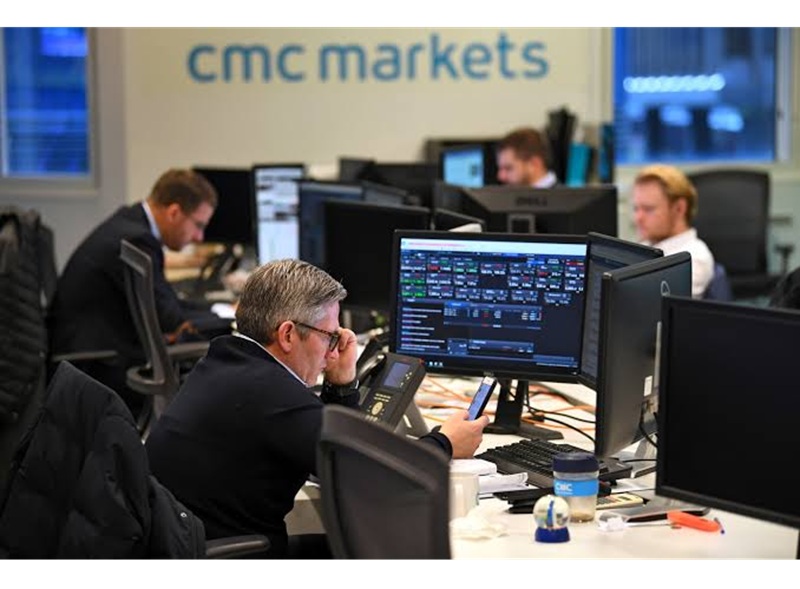
CMC Markets is recruiting a London-based Head of Fixed Income Trading to establish a new trading business, according to a senior vacancy that calls for building the desk, its technology, its liquidity arrangements and its customer franchise from the ground up.
The position is not framed as a routine replacement hire. The company’s job advertisement gives the successful candidate responsibility for strategy, product scope, trading, pricing, execution, inventory, team recruitment, risk controls and commercial performance. CMC explicitly describes an entirely new fixed-income business, but has not disclosed the specific instruments, intended launch date or legal entity that would operate it.
The move would add another potential business line to a group already shifting beyond retail foreign-exchange and contracts-for-difference trading toward multi-asset infrastructure and institutional services. It also comes days after CMC’s institutional division adopted the name CMC Markets Institutional, replacing the CMC Connect branding.
What Does CMC’s Fixed-Income Job Advert Reveal?
The most important detail is the scale of the mandate. The Head of Fixed Income Trading must define the new business’s product range, geographic market coverage, liquidity model and client proposition. That is the framework of a franchise being designed, rather than an individual trader joining an established desk.
The advert calls for ownership of trading, pricing, execution and inventory management. It also requires the executive to recruit the fixed-income team and establish relationships with counterparties, liquidity providers and execution venues. The person will work across Treasury, Risk, Technology, Operations, Compliance and Legal to construct a front-to-back trading operation.
CMC is looking for an established fixed-income professional with institutional-market experience, a commercial track record and relationships across the bond market. The role involves working with Account Executives to win and support clients, and includes accountability for revenues as the business develops.
Those requirements make a client-facing trading operation a more plausible interpretation than the management of CMC’s own excess cash or corporate bond investments. The distinction is still an inference from a recruitment notice: CMC has not formally described the desk’s final operating model.
Will the New Desk Trade Government Bonds or Corporate Credit?
That remains unanswered. The term fixed income covers products ranging from government debt and corporate bonds to interest-rate instruments and credit derivatives. The job description names the asset class but leaves the precise mix to the person hired.
The liquidity model is similarly unsettled. A dealer acting as principal may quote clients prices and hold securities or hedges on its own balance sheet. An agency-style desk may route customer orders toward external liquidity and earn fees for arranging transactions. Both structures can involve significant operational and counterparty requirements, but their capital use and market risk differ.
CMC expressly mentions inventory management and market, liquidity and counterparty risk, suggesting that managing exposures could be material to the proposed operation. That does not establish that the company plans to make markets as principal in every product, nor does it identify any intended regulatory permissions.
The distinctions are familiar to readers of how forex brokers hedge client trades, although fixed-income markets have their own settlement conventions, fragmented liquidity and pricing requirements. A successful bond desk needs reliable reference data, valuations, pre-trade checks, settlement processes and controls for issuer and interest-rate exposure.
How Does This Fit CMC’s Institutional Expansion?
In May 2026, CMC launched expanded Prime Services capabilities under its then-current CMC Connect institutional brand. The service offered cash and synthetic prime brokerage, financing, multi-asset execution and post-trade infrastructure for professional and institutional customers. Its initial description emphasized global cash equities, ETFs and synthetic single-stock exposure.
The fixed-income initiative would potentially broaden that multi-asset offering. Whether it will formally sit within the rebranded CMC Markets Institutional business, serve existing prime-brokerage customers or build a separate customer segment has not been disclosed.
CMC’s June preliminary results for the year ended March 31, 2026 reported net operating income of £392.6 million, up 15%, and pretax profit of £101.3 million, up 20%. Management said institutional and business-to-business relationships had become the majority of the group’s income. The firm was also rolling out a multi-asset platform designed to support its longer-term Super App strategy.
Other expansion efforts include stockbroking partnerships, around-the-clock cryptocurrency and bullion access, and trading infrastructure for institutional partners. On October 15, specialist media reported that the former CMC Connect operation had been rebranded CMC Markets Institutional. The newly advertised fixed-income desk is a distinct development, not the same event as that public rebranding.
The company has also been changing how it finances growth. In September, DaveFinances reported that CMC issued £250 million of Tier 2 capital notes. The debt issuance does not prove it was intended to finance the new desk, but shows the wider group has been developing a more institutional capital structure.
Why Would a Fixed-Income Business Change the Risk Profile?
Bond trading is not simply another product icon on a retail platform. Depending on the execution model, the firm may need to manage inventories that are harder to exit quickly during market stress, settlement obligations across different markets and exposures to large financial counterparties.
Government bonds are generally more liquid than many individual corporate issues, but liquidity can vary sharply by market, issue and interest-rate conditions. Quoting competitive prices requires data, risk limits and access to reliable market makers. In corporate credit, individual instruments may trade infrequently, increasing the importance of valuation and inventory discipline.
The economics will also depend on whether CMC acts as a principal dealer, agency broker or hybrid provider. This is related to, but not identical with, the A-book and B-book execution distinction in retail forex. Investors should not assume that a new fixed-income franchise will use CMC’s existing retail CFD dealing model.
Building a front-to-back platform may involve fixed costs before material revenues appear. Technology integration, experienced personnel, market data, compliance and operations can all create expenses ahead of volume growth. Conversely, a scalable electronic operation that serves existing institutional partners could deepen customer relationships without requiring the same type of retail acquisition expenditure.
What Should Investors Watch Before Calling It a Launch?
For shareholders, the vacancy is evidence of an intended buildout rather than proof that fixed-income trading has begun or will contribute earnings in a particular quarter. No revenue forecast, headcount target, launch date, product list or external counterparty arrangements were disclosed in the advert.
The most revealing next announcements would identify whether CMC plans to offer government bonds, corporate credit, derivatives or a combination; whether its execution will be agency or principal; and which customers and markets it intends to serve. The legal entity, regulatory perimeter and capital allocation would clarify how far this expands the group’s risk-taking activities.
One recruiting decision cannot establish a completed strategic transformation. But a role with authority over market coverage, liquidity, technology, risk, hiring and commercial performance is a stronger signal than a conventional dealing-desk job. For a listed broker already emphasizing institutional distribution, CMC’s attempt to build fixed income from scratch is a development worth watching as the new franchise takes shape.

Johan Shamshad is a financial markets writer at Dave Finances covering cryptocurrencies, trading platforms, brokers, fintech, financial regulation, and developments across global markets. He previously worked at Gulf News, adding newsroom experience to his coverage of fast-moving financial and digital-asset markets.
His work focuses on identifying market-moving events, company developments, regulatory changes, product launches, and shifts in trading and financial infrastructure.
Johan contributes news and analysis designed to help readers understand not only what happened, but why a development matters and how it may affect the wider financial landscape. You can reach out to him via his social media accounts:
Linkedin: https://www.linkedin.com/in/johan-shamshad-742851262/
X: https://x.com/Yasmine_FX
Investing: https://www.investing.com/members/contributors/279781574