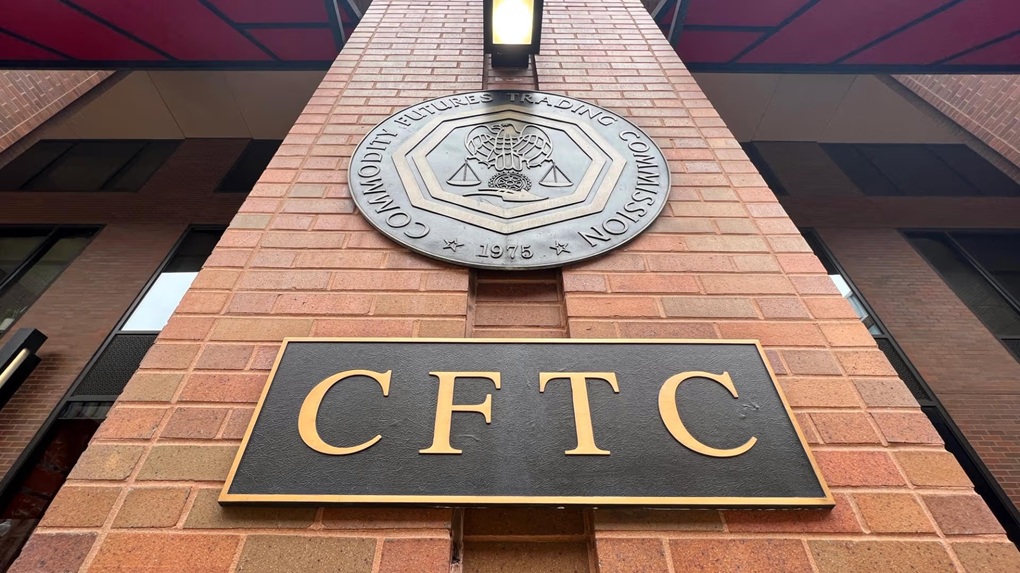
The Commodity Futures Trading Commission (CFTC) has sanctioned eight individuals for acting as unregistered associated persons of foreign introducing brokers that solicited U.S. retail customers for leveraged forex and commodity trading. The November 9, 2026, enforcement action imposes two-year registration and association bans, extending a series of regulatory settlements involving offshore white-label brokerage platforms.
In eight settlement orders announced Monday, the regulator named Michael Talento, Anthony Tyler Williams, Quillan Roberto Black, Christopher Williams, Michael Levi Peters, Jordan Taylor Morgan, Lewis Matthew Neal and Tyler Evan MacKechnie.
According to the CFTC, the individuals solicited orders from U.S. customers who were not eligible contract participants, a classification generally associated with investors meeting specified financial or institutional criteria. The transactions involved off-exchange leveraged or margined retail foreign currency and commodity products.
All eight respondents must cease and desist from the unlawful conduct identified in their orders. They are also prohibited for two years from registering with the CFTC in any capacity or acting as a principal, agent or employee of a CFTC registrant.
The CFTC did not announce additional individual monetary penalties. Instead, its orders recognize penalties imposed through related Securities and Exchange Commission (SEC) proceedings.
SEC Previously Penalized the Eight Brokerage Operators
The November 9 announcement follows two rounds of SEC enforcement that provide considerably more detail about the individuals’ brokerage activities.
On September 30, the SEC settled charges against seven operators who owned, marketed or managed online trading platforms offering contracts for difference (CFDs) to U.S. retail investors between 2019 and 2025.
The SEC identified several brokerage brands associated with those individuals:
Quillan Black and Anthony Tyler Williams co-owned and operated KOT4X, while Tyler MacKechnie operated EnviFX. Jordan Morgan, Michael Levi Peters and Michael Talento were connected to Prosperity4x, and Lewis Neal co-owned and operated FXSway.
The SEC found that these operators purchased ready-to-operate brokerage platforms from third-party providers, marketed the services through social media and affiliate arrangements, and participated in customer-facing operational activities.
The marketing was their side of it, at least the side regulators traced back to them. The providers supplied much of the underlying brokerage infrastructure.
The September settlements imposed civil penalties of $125,000 each on Black and Anthony Tyler Williams, $85,000 on MacKechnie, $65,000 each on Morgan, Peters and Talento, and $60,000 on Neal.
Those seven penalties total $590,000.
The SEC completed a further settlement on November 6 against Christopher Williams, an online trading educator known as Swaggy C, who operated 24k Markets between 2024 and 2025.
As DaveFinances reported in its coverage of the 24k Markets enforcement action, Williams recieved a $60,000 civil penalty and an industry association bar with the right to seek reentry after two years.
Combined, the eight SEC settlements imposed $650,000 in individual civil penalties. That is separate from the earlier corporate sanctions against the companies that supplied white-label brokerage infrastructure.
The individuals settled the SEC proceedings without admitting the regulator’s findings. The CFTC came later for the individuals, on the forex and commodities side.
White-Label Infrastructure Connected to Earlier $2.5 Million Case
The CFTC explicitly linked its latest orders to its June 29, 2026, enforcement action against Netrios LP Ltd. and Red Acre Ltd., two foreign businesses involved in facilitating off-exchange retail commodity transactions.
That earlier settlement imposed a $1.75 million civil monetary penalty on Netrios and a $750,000 penalty on Red Acre, bringing the combined CFTC penalties to $2.5 million.
Those amounts were announced in June, not November. The latest individual settlements do not represent another $2.5 million fine.
The SEC’s parallel June findings described a brokerage infrastructure model in which Netrios developed technology for ready-to-operate trading platforms that third parties could purchase and operate under their own brands.
At least 15 of these white-label brokerage businesses were owned and operated primarily from within the United States, according to the SEC.
Netrios provided pricing and liquidity for transactions and assumed the associated trading profit-or-loss exposure. Red Acre supplied know-your-customer verification and marketing services, among other functions.
The infrastructure was therefore more extensive than simply licensing trading software. It covered commerical activities ordinarily associated with operating a brokerage, including transaction pricing and risk management.
The SEC found that the platforms facilitated trading in CFDs referencing stocks, commodities and other assets. Stock-based CFDs linked to individual securities qualified as security-based swaps under U.S. securities law.
Customers taking those positions did not acquire ownership of the underlying shares. They entered derivative contracts referencing their prices, an arrangement explored further in DaveFinances’ examination of the legal differences between stock ownership and CFD exposure.
The June SEC order found that Netrios violated registration and exchange-trading requirements applicable to security-based swaps, while Red Acre caused those violations. Both companies consented to settlement without admitting the SEC’s findings.
Regulators Target Marketing and Customer Solicitation
The individual enforcement actions extend the regulatory findings beyond the companies providing trading infrastructure to the people marketing and operating customer-facing brokerage brands.
The SEC focused on unregistered brokerage activity involving security-based swaps. The CFTC’s November orders address the individuals’ failure to register as associated persons while soliciting retail forex and commodity transactions through unregistered foreign introducing brokers.
These are distinct registration requirements applied to overlapping brokerage operations. The SEC proceedings concerned activity under federal securities laws, while the CFTC orders concerned activities governed by the Commodity Exchange Act.
Under the CFTC’s framework, an introducing broker generally solicits or accepts customer orders for covered derivatives transactions without accepting customer funds to margin those transactions. Individuals who solicit orders on behalf of such businesses may themselves need associated-person registration.
The use of offshore service providers did not eliminate the registration obligations identified in these proceedings. The location of the provider was not the end of the matter, not with U.S. customers being solicited.
The September SEC orders also show that regulators examined more than company ownership. They considered marketing activities, affiliate programs, customer solicitation and operational support when determining whether the individuals had acted as unregistered brokers.
Christopher Williams’ case provides a particularly detailed example. The SEC found that he promoted 24k Markets through YouTube, Instagram and Discord, recruited affiliates, and received compensation connected to brokerage trading activity.
His platform relied on outside providers for key trading services, yet his direct involvement in soliciting customers formed part of the SEC’s findings. Similar activities appeared in the other operators’ settlements, although the precise operating arrangements differed.
A customer might see one broker name and not the seperate roles behind that name. The regulatory orders examined those roles individually rather than treating the platform’s branding as a complete description of who conducted brokerage activities.
Registration Exposure Extends Beyond Offshore Broker Brands
The sanctions establish specific consequences for individuals participating in U.S.-facing brokerage operations without the required registrations, even where third parties perform substantial portions of the trading infrastructure.
The November orders are especially relevent to introducing brokers, affiliate-driven trading businesses and promoters whose activities go beyond advertising into soliciting customers for regulated transactions.
For firms using outsourced trading technology, the findings also identify a practical compliance concern: registration obligations can apply to multiple participants in the same brokerage arrangement, depending on their activities and the financial instruments offered.
An offshore company’s incorporation or possession of a foreign licence does not establish that it has permission to solicit U.S. retail customers for every product offered on its platform. The distinction between corporate registration, financial-services licensing and product-specific permissions is examined in DaveFinances’ guide to forex broker licences and offshore regulatory frameworks.
The CFTC’s announcement does not quantify investor losses associated with the eight individual cases or identify a new customer restitution program. Its disclosed remedies concern registration restrictions, cease-and-desist obligations and recognition of the earlier SEC penalties.
Particulary notable is the sequence of enforcement: the agencies first sanctioned the infrastructure providers in June, the SEC settled with seven operators in September and an eighth in November, and the CFTC then imposed its own registration-related restrictions on all eight.
The resulting enforcement record covers both sides of the white-label brokerage arrangement: the businesses supplying essential trading services and the individuals responsible for marketing brokerage access to American customers.
For those operating offshore forex and CFD platforms, the cases establish that outsourcing execution, pricing or technology does not, by itself, remove the regulatory obligations associated with soliciting U.S. retail business.

Johan Shamshad is Editor-in-Chief at Dave Finances, covering financial markets, digital assets, trading platforms, brokers, fintech, payments and regulation. Since 2023, he has also worked as an editor at Gulf News, the UAE English-language newspaper published by Al Nisr Publishing LLC. His work focuses on market-moving developments, company disclosures, regulatory changes and trading infrastructure, with an emphasis on primary-source verification and practical context for traders and investors.