
Segregation is designed to keep eligible client money separate from a broker’s own operating funds and creditors. It materially improves the recovery position if the firm fails, but it does not guarantee instant access, perfect records or a full refund. The outcome depends on the legal entity, jurisdiction, client classification, account terms, third-party bank exposure, any pooled shortfall and whether a compensation scheme accepts a valid claim.
Segregation Is a Legal Safeguard, Not a Guarantee
When a regulated broker holds client money, segregation rules generally require it to keep that money separate from the firm’s own funds under the applicable regime. In the UK, the FCA’s Client Assets Sourcebook, or CASS, sets requirements for firms that hold or control client money and custody assets. The stated purpose is to reduce the risk of loss if a firm fails and exits the market. CASS also imposes recordkeeping, reconciliation and notification duties. [1][2]
The core idea is straightforward: a broker’s operating creditors should not automatically be able to treat properly protected client money as the broker’s own property. But the word ‘segregated’ can be misunderstood. It does not necessarily mean every customer has a separate bank account in their own name. Firms may hold client money in pooled accounts, with internal ledgers recording each customer’s entitlement. The money may also be placed with approved banks or other permitted third parties, creating risks beyond the broker itself.
Nor does segregation guarantee that the records are accurate or that the full required amount is actually present. A broker may fail while holding a shortfall; a bank or intermediary may fail; records may be incomplete; or administrators may need time to reconcile positions and identify valid claims. Segregation reduces the chance that client money is absorbed into the firm’s general estate, but it is not equivalent to deposit insurance and does not protect against ordinary trading losses. The right question is what the rules and contract protect in the specific account—not whether the broker uses the word ‘segregated’ in marketing.
First Find the Legal Entity and the Applicable Rules
A global broker brand can serve customers through different legal entities in different jurisdictions. One subsidiary may be authorised by the FCA, another by CySEC or ASIC, and a third may operate under an offshore regime. The same website, trading platform and brand name do not guarantee identical client-money protections. The company named in the client agreement, account opening confirmation and regulatory disclosures is the starting point.
For a UK account, check the exact firm’s entry on the FCA Financial Services Register and confirm that the permissions cover the service being offered. Authorisation alone is not enough if the customer has contracted with a different affiliate, an unregulated introducer or an offshore company. The FCA specifically warns that customers encouraged to move into professional-client status can lose protections that apply to retail clients. [3]
Client classification also matters. Under UK rules, certain professional clients can agree in writing to opt out of client-money protections for particular business, subject to the relevant requirements. The FCA Handbook explains that a qualifying professional client who gives the required acknowledgement may not receive the same segregation treatment and may rank as a general creditor for that money. This is not a detail to leave buried in an account form. Before depositing, a trader should check whether the account is retail or professional, which legal entity holds the money, which regulator supervises it and whether the terms contain any permitted client-money opt-out.
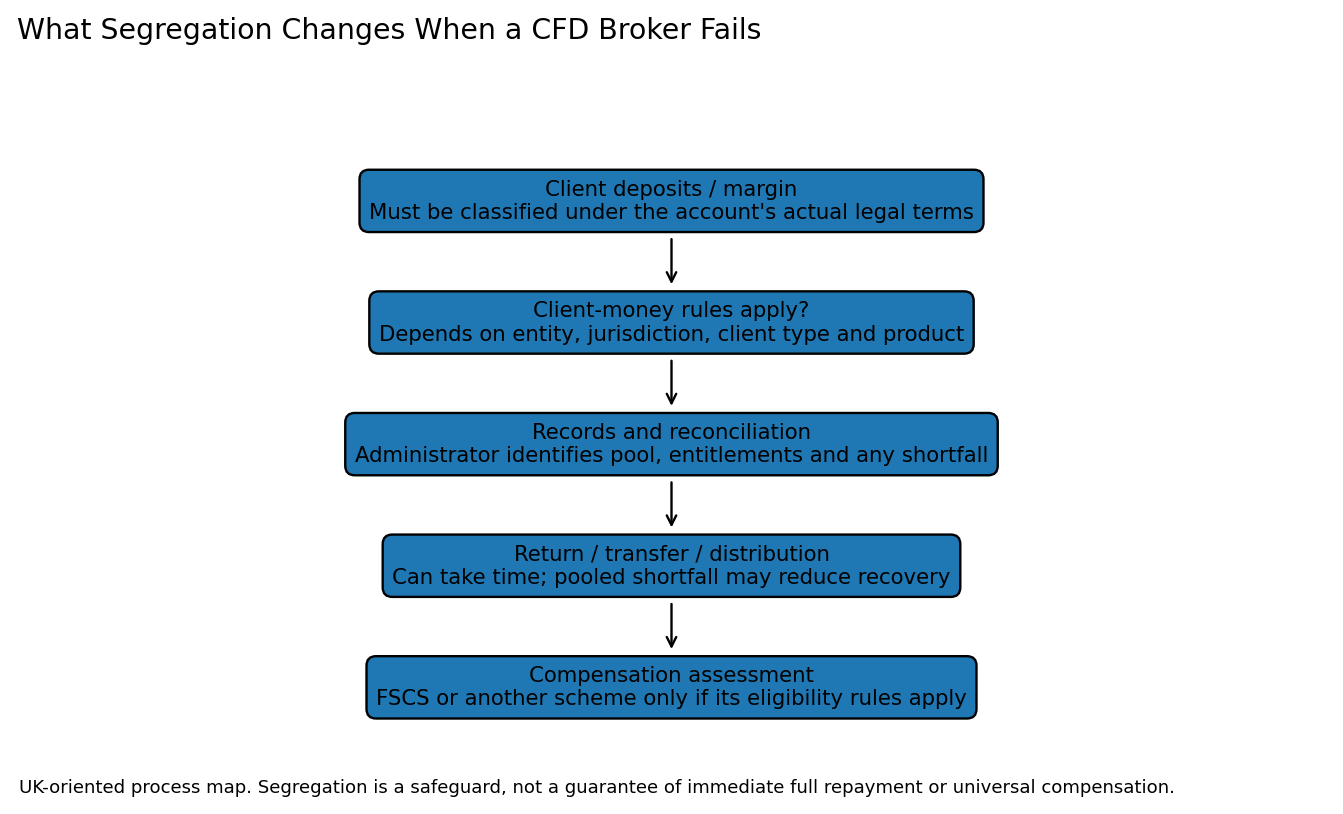
Figure 1. Segregation starts a legal and operational recovery process; it does not skip reconciliation or eligibility checks.
What Happens After Insolvency Begins?
If a UK investment firm holding client assets fails, administrators must identify the relevant client-money pool, reconcile records and determine what can be returned or transferred. The FCA’s Client Assets Resolution Pack rules require firms to maintain records that can be retrieved after failure, including reconciliations and information about custodians. The purpose is to help insolvency practitioners return assets more quickly; it does not mean recovery will be immediate. [4]
The process can involve verifying account balances, matching bank records to the broker’s ledger, resolving disputed trades and determining how open CFD positions are valued or closed. A CFD is a contract with the provider, not a share certificate that can simply be transferred to another broker. A client’s cash entitlement and the P&L on open positions are different issues: the administrator may need to close or value positions under the relevant agreement and applicable insolvency process before the final cash claim is clear.
UK investment-firm special administration is designed to prioritise returning client assets as soon as reasonably practicable while also engaging with market infrastructure and managing the firm’s wind-down or rescue. That objective is important, but ‘as soon as reasonably practicable’ is not a fixed deadline. Complex books, missing records, cross-border accounts and disputes can extend the process. A customer may have a strong property-based claim to properly segregated money and still experience a long period without access to it. [5]
Clients should also distinguish the money balance from the derivative position. A platform may show cash, used margin, unrealised P&L and equity as one account summary, but the insolvency administrator may need to reconcile each component under the client agreement. If positions are closed or valued during administration, the final amount due can change with the applicable close-out methodology and any disputes over the closing price. Segregation is about safeguarding eligible client money; it does not freeze the market value of an open CFD at the moment the platform becomes unavailable.
The Hidden Weakness: A Shortfall in the Client-Money Pool
Segregation only works as intended if the amount held and the records supporting it match the firm’s obligations. If a broker has £100 million in recorded client entitlements but only £90 million available in the relevant pool, the £10 million shortfall must be addressed through the applicable insolvency and client-money rules. The fact that the money was supposed to be segregated does not make the missing £10 million appear.
Under UK CASS 7A, client money held in a general pool is distributed according to clients’ entitlements, and specified shortfalls linked to a failed bank, intermediate broker, settlement agent or OTC counterparty can be allocated rateably among the affected clients in that pool. That means a shortfall at a third-party institution can affect clients beyond the individual whose trade or payment led to the exposure. The exact rules depend on which pool and failure event apply. [6]
Consider a deliberately simple illustration. A client has a recorded £10,000 entitlement in a pool that suffers a 10% shortfall. A pro-rata distribution would be £9,000 before considering administration costs, later recoveries, other legal adjustments or a separate compensation claim. This is not a prediction of how a real insolvency would be administered; it isolates the arithmetic of a pooled shortfall. The important lesson is that segregation can change a customer’s priority and recovery process without eliminating every possible loss.
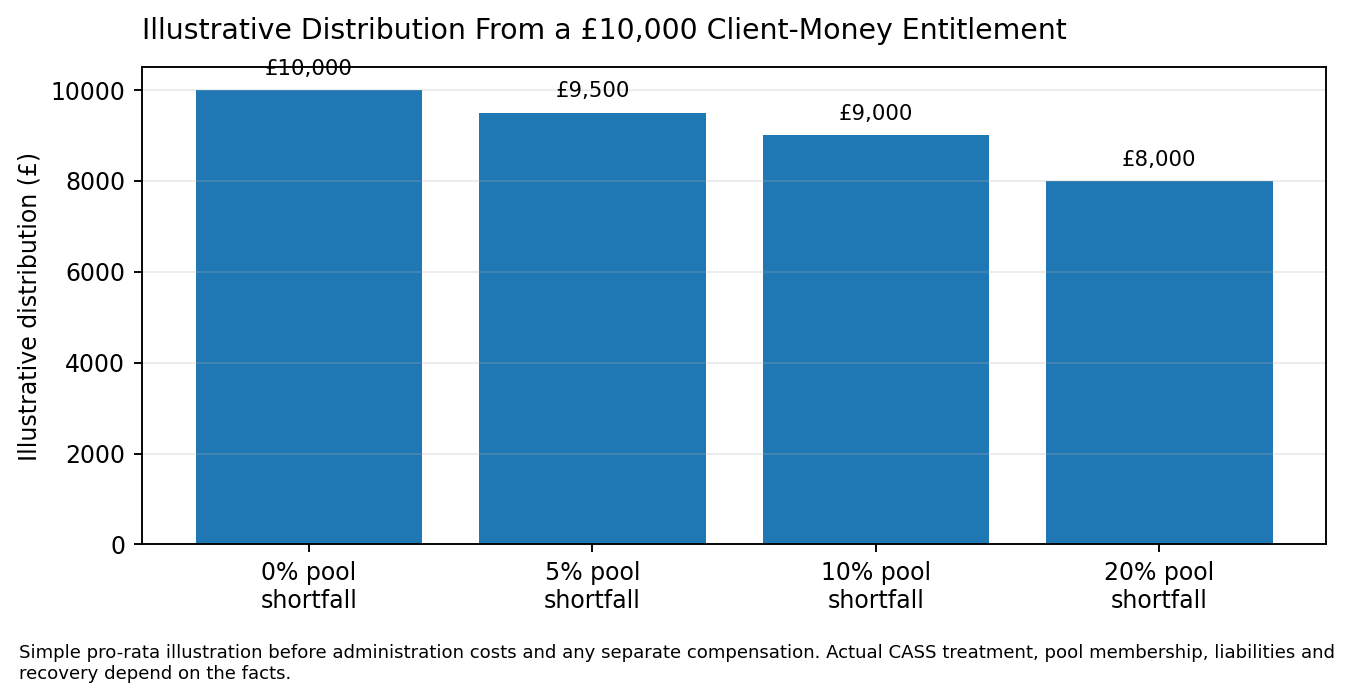
Figure 2. A simple pro-rata model shows the arithmetic impact of a pool shortfall before later recoveries or separate compensation.
Illustrative Comparison
| Protection layer | What it can do | What it does not guarantee |
| Client-money segregation | Separates eligible client money from the firm’s own funds | No shortfall, instant access or universal protection |
| Reconciliation and records | Helps identify each client’s entitlement | Perfect records during a complex failure |
| CASS distribution rules | Set how pools and certain shortfalls are allocated | Full recovery if the relevant pool is deficient |
| FSCS investment compensation | May cover eligible losses from a failed authorised firm up to the limit | Automatic reimbursement of every balance or market loss |
| Negative-balance protection | Can limit eligible retail CFD liability from trading losses | Return of missing client money after insolvency |
UK-oriented summary. Actual rights depend on the legal entity, client classification, product and facts of the failure.
The Third-Party Bank Can Matter as Much as the Broker
Client money is commonly held at banks or other permitted institutions rather than sitting in a broker’s own trading account. That separation helps distinguish client assets from the broker’s operating funds, but it creates a second layer of counterparty risk. If a bank or another institution holding the pool fails, the broker must follow the relevant notification, reconciliation and distribution rules. A third-party failure can therefore affect client access even when the broker’s own business is still solvent.
FCA CASS rules require firms to take steps to safeguard client rights and minimise the risk of loss or diminution from misuse, fraud, poor administration, inadequate recordkeeping or negligence. The rules also address client-money reconciliation and how shortfalls at third parties are treated. But these controls do not amount to a guarantee that every bank or intermediary will repay the full amount immediately. The customer should distinguish the broker’s insolvency risk from the bank’s credit risk and from operational delays in moving money.
An additional question is whether the client has direct rights against the bank. In a pooled client-money arrangement, the account is commonly held in the firm’s name under a client-money structure, rather than as an individually named deposit for each customer. The customer’s rights depend on the applicable trust or statutory framework and account terms. Do not assume that because a bank holds the cash, the customer automatically has an ordinary bank deposit in their own name or direct access to deposit-protection limits.
Do not confuse a segregated client-money account with a bank deposit opened directly by the customer. In a typical broker arrangement, the bank account is held by the broker for the client-money pool, and the customer relies on the relevant trust or statutory framework and records. The fact that the money is physically at a bank does not, by itself, establish that the customer has an individual deposit claim or that ordinary deposit-protection limits apply in the same way. The legal account structure must be checked before assuming which compensation scheme, if any, is relevant.
Can FSCS Replace Missing Client Money?
For eligible UK investment claims, the Financial Services Compensation Scheme can pay compensation when a regulated firm has failed and cannot meet a valid legal liability. The general investment-compensation limit is up to £85,000 per eligible person, per failed firm for failures after 1 April 2019. FSCS says it may be able to protect customers where a provider goes out of business and there is a shortfall in money or assets it was holding for them. [7][8]
That is not a promise that every CFD account balance will be reimbursed up to £85,000. FSCS eligibility depends on the firm, regulated activity, claimant, loss and legal liability. The firm must be in default; the service must have been regulated; the claimant must have suffered an eligible loss; and the failed firm must owe a liability. FSCS does not cover ordinary investment performance losses simply because a trade went wrong. Nor does the cap mean a customer automatically receives £85,000 whenever the broker collapses.
A real-world case illustrates the distinction between a return process and compensation. FSCS’s updates on failed firm IBP Markets describe work with joint special administrators to establish client-money and custody-asset shortfalls, while noting that distributions and compensation depend on the administrators’ plan and the relevant eligibility rules. The process can require court and committee approvals before a distribution plan proceeds. The legal limit is therefore only one part of the picture: the customer’s actual claim, the available assets and the administration timetable still matter. [9]
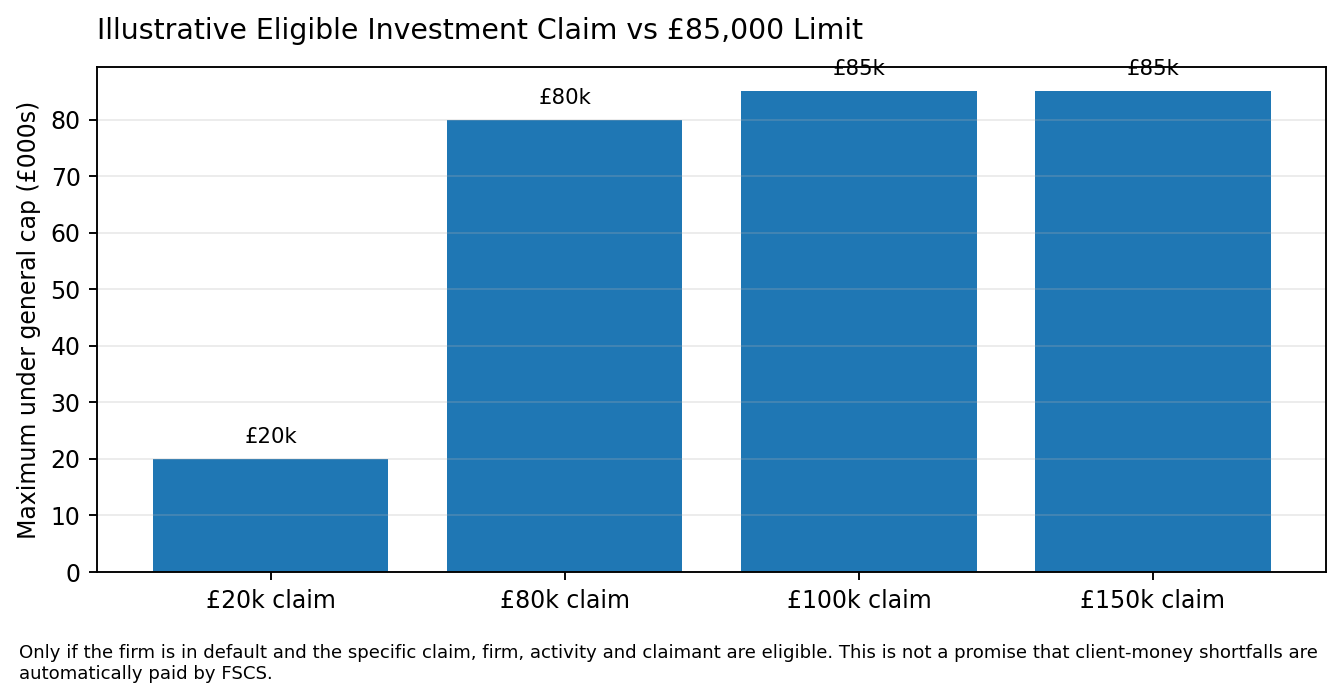
Figure 3. The £85,000 general investment-compensation limit is conditional and is not an automatic account-balance guarantee.
What a Segregated Account Does Not Protect
Segregation is not protection against market risk. If a customer loses £4,000 because an index CFD moves against the position, the loss is a trading outcome, not a missing-client-money claim. If a leveraged position gaps through a stop, the customer’s balance can fall sharply under the contract. Retail negative-balance protection, where applicable, is a separate safeguard that limits liability for CFD losses under the relevant regime; it does not guarantee that deposited funds will be returned after a broker failure.
Segregation also does not mean a broker can never use money in a way permitted by the rules or agreement, nor that every product is covered identically. Some customer categories, products and services have different treatment. Professional-client opt-outs, offshore entities, introducing arrangements, payment intermediaries and separate wallet or custody products can change the analysis. The product name on the platform is not enough to determine whether a particular balance qualifies as client money under the rules.
The difference between disclosure and legal implementation can be decisive. In October 2026, Dave Finances reported that Japan’s FXTF had disclosed a defect in the trust arrangement for corporate commodity-CFD customers: the broker said corporate assets were kept separately from its own money but were not covered by the trust agreement as customer documents had suggested. That case does not establish a loss or insolvency, but it shows why a segregation statement must be checked against the governing agreement and the exact client category. See our analysis of the FXTF trust-protection disclosure.
How to Assess Your Own Broker Before Depositing
Start with the client agreement, not the homepage. Identify the exact legal entity, regulator, account classification and governing law. Confirm whether the broker is authorised to hold client money and whether the account is covered by a statutory client-money regime. Search the regulator’s register directly and compare the approved domain with the website you are using. A real licence belonging to one affiliate does not prove that another entity is authorised to accept your funds.
Then read the client-money disclosure. Look for the bank-account arrangement, how the firm records and reconciles balances, whether money can be placed with third parties, how it handles shortfalls, and whether the agreement includes a professional-client opt-out or other exception. Check how the broker handles open positions if it enters administration and whether any negative-balance protection applies to your specific account. A firm should be able to explain these mechanics in plain language.
Finally, consider concentration. Keeping a very large cash balance at one CFD provider creates exposure to that entity and its client-money arrangements. Diversifying the operational location of cash can reduce dependence on one firm’s records and payment channels, although it cannot eliminate market or banking risk. The site’s guide to forex broker licences and protections explains why a licence is a bundle of permissions and remedies rather than a guarantee. The analysis of why most retail CFD traders lose money also explains why client-money protection and trading-risk protection should never be treated as the same thing.
A broker’s financial health remains relevant even where client assets are segregated. Capital and liquidity help the firm meet operating costs, hedge margin calls and maintain the systems that reconcile and return client money. A well-capitalised broker can still fail, and a financially stressed broker does not automatically lose client money, but financial statements and regulatory notices are useful additional evidence. The customer’s goal is not to find a firm that can never fail; it is to reduce the probability of failure and understand the recovery process if it does.
The Bottom Line: Safer Than Unsegregated Funds, Not Risk-Free
Proper segregation materially improves a client’s position compared with money treated as the broker’s own working capital. In the UK, CASS rules require segregation, recordkeeping and processes intended to facilitate return or transfer after failure. But insolvency can still create delays, disputed entitlements and shortfalls. Pooled structures mean a failure at a bank or other permitted institution can have consequences for a group of clients, not just the account associated with the original transaction.
FSCS can provide an additional layer for eligible investment claims, up to the applicable limit, but it is not a universal guarantee for every account or every loss. The client must be dealing with the right authorised entity and the specific claim must meet the scheme’s rules. Offshore accounts and professional-client arrangements may have materially different protection. The same broker brand can therefore imply different recovery rights depending on which legal entity holds the account.
The practical conclusion is to treat segregation as one part of a broader risk assessment: verify the entity, confirm the client-money regime, understand any opt-outs, read the third-party and insolvency clauses, and do not assume that a displayed balance equals immediate cash access. Protection is strongest when the legal documents, operational records and actual custody arrangements all match.
Methodology
This article uses the UK FCA CASS regime and FSCS rules as a worked example, not as a universal global rule. The £10,000/10% shortfall illustration assumes a proportional 10% reduction solely to show arithmetic; actual CASS pool allocation, costs, recoveries and entitlements are determined by the applicable rules and insolvency facts. The £85,000 figure is the general FSCS investment-compensation limit for eligible claims involving firms that failed after 1 April 2019; it is not an automatic payment. Legal information checked against official sources available on October 29, 2026.
Sources
- FCA, Client Money and Assets
- FCA Handbook, CASS 7 Client Money Rules
- FCA, Contract for Differences: Provider Expectations
- FCA, Client Assets Resolution Pack
- Bank of England, Approach to Resolution and Investment Firm Special Administration
- FCA Handbook, CASS 7A Client Money Distribution and Transfer
- FSCS, Investment Compensation and Protection
- FSCS, Compensation Rules and Eligibility
- FSCS, IBP Markets Failed Firm Updates
- FCA, CASS 7.13 Segregation of Client Money
- FCA, Financial Services Register

Johan Shamshad is Editor-in-Chief at Dave Finances, covering financial markets, digital assets, trading platforms, brokers, fintech, payments and regulation. Since 2023, he has also worked as an editor at Gulf News, the UAE English-language newspaper published by Al Nisr Publishing LLC. His work focuses on market-moving developments, company disclosures, regulatory changes and trading infrastructure, with an emphasis on primary-source verification and practical context for traders and investors.