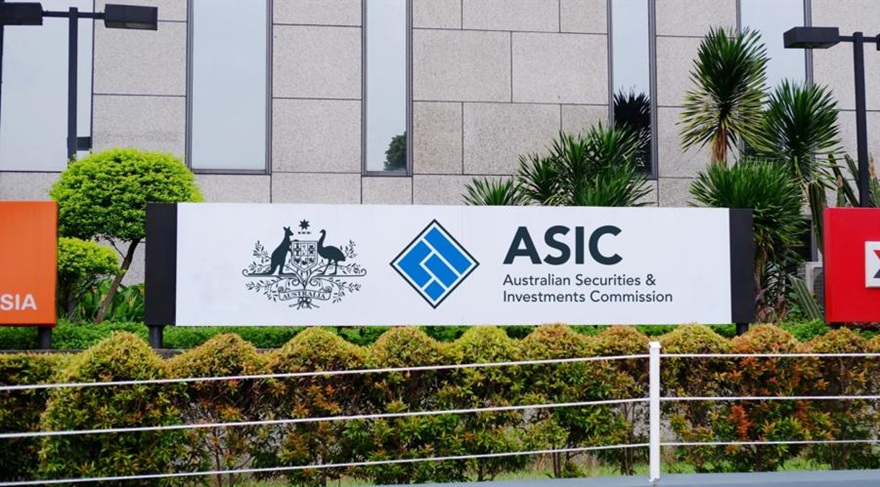
Australia’s securities regulator has sued Commonwealth Bank of Australia (CBA), alleging it charged around 42,000 business customers A$8.5 million in fees that were not properly disclosed on its CommBiz banking platform between November 2020 and May 2025. The bank has already paid more than A$26.4 million in remediation across a longer period, but disputes parts of the civil case.
The Australian Securities and Investments Commission (ASIC) filed proceedings in the Federal Court alleging misleading fee disclosures and failures to provide financial services efficiently, honestly and fairly. Its case centres on Direct Credit and Direct Debit transactions, where customers were told about a fee for transferring money to or from a third party but were allegedly charged again for the related movement through their own CommBiz account.
In one example, ASIC says a business paying ten employees from two accounts incurred 12 fees rather than the ten it expected. The additional charge was 25 Australian cents plus goods and services tax, according to CBA’s response. Small amounts, repeated across years of business payments.
ASIC alleges complaints and an internal audit went unheeded
The allegations extend well beyond the November 2020–May 2025 period identified for potential civil penalties. ASIC’s November 12 enforcement announcement traces the disputed billing practice to CommBiz’s launch in December 2006, nearly 19 years before the charges ceased.
In the court’s concise statement, ASIC alleges that customers raised at least 13 serious complaints between 2015 and 2025 about the mismatch between advertised fees and actual charges. An April 2016 internal audit had already classified the platform’s control environment as unsatisfactory and instructed the bank to reconcile terms with billing practices, investigate the cause and compensate customers. The regulator says those corrective measures were not implemented by the deadlines.
A 2022 complaint prompted a customer-relations employee to raise a systemic issue over charging by transaction line. ASIC alleges the matter was subsequently closed as showing no bank error. The court filing also describes a May 2024 internal email raising concerns that the pricing documents did not explain per-leg billing and that the bank could be perceived as charging twice.
In July 2024, CBA opened a more formal investigation into the contractual basis for the fees. ASIC alleges an August 2024 decision classified the incident as not reportable despite the complaint history. CBA first notified ASIC of an ongoing investigation in June 2025, according to the regulator’s court document. The dates underpin ASIC’s claim that the problem was not simply a drafting mistake left unnoticed until the bank discovered it.
ASIC also alleges that website terms and fee schedules made misleading representations on around 2.4 million occasions during the penalty period. That number refers to alleged instances of webpages being viewed, not 2.4 million customers who were overcharged.
CBA disputes parts of claim after repaying A$26.4M
In a November 12 announcement to the Australian Securities Exchange, CBA accepted that its fee disclosures had not been right and apologised to affected customers. It said the disputed charge had been applied consistently, but simplification of certain terms and conditions left the documents inaccurately describing the existing billing method. The bank said it identified the problem itself, reported it to ASIC and cooperated with the investigation.
CBA does not accept the way some allegations have been framed and says it expects to defend aspects of the proceeding or work with ASIC to resolve it. That response is separate from the regulator’s allegations about missed internal warnings and delayed escalation. No court has ruled on the disputed claims.
The repayment figures require careful reconcilliation. ASIC estimates A$8.5 million in excess charges to about 42,000 customers during the shorter penalty period. Across December 2006 to May 2025, its court filing alleges roughly A$21 million was overcharged to about 93,000 businesses. The regulator says CBA’s completed remediation, covering past and present customers and including interest, exceeded A$26.4 million for approximately 93,000 customers, including around 40,000 small businesses.
Those totals are different measures, not contradictory amounts to add together. CBA reported that, as of October 20, the median payout to an affected customer was roughly A$85 and the average was about A$442, including interest. The bank says it made provision for the payments in its 2026 financial year.
CBA temporarily stopped charging the relevant fees in June 2025, updated the CommBiz terms in August and has waived the ‘contra leg’ component since February 2026. Customers who believe they were affected but did not receive a repayment have been directed by ASIC to contact the bank.
Refunds do not resolve the bank’s regulatory exposure
ASIC is seeking declarations, financial penalties, adverse-publicity orders and legal costs. It has not specified the eventual penalty, and the Federal Court has not scheduled an initial case-management hearing. The current proceeding is a claim, not a fine or judgment already imposed.
ASIC’s wider enforcement record shows why the distinction between repayment and punishment persists. In its 2025–26 enforcement year, the regulator reported A$830 million in court-ordered civil penalties alongside nearly A$644 million connected with refunds and customer remediation. Those aggregates concern separate cases and cannot predict any penalty against CBA.
The alleged failure is one of disclosure and internal controls, not a claim that a 25-cent payment fee was inherently unlawful in every circumstance. ASIC has also examined how online trading platforms present fees, incentives and product information, although those consumer-trading rules are seperate from the CommBiz business-banking dispute.
Transparency about pricing is also central to ASIC’s distinct rules on trading rebates and fee discounts, where the published conditions can determine whether an offer is permitted. CommBiz instead involves alleged inconsistencies between a contract’s fee schedule and what the bank charged. It is a different legal test, with the same basic commercial question: what did customers agree to pay?
For CBA, the remaining issue is whether its governance and disclosue failures support civil penalties even after repayment. ASIC’s allegations concern decisions made years after an internal audit flagged the billing issue. The bank has acknowledged an error and funded compensation, but the precise legal responsibility and any court-ordered financial consequences remain to be determined. The court process will decide that, not the refund totals alone.

Johan Shamshad is Editor-in-Chief at Dave Finances, covering financial markets, digital assets, trading platforms, brokers, fintech, payments and regulation. Since 2023, he has also worked as an editor at Gulf News, the UAE English-language newspaper published by Al Nisr Publishing LLC. His work focuses on market-moving developments, company disclosures, regulatory changes and trading infrastructure, with an emphasis on primary-source verification and practical context for traders and investors.