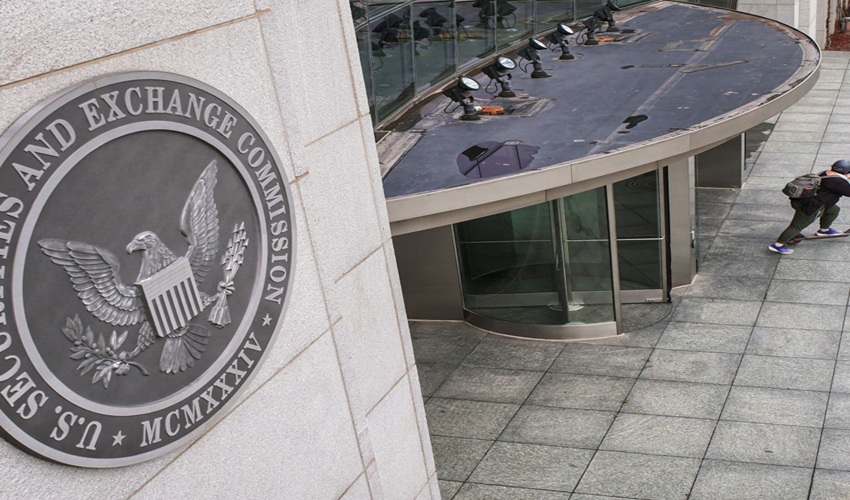
The US Securities and Exchange Commission sued eight entities on November 19, accusing them of operating four successive fake investment-advisory and cryptocurrency-trading businesses that collected approximately $37.45 million from more than 1,500 American investors. The operation allegedly ran from August 2024 through May 2026, moving from one adviser-and-exchange pairing to another as earlier identities disappeared.
The case, filed in federal court in Colorado, is a civil enforcement action, not a judgment establishing fraud or an announcement of recovered funds. The SEC alleges that overseas operators used US-registered business identities, WhatsApp investment groups and misleading regulatory documents to persuade clients that their money was being invested in genuine crypto assets. The trading profits shown on the platforms were allegedly fictional.
Four adviser-exchange pairs collected $35.5 million in crypto
The SEC’s November 19 complaint names Advisor WeChat Capital, Tech Brokerage Asset Alliance Ltd., HB Wealth Advisors, IdeaCrypto Exchange LLC, Convergent Wealth Advisors Inc., RealSimple Crypto Exchange Inc., Associated Wealth Advisors Ltd., and Essential Crypto Exchange. The eight were allegedly organized into four pairs, each combining a purported investment adviser with a purported trading venue.
| Period | Alleged adviser | Alleged crypto platform | Crypto deposits |
|---|---|---|---|
| Aug.–Dec. 2024 | Advisor WeChat Capital | Tech Brokerage Asset Alliance | $7.32M |
| Jan.–Jul. 2025 | HB Wealth Advisors | IdeaCrypto Exchange | $13.64M |
| Jul.–Dec. 2025 | Convergent Wealth Advisors | RealSimple Crypto Exchange | $10.36M |
| Jan.–May 2026 | Associated Wealth Advisors | Essential Crypto Exchange | $4.22M |
The SEC calculated $35,542,323 in cryptocurrency deposits to four accumulation addresses and another $1,903,477 in fiat payments, for total alleged receipts of $37,445,800. The rounded figures in the table describe deposits at the four crypto addresses; the fiat component is not allocated among those rows. It would be wrong to add the $37.45 million headline figure to the individual platform receipts as though they were seperate losses.
According to the regulator, victims were first offered stock-trading advice in private messaging groups. As confidence grew, the purported advisers recommended selling listed stocks and sometimes liquidating retirement holdings or other assets to participate in exclusive crypto offerings. A real brokerage transaction could be the first step toward a wholly fabricated exchange account. The switch was the trap.
Fake certificates and genuine filings created false credibility
The SEC alleges that the operators used social-media advertising to direct prospective clients into WhatsApp conversations managed by supposed investment professionals. Their websites described personalized advisory services, and different pairs reused similar promotions, fictitious fund-manager competitions and claims about profitable initial exchange offerings.
The documentation was more deceptive than a simple forged logo. Tech Brokerage Asset Alliance filed a Form D and obtained an SEC Central Index Key, which representatives allegedly portrayed as proof of SEC supervision. Some defendants registered as money-services businesses with FinCEN, while Convergent Wealth and Essential Crypto filed Forms ADV describing themselves as exempt reporting advisers. None of those administrative actions, by itself, established that the investments were licensed, approved or genuine.
The complaint says investors also received counterfeit SEC registration certificates. It alleges that certain Forms ADV listed nonexistent or unaffiliated regulatory contacts, inaccurate Colorado office addresses and private-fund information inconsistent with the purported businesses. The SEC said it removed the relevant Tech Brokerage Form D and two Forms ADV from its website after the investigation.
This distinction matters because searchable government records can be used as props in an investment pitch. EDGAR access does not constitute regulatory endorsement; a FinCEN registration does not verify that an exchange executes real transactions. A person can find a filing and still be looking at a dishonest explanation of what that filing means.
DaveFinances previously covered the $31.5 million Fundsz judgment, where supposed trading expertise was central to the investor pitch. That case has a court-imposed remedy; the newly filed SEC lawsuit has not reached that stage, and there is no established connection between the defendants.
Investor funds allegedly crossed from Ethereum to Tron
Instead of sending money directly to an unfamiliar exchange, investors were instructed to fund an account at a known US crypto platform, buy assets such as ETH, USDT or USDC, move them into a personal wallet and then transfer those assets to a designated deposit address. The fraudulent platform app allegedly displayed the transferred balance and invented gains. The money itself had already left the investor’s control.
The complaint identifies four Ethereum accumulation addresses, one for each exchange identity. A fund-flow analysis incorporated into the lawsuit traces part of the proceeds through consolidation wallets and cross-chain bridges into the Tron network, where streams from different groups converged on common downstream destinations. That shared routing is one of the reasons the SEC characterizes the four apparently distinct businesses as a coordinated operation rather than unrelated scams.
When users tried to withdraw their supposed investment gains, the defendants allegedly demanded additional crypto payments for fees, refused to deduct those fees from displayed balances and eventually stopped responding. According to the complaint, one investor lost almost $500,000, another approximately $850,000 and a third close to $1.6 million, including proceeds tied to a house and retirement savings. Those examples are within the alleged investor-loss narrative, not extra amounts on top of the $37.45 million receipts.
The use of a polished trading app to simulate enormous profits resembles a different fraud mechanism examined in DaveFinances’ report on a Hong Kong investor’s $3.3 million scam loss. The cases involve different people and jurisdictions. In both, an on-screen account balance was not evidence that a real trade had occured or that the customer could recieve the displayed money.
The SEC seeks penalties, but investor recovery is unresolved
All eight entities are accused of violating Exchange Act Section 10(b) and Rule 10b-5. The four purported advisory businesses also face claims under the Investment Advisers Act’s antifraud provisions. Convergent Wealth and Essential Crypto additionally face allegations involving false information in adviser filings. These are allegations set out in the complaint, not findings from a trial.
The SEC is asking the District of Colorado for permanent and conduct-based injunctions, disgorgement, prejudgment interest and civil monetary penalties. It also seeks restrictions preventing the alleged adviser defendants from serving as investment advisers and prohibiting certain adviser filings by two defendants. The complaint does not announce a court-awarded damages figure or an established restitution timetable.
The distinction between a claimed loss and a recoverable asset is substantial. Funds routed across multiple addresses and blockchains may be traced historically without still being available for seizure. DaveFinances’ coverage of NovaTech’s separate $1.37 billion recovery request similarly distinguishes deposit totals, requested legal relief and money actually collected. That earlier litigation is unrelated to the eight firms named here.
The SEC acknowledged assistance from financial regulators in Hong Kong, Singapore, mainland China and Switzerland. It says the entities were formed in Colorado but were likely run by people located abroad. The complaint does not establish the ultimate identities of all operators, how much of the money remains accessable or whether any investor will receive compensation. For now, the case turns on a claimed $37.45 million collection network built around four fabricated trading venues and regulatory credentials used to give them credibility.

Johan Shamshad is Editor-in-Chief at Dave Finances, covering financial markets, digital assets, trading platforms, brokers, fintech, payments and regulation. Since 2023, he has also worked as an editor at Gulf News, the UAE English-language newspaper published by Al Nisr Publishing LLC. His work focuses on market-moving developments, company disclosures, regulatory changes and trading infrastructure, with an emphasis on primary-source verification and practical context for traders and investors.