


The Ethereum Foundation just reminded the industry what Ethereum was supposed to be in the first place.
Not a company.
Not a product roadmap.
Not even a platform in the usual tech sense.
Infrastructure.
The Foundation released a formal mandate explaining its role inside the ecosystem and—more interestingly—what its role shouldn’t be. At the center of the document sits a concept the organization calls the “walkaway test.”
The idea is simple. Brutal, actually.
Ethereum should eventually function even if the Foundation vanished tomorrow.
That statement sounds philosophical, but it lands at a tense moment. Ethereum is under pressure from multiple directions at once: scaling demands, the explosion of layer-2 networks, and increasingly aggressive competition from other chains promising speed and lower costs.
So this mandate isn’t just theory. It’s a signal about how the network intends to evolve.
The Principles Ethereum Refuses to Compromise
The Foundation’s document doesn’t announce a flashy upgrade or a new product initiative. Instead, it goes back to basics.
According to the mandate, Ethereum must preserve several core properties:
- Censorship resistance
- Open-source development
- Privacy protections
- Security and system resilience
- Technology that preserves user freedom
Those ideas trace back to the network’s earliest days, when Vitalik Buterin and other contributors launched Ethereum in 2015 as more than a cryptocurrency.
Ethereum was designed as programmable infrastructure—a platform where decentralized applications, financial tools, and digital ownership systems could exist without relying on traditional intermediaries.
The mandate doubles down on that premise.
Users—not developers, not companies, not the Foundation—must ultimately control their assets and data. Ownership should be enforced by the protocol itself.
If that principle weakens, the argument goes, Ethereum becomes just another technology platform.
The Walkaway Test
The most striking concept in the document is the walkaway test.
In plain terms: Ethereum must eventually reach a point where the Ethereum Foundation becomes unnecessary.
That’s a strange goal for an organization to articulate about itself. But it reflects a structural tension inside decentralized systems.
Early networks need coordination. Someone funds research. Someone organizes upgrades. Someone keeps client teams aligned.
Over time, though, the system is supposed to decentralize those responsibilities across the ecosystem.
Right now the Foundation still performs several critical roles:
- Funding long-term protocol research
- Coordinating development roadmaps
- Supporting security programs and bug bounties
- Maintaining developer tools and infrastructure
But the mandate frames those tasks as temporary scaffolding.
Eventually, the ecosystem should take over.
Why This Moment Matters
The timing isn’t random.
Ethereum is in the middle of a long, awkward transition.
On one hand, the base layer remains the most battle-tested smart-contract platform in the world. On the other hand, it struggles with throughput limits and high transaction costs.
The solution that emerged over the past two years was the layer-2 rollup ecosystem.
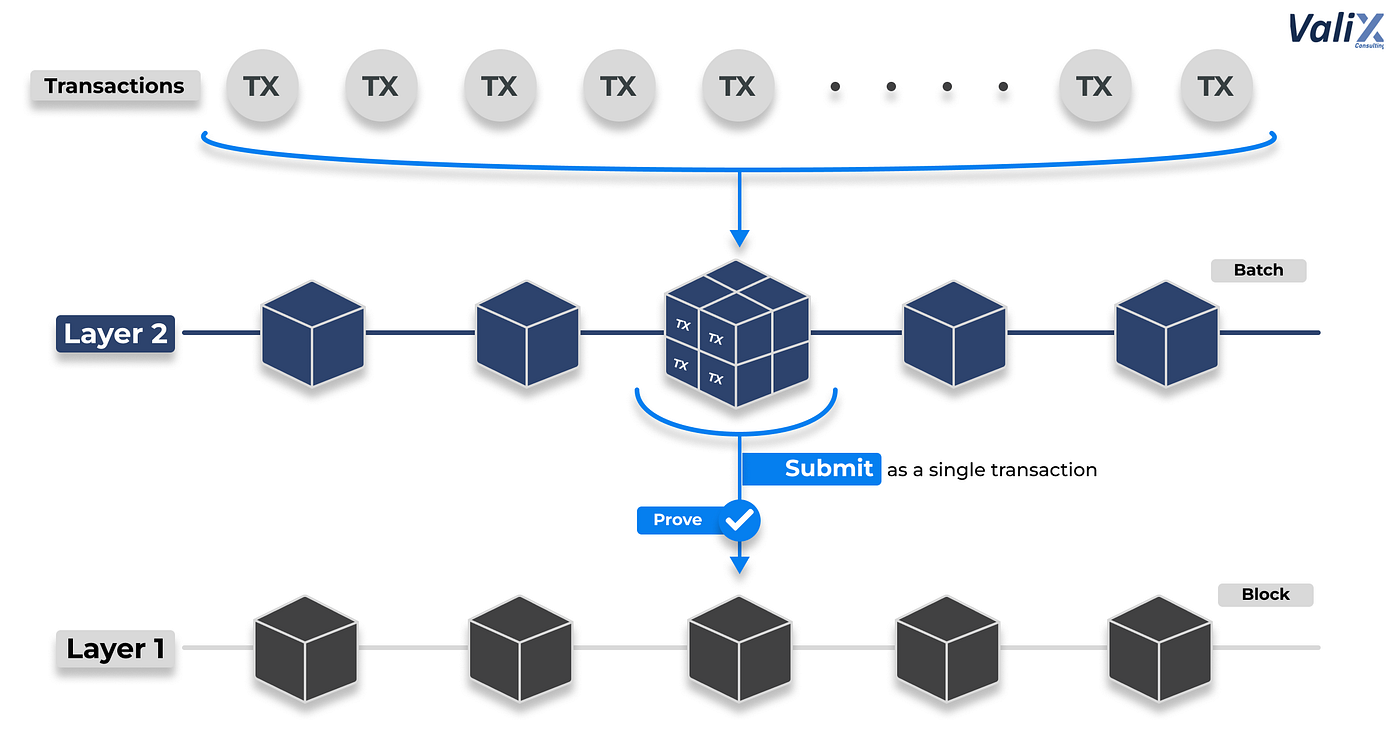
Rollups process transactions off the main Ethereum chain and then settle them back on it. That architecture dramatically increases capacity while keeping the base layer focused on security.
But rollups have introduced their own complications.


The Layer-2 Fragmentation Problem
Rollups improved scalability, but they also fractured the ecosystem.
Liquidity spreads across multiple networks. Users jump between bridges. Governance becomes fragmented. Developers must design for several environments at once.
Some critics argue the ecosystem now resembles a constellation of semi-independent networks rather than a single cohesive platform.
And this is where Buterin’s recent comments come into play.
He has repeatedly warned that many layer-2 implementations rely on structures that feel uncomfortable from a decentralization standpoint.
Two examples come up often:
- Centralized sequencers that decide transaction ordering
- Multi-signature bridges that control transfers between chains
Both mechanisms improve performance. But they introduce trust assumptions that resemble traditional financial infrastructure.
In other words, Ethereum might be scaling… but not always in the decentralized way it originally envisioned.
Rethinking What Layer-2 Networks Are For
Buterin has floated an alternative way of thinking about the layer-2 ecosystem.
Instead of treating rollups purely as scaling engines, they could evolve into specialized networks focused on different use cases.
Examples often mentioned include:
- Privacy-focused applications
- Identity infrastructure
- DeFi and financial systems
- Social networks or community platforms
In that framework, Ethereum’s base layer becomes the ultimate security and settlement layer while layer-2 networks experiment with application-specific environments.
It’s a subtle shift in narrative.
Rollups stop being mere transaction processors and become ecosystems of their own.
Not everyone loves that idea, especially teams whose projects were originally pitched as Ethereum scaling solutions.
The Long Game: Research
One section of the Foundation’s mandate focuses on something most users rarely notice—long-horizon research.
These are projects that take years before they show up in the protocol.
Areas the Foundation highlights include:
- Zero-knowledge cryptography
- Stateless client architectures
- Improvements to Ethereum’s consensus design
- Advanced privacy technologies
None of these topics generate immediate headlines.
But they’re essential if Ethereum wants to remain competitive against newer blockchain architectures that claim higher throughput or integrated scaling.
The Foundation sees itself as a steward of that slow, foundational work.
Startups move fast. Protocol research moves carefully.
Ethereum’s Real Competitive Advantage
When people talk about Ethereum’s dominance, they often focus on market capitalization or DeFi liquidity.
But the network’s real advantage may be its developer ecosystem.
Thousands of developers contribute to Ethereum through:
- Client software implementations
- Smart-contract frameworks
- Developer tools and infrastructure
- Research and experimentation
The Foundation’s mandate explicitly acknowledges that this distributed developer base—not any single institution—is Ethereum’s true strength.
Funding tools and lowering entry barriers is one way the Foundation spreads expertise across the ecosystem.
Over time, that reduces reliance on central leadership.
Competition Is Getting Real
Ethereum no longer operates in a vacuum.
Newer chains promise faster transaction speeds, cheaper fees, and more integrated architectures. Some prioritize performance over decentralization. Others build vertically integrated ecosystems designed to reduce fragmentation.
Ethereum’s strategy has always been different.
Instead of chasing raw throughput numbers, it focuses on three pillars:
- Security
- Decentralization
- Composability
That approach leads to slower progress but arguably stronger long-term resilience.
Whether that trade-off remains attractive to developers and users will shape the next phase of the ecosystem.
A Network Built to Outlive Its Creators
The Foundation’s mandate ultimately emphasizes something unusual in technology.
Ethereum is not supposed to function like a tech company.
It’s closer to digital public infrastructure.
The walkaway test captures that ambition. A truly decentralized network must eventually reach a stage where no single institution—founders included—can meaningfully control its fate.
Few technological systems are designed this way.
Most platforms centralize power as they grow.
Ethereum is attempting the opposite experiment.
The Next Phase
The Ethereum ecosystem is entering a phase defined by scale and complexity.
Layer-2 networks multiply. Institutional interest grows. Developers push new applications into production. Governments and regulators watch closely.
All of this increases the risk that Ethereum drifts away from the principles that originally defined it.
The Foundation’s mandate is a reminder that decentralization remains the core objective—even if achieving it takes longer and proves harder than expected.
The balancing act ahead is clear.
Scale without centralizing.
Innovate without compromising security.
Expand without losing the network’s core ethos.
If Ethereum manages that balance, it could become something rare in the history of technology: infrastructure designed to function long after its creators step aside.
*********************************
Disclaimer
This article is for informational and educational purposes only and does not constitute financial, investment, trading, or legal advice. Cryptocurrencies, memecoins, and prediction-market positions are highly speculative and involve significant risk, including the potential loss of all capital.
The analysis presented reflects the author’s opinion at the time of writing and is based on publicly available information, on-chain data, and market observations, which may change without notice. No representation or warranty is made regarding accuracy, completeness, or future performance.
Readers are solely responsible for their investment decisions and should conduct their own independent research and consult a qualified financial professional before engaging in any trading or betting activity. The author and publisher hold no responsibility for any financial losses incurred.

Shane Neagle is a financial markets analyst and digital assets journalist specializing in cryptocurrencies, memecoins, prediction markets, and blockchain-based financial systems. His work focuses on market structure, incentive design, liquidity dynamics, and how speculative behavior emerges across decentralized platforms.
He closely covers emerging crypto narratives, including memecoin ecosystems, on-chain activity, and the role of prediction markets in pricing political, economic, and technological outcomes. His analysis examines how capital flows, trader psychology, and platform design interact to create rapid market cycles across Web3 environments.
Alongside digital assets, Shane follows broader fintech and online trading developments, particularly where traditional financial infrastructure intersects with blockchain technology. His research-driven approach emphasizes understanding why markets behave the way they do, rather than short-term price movements, helping readers navigate fast-evolving crypto and speculative markets with clearer context.