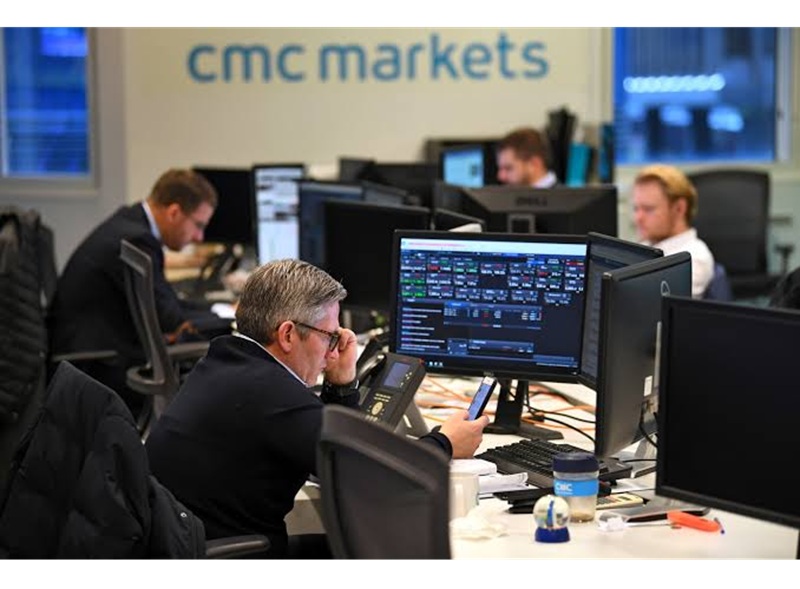
CMC Markets reported intermittent pricing problems across its CMC CFD Global web platform, mobile platform and trading service on November 5, with the incident lasting 75 minutes, according to the broker’s official status page.
The broker began investigating at 15:45 UTC and marked the issue resolved at 17:00 UTC. The disruption therefore ran from 5:45 p.m. to 7:00 p.m. in Cairo. CMC said it was experiencing intermittent technical difficulties with pricing and directed customers needing assistance to live chat. The notice was brief, and it stayed brief on the details traders would want.
The incident record listed the Web Platform, Mobile Platform and Trading components under CMC CFD Global. It did not identify the instruments affected, explain whether quotes were delayed, missing or inaccurate, or disclose how many clients were involved. No instrument-level breakdown or customer count was made availble.
As of November 6, the status page showed all systems operational and no new incidents reported for the day.
Pricing issue follows a run of service problems
The latest disruption followed three separate trading and account-related incidents recorded by CMC between November 1 and November 3.
First, the broker reported incorrect positions on its web and mobile platforms from 21:43 UTC on November 1 until 05:20 UTC on November 2, a period of seven hours and 37 minutes. A second issue involved payments not appearing in the History tab. It began at 22:48 UTC on November 2 and was resolved at 21:48 UTC on November 3, after approximately 23 hours. CMC said the problem should not affect the Account Summary section, and the notice did not describe a payment-processing or withdrawal failure.
The third incident concerned orders routed through CMC’s UK7 data centre. The broker reported intermittent execution difficulties at 11:59 UTC on November 3 and marked the issue resolved at 12:15 UTC, 16 minutes later. The sequence is getting harder to treat as one-off noise, even though the records do not connect the events.
DaveFinances previously covered the UK7 execution issue in its trading infrastructure roundup. These incidents should be assessed seperately unless CMC identifies a common technical cause.
CMC also logged a separate phone-line problem on November 5, from 00:00 to 00:23 UTC. It had been resolved more than 15 hours before the pricing incident began.
Customer impact remains unclear
A pricing interruption can take several forms, including stale quotes, missing bid or ask prices, or delays between the underlying market and the prices displayed to customers. CMC did not specify which occurred. It also did not say whether clients recieved stale or unavailable prices, whether orders were rejected or delayed, or whether stop-loss triggers or margin calculations were affected.
For a trader looking at an open position, the screen is where the trouble appears, not where the reason is explained.
CFD prices can differ across brokers even when they reference the same market. Firms may use different reference markets, liquidity providers and pricing feeds, while contract specifications can also produce legitimate variations. DaveFinances has previously explained how CFD brokers quote different prices for the same market. A technical pricing incident, however, raises a different question from ordinary differences between providers.
Clients who believe an order was affected would need to compare the instrument, direction, timestamp, displayed bid and ask, order type, order ID, requested price and final execution price. For UK-regulated investment firms within scope, the FCA’s best-execution rules require firms to take all sufficient steps to obtain the best possible result for clients, considering factors including price, costs, speed and likelihood of execution.
The existence of a pricing interruption does not automatically establish a breach of those requirements. The relevant order and execution records would need to be examined to determine whether a particular client received an appropriate outcome.
Any review of a stop-related complaint should also distinguish a standard stop-loss from a guaranteed stop-loss order, which carries a different contractual commitment concerning the exit price.
The pricing problem is a separate entry, and for now it remains a separate question. The occurence of several status-page incidents does not prove that they shared a technical cause. CMC has not disclosed the cause of the November 5 pricing issue, and the available public information does not establish whether any client suffered an adverse execution as a result.
For now, the public record is a timeline, with the customer-level effects still missing.

Johan Shamshad is Editor-in-Chief at Dave Finances, covering financial markets, digital assets, trading platforms, brokers, fintech, payments and regulation. Since 2023, he has also worked as an editor at Gulf News, the UAE English-language newspaper published by Al Nisr Publishing LLC. His work focuses on market-moving developments, company disclosures, regulatory changes and trading infrastructure, with an emphasis on primary-source verification and practical context for traders and investors.