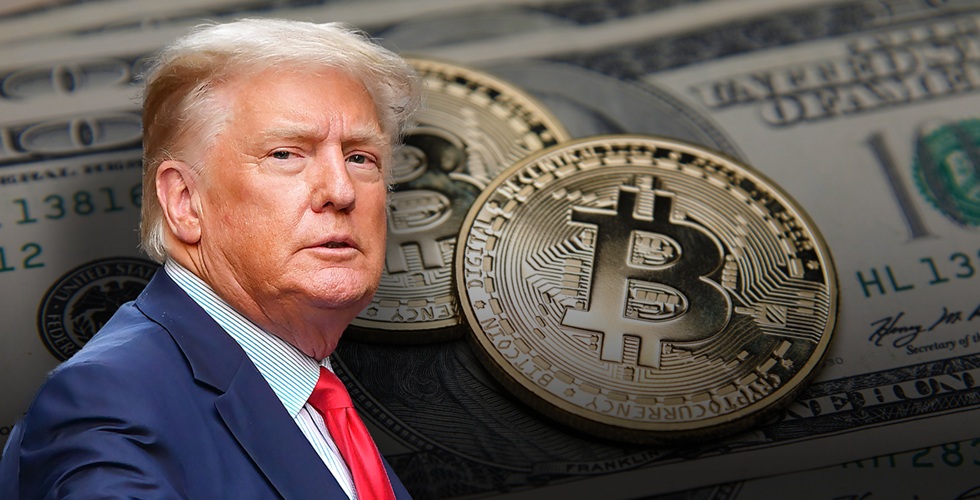
Standfirst. Donald Trump’s financial disclosures, his family’s crypto ventures and recently reported securities transactions have prompted questions from lawmakers and ethics specialists about financial conflicts during his presidency. The public record contains documented income, business rights, congressional requests, contested interpretations and denials—but those categories are not proof of insider trading or a criminal violation. This article traces the money, identifies what the documents establish and tests where the available information remains inadequate.
Start With What Is Documented, Not What Is Alleged
On June 30, 2026, the U.S. Office of Government Ethics made President Donald Trump’s certified annual financial disclosure for calendar 2025 public. The filing is the strongest starting point for a discussion about his private financial interests: it records categories of income, interests and transactions subject to the disclosure system. It does not itself determine whether a policy decision was influenced by an investment, nor does reporting an investment establish illegal insider trading. [1][2]
Reuters analyzed the filing and reported that Trump’s family-linked crypto projects generated more than $1.4 billion in reported income during 2025, with proceeds subsequently associated with a considerable expansion of traditional securities portfolios. The recorded income is not equivalent to cash that reached the president personally on an after-tax basis, nor to net profit after costs, nor to a valuation of all his outstanding crypto assets. These categories must remain separate. [3]
A central issue is that the same person can be a public official overseeing policy and also have a financial interest in businesses affected by that policy. This creates questions about disclosure, recusal and governance even where there has been no finding of misconduct. Defenders argue his money managers execute securities trades independently and that the administration’s policies reflect broader national objectives. Critics—particularly Democratic members of congressional committees—argue that the combination of policymaking powers, crypto revenues and foreign-linked investment warrants more scrutiny. Both positions should be evaluated against actual documents. [4][5]
What the Crypto Income Numbers Actually Represent
Contemporaneous analyses of the June filing identified approximately $525 million associated with World Liberty Financial token sales, around $635 million from Celebration Coins-related licensing royalties, $196 million linked to stablecoin-related proceeds and roughly $65 million from equity sales. Adding those rounded, differently classified figures produces about $1.421 billion. This is an illustrative aggregation of reported income channels drawn from press examination of the disclosure, not an independently audited income statement and not an estimate of net wealth creation. The broad reported total is consistent with Reuters’ more-than-$1.4-billion description, but precision should not be inferred from rounded categories. [3][6]
Figure 1. Reported 2025 income categories are rounded and are not net profits.
The striking comparison is not simply crypto versus real estate. Token businesses can monetize distributions or licensing rights immediately while an ordinary buyer holds an asset whose market price may subsequently decline. A large token sale can generate issuer or affiliate proceeds without creating a corresponding increase in cash flow or asset value for later tokenholders. Furthermore, token-sale proceeds, fees on a future payment service, revenue from reserve assets and ownership of remaining tokens are four different economic channels. Counting them as though all are investment gains risks inflating the narrative.
These distinctions are particularly important in World Liberty Financial. Its public website states that DT Marks DEFI LLC, an entity affiliated with Trump and certain family members, holds approximately 38% of WLF Holdco’s equity, while DT Marks and some family members together hold 22.5 billion WLFI tokens. It also says DT Marks is entitled to service fees equal to 75% of WLFI token sale proceeds after specified deductions. Equity ownership, token ownership and revenue-sharing rights are not interchangeable; neither a 38% equity stake nor a 75% fee entitlement gives a defensible exact estimate of Trump’s ultimate personal net profit. [7]
A Business Can Grow Without a President Personally Receiving Every Dollar
World Liberty’s USD1 stablecoin illustrates the distinction between circulating assets and monetization. When an issuer has $1 billion in tokens backed by eligible reserve assets yielding an illustrative 4% annually, the reserves generate $40 million a year in gross return, before custody, distribution, compliance, losses, expenses, sharing arrangements and taxes. At $3 billion, the same sensitivity is $120 million. The calculation reveals the scale of possible issuer-level economics, not the realized profitability of USD1, World Liberty or Trump personally. [7][8]
| Illustrative USD1-type reserve float | 2% gross yield | 4% gross yield | 6% gross yield |
| $1 billion |
$20m |
$40m |
$60m |
| $3 billion |
$60m |
$120m |
$180m |
| $5 billion |
$100m |
$200m |
$300m |
Figure 2. Hypothetical reserve income before all expenses and distributions.
Market distribution matters because durable stablecoin balances can generate more income than one-off transfers if the business retains an economic entitlement to reserves. Dave Finances examined the planned merchant expansion in Trump-linked USD1’s Mesh payment integration. However, not every payment increases the coin supply, and not every dollar of gross reserve yield belongs to the token’s sponsor. The identity of the legal issuer, redemptions, distribution contracts and charter status all affect who captures value. Comparisons with the different stablecoin strategies of Visa, Mastercard and Stripe make clear why technology adoption alone does not settle the revenue-allocation question.
In 2026, World Liberty’s attempt to extend its banking and payments infrastructure raised additional questions because banking applicants face regulatory review. The published Senate material documents questions about beneficial owners and foreign interests in a proposed bank, while official approvals and applications must be distinguished from a chartered bank already operating. The legal consequences of an application are not the same as those of ownership in a chartered depository institution. [9]
Why Lawmakers Are Examining Foreign-Linked Crypto Investments
On June 23, 2026, Democratic minority staff of the Senate Banking Committee published a report alleging that people and entities connected to the United Arab Emirates invested hundreds of millions of dollars in World Liberty Financial and identifying administration actions that the authors considered favorable to the UAE. The report argued that the sequence raised national-security and conflict-of-interest questions. On July 10, five Democratic senators called for committee hearings following Trump’s new financial disclosure and referred to reporting that UAE interests had acquired a 49% stake. Those claims are attributable to the senators and their report, not independent judicial findings that any policy action was bought. [4][5]
A February Senate hearing produced a narrower, verifiable event: Comptroller of the Currency Jonathan Gould told Sen. Elizabeth Warren that he would consider her request for unredacted World Liberty bank-charter materials. That exchange documents oversight activity, not a regulatory determination of wrongdoing. Similarly, senators requested federal inquiries into World Liberty’s relationships with entities that had been publicly linked to sanctions concerns, including additional requests in May and September 2026. Requests for investigation should not be described as charges filed by federal prosecutors. [9][10][11]
For investors, the question extends beyond the conduct of any one politician. If a stablecoin’s distribution, reserve custody, commercial relationships or regulatory path are materially linked to officials and foreign counterparties, counterparty and reputational risks can change quickly. But the analysis must identify the specific transmission mechanism—redemption access, custody, issuer credit, compliance restrictions or business concentration—rather than label every related token inherently defective.
Separating Disclosed Trading From Insider-Trading Proof
On October 8, Reuters reported that an August securities disclosure showed purchases of up to $1.6 million and sales of up to $1 million in Nvidia shares in accounts belonging to the president, as his administration weighed policies relevant to advanced chips and as the president prepared to recognize Nvidia CEO Jensen Huang. The White House said independent third-party financial institutions managed the holdings using model portfolios that replicate recognized indexes and denied conflicts of interest. The filing’s ranges do not identify exact execution prices, position timing or realized P&L. [12]
A separate Washington Post examination of the disclosures reported a purchase of $1 million to $5 million in SpaceX debt around two days before the unveiling of a new space-policy initiative. It also reported more than 500 recent transactions in presidential financial accounts and quoted the White House’s explanation that those accounts were handled by third-party discretionary managers. A two-day proximity between transactions and public policy is relevant to a conflict-of-interest inquiry; it does not prove the owner directed the orders, knew material nonpublic facts when buying or received improper profits. [13]
The math illustrates why transaction disclosures cannot support a precise trading-profit headline. If an asset position is reported in a $1 million–$5 million transaction band, the upper disclosed value is five times the lower. Even assuming the security gained 10%, a hypothetical paper gain ranges from $100,000 to $500,000 before financing, taxes and any prior hedges—an enormous uncertainty interval. Actual price, size, hedging, sale timing and financing are unknown. Applying this proportional example to a live security without the underlying transaction details would imply information the records do not provide.
Figure 3. Disclosure bands cannot be used as exact trade-price or profit data.
Evidence of a policy-relevant investment is therefore distinct from evidence required for an insider-trading case: who decided to buy, what nonpublic information that decision-maker possessed, whether the information was material, whether a relevant duty was breached, and what the trading record shows. The fact that regulators bring cases against people using confidential government information in prediction markets does not establish misconduct by the president in separate securities transactions. The burden of proof remains case-specific. [14]
A Three-Layer Test for Financial-Conflict Claims
The first layer is observable fact: a filing records a financial interest; a company reports an agreement; a senator publicly requests a hearing; a security is traded. The second is mechanism: would a regulatory change plausibly increase issuer reserve income, broaden market access, change investment valuations or ease a counterparty’s restrictions? The third is causation and intent: can evidence connect the policymaking process and a financial decision to a knowing purpose or legally prohibited conduct? Many public debates jump from the first layer to the third without filling the evidentiary gap.
Consider the claim that favorable stablecoin regulation enriches an issuer. A clearly defined mechanism could exist if it grows durable circulating supply or protects an issuer’s access to banking rails. Yet the incremental income requires assumptions about average reserves, portfolio yield, the fraction of economics accruing to the sponsor, expenses and whether regulatory costs rise at the same time. Higher compliance costs may offset some growth. Likewise, a policy favorable to one chip manufacturer may have broad sector effects, and index-like account management could produce company exposure without a security-specific investment judgment.
This does not make conflict concerns immaterial. It clarifies what must be demonstrated. An investigatory committee might request investment-manager mandates, execution timestamps, fund holdings, relevant communications, ultimate beneficial ownership and policy decision records. Without these records, a robust financial report should present scenarios and disclosure limitations, not estimate clandestine profits.
Policy Interests and the Difference Between Correlation and Causation
Government choices on export controls, the dollar, monetary regulation and capital markets affect whole sectors. A public official with broad business interests may benefit from favorable macroeconomic policies without having selected them for personal gain. The difficult governance question is not whether a policy had winners, but whether the decision process met applicable disclosure and ethics requirements and whether private interests were sufficiently separated from official action. Supporters cite the legitimacy of policies that favor U.S. innovation and the White House’s independently managed accounts; critics cite the unusual concentration of overlapping public and private interests. [4][12][13]
The same distinction applies to fiscal promises and market-moving statements. Dave Finances’ examination of Trump’s proposed $5,000 dividend and its budget implications shows how to evaluate the financial effects of a public proposal without assuming that investors or officials necessarily acted unlawfully because asset prices responded.
Transparency reforms, independent oversight and better granularity in disclosure could reduce uncertainty in either direction. They would make it easier both to establish a genuine conflict and to rule one out. Market participants should not confuse disclosure ranges, regulatory applications or partisan statements with final investigative findings.
An Investor’s Exposure Map
Retail investors and counterparties considering Trump-associated crypto assets face four separable risks. Token economics: does holding the token confer cash flow, governance rights, transferability or merely market exposure? Legal structure: who issues, redeems and custodies the relevant asset? Business concentration: how dependent are growth, liquidity and distribution on a small number of counterparties, political relationships or announcements? Governance and headline risk: could an investigation, policy reversal or regulatory refusal materially alter access or market liquidity?
A holder of WLFI should not value a large publicly reported payment to an affiliated entity as though it were a dividend owed to tokenholders. A USD1 holder should distinguish redeemability and the issuer’s obligations from reserve income that may accrue elsewhere. A shareholder in a publicly traded company mentioned in presidential transactions should examine the company’s underlying business and the trade’s disclosed range, not treat proximity to policy as a demonstrated trading edge.
The practical test is to connect each headline with a specific contractual entitlement and measurable cash flow. That is harder than producing a sensational dollar figure; it is also materially more useful for retail decision-making.
What Would Resolve the Open Questions?
More detailed, independently verifiable records of investment mandates, beneficial ownership and cash-flow distributions could resolve whether reported earnings benefited particular individuals and how. Contemporaneous trade logs and policy-communication records could test allegations involving financial decisions. Formal committee findings, regulatory examination records or court rulings would change the evidentiary weight of the allegations. By contrast, a fresh political accusation without new documents should not be treated as an increase in proven wrongdoing.
Bottom Line
The 2026 public record supports a substantial description of Trump’s disclosed crypto-linked income, company-linked economic rights, foreign-investment-related oversight questions and securities transactions reported in ranges. It does not, by itself, establish insider trading, a bribery arrangement or a particular net personal profit from any specific public decision. For markets and investors, the important issue is where the economic rights actually sit—and which documents would demonstrate or rebut a causal connection between official action and private financial benefit.
Methodology
The cited annual filing is treated as a public disclosure rather than an audit. Rounded media-derived income components are presented as reported categories, not exact cash flows or net income. The reserve-yield table is an entirely hypothetical issuer-economics sensitivity (assumed float × illustrative annual yield), before costs, taxes and sharing, with no inferred attribution to Trump. Transaction-band examples are sensitivity illustrations, not profit estimates. Senate Democratic minority letters and reports are labeled by authorship and status; administration responses are included. This is not a legal conclusion about any individual.
Sources
[1] Office of Government Ethics, annual financial disclosures release, June 30, 2026 — Open source
[2] OGE, Donald Trump 2026 annual disclosure PDF — Open source
[3] Reuters, Trump invested crypto gains in stocks and bonds, July 13, 2026 — Open source
[4] Senate Banking Democratic minority report, June 23, 2026 — Open source
[5] Senate Banking Democratic leaders’ letter on disclosure, July 10, 2026 — Open source
[6] Washington Post, 2025 financial disclosure income categories, June 30, 2026 — Open source
[7] World Liberty Financial, public ownership and token-revenue disclosures — Open source
[8] Senators Reed and Kim, World Liberty beneficial ownership inquiry, Feb. 27, 2026 — Open source
[9] Senate Banking hearing exchange on WLF application, Feb. 26, 2026 — Open source
[10] Senate Banking Warren-Reed inquiry letter, May 14, 2026 — Open source
[11] Senate Banking September 15, 2026 request to investigate WLF — Open source
[12] Reuters, Nvidia transactions and White House response, Oct. 8, 2026 — Open source
[13] Washington Post, SpaceX bond disclosures and White House response, Oct. 8, 2026 — Open source
[14] CFTC, enforcement of government-confidential information in event contracts — Open source
[15] Senate Banking, additional UAE and AI export-control concerns, July 10, 2026 — Open source

Johan Shamshad is a financial markets writer at Dave Finances covering cryptocurrencies, trading platforms, brokers, fintech, financial regulation, and developments across global markets. He previously worked at Gulf News, adding newsroom experience to his coverage of fast-moving financial and digital-asset markets.
His work focuses on identifying market-moving events, company developments, regulatory changes, product launches, and shifts in trading and financial infrastructure.
Johan contributes news and analysis designed to help readers understand not only what happened, but why a development matters and how it may affect the wider financial landscape. You can reach out to him via his social media accounts:
Linkedin: https://www.linkedin.com/in/johan-shamshad-742851262/
X: https://x.com/Yasmine_FX
Investing: https://www.investing.com/members/contributors/279781574