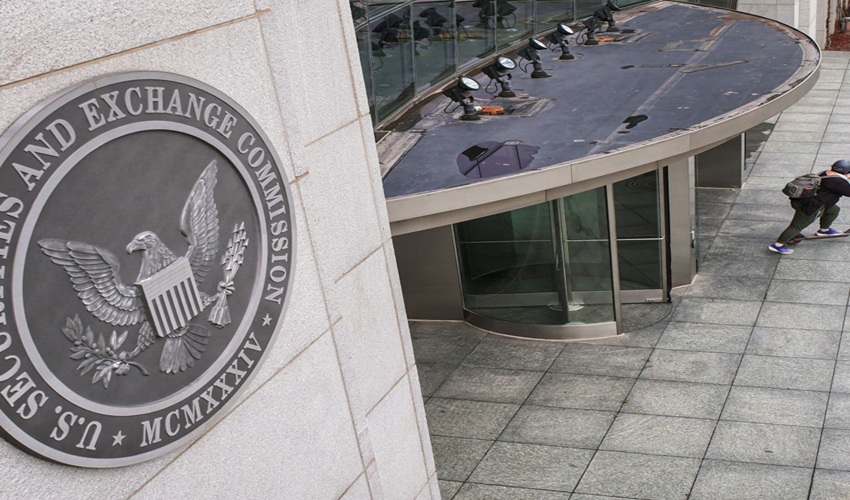
The U.S. Securities and Exchange Commission (SEC) has barred Christopher Williams, known online as “Swaggy C,” from associating with a broad range of regulated financial-industry entities after finding that he operated an unregistered CFD brokerage targeting U.S. retail customers. The November 6 settlement concerns 24k Markets, an online trading platform that relied on third-party white-label brokerage providers for its technology, trading infrastructure and customer services. Williams agreed to pay a $60,000 civil penalty and accept a cease-and-desist order, without admitting or denying the SEC’s findings.
24k Markets relied on third-party white-label providers
According to the SEC’s administrative order, Williams launched 24k Markets in 2024 and owned and operated the business through 2025. The company, 24k Markets LTD, was incorporated in Saint Lucia but maintained operations in the United States. It operated through the website 24kmarkets.com and ceased business in 2025.
Rather than developing its own brokerage infrastructure, 24k Markets contracted with third-party companies offering ready-to-operate white-label brokerage services. These providers supplied the technology and infrastructure required to operate under the 24k Markets brand.
Their responsibilities extended considerably beyond software licensing. The SEC’s order says the providers designed the brokerage website, issued and offered the CFDs, supplied back-office systems, sublicensed a third-party trading application, provided pricing and liquidity, held customer funds in custody, supported trading operations and conducted Know Your Customer (KYC) verification.
Customers saw the 24k Markets name, but much of the trading machinery was elsewhere. It was not a simple white-label website sitting on top of someone else’s app.
Customers funded their accounts using Bitcoin and other cryptocurrencies, with deposits held by the white-label providers in margin accounts. 24k Markets had agreed to replenish those accounts when their balances fell below a prescribed threshold.
Williams nevertheless maintained an active role in the business. He promoted the brokerage through YouTube, Instagram and Discord, recruited affiliates who received transaction-based compensation, and solicited customers through his online network, which consisted primarily of U.S. residents.
He also handled customer-facing operational matters, including responding to potential customers, forwarding questions and complaints to the service providers, and monitoring the business alongside them. The SEC found that 24k Markets received commissions, spreads and overnight swap fees from trading activity, with portions shared with the providers. Williams himself recieved a share of commissions and spreads as compensation.
The arrangement illustrates how a customer-facing trading brand can operate through several external financial-service providers. A different division of responsibilities appears in Binance’s U.S. stock-trading infrastructure, where separate entities handle brokerage, execution, clearing, settlement and custody rather than the exchange performing every function itself.
SEC enforcement focused on stock-based CFDs
24k Markets offered contracts for difference linked to several asset classes, including foreign exchange, cryptocurrencies, commodities, broad-based equity indices and stocks listed on U.S. and European exchanges.
The SEC identified 37 individual equities underlying the platform’s stock-based CFDs. Although the majority of trading activity involved foreign exchange, customers also regularly traded CFDs referencing individual stocks.
This product classification is central to the enforcement action. The SEC determined that CFDs referencing individual securities qualified as security-based swaps under U.S. federal securities laws because their value was based on a single security or its value.
Under Section 15(a)(1) of the Securities Exchange Act of 1934, brokers and dealers generally must register with the SEC before effecting transactions in securities or inducing their purchase or sale for the accounts of others, unless an applicable exemption applies.
The Commission found that Williams willfully violated this requirement by effecting transactions in, and inducing or attempting to induce, the purchase or sale of security-based swaps without registering as a broker-dealer or associating with a registered broker-dealer.
The finding is specifically connected to the stock-based CFDs classified as security-based swaps. It should not be interpreted as a blanket determination that every foreign exchange, commodity or cryptocurrency product offered through 24k Markets fell under the same classification.
The case also highlights the legal difference between trading exposure and ownership of an underlying asset. Customers trading stock CFDs did not acquire the underlying shares; they speculated on price movements through derivative contracts. DaveFinances previously examined this distinction in its analysis of what retail traders actually own when buying stocks, tokenized equities and CFDs.
The offshore corporate structure adds another regulatory dimension. Incorporation in Saint Lucia did not establish SEC broker-dealer registration, while the platform’s U.S. operations and solicitation of American retail customers formed part of the conduct examined by the Commission. Similar questions about the relationship between a trading brand, its operating companies and their regulatory permissions have appeared in DaveFinances’ investigation into InnoMP’s two-entity structure.
Williams faces $60,000 penalty and two-year re-entry restriction
Under the settlement, Williams consented to a cease-and-desist order prohibiting further violations of Section 15(a)(1). He was also barred from association with any broker, dealer, investment adviser, municipal securities dealer, municipal advisor, transfer agent or nationally recognized statistical rating organization.
The order provides a right to apply for re-entry after two years. Any application must go through the appropriate self-regulatory organization or, where applicable, the SEC, and remains subject to the relevant legal and regulatory requirements.
Williams must also pay a $60,000 civil money penalty within 10 days of the order’s entry. The settlement was reached without admitting the SEC’s findings, although Williams consented to the Commission’s jurisdiction and the terms of the order.
The order spends more time on what Williams did than on who the providers were. The third-party white-label companies were not identified in the published findings, and the SEC did not announce enforcement action against them as part of this proceeding. Their registration status is not assessed seperately in the order.
That leaves an important question about the allocation of reponsibility between the brand owner and the companies supplying the underlying brokerage services. The SEC’s findings establish that the providers supplied and operated substantial parts of the trading infrastructure, while Williams handled marketing, customer solicitation and other operational activities. They do not establish whether the providers faced separate regulatory scrutiny or what conclusions regulators may have reached about their individual obligations.
The Commission also acknowledged assistance from the Commodity Futures Trading Commission (CFTC) during its investigation, although the November 6 announcement concerned the SEC settlement against Williams.
The enforcement action provides a concrete example of the regulatory exposure that can arise when an online trading brand solicits U.S. retail customers and participates in brokerage activity without the required registration. For white-label operators, technology providers and brokerage businesses, the case puts the division of commercial functions under closer scrutiny. For the customer, the screen said 24k Markets, and that was the broker they thought they were using.

Johan Shamshad is Editor-in-Chief at Dave Finances, covering financial markets, digital assets, trading platforms, brokers, fintech, payments and regulation. Since 2023, he has also worked as an editor at Gulf News, the UAE English-language newspaper published by Al Nisr Publishing LLC. His work focuses on market-moving developments, company disclosures, regulatory changes and trading infrastructure, with an emphasis on primary-source verification and practical context for traders and investors.