
A card can be authorized at 2 a.m. on Sunday while the institutions behind it still manage funding and settlement around market cut-offs. That gap is now being tested in production. On September 22, SoFi Bank and Mastercard said SoFiUSD, a stablecoin issued by a nationally chartered US bank, was live for settlement across SoFi’s debit and credit card program. SoFi described a program expected to process more than $25 billion in annualized card volume. The reported program size is not a measurement of actual stablecoin settlement volume or a promise that every merchant gets money instantly. It is evidence that blockchain-based settlement is moving from demonstrations into a major card issuer’s operating infrastructure. [1]
The central question is not whether a stablecoin blockchain stays open on weekends. It generally does. The question is whether funding obligations can move continuously through network rules, institutional controls and off-ramps without simply shifting cost and risk elsewhere. A faster transfer of a bank’s token need not accelerate an acquiring bank’s credit to a retailer; nor does it eliminate cardholder credit, fraud, chargebacks or merchant settlement agreements.
A Live Bank-Issued Token Changes One Layer of a Card Payment
At checkout, a card transaction travels through the merchant’s acquirer, the card network and the issuer. The issuer authorizes it against a credit line or account balance. Later, transaction details are cleared, participants calculate what is owed, and money is transferred to discharge those obligations. The merchant is paid according to the acquiring contract, and a credit-card customer typically pays the issuer on a separate billing schedule. Treating authorization, network settlement, merchant funding and cardholder repayment as one event makes the stablecoin story sound much more dramatic than the source disclosures justify.
SoFi says its SoFiUSD is issued by SoFi Bank, N.A., redeemable one-to-one for dollars and primarily backed by cash. Its September announcement explicitly covers debit and credit card settlement on Mastercard’s network. Mastercard’s June 3 policy expansion separately described intraday, weekend and holiday settlement options, in fiat or supported regulated stablecoins, and identified USDC, PYUSD, USDG, USDP, RLUSD and SoFiUSD among supported or planned assets. [1][2] These are network-level options for eligible participants. They do not turn every Mastercard payment into an on-chain payment or require merchants to hold tokens.
The term “bank-issued” matters, but only to a point. Visa’s USDC settlement program initially involved Cross River Bank and Lead Bank as participating banks; USDC itself is issued by Circle, not those banks. By contrast, SoFi is the issuer of SoFiUSD. These are different organizational and counterparty arrangements, even though both can use blockchain transfer to satisfy a network obligation. Visa announced US availability for institutional USDC settlement in December 2025 and has described seven-day settlement for eligible partners. [3] A bank can use a nonbank-issued stablecoin; an issuing bank can also create its own token. The badge on the issuer is not the whole risk story.
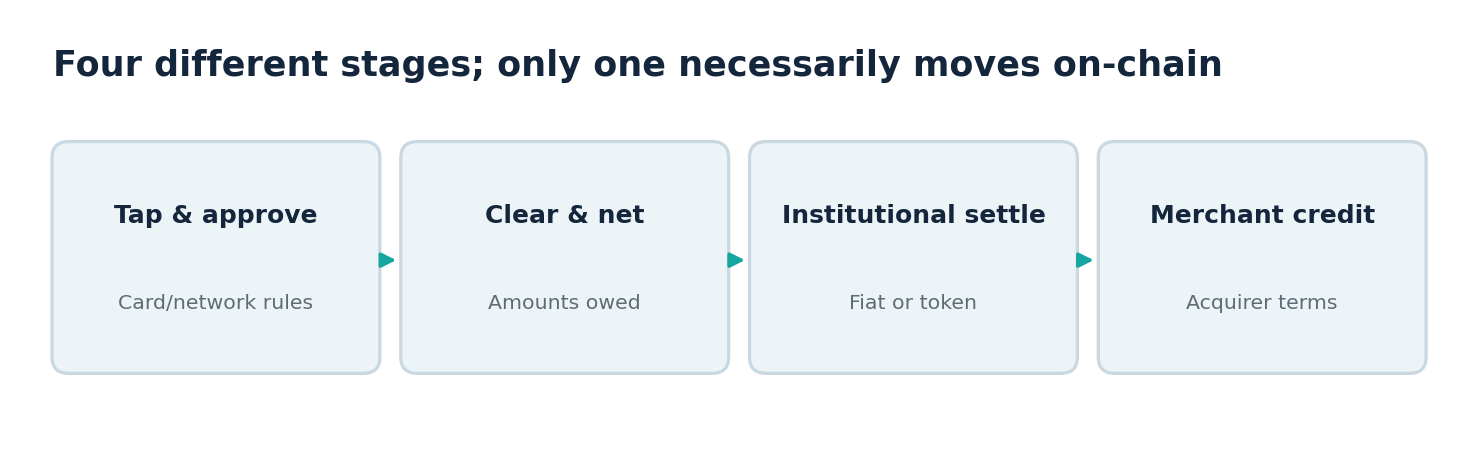
Figure 1. Card payment functions that must not be conflated. Original schematic.
The Three Clocks Investors Should Keep Separate
One clock is cardholder-facing: instant authorization can occur on Saturday with no payment to the merchant at that moment. A second is the financial-institution clock: issuer or acquirer funding, reconciliation, settlement files, net positions and credit exposure occur on rules set by the network and participants. A third is the recipient clock: the merchant’s acquirer credits its account, subject to reserves, fraud review and merchant contract terms. Stablecoins primarily address the institutional clock, although integrated providers may bring the merchant clock forward too.
This explains SoFi’s claim that participating merchants using its Big Business Banking platform may receive settlement into a SoFi Bank account quickly and withdraw cash around the clock. That is an offering within the SoFi infrastructure; it should not be generalized to every Mastercard-accepting merchant. A small retailer served by another acquirer will still depend on that acquirer’s funding terms. The stablecoin can move, yes, but the merchant may not notice. The customer also retains the same obligation to repay a credit-card bill, regardless of how banks fund one another.
Traditional rails are evolving as well. The Bank of England decided in February 2026 to move CHAPS opening from 06:00 to 01:30, targeted for September 2027, and its wider strategy considers near-24×7 settlement. [4] A comparison that assumes banking hours will remain permanently fixed understates conventional infrastructure’s competing improvements. Blockchain’s availability is real; its advantage over bank rails is a moving target.
Original Model: How Valuable Is Releasing Weekend Liquidity?
A thought experiment isolates the balance-sheet benefit. Suppose a hypothetical card program has $100 million of gross monthly settlement obligations, spread evenly across 30 days. That implies $3.33 million a day of gross obligations before any bilateral netting. Suppose its working capital buffer falls from two days to half a day after adopting more flexible settlement. Cash released would be 1.5 x $3.33 million, or $5 million. At an illustrative annual cost of capital of 7%, that cash release is worth $350,000 per year before platform, custody, conversion, operational and compliance costs.
Now compare that $350,000 with $1.2 billion of annual gross payment flow. The benefit is only 2.92 basis points of that flow. An incremental processing or conversion cost above roughly 2.92 basis points would consume the modeled capital benefit; it does not take a 1% fee. The result is not an estimate of SoFi’s savings. Actual funding exposures are netted, seasonally variable, secured and shaped by network participation agreements. Many issuers already have intraday credit lines and liquidity arrangements. Some could release less cash; some could gain from reduced delays or different collateral requirements that this model does not include.
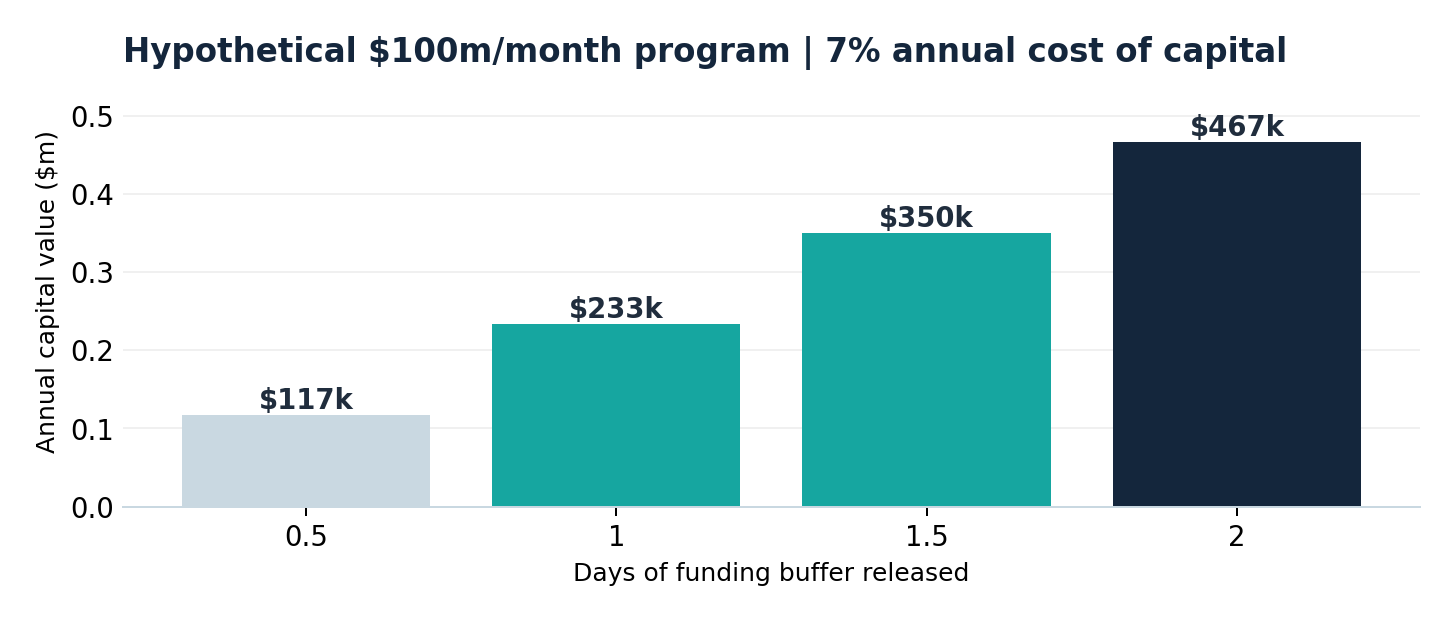
Figure 2. Modeled liquidity benefit varies with the buffer actually released; not SoFi results.
The 24/7 claim should also be evaluated at the margin. A program that drops its required buffer from two to one day frees $3.33 million, worth about $233,333 annually in this model. The last half-day improvement adds around $116,667. That is operationally useful, but every added layer of blockchain custody, treasury reconciliation, token acquisition or redemption imposes its own cost. The settlement instrument is not free merely because a transaction’s gas fee is small.
The Funding Stack: Which Costs Move Rather Than Disappear?
Traditional institutional settlement involves prefunding, overnight credit and scheduled bank transfers. The stablecoin model still needs reserves and a source of liquidity. A bank may hold cash backing its stablecoin, custody arrangements protect keys, the treasury desk monitors on-chain transfers, and recipients may need fiat conversion. A card scheme still performs clearing, netting and dispute functions; a blockchain transfer does not substitute for its fraud screening or risk rules. In some configurations, liquidity migrates from correspondent accounts to an issuer’s reserve account rather than disappearing from the financial system.
Visa’s September 2026 description of Credit Coop is a useful adjacent example. It describes financing Visa settlement obligations with a stablecoin-denominated revolving facility secured by settlement receivables, including programmable repayments and 24/7 funding. Visa says the program financed over $2.5 billion cumulatively since 2023. [5] This is financing for stablecoin-linked card programs, not evidence of a credit-card network eliminating funding risk. It actually highlights why the right of access to liquidity can matter more than nominal network speed.
| Layer | Conventional arrangement | Stablecoin-enabled arrangement | Remaining constraint |
|---|---|---|---|
| Consumer approval | Card authorization | Usually unchanged | Fraud, credit limits, chargebacks |
| Network obligation | Clearing files and participant netting | Usually unchanged | Network rulebook and reconciliation |
| Settlement asset | Commercial-bank money | Eligible stablecoin or fiat | Issuer, custody and redemption |
| Settlement window | Bank/network schedules | Potentially seven days | Participant eligibility and controls |
| Merchant payout | Acquirer credits bank account | Could be accelerated for integrated users | Acquiring contract and final payout rail |
How Much New Cost Would Erase the Benefit?
The marginal-cost test is demanding. Under the same $1.2 billion annual flow, a net incremental cost of 1 basis point means $120,000 per year. At 3 basis points, it means $360,000: slightly more than the $350,000 value of the illustrative 1.5-day buffer release. At 5 basis points, it means $600,000. Those are assumed all-in incremental costs, not published fees. They include any extra conversion, wallet administration, controls, reconciliation, and the difference in treasury costs relative to the old model. If a provider can eliminate other fees, the net figure could be lower or negative. Where a scheme introduces expensive new token services, it could be much higher.
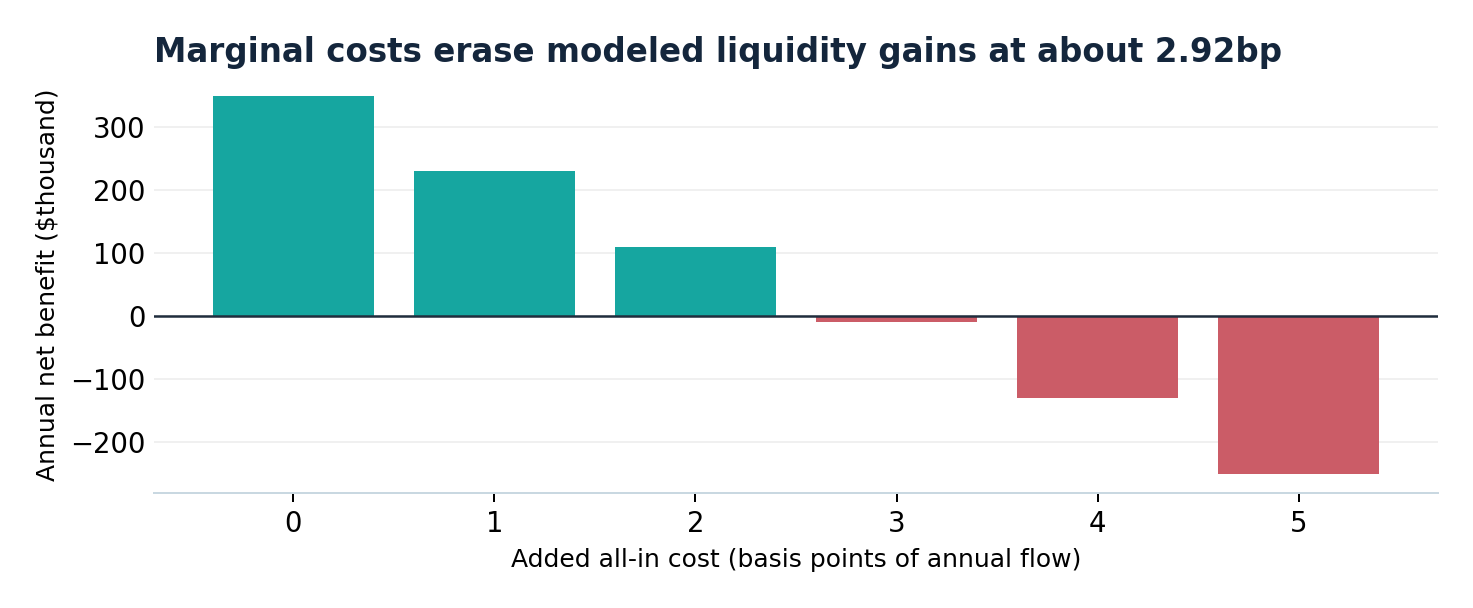
Figure 3. Added per-flow charges can exceed a stock-based funding benefit. Illustrative model.
The larger the payout volume relative to average balances, the smaller the liquidity-saving benefit per dollar of throughput. A buffer reduction produces an annual savings based on a stock of capital; a per-transaction fee charges against a flow of card activity. Confusing those two quantities is how an impressive working-capital story can become an unpersuasive financial case. Our related analysis of stablecoin prefunding and institutional liquidity tests a similar stock-versus-flow trade-off for remittance and payout networks.
Bank Issuance Does Not Turn Stablecoins Into Deposits
SoFi also introduced SOFIE in October 2026, an interest-bearing tokenized deposit that it distinguishes from SoFiUSD. SOFIE represents a deposit at SoFi Bank and carries FDIC protection subject to applicable rules; SoFiUSD is a transferable stablecoin, and SoFi’s customer support says it is not an insured deposit. [6][7] A consumer could see both displayed as dollar-denominated products within one brand and still own different legal claims. We explore that boundary in our separate discussion of tokenized SoFi deposits and SoFiUSD.
The FDIC has stressed that payment stablecoins are not federally deposit-insured simply because their issuers operate within a regulated framework. The BIS likewise warns that stablecoins do not automatically deliver the singleness and elasticity of central-bank-backed settlement money. [8][9] These cautions do not invalidate the Mastercard pilot. They identify why redemption, token governance, operational access and legal finality remain fundamental. A reserve-heavy asset can be economically reliable and still introduce a new private issuer liability into the settlement chain.
Who Captures the Economic Value?
SoFi benefits if its own settlement asset helps reduce outside infrastructure dependency and draws merchants or treasury clients to Big Business Banking. Mastercard benefits by keeping its acceptance, fraud and network relationships central while adding more ways to settle. Stablecoin infrastructure, wallet and custody partners may collect service revenues; traditional cash-transfer intermediaries may lose a portion of treasury volume. The merchant benefits only if the acquirer passes through faster available funds or lower financing cost. The consumer’s credit-card rewards, interest charges and fraud protections do not automatically change.
This is why the strategies of Visa, Mastercard and Stripe in stablecoin payments should not be reduced to a race for the fastest blockchain. The network that retains clearing, acceptance, identity and dispute management may keep pricing power even as the settlement asset changes. The stablecoin issuer gains visibility and potentially distribution, but must also carry reserve and compliance obligations. There is no automatic transfer of interchange economics to token holders.
What Would Disprove the 24/7 Settlement Thesis?
A serious assessment needs participant-level, not promotional, data. Watch the share of Mastercard card obligations actually discharged in SoFiUSD; the median and high-percentile time between clearing and irrevocable institutional settlement; the net required prefunding or credit line before and after migration; and the share of merchants offered faster cash availability without higher fees. Reported card program volume should never be mistaken for verified on-chain settlement volume. Also inspect cross-chain or fiat conversions, failed transfers, token freezes and the frequency of reconciliation breaks.
The economic thesis weakens if actual cash buffers barely change, new service fees exceed approximately a few basis points of flow, or weekend settlement is available only to a small set of institutions. It strengthens if audited program data show lower average liquidity, fewer missed cut-offs, resilient processing through bank holidays and genuinely faster merchant funds. A token transaction completing in seconds is not a sufficient KPI. It never was the whole payment.
Bottom Line
Yes: bank-issued stablecoins already support live card-network settlement, and they can make the institutional funding leg available seven days a week for eligible participants. No: that does not mean every credit-card purchase settles instantly, every merchant receives cash on Sunday, or every stablecoin is equivalent to insured bank money. The commercial prize lies in lower funding buffers and more flexible treasury, not a replacement of the card network’s existing trust and credit machinery. On illustrative assumptions, releasing 1.5 days of buffer is worth only 2.92 basis points of annual throughput; that small number is the cost test every ambitious 24/7 claim must pass.
Methodology and Limitations
Research cut-off: 12 November 2026. Claims about launches and scale are attributed to company announcements; no independent operating data were supplied showing the share of SoFi’s annualized card program settled on-chain. The illustrative model assumes $100 million monthly gross settlement flow, 30 days per month, uniform obligations, a 7% annual capital cost and a reduction in required funding buffer. Annual capital benefit equals dollars released x 7%; basis-point equivalent divides annual benefit by 12 months of throughput and multiplies by 10,000. Real net settlement positions, timing, fees and capital treatment vary. The three diagrams and charts are original explanatory or numerical models, not measurements of proprietary company performance.
Sources
3. Visa, “Visa Launches Stablecoin Settlement in the United States,” 16 December 2025
6. SoFi, “Launches SoFi Earn (SOFIE),” 22 October 2026
7. SoFi Help, “Does SoFiUSD earn interest or come with FDIC insurance?”
8. FDIC, “An Update on Reforms to the Regulatory Toolkit,” 2026
9. Bank for International Settlements, Annual Economic Report chapter on next-generation money, 2025
10. Visa, “Stablecoin-linked cards and money movement,” 2026
11. Visa, “Visa and Lloyds test round-the-clock cross-border settlement,” 30 September 2026
12. Bank of England, “Extending RTGS and CHAPS settlement hours: next steps,” 18 May 2026
13. Mastercard / BVNK, “Global Money Platform,” 15 October 2026

Johan Shamshad is Editor-in-Chief at Dave Finances, covering financial markets, digital assets, trading platforms, brokers, fintech, payments and regulation. Since 2023, he has also worked as an editor at Gulf News, the UAE English-language newspaper published by Al Nisr Publishing LLC. His work focuses on market-moving developments, company disclosures, regulatory changes and trading infrastructure, with an emphasis on primary-source verification and practical context for traders and investors.