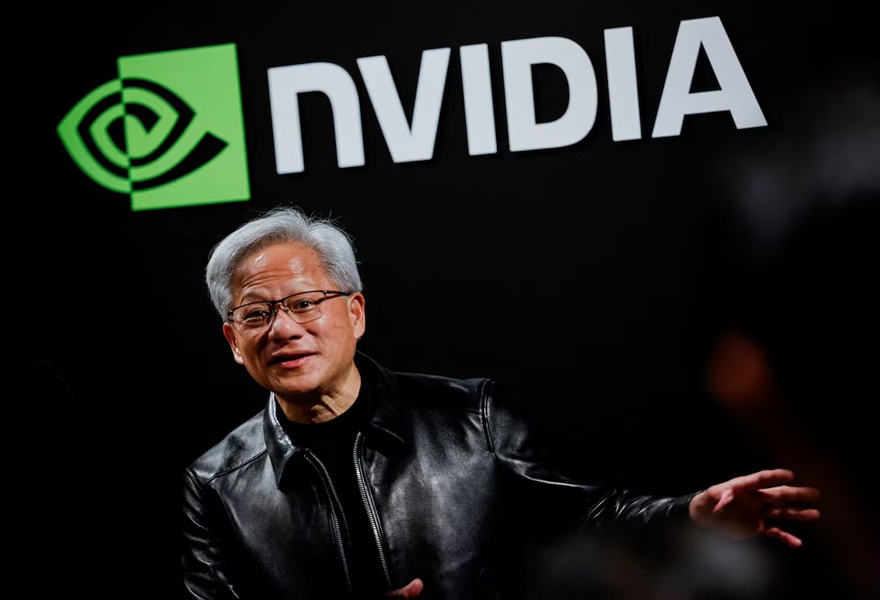
White House technology adviser David Sacks has challenged claims that Chinese businesswoman Alice Huang spied on former Nvidia chief executive Jensen Huang, pointing to public comments from the U.S. attorney general and fresh reporting about disagreements within the intelligence community. In a November 13 post, Sacks also called for an investigation into an alleged leak of classified information connected to the case.
His intervention comes a day after Jensen Huang left Nvidia and the company appointed Chief Financial Officer Colette Kress as interim CEO. The leadership change is confirmed, but the central allegation that Alice Huang knowingly worked for Chinese intelligence has not been established by a public finding. U.S. investigators have not closed the matter.
Sacks described the espionage narrative as weakening after CNN reported that intelligence collected so far does not prove Alice Huang was acting on behalf of Beijing. His interpretation is not an official exoneration. Nor do the reported doubts settle whether she posed a counterintelligence risk because of her relationship with the leader of a strategically important chipmaker.
DOJ has reached no conclusion while intelligence officials differ
U.S. Attorney General Todd Blanche told reporters on November 12 that the Justice Department and FBI Director Kash Patel had reached no conclusion about whether Alice Huang was a spy. Blanche said the FBI was investigating the reports, rejecting the premise that authorities had already determined her status.
CNN, citing people familiar with the intelligence, reported that CIA officials were not yet convinced the material gathered, including intercepted communications, proved she had knowingly supplied information to China. Some officials at the Office of the Director of National Intelligence considered the description of her as a spy overstated, according to the network.
Those positions were reported through unnamed sources, rather than formal agency determinations released to the public. Sacks compressed them into claims that the CIA and DNI had said no. The actual distinction is that officials reportedly disagree over the sufficiency of the available evidence. The investigation remains open, and its full record is not public.
Representative Jim Himes, the senior Democrat on the House Intelligence Committee, said after a classified briefing that he still did not know what relationship Alice Huang had with the Chinese government, or what information or influence might have been exchanged. His uncertainty after the briefing does not amount to a finding that no operation occurred.
Some administration officials remain suspicious, according to CNN. The network reported that information from someone close to Nvidia appeared to reach Chinese intelligence channels, though that does not publicly identify Alice Huang as the source. Other officials cited her business background and access to Jensen Huang as reasons for concern. Neither being a Chinese businesswoman nor knowing a prominent executive is proof of espionage.
Sacks calls for a probe of the reported classified memo leak
Sacks questioned why claims about the intelligence assessment entered public reporting and called for an inquiry into the disclosure of a purported classified memo. He suggested that the leak itself was a crime. No public Justice Department finding has established who disclosed the material, whether the information made public was classified at the time or whether a criminal violation occurred. His accusation is a demand for investigation, not a proven offense.
The memo, attributed in reporting to Secretary of State and National Security Adviser Marco Rubio, allegedly raised concerns about Jensen Huang’s relationship with Alice Huang earlier in 2026. CNN said its precise intelligence detail remains unclear. No authenticated version of the memo was publicly available for independent examination in the reporting reviewed for this article.
Separate congressional scrutiny is underway regardless of Sacks’s comments. Senators Elizabeth Warren and Chris Coons sent a November 11 records-preservation request to senior administration officials covering Nvidia chip exports and the reported intelligence concerns. They requested written confirmation of preservation measures by November 17 and briefings on related risks. Their request describes allegations and questions requiring scrutiny, not findings that Alice Huang committed espionage.
The policy concern also includes whether advanced Nvidia chips were diverted through overseas customers. CNN reported that investigators had examined Singapore-based Megaspeed, where Alice Huang previously worked, over possible violations of U.S. chip-export controls. That business investigation is distinct from proving that a particular person was a foreign intelligence operative.
Nvidia’s leadership change is confirmed; espionage is not
Jensen Huang resigned as CEO and director on November 12, with Colette Kress stepping in while the board searches for a permanent chief executive. As DaveFinances reported on Nvidia’s leadership transition, the company’s formal announcement did not attribute his resignation to a proven intelligence breach or identify wrongdoing by Alice Huang.
The board had opened an independent investigation and previously said it had no reason to believe Nvidia’s national-security or confidential information had been compromised. Earlier reports of directors considering Huang’s removal covered broader allegations about executive conduct, which should not be treated as findings about Chinese espionage.
In a separate follow-up, DaveFinances examined further reported relationships and claims about chip distribution. Those allegations remain subject to their own evidentiary limits. The latest doubts about one intelligence claim do not automatically resolve the governance or export-compliance issues.
For investors, uncertainty now runs along two different tracks: Nvidia’s confirmed CEO succession ahead of its November 17 earnings report, and the unfinished government and corporate investigations. A more cautious intelligence assessment could change the public understanding of the episode, but it does not reverse a board decision or establish whether secret information was shared.
The core unanswered questions are concrete: what evidence investigators have, whether they can attribute any transfer of information to Alice Huang, and how the reported memo reached the public. Until those questions are answered, describing her either as a proven spy or as definitively cleared would go beyond what the available record supports.

Johan Shamshad is Editor-in-Chief at Dave Finances, covering financial markets, digital assets, trading platforms, brokers, fintech, payments and regulation. Since 2023, he has also worked as an editor at Gulf News, the UAE English-language newspaper published by Al Nisr Publishing LLC. His work focuses on market-moving developments, company disclosures, regulatory changes and trading infrastructure, with an emphasis on primary-source verification and practical context for traders and investors.