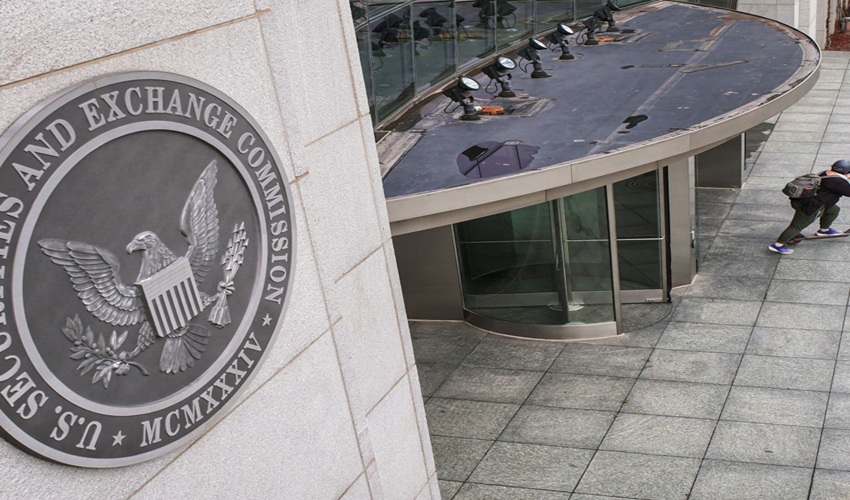
The US Securities and Exchange Commission issued two contrasting securities-industry disciplinary decisions, permanently barring Christopher Byungin Lee from regulated financial-sector associations while imposing only a censure on Eric Christopher Cannon. Both proceedings followed federal court judgments involving unregistered brokerage activities, but the Commission reached different conclusions about the restrictions needed to protect investors. Lee’s case involved a penny-stock matched-trading operation and more than $1 million in commissions, while Cannon’s concerned sales of life settlement investments through Pacific West Capital Group.
SEC bars Christopher Lee over penny-stock operation
The SEC has barred Christopher Byungin Lee from associating with brokers, dealers, investment advisers, municipal securities professionals, transfer agents and nationally recognized statistical rating organizations, following an investigation into his activities at an unregistered securities sales operation.
The November 13 decision, Exchange Act Release No. 106892, also prohibits Lee from participating in penny-stock offerings, including acting as a promoter, finder, consultant or agent. He remains permitted to buy and sell securities in his personal accounts where those transactions are otherwise lawful.
According to the SEC’s November 13 opinion and sanctions order, Lee participated in a call-center operation between at least October 2015 and November 2019 that connected purchasers of microcap securities with existing shareholders seeking to liquidate their holdings.
The operation used a matched-trading system. Telemarketers identified buyers through scripts and lead lists, coordinated prices and share quantities with sellers, and instructed buyers to submit limit orders through their brokerage accounts. Corresponding sell orders were entered at matching prices and quantities, making execution between the parties highly likely.
Orders were matched, and matched quite deliberately, according to the Commission.
The SEC found that Lee participated in arranging transactions on both sides, recruited and managed other telemarketers, and earned more than $1 million in commisions.
The regulator also found that prospective buyers were not informed that their purchases were being coordinated with shareholders seeking to dispose of their shares.
The operation’s registration failures resemble the central issue in the SEC’s November 6 enforcement action against the operator of 24k Markets, although the underlying products and business models differed. The 24k Markets case involved security-based swaps offered through an offshore white-label brokerage structure, whereas Lee’s conduct concerned physical securities transactions involving microcap shares.
Earlier $1.14 million judgment preceded Lee’s industry ban
The SEC originally filed its civil action against Lee and several co-defendants in October 2020. In July 2022, a federal district court entered a default judgment finding him liable for violating Section 15(a)(1) of the Securities Exchange Act.
The court permanently enjoined Lee from future unregistered brokerage activity and securities solicitation, while imposing a civil penalty of $1,144,061.81, equivalent to the commissions the SEC alleged he received.
That penalty was imposed in 2022, not as part of the latest administrative decision.
The SEC subsequently initiated separate administrative proceedings in September 2022 to determine whether Lee should face additional securities-industry restrictions.
After Lee filed an answer seeking settlement in March 2025, he did not respond to the Enforcement Division’s requests for a prehearing conference or oppose its later motion for summary disposition.
The Commission nevertheless required supplementary evidence before deciding on the proposed bans. Because the earlier court judgment was entered by default, the SEC determined that the allegations in the civil complaint could not automatically be treated as conclusively established.
But a default judgment was not, by itself, proof of every fact alleged in the complaint.
Additional testimony from co-defendant Alex Forester, together with documentary evidence, established Lee’s involvement in the matched-trading operation and his supervisory role over other telemarketers.
The Commission concluded that Lee’s repeated conduct, substantial compensation and failure to provide assurances against future violations justified broad restrictions.
Unlike temporary restrictions imposed in some other enforcement proceedings, the November order does not specify a scheduled expiration date or automatic eligibility for reinstatement.
Eric Cannon censured after Pacific West securities case
In a seperate November 13 decision, the SEC censured Eric Christopher Cannon following litigation concerning unregistered securities offerings and brokerage activities associated with Pacific West Capital Group.
The Commission’s decision, Exchange Act Release No. 106896, rejected the Enforcement Division’s request for industry-association and penny-stock bars.
Cannon worked as a sales agent for Pacific West between 2011 and November 2014, offering interests in life settlements that were subsequently determined to constitute securities under federal law.
According to the SEC, Pacific West and its sales agents marketed these investments through seminars, distributed sales materials, answered prospective investors’ questions and received commissions for completed transactions.
The operation sold investments to more than 3,000 investors overall. That figure covers Pacific West’s sales activities, not transactions personally completed by Cannon.
The SEC filed its original civil complaint in April 2015. In 2023, a federal district court granted partial summary judgment against Cannon, finding violations of Securities Act Sections 5(a) and 5(c), and Exchange Act Section 15(a).
The resulting remedies included $219,333.33 in disgorgement and a $15,000 civil penalty, together with permanent injunctions against future registration violations.
The Ninth Circuit subsequently affirmed the district court’s judgment and remedies in 2025.
Cannon contested the administrative proceedings, arguing that requiring him to defend himself before the SEC after the federal litigation violated his due process rights. He also maintained that the earlier court case should prevent the agency from pursuing additional administrative sanctions.
The Commission rejected both arguments, concluding that federal securities legislation expressly permits follow-on administrative proceedings after qualifying court injunctions.
Cannon also requested an evidentiary hearing to present testimony concerning his state of mind and his recognition of the misconduct. The Commission concluded that he had not identified a material factual dispute requiring such a hearing.
The hearing he requested, he did not get.
Why the SEC imposed different sanctions
Although both cases involved violations of federal registration requirements, the Commission’s November decisions reached substantially different conclusions about the respondents’ conduct and future regulatory risks.
For Cannon, the SEC acknowledged that the district court had not found intentional misconduct. The court had concluded that he could reasonably have believed the life settlement interests qualified for an exemption because the legal classification presented a close question.
The Commission said the record did not establish that Cannon knew his activities required registration, or even that he had acted negligently.
It also credited Cannon’s assurances against future violations and his recognition of wrongdoing, despite noting that he intended to continue working in the securities industry as an investment adviser.
Those mitigating circumstances supported censure rather than the broader bars requested by the Enforcement Division.
The censure remains a formal disciplinary sanction, and Cannon’s existing federal court injunctions continue to apply. The November decision did not impose another monetary penalty or grant him any new regulatory authorization.
Lee’s circumstances were different. The SEC found evidence of repeated involvement in coordinated securities transactions, recruitment of other salespeople and substantial commission earnings. He also failed to participate meaningfully in the later stages of his administrative proceeding.
Two cases, same registration problem on paper, very different reasoning underneath.
Other recent enforcement actions provide a comparison. In November, the CFTC imposed two-year registration and association bans on eight individuals involved in unregistered retail forex brokerage solicitation. Those proceedings arose under different statutory requirements and involved settlement orders rather than contested SEC administrative opinions.
Outside the US, Brazil’s securities regulator imposed R$3.7 million in penalties on FBS Markets and Mitsui Markets for unauthorized intermediation and unregistered securities offerings. That case likewise involved different national rules, reinforcing that the relevent registration obligations and available remedies depend on the specific jurisdiction and activities.
The SEC’s latest decisions do not identify new securities sales or misconduct committed by Lee or Cannon during November 2026. They resolve disciplinary questions arising from activities that ended years earlier.
Lee now faces industry-wide restrictions and a prohibition on penny-stock offering participation, while Cannon has recieved a censure alongside the injunctions and monetary remedies previously ordered by the courts. The difference reflects the Commission’s assessment of the documented conduct, mitigating evidence and future risk in each case, rather than registration violations automatically producing identical sanctions.

Johan Shamshad is Editor-in-Chief at Dave Finances, covering financial markets, digital assets, trading platforms, brokers, fintech, payments and regulation. Since 2023, he has also worked as an editor at Gulf News, the UAE English-language newspaper published by Al Nisr Publishing LLC. His work focuses on market-moving developments, company disclosures, regulatory changes and trading infrastructure, with an emphasis on primary-source verification and practical context for traders and investors.