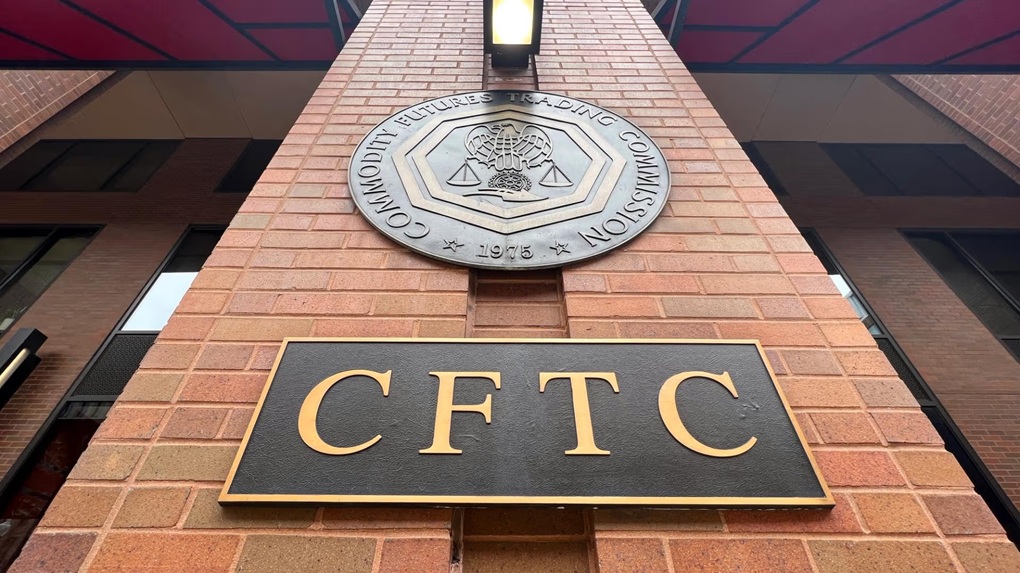
The US regulatory stance toward prediction markets quietly but decisively shifted this week. With the issuance of a no-action letter to Bitnomial, the Commodity Futures Trading Commission (CFTC) signaled a willingness to accommodate event contracts and prediction markets within the existing derivatives framework—without forcing them into reporting structures designed for legacy swaps markets.
The decision may appear technical on its surface. In practice, it removes one of the most significant regulatory bottlenecks facing US-based prediction market platforms and sets a precedent that could reshape how these products are built, governed, and scaled in the American market.
As prediction markets move from the fringes of crypto experimentation into regulated financial infrastructure, the Bitnomial letter offers a window into how regulators, exchanges, and institutional capital are recalibrating their approach.
Why the No-Action Letter Matters
A no-action letter is not formal rulemaking. It does not rewrite statute or create binding precedent. But in US financial regulation, it carries substantial practical weight. It signals that the regulator does not intend to pursue enforcement action against a specific activity, provided certain conditions are met.
In Bitnomial’s case, the CFTC letter relieves the exchange from complying with swap-level reporting requirements that are effectively unworkable for prediction markets. These markets can generate tens of thousands of micro-transactions per day, often with rapid entry and exit, making real-time compliance with traditional swaps reporting regimes operationally impractical.
By granting relief, the CFTC acknowledged a structural reality: prediction markets do not fit neatly into the reporting logic designed for bespoke, low-frequency over-the-counter derivatives.
This is not regulatory leniency so much as regulatory adaptation.
What Bitnomial Still Has to Do
The no-action letter does not give Bitnomial a free pass. On the contrary, it imposes conditions that reflect the CFTC’s priorities around transparency and systemic risk.
Under the terms of the letter:
-
All positions must be fully collateralized on a 1:1 basis
-
Leverage is prohibited
-
Consumer-facing market data must be published clearly, including timestamps and transaction prices
-
The exchange must provide data to the CFTC upon request
These requirements are not cosmetic. Full collateralization directly addresses one of the most destabilizing forces in crypto markets: cascading liquidations triggered by leverage. By eliminating leverage entirely, the CFTC is implicitly signaling that prediction markets are acceptable only if they behave more like cash-settled contracts than speculative derivatives.
This design choice may limit upside for traders, but it significantly reduces platform-level insolvency risk.
A Quiet Endorsement of Prediction Markets
Taken together, the letter reflects a broader regulatory shift. The CFTC is not merely tolerating prediction markets; it is beginning to treat them as legitimate financial instruments—provided they are structured responsibly.
This stance would have been difficult to imagine just a few years ago, when event contracts were often conflated with unregulated gambling. The difference today lies in both technology and context. Blockchain-based infrastructure enables real-time transparency, immutable audit trails, and automated settlement in ways legacy systems cannot easily replicate.
At the same time, prediction markets have demonstrated real-world utility. During the 2024 US elections, they repeatedly outperformed traditional polling in forecasting outcomes, drawing attention from media, researchers, and institutional investors alike.
Regulators are not blind to this track record.
Prediction Markets Since 2024: From Curiosity to Cultural Signal
The US election cycle of 2024 marked the inflection point for prediction markets. Platforms such as Polymarket and Kalshi experienced surging volumes as traders, journalists, and analysts began treating market-implied probabilities as meaningful indicators.
What followed was not just increased usage, but cultural visibility. In September 2025, prediction markets were referenced in an episode of South Park, a milestone that often signals an idea has crossed from niche discourse into mainstream awareness.
That same momentum translated into capital. In October 2025, Intercontinental Exchange, the owner of the New York Stock Exchange, invested $2 billion in Polymarket at a $9 billion valuation. For an incumbent exchange operator to back a crypto-native prediction platform at that scale sent a clear message: these markets are being taken seriously at the highest levels of finance.
Bitnomial’s Position in the Ecosystem
Bitnomial occupies a different niche from Polymarket or Kalshi. As a crypto derivatives exchange with existing regulatory engagement, it is well positioned to bridge the gap between experimental crypto markets and compliant US trading venues.
The CFTC’s no-action letter effectively greenlights Bitnomial to test prediction markets in a controlled environment. If successful, it provides a model other US-based platforms can follow—one that balances innovation with safeguards.
Importantly, the letter suggests the CFTC prefers adaptation over prohibition. Rather than forcing prediction markets offshore or into legal gray zones, the regulator appears willing to integrate them into supervised markets with clear constraints.
Coinbase and the Race Toward Regulated Prediction Markets
The Bitnomial decision also lands amid a broader industry push. Coinbase has already committed to prediction markets through its acquisition of The Clearing Company, a deal expected to close in January 2026.
Coinbase’s timing is notable. The acquisition aligns with the US midterm election cycle, which historically drives heightened interest in political event contracts. More importantly, it reflects Coinbase’s long-term vision of becoming an all-encompassing financial exchange, spanning crypto, tokenized assets, derivatives, and now event-based contracts.
The CFTC’s letter to Bitnomial strengthens Coinbase’s hand. It clarifies that regulated prediction markets are not only possible in the US, but increasingly acceptable—if designed within the right parameters.
Regulation as a Competitive Filter
One of the less discussed effects of regulatory clarity is its impact on competition. Compliance is expensive. Full collateralization reduces capital efficiency. Transparency requirements raise operational costs.
These constraints will likely favor well-capitalized platforms with institutional ambitions, while making it harder for lightly funded startups to compete. In that sense, the CFTC’s approach acts as a filter, shaping the market toward fewer, more robust players.
This dynamic mirrors earlier phases of crypto regulation, where exchanges that invested early in compliance gained durable advantages as rules tightened.
The Broader Institutional Context
The Bitnomial letter also fits into a larger institutional narrative. Traditional finance has been edging closer to crypto trading, particularly at the institutional level. JPMorgan Chase has reportedly explored expanding crypto trading services for select clients, while continuing to invest in blockchain-based settlement infrastructure.
As banks and exchange operators engage more deeply with digital assets, pressure increases on regulators to provide workable frameworks rather than blanket restrictions. Prediction markets, once viewed as fringe products, now sit at the intersection of derivatives, data markets, and behavioral finance.
Ignoring them is no longer an option.
The Structural Trade-Off: Safety Versus Excitement
By mandating 1:1 collateralization and banning leverage, the CFTC has drawn a clear line. Prediction markets may exist, but not as high-octane speculative instruments.
This choice has consequences. Fully collateralized markets are safer, but less capital-efficient. They discourage aggressive speculation and limit the kind of outsized returns that attract certain traders.
From a regulatory perspective, that is a feature, not a bug. From a platform growth perspective, it raises questions about user engagement and revenue density.
The next phase of prediction markets in the US will likely be shaped by this tension. Platforms must decide whether to optimize for volume and excitement abroad, or for durability and legitimacy at home.
Information Markets, Not Casinos
The CFTC’s framing implicitly reinforces a specific vision of prediction markets: as information markets rather than gambling venues.
By emphasizing transparency, collateralization, and regulatory oversight, the regulator is attempting to preserve the forecasting value of these markets while limiting their resemblance to casinos. Whether platforms adhere to that spirit will depend on product design choices, not just legal compliance.
How probabilities are displayed, how contracts are explained, and how prominently they are featured within apps will all influence user behavior.
What Comes Next
The Bitnomial no-action letter is unlikely to be the final word. As trading volumes grow and election-driven activity returns in 2026, regulators will gather more data on how prediction markets behave under stress.
Future guidance may refine reporting standards, introduce position limits, or formalize rules around market-making and conflicts of interest. For now, the message is cautious but constructive: innovation is permitted, but guardrails are non-negotiable.
A Marker of Maturity
For the crypto sector, the significance of the CFTC’s decision goes beyond prediction markets themselves. It reflects a maturing relationship between regulators and digital asset platforms—one based less on confrontation and more on pragmatic accommodation.
Prediction markets are no longer being asked whether they should exist. They are being asked how they should exist.
That shift, more than any single letter or acquisition, marks a new phase in crypto’s integration into the US financial system.

Michael Lebowitz is a financial markets analyst and digital finance writer specializing in cryptocurrencies, blockchain ecosystems, prediction markets, and emerging fintech platforms. He began his career as a forex and equities trader, developing a deep understanding of market dynamics, risk cycles, and capital flows across traditional financial markets.
In 2013, Michael transitioned his focus to cryptocurrencies, recognizing early the structural similarities—and critical differences—between legacy markets and blockchain-based financial systems. Since then, his work has concentrated on crypto-native market behavior, including memecoin cycles, on-chain activity, liquidity mechanics, and the role of prediction markets in pricing political, economic, and technological outcomes.
Alongside digital assets, Michael continues to follow developments in online trading and financial technology, particularly where traditional market infrastructure intersects with decentralized systems. His analysis emphasizes incentive design, trader psychology, and market structure rather than short-term price action, helping readers better understand how speculative narratives form, evolve, and unwind in fast-moving crypto markets.