
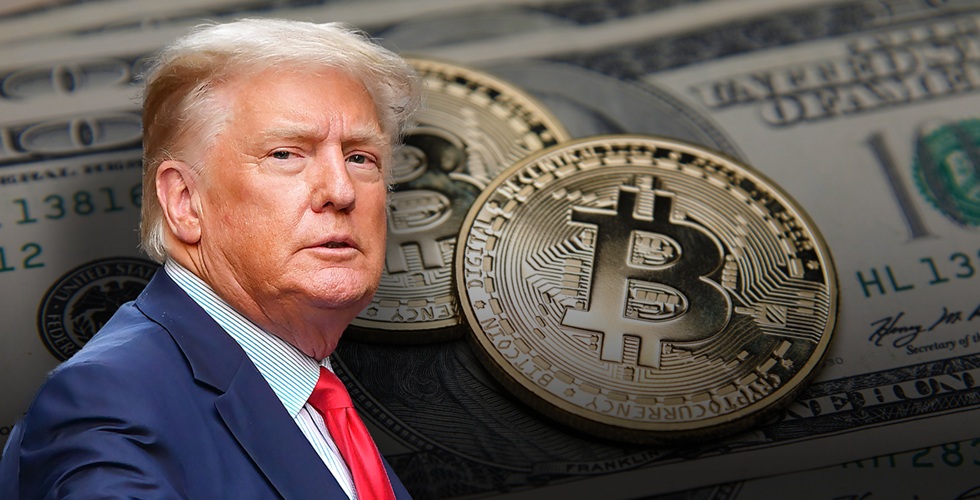
One year after Gary Gensler walked out of the US Securities and Exchange Commission, the impact isn’t theoretical anymore. You can see it. In the court docket. In the cases that vanished. In the way the SEC now talks about crypto—carefully, politely, almost apologetically.
This wasn’t a slow policy drift. It was a hard pivot.
And it happened fast.
The Day the Temperature Dropped
When Gary Gensler resigned in January 2025—on the same day Donald Trump was inaugurated—the symbolism was impossible to miss. Gensler’s term was already winding down, sure. But crypto had turned into a political fault line by then, and everyone knew it.
Under Gensler, the SEC’s position was blunt: most tokens were securities, the law was already clear, and if the industry didn’t like that, courts could sort it out. Regulation by enforcement wasn’t an accident. It was the strategy.
What I remember from that period is how tense everything felt. Founders lawyering up before shipping features. Exchanges quietly delisting assets just to stay out of the blast radius. Nobody liked it—but everyone understood the risk.
That clarity is gone now.
Mark Uyeda and the Quiet Walk-Back
Trump’s choice of Mark Uyeda as acting chair telegraphed what was coming. Uyeda had been openly critical of Gensler’s approach, and he inherited an SEC knee-deep in crypto probes.
Then, in February, the first shoe dropped.
The SEC scrapped its case against Coinbase.
No replacement framework.
No new rulemaking.
Just… gone.
That’s when it clicked for me. This wasn’t about refining policy. It was about clearing the board.
Enforcement, Unplugged
After Coinbase, the rest fell like dominos.
Investigations into Robinhood’s crypto arm? Ended.
The probe into Uniswap Labs? Wrapped up.
And then came the big one.
In March, Brad Garlinghouse confirmed that the SEC would abandon its appeal in the Ripple case. That lawsuit—filed back in 2020—had been the spine of the SEC’s entire “tokens are securities” argument.
Walking away from it wasn’t a procedural tweak. It was a concession.
By the time Paul Atkins took over as chair in April, the enforcement pipeline was already wrecked. Under Atkins, more cases disappeared. What used to be the SEC’s defining posture toward crypto was effectively dismantled in under four months.
I’ve never seen a regulatory reversal that clean.
Law Enforcement… or Political Settlement?
Here’s where things get uncomfortable.
Several of the companies that benefited from dropped actions were also active donors to pro-crypto PACs in the 2024 election cycle. That doesn’t prove anything on its own—but optics matter, especially for a market regulator.
Then there’s Trump himself.
By mid-2025, the Trump family was tied to World Liberty Financial, a stablecoin project launched while Congress debated crypto rules. Trump issued his own memecoin. His sons rolled out American Bitcoin, a mining venture. Estimates put family-linked crypto profits north of $1 billion.
At that point, it stopped feeling like deregulation. It felt like alignment.
Roundtables Without Teeth
To its credit, the SEC tried to rebrand. Instead of suing, it started hosting crypto roundtables—custody, DeFi, tokenization, privacy. Lots of dialogue. Lots of panels.
But here’s the thing: those conversations were happening while Congress was drafting the CLARITY Act.
Everyone in the room knew that once Congress drew hard lines, the SEC’s discretion would shrink. So the roundtables felt provisional. Almost ceremonial. A regulator talking through scenarios it might not control much longer.
Process without authority.
Congress Steps In, and the SEC Steps Back
The Digital Asset Market Clarity Act passed the House in July. Senate progress stalled, but momentum is real.
What caught my eye was Brian Armstrong pulling support just before a key markup. That moment exposed the irony at the heart of all this: the industry wants certainty, but it doesn’t agree on the details.
For the SEC, though, the direction is clear. Under Gensler, the agency claimed existing law was enough. Under Trump, Congress is rewriting the rules explicitly—and boxing the SEC into narrower lanes.
That’s not evolution. That’s displacement.
An SEC Without Balance
The most under-discussed shift isn’t policy. It’s personnel.
By January 2026, every Democratic commissioner had left. Gensler. Jaime Lizárraga. And finally Caroline Crenshaw, who stayed 18 months past her term before exiting.
Trump hasn’t named replacements.
So right now, the SEC—a regulator whose legitimacy rests on neutrality—is run entirely by Republican appointees. That’s unprecedented. And even people who despised Gensler’s tactics are uneasy about it.
Because once you lose balance, you lose trust.
Gensler, After Power
After the SEC, Gensler went back to MIT Sloan School of Management. He teaches. He writes. He gives interviews.
He still thinks most crypto is speculative. He still worries about retail investors getting wrecked. But now it’s academic commentary, not enforcement policy.
The contrast is jarring. One year ago, crypto was treated as a systemic risk. Today, it’s treated like an industry partner.
Same assets.
Same volatility.
Very different rules.
What This Actually Means for Crypto
Short term? This is a win. No question.
Legal risk is down. Compliance budgets are lighter. New products—prediction markets, tokenized securities—are moving faster than they have in years.
But here’s my hesitation.
Enforcement-first regulation was ugly, but it was predictable. You knew where the red lines were, even if you hated them. What replaced it is political dependency. Regulatory outcomes now feel tied to election cycles, donor networks, and access.
That favors incumbents.
It punishes newcomers.
And it makes the whole system fragile.
The Precedent Nobody’s Talking About
If an entire regulatory philosophy can be erased in under a year, what does that say about the durability of the next one?
Crypto doesn’t just need friendly regulators. It needs stable ones. The post-Gensler SEC delivered speed. It delivered relief. It delivered certainty—for now.
Whether it delivered resilience is still an open question.
And markets have a way of testing that.
Disclaimer
This article is for informational and educational purposes only and does not constitute financial, investment, trading, or legal advice. Cryptocurrencies, memecoins, and prediction-market positions are highly speculative and involve significant risk, including the potential loss of all capital.
The analysis presented reflects the author’s opinion at the time of writing and is based on publicly available information, on-chain data, and market observations, which may change without notice. No representation or warranty is made regarding accuracy, completeness, or future performance.
Readers are solely responsible for their investment decisions and should conduct their own independent research and consult a qualified financial professional before engaging in any trading or betting activity. The author and publisher hold no responsibility for any financial losses incurred.
[…] The US Securities and Exchange Commission is recalibrating its public posture toward digital assets at a moment when both market prices and legislative authority are in flux. Remarks from Paul Atkins and Hester Peirce at ETHDenver suggest the agency is preparing for a regulatory environment in which tokenized securities become harder to ignore—and potentially harder to police under the SEC’s sole authority. […]