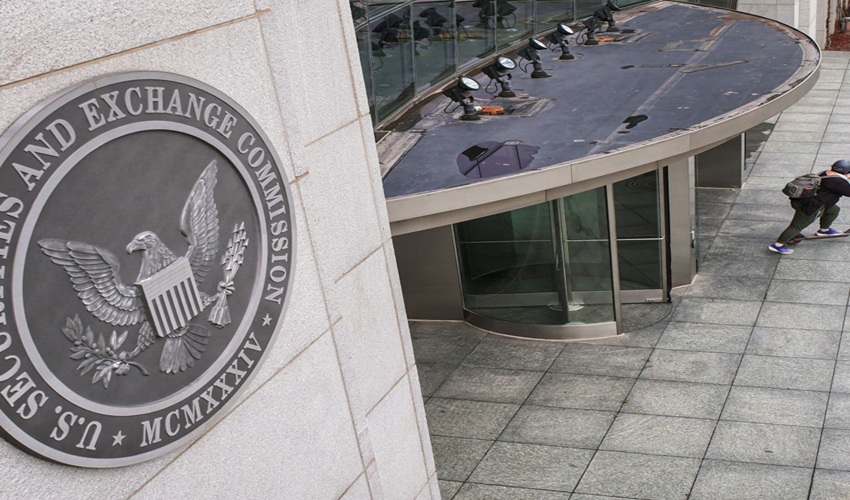
The US Securities and Exchange Commission has charged Chetram Balli, a longtime employee of international law firm Cravath, Swaine & Moore, with allegedly using confidential information about corporate transactions to trade shares of at least eight publicly listed companies, generating approximately $55,000 in illegal profits.
The civil complaint, filed November 12 in the US District Court for the Eastern District of New York, alleges that Balli repeatedly traded ahead of merger and acquisition announcements between 2025 and October 2026. Federal prosecutors separately arrested the 54-year-old New York resident and brought criminal securities fraud charges, alleging more than $70,000 in profits.
Balli worked as a document processing specialist, a position that gave him access to merger agreements, due diligence materials and corporate announcements before their public release. Prosecutors allege he exploited that access despite his employer’s restrictions on trading securities linked to confidential client information.
Cravath confirmed that Balli was no longer employed by the firm and said it was cooperating with investigators. The firm itself has not been accused of wrongdoing.
Trades preceded major corporate acquisitions
The SEC’s November 12 civil complaint identifies several transactions in which Balli allegedly purchased shares shortly before acquisition announcements that subsequently moved stock prices.
One of the most profitable trades involved Forge Global Holdings, the private-market investment platform acquired by Charles Schwab.
On November 5, 2025, Balli allegedly purchased 1,242 Forge shares at an average price of $26.30, beginning his purchases at approximately 2:19 p.m. Forge announced its acquisition that evening, with Schwab confirming the transaction the following morning.
Forge shares rose approximately 68.7% on November 6, closing at $44.07. Balli subsequently sold his position at an average price of $44.21, producing an alleged profit of $22,064.
The timing was close, very close. According to the complaint, Balli had accessed an email containing transaction documents, including a Schedule 13D referencing the acquisition, just one day before purchasing the shares.
Another profitable transaction involved Pacira BioSciences, acquired by Viatris in October 2026 for approximately $1.65 billion.
Investigators allege Balli accessed a proposed merger agreement on August 20 and subsequently traded Pacira shares. Between September 24 and October 7, he accumulated 1,700 shares at an average price of $25.83.
Following the October 8 acquisition announcement, Pacira shares increased approximately 44.4%, closing at $36.39. Balli allegedly sold his position that day for approximately $17,803 in profits.
The Forge and Pacira transactions alone generated nearly $40,000 in alleged gains, accounting for roughly 72% of the SEC’s $55,000 total.
Other profitable transactions involved e2open, acquired by WiseTech Global for an enterprise value of approximately $2.1 billion, and Talkspace, acquired by Universal Health Services in an $853 million transaction.
But not every trade worked out. The SEC also alleges unsuccessful trading ahead of transactions involving Kenvue, Paramount Skydance, Warner Bros. Discovery and Huntsman. Those positions produced no profit because of unfavorable price movements or trading decisions.
Document processing system exposed confidential deals
The investigation describes how an administrative employee allegedly gained access to information capable of moving billions of dollars in market capitalization.
Balli had worked at Cravath since 1989, processing and revising legal documents and preparing materials for submission through the SEC’s EDGAR filing system.
The firm’s lawyers used a centralized document processing application to distribute assignments. Requests frequently included client names, project descriptions, merger agreements, due diligence reports and other confidential materials.
According to the SEC, document processing specialists could view requests even when those assignments were not allocated to them. Completed assignments typically remained accessible until the end of the calendar year.
It was an administrative system, but one holding information about deals before public disclosure.
The complaint identifies several occasions when Balli allegedly accessed documents concerning transactions before purchasing shares. Investigators also reviewed internal work logs that recorded his participation in specific document-processing assignments.
The firm maintained a restricted trading list covering companies connected to confidential transactions. Employees were required to consult its Conflicts Department before buying or selling securities, subject to limited exceptions.
All eight securities identified in the SEC complaint were on the restricted list when Balli traded them, according to investigators. He allegedly submitted no requests for trading approval, despite having repeatedly acknowledged the firm’s insider-trading policy.
And there was a list already, a rule already, but no approval request for these trades, investigators say.
The allegations resemble a seperate September prosecution involving Robinhood engineers accused of trading on confidential cryptocurrency listing information. In that case, prosecutors alleged that employees used advance knowledge of planned listings to establish perpetual futures positions on Hyperliquid.
Both cases involve alleged misuse of information obtained through ordinary employment duties rather than access reserved exclusively for senior executives.
SEC and prosecutors report different profit figures
The SEC and Justice Department have presented different financial totals for Balli’s alleged trading.
The SEC estimates approximately $55,000 in gains from at least eight instances of trading on material nonpublic information. Its complaint identifies profitable transactions involving four companies and unsuccessful positions involving four additional issuers.
The Justice Department’s parallel criminal announcement instead alleges more than $70,000 in profits from trading associated with five companies between April 2025 and October 2026.
Two totals, overlapping conduct, and no public reconciliation of the calculations.
The criminal case names e2open, Forge Global, Paramount Skydance, Talkspace and Pacira BioSciences. The SEC’s civil complaint covers those companies alongside Warner Bros. Discovery, Kenvue and Huntsman.
The public announcements do not provide a detailed explanation reconciling the two profit estimates. The different figures should therefore be attributed to their respective proceedings rather than treated as interchangeable.
Another allegation concerns Balli’s brokerage accounts.
The SEC says his original brokerage account, opened in August 2000, was closed by the broker in August 2026. He subsequently opened an account with another US broker-dealer, allegedly listing his employment status as unemployed despite continuing to work at the law firm.
He then allegedly used the new account to trade Pacira shares ahead of the October acquisition announcement.
The account closure did not end the alleged trading, it merely changed where it took place.
The regulator has not disclosed why the first brokerage account was closed or whether that closure resulted from suspicious trading activity. The allegedly inaccurate employment information on the second application is identified in the complaint, but it is not presented as a separately charged offense.
Consolidated Audit Trail data helped identify trading
The SEC’s Market Abuse Unit initiated its investigation using data from the Consolidated Audit Trail (CAT), the US system designed to track securities orders and transactions across participating markets.
CAT data allows investigators to reconstruct trading activity, compare execution timestamps and examine patterns across brokerage accounts. The SEC has not released the exact surveilance methodology that initially identified Balli’s transactions.
The agency’s use of market-wide transaction records provides another example of how regulators can examine suspicious trades alongside corporate announcement timelines and employment-related information.
Similar concerns about employees monetizing privileged information have emerged outside traditional equity markets. DaveFinances previously reported on unusual earnings-related prediction-market trades involving KPMG-audited companies, although that separate activity has not been established as insider trading.
Recent congressional scrutiny has also examined employee access to confidential information used in prediction-market trading, following a CFTC enforcement settlement involving a former White House employee.
In Balli’s case, the SEC seeks a permanent injunction against further securities-law violations, disgorgement of allegedly unlawful gains with prejudgment interest, and civil monetary penalties.
The civil charges concern Section 10(b) of the Securities Exchange Act of 1934 and Rule 10b-5, which prohibit specified fraudulent conduct in connection with securities transactions.
Federal prosecutors have brought a parallel criminal securities fraud case in Brooklyn. A conviction could carry a maximum prison sentence of 20 years, although any actual penalty would depend on the outcome of the proceedings and applicable sentencing rules.
Balli’s attorney had not provided a substantive public response to the allegations as of the latest recieved reporting on November 13. The charges remain unproven, and Balli is presumed innocent unless and until proven guilty.
The SEC’s complaint identifies a specific weakness in the controls surrounding confidential corporate transactions: document processing staff could access sensitive assignments beyond those directly allocated to them, while the firm relied on restricted lists and employee compliance procedures to prevent personal trading. The litigation will determine whether Balli used that access as alleged.

Johan Shamshad is Editor-in-Chief at Dave Finances, covering financial markets, digital assets, trading platforms, brokers, fintech, payments and regulation. Since 2023, he has also worked as an editor at Gulf News, the UAE English-language newspaper published by Al Nisr Publishing LLC. His work focuses on market-moving developments, company disclosures, regulatory changes and trading infrastructure, with an emphasis on primary-source verification and practical context for traders and investors.