
The US Securities and Exchange Commission is recalibrating its public posture toward digital assets at a moment when both market prices and legislative authority are in flux. Remarks from Paul Atkins and Hester Peirce at ETHDenver suggest the agency is preparing for a regulatory environment in which tokenized securities become harder to ignore—and potentially harder to police under the SEC’s sole authority.
Their comments, delivered amid sharp declines in crypto prices and an active congressional debate over market structure, underscore a structural transition underway in US digital asset regulation. The question is no longer whether tokenization will intersect with securities law, but how that interaction will be defined—and which agency will ultimately supervise it.
Tokenized Securities Move From Theory to Policy
Tokenized securities—traditional financial instruments represented on blockchain infrastructure—have moved from experimental pilots to strategic initiatives. Major financial institutions are exploring tokenized bonds, equities, and funds, while crypto-native platforms increasingly market blockchain-based versions of regulated instruments.
Atkins’ statement that regulators should clarify how tokenized securities interact with existing frameworks signals recognition of this shift. Rather than treating digital assets as an isolated category, the SEC appears to be preparing for hybrid instruments that blur the line between crypto infrastructure and conventional securities.
This matters because tokenization challenges legacy assumptions embedded in securities regulation:
-
What constitutes issuance in a decentralized environment?
-
How does transfer agency function onchain?
-
Where do custody obligations sit?
-
How are disclosures delivered and verified?
By emphasizing information availability and market transparency, Atkins anchored his remarks in the SEC’s historical mandate: ensuring investors have sufficient information to make informed decisions. That framing suggests continuity rather than rupture—an attempt to adapt old principles to new infrastructure.
Market Volatility and Regulatory Neutrality
Atkins’ reference to falling crypto prices—Bitcoin down more than 28% and Ether down more than 40% over the prior month—served as a reminder that regulatory clarity does not eliminate volatility.
Bitcoin and Ethereum remain the gravitational centers of digital asset markets. Their price swings ripple outward across tokens, derivatives, and related equities. For regulators, the temptation during downturns is often to intervene more aggressively.
Instead, Atkins articulated a principle of regulatory neutrality: the SEC’s role is not to manage prices but to ensure market participants have reliable information. This approach contrasts with more enforcement-driven narratives that have dominated prior crypto cycles.
The tone signals a shift from reactive enforcement toward structural clarification—particularly if Congress alters the agency’s jurisdiction.
The CLARITY Act and Jurisdictional Realignment
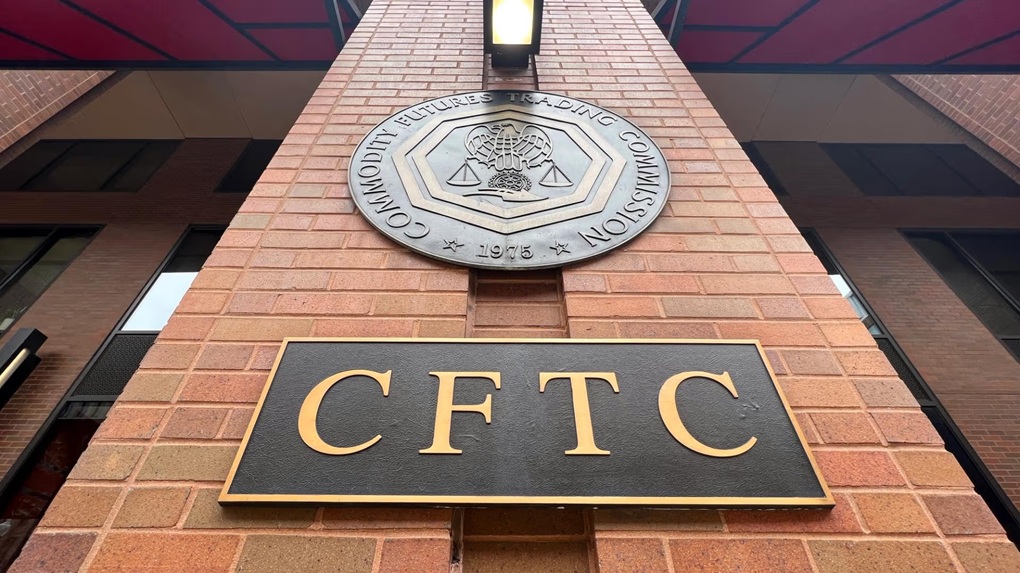
The legislative backdrop to these remarks is the CLARITY Act, a market structure bill that could reallocate significant oversight of digital assets from the SEC to the Commodity Futures Trading Commission.
If enacted in its current form, the bill would redefine which tokens qualify as securities and which fall under commodities law. That shift could limit the SEC’s authority over large portions of the crypto ecosystem, particularly spot markets that have historically operated in ambiguous regulatory territory.
Peirce acknowledged that the SEC has provided technical assistance on the bill, though neither commissioner directly endorsed or criticized its provisions.
The institutional implications are substantial. The SEC traditionally regulates securities issuance and secondary trading venues, while the CFTC oversees derivatives and commodity futures markets. Digital assets, however, do not fit neatly into these silos.
A reallocation of authority would reshape compliance strategies for exchanges, token issuers, and institutional participants.
The CFTC’s Capacity Problem
Any shift of authority raises operational questions. Commodity Futures Trading Commission currently operates with a skeletal leadership structure. With only one Senate-confirmed commissioner in place, the agency lacks the full complement typically required to oversee complex market transitions.
Some lawmakers have proposed language requiring at least four commissioners to be confirmed before market structure reforms take effect. That reflects a broader concern: transferring jurisdiction without institutional capacity risks regulatory fragmentation.
For crypto markets, fragmentation creates uncertainty. Exchanges and issuers need clarity not just about rules, but about enforcement consistency and supervisory resources.
ETHDenver as Regulatory Signal
ETHDenver has become one of the largest cryptocurrency gatherings in the United States, drawing developers, entrepreneurs, and policymakers. The presence of senior SEC officials at the conference reflects a normalization of dialogue between regulators and the crypto industry.
In earlier cycles, regulatory engagement often occurred through enforcement actions or courtroom disputes. Public participation in industry forums signals a more direct channel of communication.
This does not imply deregulation. It suggests that the agency recognizes the scale of the ecosystem it oversees—or may soon share oversight over.
Tokenization and the Future of Market Infrastructure
Tokenized securities are not merely crypto experiments. Major asset managers and banks have already piloted tokenized funds, repo transactions, and bond issuances. The technology promises:
-
Faster settlement
-
Reduced counterparty risk
-
Enhanced transparency
-
Programmable compliance
-
Lower operational costs
However, embedding these efficiencies into regulated frameworks requires clarity on how existing securities laws apply. The SEC’s willingness to support clarification efforts suggests acknowledgment that current rules were not written with distributed ledgers in mind.
Without clear guidance, tokenized products risk either stalling innovation or proceeding in legal gray zones.
Political Crosscurrents and Enforcement Debates
Atkins and Peirce’s comments also arrive amid political tension. Democratic lawmakers have criticized the SEC’s recent enforcement posture, while others argue the agency has historically overreached in classifying digital assets as securities.
This debate reflects a broader ideological divide about crypto’s role in financial markets. Some view digital assets as speculative instruments requiring strict oversight. Others see them as infrastructure innovations deserving regulatory accommodation.
The SEC’s evolving tone suggests a strategic pivot: rather than framing crypto as a compliance problem, it is positioning tokenization as a modernization challenge.
Volatility, Disclosure, and Investor Autonomy
Atkins’ emphasis on disclosure aligns with the SEC’s foundational philosophy. Markets fluctuate; transparency mitigates harm.
In crypto, disclosure challenges are acute. Many token issuers lack traditional reporting structures. Decentralized protocols operate without centralized management teams. Onchain transparency does not automatically translate into investor comprehension.
If tokenized securities become mainstream, disclosure regimes may need to integrate blockchain-native data with traditional reporting formats.
The regulator’s task is not trivial. It must reconcile code-based transparency with narrative-based disclosure obligations.
The Institutional Stakes
Institutional capital remains cautious but engaged. Pension funds, asset managers, and banks are experimenting with tokenization under controlled conditions. They require predictable regulatory boundaries.
If the SEC clarifies how tokenized securities fit within existing law, institutional participation may accelerate. If authority shifts to the CFTC without equivalent infrastructure, uncertainty could delay adoption.
The stakes extend beyond crypto startups. They include the architecture of future capital markets.
A Transitional Moment
The convergence of falling crypto prices, pending legislation, and public regulatory engagement marks a transitional phase for US digital asset policy.
Three structural forces are intersecting:
-
Market volatility testing investor resilience
-
Congressional attempts to redefine regulatory authority
-
Institutional experimentation with tokenization
The outcome will determine whether the United States maintains leadership in digital market infrastructure or cedes ground to jurisdictions with clearer frameworks.
Conclusion: Clarification Over Confrontation
The SEC’s current messaging emphasizes clarification rather than confrontation. Support for efforts to define how tokenized securities interact with regulation signals openness to adaptation.
At the same time, jurisdictional uncertainty and staffing gaps at the CFTC complicate the path forward.
Tokenization is not a passing trend. It is a structural evolution of financial plumbing. The regulatory response will shape not just crypto markets, but the design of next-generation capital markets.
Whether authority remains concentrated at the SEC or is redistributed, clarity—not volatility—will determine the trajectory of digital asset integration into US financial law.
Disclaimer
This article is for informational and educational purposes only and does not constitute financial, investment, trading, or legal advice. Cryptocurrencies, memecoins, and prediction-market positions are highly speculative and involve significant risk, including the potential loss of all capital.
The analysis presented reflects the author’s opinion at the time of writing and is based on publicly available information, on-chain data, and market observations, which may change without notice. No representation or warranty is made regarding accuracy, completeness, or future performance.
Readers are solely responsible for their investment decisions and should conduct their own independent research and consult a qualified financial professional before engaging in any trading or betting activity. The author and publisher hold no responsibility for any financial losses incurred.