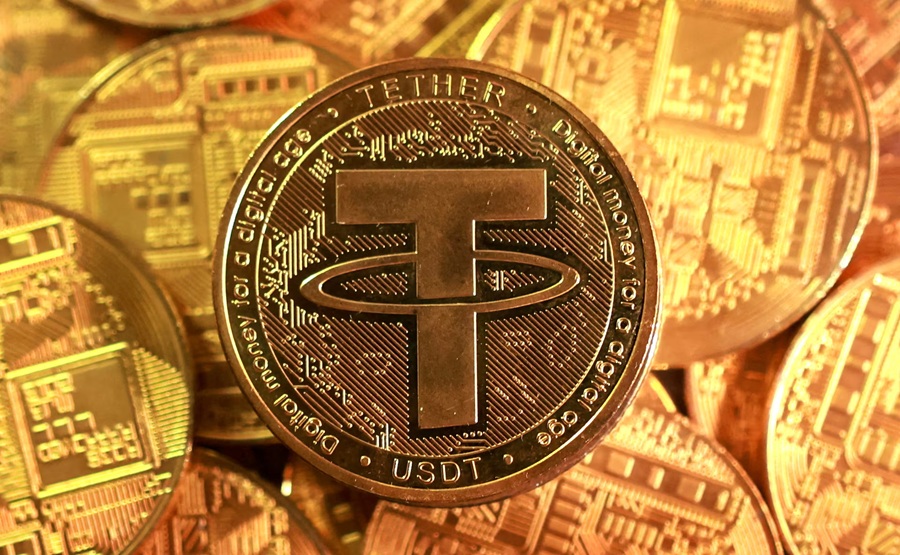
T3 Financial Crime Unit Freezes $450 Million in Illicit Crypto Assets Since Launch
A joint crypto enforcement initiative formed by Tether, TRON and TRM Labs said it has frozen more than $450 million in illicit digital assets since launching in 2024, underscoring the growing role of coordinated intervention across the cryptocurrency ecosystem.
The T3 Financial Crime Unit (T3 FCU), established by the three firms, said the cumulative total reflects freezes tied to investigations involving exchange breaches, North Korea-linked laundering operations, drug trafficking, terrorist financing, kidnappings and extortion cases.
According to the group, the amount of illicit proceeds intercepted in 2025 rose 43.9% compared with the previous year, pointing to both expanding enforcement activity and increasing volumes of suspicious funds moving through digital asset networks.
The initiative combines several layers of crypto infrastructure into a single enforcement workflow. Blockchain analytics firm TRM Labs identifies suspicious transaction activity, while TRON provides visibility into onchain fund movements across its network. Tether, as issuer of the USDT stablecoin, can then freeze assets directly at the token level through wallet blacklisting.
That structure gives the initiative capabilities not typically available in decentralized cryptocurrency systems.
Unlike Bitcoin and other permissionless assets that cannot be frozen once transferred, centrally issued stablecoins such as USDT can be rendered inaccessible if the issuer intervenes. The mechanism has become an increasingly important enforcement tool for investigators attempting to halt suspicious transfers before funds are fragmented through mixers, bridges or decentralized protocols.
USDT has become widely used on the TRON blockchain due to the network’s relatively low transaction costs and deep liquidity. Investigators say those same characteristics have also made it attractive for illicit finance, particularly in cross-border settlement activity requiring rapid movement of funds.
North Korea-linked operations remain a major focus for crypto enforcement groups and law enforcement agencies. These networks have historically relied on multi-stage laundering techniques involving decentralized exchanges, cross-chain bridges and over-the-counter brokers to obscure stolen funds.
The T3 unit said early-stage freezes can disrupt those laundering flows before assets are broken into more complex transaction pathways.
The initiative has also been involved in investigations tied to violent crime, including ransom and extortion schemes where stablecoins increasingly appear as payment tools. Law enforcement agencies working alongside the unit have used blockchain tracing to identify recipient wallets and coordinate freezes before funds can be withdrawn or converted.
The T3 Financial Crime Unit said it now collaborates with authorities across 23 jurisdictions, including the United States, Spain, Germany, Brazil and the United Kingdom.
The international scope reflects broader changes in how crypto-related financial crime investigations are being handled. Rather than relying primarily on exchanges to respond after suspicious transactions have already moved through multiple intermediaries, the model centers on rapid coordination between blockchain analytics providers, infrastructure operators and token issuers.
For Tether, the initiative also carries regulatory significance.
Stablecoin issuers are facing increasing scrutiny from lawmakers and regulators in both the United States and Europe, where policymakers continue debating frameworks that could impose stricter compliance and anti-money laundering obligations on digital asset firms.
The ability to freeze large volumes of illicit funds strengthens arguments from centralized stablecoin issuers that such assets can operate within existing financial crime enforcement standards.
At the same time, the model highlights a growing divide within crypto markets between centralized and decentralized systems.
The effectiveness of the T3 structure depends heavily on issuer-level control over token infrastructure. Fully decentralized cryptocurrencies, where no centralized entity can freeze or blacklist assets, remain outside the scope of this type of intervention.
Blockchain analytics data has consistently suggested that illicit activity represents a relatively small portion of total crypto transaction volume. Enforcement efforts, however, continue to focus on high-impact cases where suspicious funds can be identified and intercepted before laundering processes are completed.
The more than $450 million frozen by the T3 initiative illustrates how coordinated action between analytics firms, blockchain operators and stablecoin issuers is becoming a more active component of crypto enforcement strategy.
As criminal groups continue adapting their methods — including moving across chains and into less controllable assets — enforcement efforts are likely to evolve in parallel.
Analysis: Tether’s $450 Million Freeze Operation Shows Stablecoins Are Becoming the Banking System Crypto Once Claimed to Escape
This is the irony nobody in crypto really wants to admit.
The thing making enforcement effective isn’t decentralization.
It’s centralization.
That’s the real story behind the $450 million frozen by the T3 Financial Crime Unit. Not the headline number itself. Not the PR about “protecting users.” The structural reality underneath it.
Because when you strip away the marketing language, this operation worked for one reason:
Tether can freeze your money.
Instantly.
And that changes everything.
Crypto Wanted Permissionless Money. Instead It Built Programmable Dollars.
Back in 2021, the pitch was different.
“Unstoppable money.”
“Censorship resistance.”
“Banks can’t touch this.”
Then the market matured, institutions arrived, regulators leaned in, and suddenly the most important asset in crypto became a centrally controlled stablecoin that can blacklist wallets at will.
That’s USDT.
And honestly? Most traders are fine with it now.
Because speed and liquidity won.
Ideology lost.
The T3 Structure Is Actually Pretty Clever
I’ll give them credit here. Operationally, this setup makes sense.
TRM Labs tracks suspicious flows.
TRON sees the network activity in real time.
Tether freezes the assets before they disappear into mixers or bridges.
That combination matters.
Because historically, crypto enforcement has been reactive.
Funds get stolen.
Wallets scatter.
Assets jump chains.
Then exchanges get a memo three days later asking if they can help.
By then? Good luck.
This model flips that timeline.
Detection and execution happen almost simultaneously.
That’s why the freeze numbers are getting big.
TRON Keeps Showing Up in These Cases for a Reason
This part doesn’t surprise me at all.
USDT on TRON has basically become the shadow settlement rail of global crypto.
Cheap transfers. Fast confirmation. Massive liquidity.
If you’re moving size internationally and you don’t want Ethereum gas fees eating your face off, you probably touch TRON at some point.
Legitimate traders use it.
OTC desks use it.
Market makers use it.
Criminal networks use it too.
That overlap is unavoidable.
And honestly, anyone pretending otherwise hasn’t been paying attention for the last 3 years.
The North Korea Angle Matters More Than People Think
When these reports mention North Korea-linked activity, most readers skim past it.
Big mistake.
Those operations are sophisticated now.
We’re not talking about random hackers draining wallets and sitting on ETH anymore. These groups move funds through layered laundering systems involving bridges, OTC brokers, DEXs, shell wallets, sometimes even fake trading activity.
I’ve watched some of these laundering trees unfold onchain before. It gets messy fast.
The key is stopping funds early.
Once assets fragment across enough wallets and chains, tracing becomes exponentially harder.
That’s why issuer-level freezes are powerful.
Not philosophically powerful. Practically powerful.
Here’s the Part Crypto Purists Hate
Bitcoin can’t do this.
That’s both its strength and its weakness.
Nobody can freeze BTC.
Nobody can reverse it.
Nobody can blacklist you.
Sounds great — until stolen funds vanish permanently into laundering routes and nobody can stop it.
Stablecoins operate differently.
And regulators love that.
Because from a compliance perspective, USDT behaves less like crypto anarchy and more like a programmable banking layer.
That’s exactly why governments tolerate it more than many decentralized systems.
The Market Quietly Accepted Surveillance
This shift happened gradually.
People didn’t wake up one day and say:
“Yeah, I want issuers monitoring flows and freezing wallets.”
It happened because convenience compounded.
Traders wanted:
- Stable pricing
- Deep liquidity
- Fast settlement
- Cheap transfers
USDT delivered all four.
So the market made a trade-off.
Control in exchange for efficiency.
Now we’re at the point where some of the largest enforcement actions in crypto history rely directly on centralized issuer authority.
That’s not a side detail anymore.
That is the infrastructure.
Violent Crime Cases Change the Optics Completely
The kidnapping and extortion angle matters politically.
A lot.
Because regulators can debate DeFi all day. But once stablecoins appear in ransom payments or violent crime investigations, the conversation changes instantly.
Now it’s public safety.
And public safety arguments move legislation much faster than abstract financial policy debates.
That’s why Tether publicly emphasizing these cases feels strategic, not accidental.
They’re sending a message:
“We are not the problem. We are part of the enforcement solution.”
This Is Also a Regulatory Survival Strategy
I don’t think this is purely altruistic.
Not even close.
Tether knows regulatory pressure is rising, especially in the US and Europe.
Stablecoin legislation is coming one way or another.
So freezing $450 million tied to criminal activity becomes political ammunition.
It helps Tether argue:
“We can comply.”
“We can intervene.”
“We can work with law enforcement.”
That matters when lawmakers start deciding which stablecoin issuers get institutional legitimacy.
The Bigger Divide Inside Crypto Is Getting Harder to Ignore
There are basically two crypto industries now.
One side wants integration with traditional finance.
Compliance.
Institutional capital.
Issuer controls.
Surveillance tools.
The other side still wants permissionless systems with minimal intervention.
Right now?
The first side is winning.
Not philosophically.
Financially.
Liquidity flows toward systems institutions can tolerate.
And institutions absolutely prefer assets they can freeze if necessary.
What I Think Happens Next
Criminal networks adapt.
That’s guaranteed.
If enforcement tightens around centralized stablecoins, more activity moves toward:
- Cross-chain obfuscation
- Smaller liquidity venues
- Privacy-focused assets
- Decentralized infrastructure
It becomes an arms race.
Same as traditional finance.
Same as cybersecurity.
But the broader direction is already clear.
Crypto isn’t becoming less controlled.
It’s becoming selectively controllable.
And stablecoins are the clearest example of that shift.
The Real Takeaway Here
The $450 million number is impressive.
But the bigger story is what it represents.
Crypto’s most important financial rails are no longer operating like experimental decentralized networks.
They’re starting to operate like digital extensions of the global financial system itself.
Just faster.
Cheaper.
And programmable.

Shane Neagle is a financial markets analyst and digital assets journalist specializing in cryptocurrencies, memecoins, prediction markets, and blockchain-based financial systems. His work focuses on market structure, incentive design, liquidity dynamics, and how speculative behavior emerges across decentralized platforms.
He closely covers emerging crypto narratives, including memecoin ecosystems, on-chain activity, and the role of prediction markets in pricing political, economic, and technological outcomes. His analysis examines how capital flows, trader psychology, and platform design interact to create rapid market cycles across Web3 environments.
Alongside digital assets, Shane follows broader fintech and online trading developments, particularly where traditional financial infrastructure intersects with blockchain technology. His research-driven approach emphasizes understanding why markets behave the way they do, rather than short-term price movements, helping readers navigate fast-evolving crypto and speculative markets with clearer context.