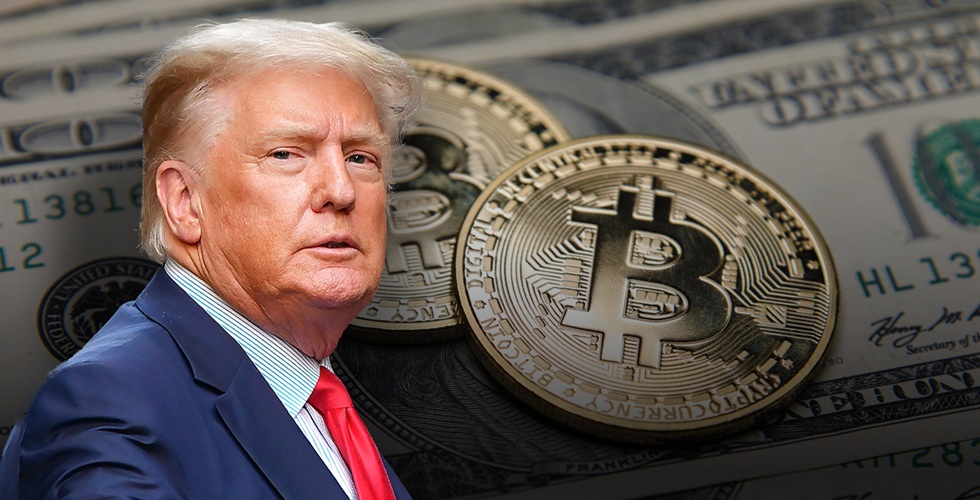
President Donald Trump is expected to highlight a crackdown on overseas cryptocurrency investment scams at a White House cybersecurity event on October 21, drawing attention to a fraud problem that generated more than $11 billion in reported losses from cryptocurrency-related complaints last year.
A White House official told Reuters that the event would focus on enforcement against international criminal networks that lure Americans onto fake investment platforms, alongside efforts to disable fraudulent websites and counter impersonation scams. Senior officials from the Justice Department, FBI, Homeland Security and Defense Department were expected to participate.
The scheduled appearance comes after months of federal seizures and coordinated operations against suspected scam networks. But enforcement announcements need careful interpretation: blocking a fraudulent domain, restricting a crypto wallet, seizing assets and returning money to victims are different results, and the government has not demonstrated that all losses can be recovered.
What Is Trump Expected to Announce About Crypto Scams?
According to Reuters’ October 21 report, the president is expected to discuss the government’s efforts to seize fake cryptocurrency investment websites and combat the impersonation schemes used to approach potential victims online. The news agency cited an administration official ahead of the planned event.
Officials expected to attend include Attorney General Todd Blanche, FBI Director Kash Patel, Homeland Security Secretary Markwayne Mullin and Defense Secretary Pete Hegseth. Their involvement reflects the government’s framing of foreign online scams as both a consumer-protection and transnational-crime issue.
At the time of this report, the event’s full remarks and any new operational figures had not been independently established. Previously reported seizures should not be presented as fresh results achieved on October 21 merely because they are discussed at the White House.
The administration’s approach predates the event. A March 6 executive order directed federal agencies to coordinate action against foreign criminal organizations engaged in financial fraud, phishing and impersonation, and to consider mechanisms for restoring forfeited assets to victims.
An August memorandum went further by creating a framework for vetted private companies to assist with certain cyber operations under federal supervision. That is a policy framework, not evidence that any newly announced operation has already succeeded.
How Large Are Americans’ Reported Cryptocurrency Scam Losses?
The FBI’s 2025 Internet Crime Report, released in April 2026, recorded 1,008,597 internet-crime complaints, compared with 859,532 in 2024, an increase of approximately 17%.
Reported losses across all categories approached $21 billion. Separately, the FBI counted 181,565 complaints involving cryptocurrency and more than $11 billion in related reported losses. These figures cover different but overlapping categories and should not be added together.
The cryptocurrency figure is not limited to fake token offerings or investment websites. Cases can involve varied forms of fraud in which crypto was used to receive or move proceeds. Likewise, the million-plus total represents all recorded internet-crime complaints, rather than one million proven cryptocurrency scams.
The FBI also reported that people aged 60 or older suffered approximately $7.7 billion in losses across internet-crime categories. The numbers demonstrate the financial scale of the problem, but remain complaint-based estimates rather than a complete census of every incident: some victims never report losses, while investigations can change how activity is classified.
For prospective investors, the operational risk often begins before any cryptocurrency transfer. Scammers may cultivate trust through fake relationships, professional-looking platforms or fabricated account balances, then demand additional deposits or fees when a customer attempts to withdraw.
What Has the Justice Department Actually Disrupted?
The government’s April 23 enforcement announcement described the seizure of 503 fake investment websites and criminal charges involving alleged operators of overseas scam compounds. These cases illustrate how authorities can intervene at the infrastructure stage, not only after funds reach an identifiable exchange wallet.
In July, the Justice Department said separate investigations had resulted in seizures of more than $25 million in cryptocurrency connected to international fraud schemes. In September, its Scam Center Strike Force reported restricting about $52 million in crypto in one day, bringing the cumulative amount it described as restrained to approximately $938 million.
Those amounts are from different dates and reporting categories. A restricted balance may still be subject to court proceedings, ownership claims or forfeiture steps. It does not follow that $938 million was already distributed to victims, or that the July and September figures can simply be added to the cumulative September total.
One September operation also targeted a suspected Chinese-language marketplace used to offer infrastructure and laundering services for fraud networks. Authorities alleged that vendors supplied fake investment websites and financial services to scam operators. That structure helps explain why taking down a single public-facing site is not enough: new sites can be built while recruitment and cash-out infrastructure remain active.
Cooperation with foreign authorities is equally important. As previously covered in DaveFinances’ reporting on a West African scam-network crackdown, arrests, account takedowns, crypto tracing and victim identification are separate stages of cross-border enforcement.
Can Seized Crypto Be Returned to Scam Victims?
Cryptocurrency can sometimes be traced between publicly visible addresses, and custodians may be able to restrict balances when they receive valid legal demands. But tracing a transaction does not mean the assets remain accessible, and even a seizure is not necessarily an immediate reimbursement.
A successful return process may require determining the rightful owner, establishing which fraudulent transfers funded a particular wallet, completing forfeiture proceedings and accounting for competing claims. Some stolen assets may already have been converted, mixed, bridged or withdrawn beyond the reach of the relevant custodians.
The distinction between a frozen asset and a recovered customer balance has appeared in earlier enforcement work involving Tether, TRON and blockchain intelligence providers. Issuer restrictions can disrupt transfers under particular circumstances, but they are not a universal mechanism for undoing cryptocurrency transactions.
Consumers also face impersonation fraud after the original scam. Criminals may pretend to be investigators or recovery agents and request payments to unlock supposedly seized funds. A user receiving an unexpected recovery offer should confirm the agency and case through official channels rather than send additional crypto to a new address.
Why Do Trump’s Own Crypto Businesses Remain Part of the Debate?
The administration’s enforcement effort is occurring alongside scrutiny of the president’s family’s commercial investments in the crypto sector. A separate Reuters investigation published June 9 estimated that Trump and his sons had added at least $2.3 billion to their family wealth through principal cryptocurrency ventures, while investors in those ventures incurred an estimated $2.3 billion in losses.
These are findings and calculations by Reuters, not adjudicated fraud losses or an assertion that the family stole the same money being targeted by overseas-scam enforcement. Investment losses in marketed crypto products are not automatically evidence of criminal activity, and the two estimated totals should not be treated as direct transfers between the same parties.
The White House has rejected the implication that the president’s commercial interests determine his administration’s decisions, telling Reuters that official actions are taken in Americans’ interests. The unresolved public-policy question is how financial interests and government decision-making are separated when crypto regulation and enforcement affect a sector in which the president’s family has substantial business exposure.
For investors, this debate should not obscure the central distinction between lawful, high-risk crypto speculation and deceptive platforms that fabricate ownership, returns or withdrawal rights. The practical tests for suspicious websites, wallet authorizations and fake support channels are discussed in DaveFinances’ guide to identifying crypto scams before connecting a wallet.
What Should Investors Watch After the White House Event?
The most useful measures of further progress will be newly identified criminal networks, verified counts of websites disabled, funds actually seized under court authority, amounts ultimately returned to victims and the durability of the disruptions. Announced asset restraints and website seizures are meaningful, but alone cannot establish a permanent reduction in crypto investment fraud.
Another issue is whether prosecutors and technology companies can prevent operators from replacing domains, social-media accounts and payment intermediaries as quickly as authorities remove them. Cross-border coordination and usable transaction evidence will determine how often a temporary disruption becomes a lasting enforcement result.
Trump’s planned remarks give the White House a platform to publicize that campaign. The financial outcome will be measured less by the size of announced seizures than by how effectively future victims are protected and how much of the money already stolen is legally returned.

Johan Shamshad is a financial markets writer at Dave Finances covering cryptocurrencies, trading platforms, brokers, fintech, financial regulation, and developments across global markets. He previously worked at Gulf News, adding newsroom experience to his coverage of fast-moving financial and digital-asset markets.
His work focuses on identifying market-moving events, company developments, regulatory changes, product launches, and shifts in trading and financial infrastructure.
Johan contributes news and analysis designed to help readers understand not only what happened, but why a development matters and how it may affect the wider financial landscape. You can reach out to him via his social media accounts:
Linkedin: https://www.linkedin.com/in/johan-shamshad-742851262/
X: https://x.com/Yasmine_FX
Investing: https://www.investing.com/members/contributors/279781574