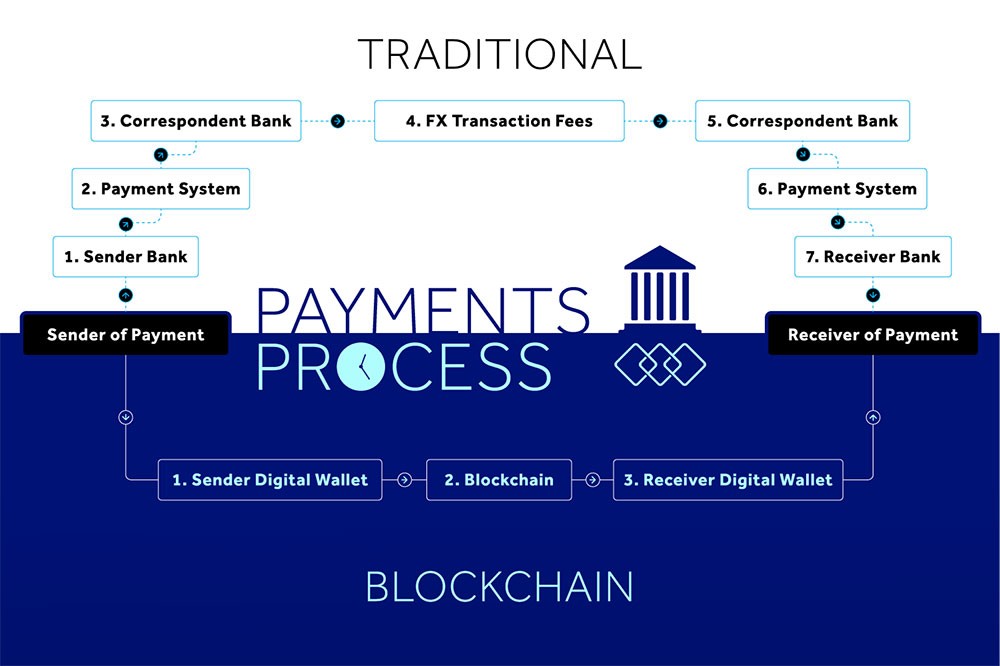
The answer depends on what “one account” is allowed to mean. Mastercard and BVNK announced their Global Money Platform on October 15, 2026, describing a single API and account interface in which businesses could hold, convert, send and receive fiat currencies and stablecoins. SoFi, meanwhile, has connected conventional bank deposits, tokenized deposits and a bank-issued stablecoin within its own customer services. The technology for a combined experience is no longer purely theoretical. The legal notion of one undifferentiated balance remains misleading. [1][2]
A customer can see dollars, euros and stablecoins side by side without owning the same kind of claim in each case. One line might represent an insured deposit at a bank. Another might be safeguarded e-money from a licensed nonbank. A third could be a token whose issuer owes redemption subject to a rulebook, while the customer’s wallet provider merely holds the asset. The same application can manage all three; one balance sheet and one insurance policy cannot be presumed to cover them. The bank account screen is becoming broader, but the underlying rights don’t all follow.
One Interface Is Not One Legal Account
Mastercard says its Global Money Platform includes global money accounts that let fiat and stablecoins sit side by side, with conversion via a single integration, and connects them to Mastercard Move payouts and stablecoin-linked card spending. [1] Crucially, the product is infrastructure offered to banks, fintechs and enterprises for embedding in their own services. It does not mean Mastercard itself has opened a single insured retail account containing every supported currency and token. Mastercard named Nuvei, Marqeta, Ontop, Beem and Almond FinTech among intended early adopters, but public material does not establish that every retail customer of each provider already has an activated account.
From the customer’s perspective, combining the products has obvious appeal. An employer can receive euros, pay a contractor in dollars and maintain a dollar stablecoin balance for weekend disbursements. A freelancer can collect USDC and convert part into a euro bank transfer. A consumer can hold a bank deposit while selecting a stablecoin as a transfer method to an external wallet. The interface can reconcile transactions without opening three separate apps. It is a real convenience gain. The question is which company owes the balance and under which rules at each step.
The practical architecture has at least five layers: a front-end ledger, a regulated bank or payment account provider, a stablecoin issuer, a crypto custody/wallet service and the payment rails used to reach the recipient. Providers can vertically integrate some layers, but not all of them necessarily sit on one legal entity’s books. A fintech that calls these one account ought to provide a precise mapping of the legal debtor for each asset and the action that changes that debtor.
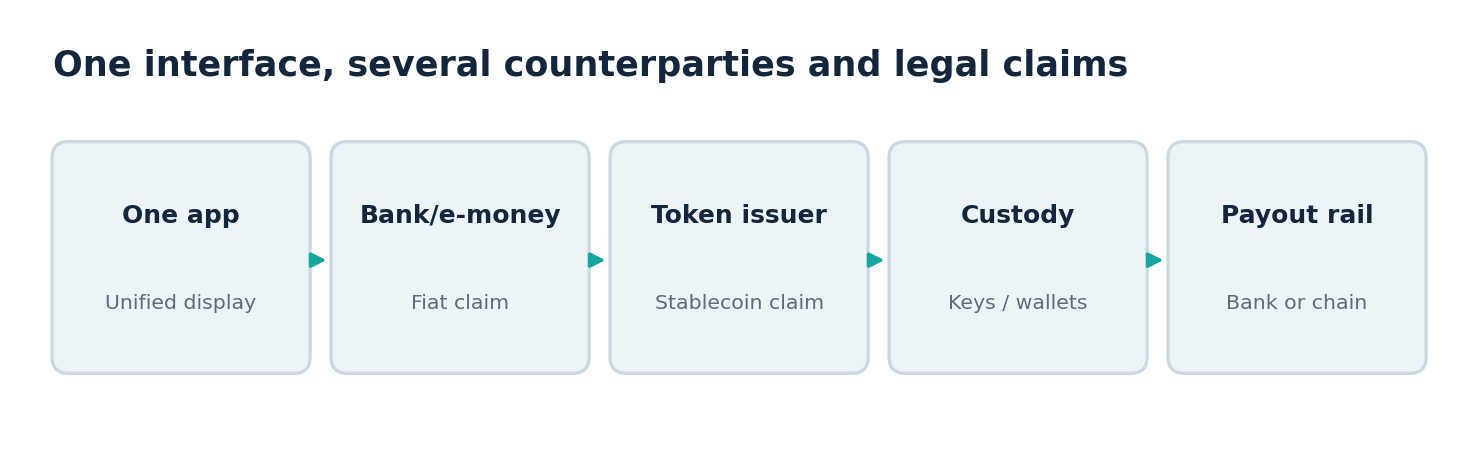
Figure 1. Legal claims remain distinct despite a single financial user interface.
The SoFi Example Reveals the Key Boundary
SoFi’s October 22 launch provides a remarkably clear case. The bank says SoFi Earn (SOFIE) is a tokenized deposit representing one dollar held on deposit at SoFi Bank; it was advertised at 4.40% APY and FDIC-insured subject to normal limits. Eligible users can exchange SOFIE into SoFiUSD (SOFID) at one-to-one and send the stablecoin through supported blockchain networks around the clock. SoFi’s help material explicitly distinguishes SOFID from a bank deposit: it does not earn the advertised deposit interest and is not FDIC-insured. [2][3][4]
SoFi can therefore put two dollar-looking balances into the same digital-money service while changing the user’s legal exposure with a conversion. A $10,000 SOFIE position is a bank deposit if its terms and eligibility requirements are met. A $10,000 SOFID position is a stablecoin claim, even if issued by that same bank and even if its current redemption price is $1.00. The conversion is economically small when everything works, but it is legally substantial. This is the essential warning for a unified financial interface: familiar currency labels are not enough.
An earlier Dave Finances examination of SoFi’s tokenized deposit and stablecoin products focuses on that exact handoff. The more general difference between stablecoins and savings-account deposits is not resolved by issuing both through a bank. Deposit insurance relates to the legal status of a qualifying bank deposit, not to a graphic in the mobile app.
What the Customer Actually Owns
| Balance displayed | Typical legal position | What moves when you pay? | Protection to verify |
|---|---|---|---|
| Bank USD/EUR deposit | Claim on insured deposit-taking bank | Bank liability transferred through payment rails | Deposit-insurance eligibility and aggregation |
| E-money balance | Claim on authorized e-money issuer | E-money redeemed or transferred | Safeguarding regime; not necessarily deposit insurance |
| Tokenized bank deposit | Bank deposit recorded through token system | Deposit claim represented/transferred under bank rules | Whether it legally remains a deposit |
| Payment stablecoin | Redemption/ownership claim governed by issuer and custody terms | Token moved, later redeemed or swapped | Reserves, redemption access, custody, not FDIC cover |
| Yield or lending token | Claim on platform/strategy or underlying pool | Smart contract or intermediary claim | Counterparty, liquidation, lock-up and loss terms |
The category of tokenized deposits deserves special attention. The FDIC has explained that it evaluates whether the underlying legal instrument is a deposit; a tokenized deposit does not cease to be a deposit solely because it is recorded on distributed infrastructure. The US GENIUS Act separately makes clear that payment stablecoins are not federally deposit-insured or guaranteed by the government. The FDIC’s 2026 statements and proposals address these boundaries, and their details may change with subsequent implementing rules. [5][6] The decisive question is not whether a bank is involved at some point. It is whether the holder possesses an eligible deposit claim at the relevant moment.
Across the European Union, the Markets in Crypto-Assets Regulation (MiCA) grants holders of qualifying e-money tokens a claim on their issuer and a redemption right at par, while Article 50 prohibits issuers from granting interest merely for holding those tokens. [7] Those rules differ from those for bank deposits. The UK is also designing a distinct stablecoin regime; its Bank of England June 2026 paper describes backing-asset requirements and a route to systemic recognition without declaring stablecoins to be equivalent to ordinary deposits. [8] A unified multicurrency app may therefore display similar assets governed by several regulatory structures depending on the user’s country and provider.
The Conversion Is the Financial Product
The profitable part of the combined account may sit in the conversion event. A fintech can attract customers with free account access, then monetize foreign exchange, spread on stablecoin conversions, wallet and custody services, yield distribution, card interchange and payouts. Mastercard/BVNK’s new platform brings several of these steps into one API, potentially reducing the need for each fintech to contract with separate suppliers. That may simplify engineering and compliance integration. It does not guarantee that end-users receive cheaper conversion or that their financial risks are pooled into one protection arrangement.
Take a small enterprise that receives $10,000 in USDC and wants to pay a supplier $10,000 through a bank account. Suppose an all-in conversion spread is 10 basis points and a payout charge is $2: the cost is $12 before currency conversion. At 30 basis points the same payout costs $32. If the business then needs to change the dollars to euros at an additional 20 basis points, another $20 is added, plus any banking charges. The blockchain network fee could be lower than any of these amounts and still be a negligible portion of the bill.
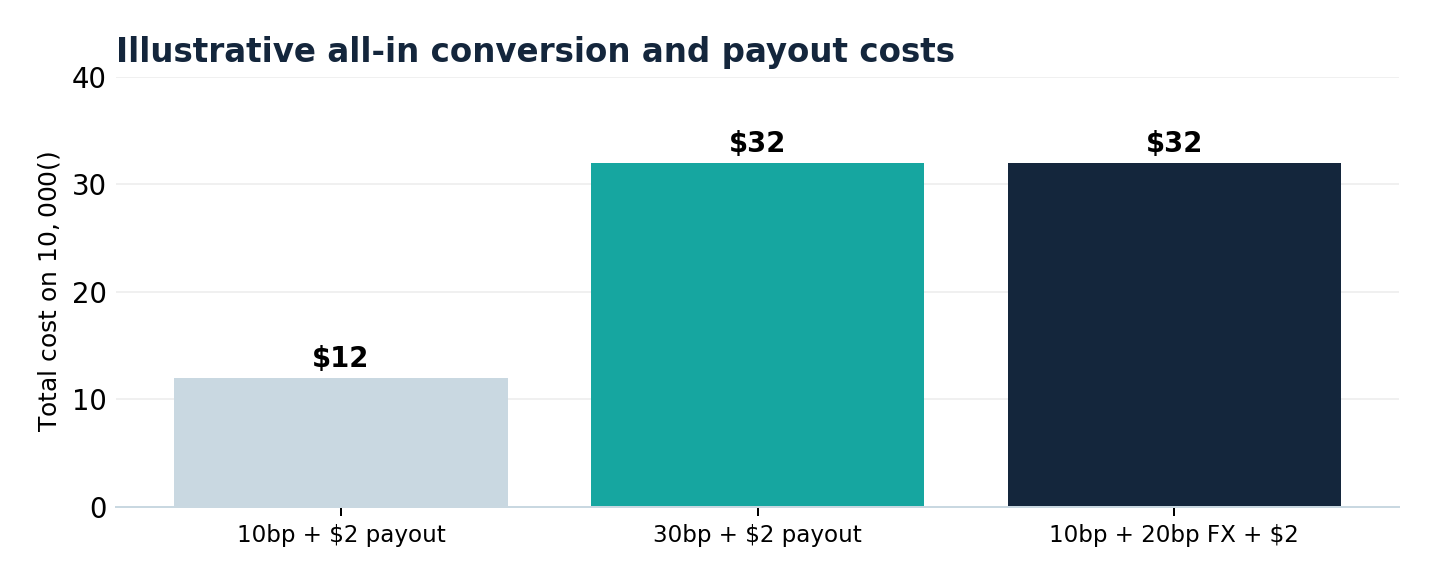
Figure 2. Hypothetical $10,000 payout costs; not provider fee quotations.
These amounts are scenarios, not current BVNK or SoFi quotations. The real comparison is between final spendable bank money after every leg and the amount a supplier would receive from a conventional bank payment. Local fiat payout coverage may be limited to supported countries, currencies, receiving banks, screening windows and partner operating hours. Mastercard says Global Money Platform’s connected Mastercard Move reach is intended to expand further into 2027. The launch description is a product capability and roadmap, not verified instant payouts to every endpoint. [1]
Original Model: What Does the Wrong Balance Cost You?
A second test concerns idle money. Imagine a user has $10,000 ready for a future on-chain payment. Under the announced 4.40% SOFIE APY as a point-in-time illustration, a simple annualized interest approximation yields $8.44 over seven days, $36.16 over thirty and $108.49 over ninety. A noninterest-bearing stablecoin earns zero contractual deposit interest over those periods. The difference is not a recommendation to hold the deposit: rates can change, conversion features can be restricted and eligibility differs. It simply measures the carry that disappears when an interest-bearing deposit is converted early into a non-yielding payment token.
At an assumed one-way 10-basis-point conversion cost, turning $10,000 into a token costs $10. A seven-day interest differential of about $8.44 would not fully offset that charge, while a thirty-day differential of $36.16 would. The rough carry break-even period for a $10 fee at 4.40% is 8.3 days. If conversion both into and out of the stablecoin costs 10 basis points, round-trip expense rises to $20 and break-even is 16.6 days. Real SOFIE-to-SoFiUSD conversion is described as one-to-one; this fee scenario should not be attributed to SoFi. It is a way to value timing and transfer pricing in any unified account.
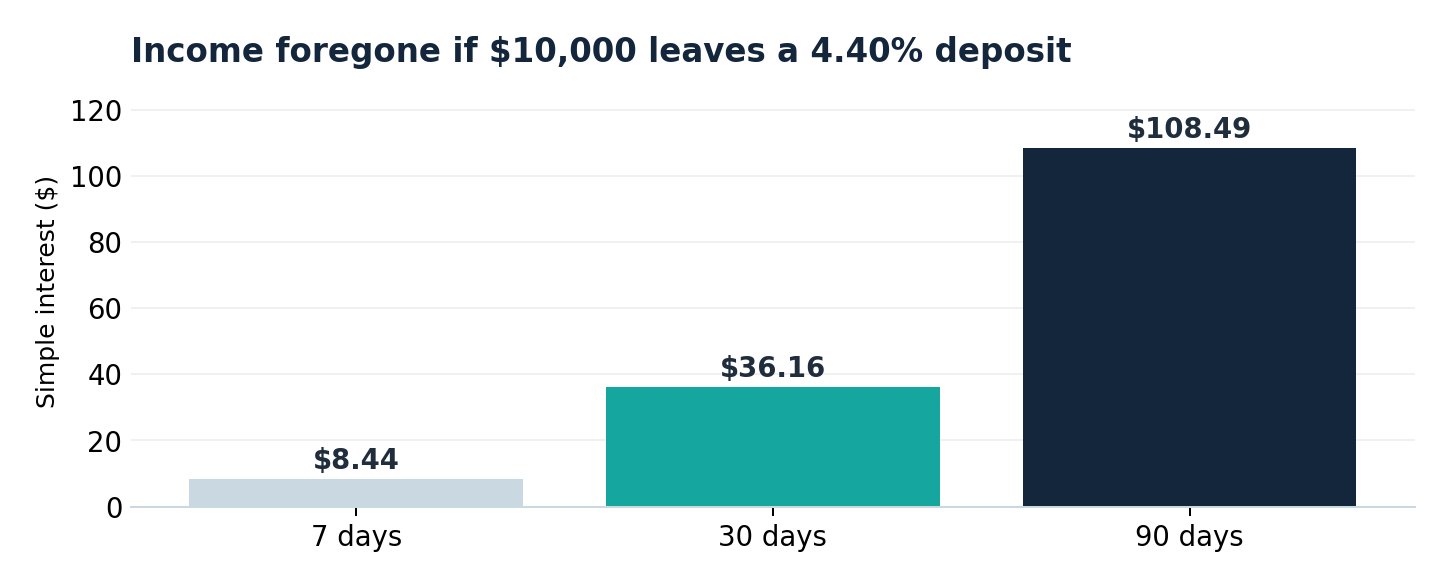
Figure 3. Short-term interest at the October 2026 SOFIE advertised rate; hypothetical comparison.
The result raises an awkward question for providers: should a user retain an interest-bearing or safeguarded fiat balance until the final instant, converting only the amount needed at payment time? Technologically, yes, for eligible integrations with real-time conversion and enough liquidity. Operationally, the provider must still manage reserve coverage, payment screening, the availability of redemption facilities and possible chain or bank outages. The last mile is always a little less tidy than the account dashboard.
When Is a Single Account Better Than Several?
The advantage is clearest for firms that frequently alternate between multiple currencies and payment types, can net receipts and obligations and need reconciled books. One interface can reduce the time spent manually moving balances between a bank, exchange, custody wallet and cross-border payment provider. It can also reduce mistakes introduced by repeated address or bank-detail entry. Mastercard’s enterprise offering is designed to package these operations, while specialist providers such as MoonPay Enterprise already advertise virtual accounts that receive fiat and automatically convert it to a selected stablecoin. [1][9] Different products move the conversion boundary to different points in the transaction.
But unified interfaces can increase concentration risk. A single provider interruption might freeze the user’s ability to view deposits, access a stablecoin wallet, initiate payouts and reconcile payments even when the underlying bank or blockchain is still functioning. In November 2026, an interruption at a Japanese banking API affected stablecoin issuance and redemption services; that episode illustrates a failure mode at the on/off-ramp layer without proving a problem in every stablecoin arrangement. The legal parties and escape routes matter. A useful comparison is Telcoin’s attempt to connect bank accounts with eUSD-linked blockchain infrastructure, where integrated access and the form of the underlying claim must be assessed separately.
How the Balance-Sheet Economics Change
Banks have an incentive to keep interest-bearing deposits, customer relationships and payment activity within their ecosystem. Stablecoin issuers may earn investment income on eligible reserves, subject to issuance rules and commercial arrangements. Fintechs can earn conversion, payment or platform fees and avoid integrating many separate vendors. Card networks can preserve distribution and routing roles while processing multiple money types. Customers may enjoy easier transfers but can lose return on a bank balance or take on token, platform and cybersecurity risks when funds are moved.
A bank that issues both deposits and stablecoins might gain operating flexibility but cannot simply count the same dollar of reserves twice. If $1 billion of deposits is converted into outstanding stablecoins, the structure of liabilities and the composition of reserves matter. A transaction that appears to be an internal toggle can still change funding, liquidity metrics, redemption risk and compliance. The BIS has emphasized that private stablecoin claims can remain economically differentiated from central-bank settlement money even when denominations look identical. [10] Treating every digital dollar as fungible at par is a product ambition, not an unconditional economic law.
What to Ask Before Keeping Both in One Place
A prospective customer should identify the contracting entity, the custodian, the stablecoin issuer, the recipient’s settlement form and the precise circumstances in which a balance is deposit-insured, safeguarded or neither. They should ask whether tokens can leave to a self-controlled wallet; whether conversion into fiat is guaranteed at par for that customer category; whether the bank account can still operate if the crypto interface has an outage; and what happens to pending transfers during insolvency or a sanctions review. Fee schedules should separate exchange spread, custody, gas, payment charges, FX and withdrawal. A single app should make those differences clearer, not harder to find.
A reliable launch would disclose active funded accounts, the portion of payments actually crossing between fiat and stablecoins, the average fee per completed payout, conversion and redemption failure rates, and support response times. The thesis is weakened if users still need separate verification at every stage, advertised fiat endpoints are not live, or funds are difficult to withdraw back to an ordinary bank account. The best product is not necessarily the one supporting the longest list of currencies; it is the one that delivers usable money with predictable protections and costs.
Bottom Line
Yes, one financial interface can now accommodate fiat currencies, tokenized bank deposits and stablecoins, and Mastercard/BVNK’s October launch offers a concrete infrastructure route for firms to build such products. But an app cannot abolish the distinction between a bank deposit, e-money and a transferable private token. The best financial account will not disguise those differences under one dollar symbol. It will show the user exactly when their legal claim changes, how much a conversion costs and what route remains available if the platform, issuer or bank is under stress.
Methodology and Limitations
Research cut-off: 12 November 2026. Product scope, geography and availability reflect publicly described capabilities, not independent customer tests. The original payout model assumes a $10,000 stablecoin holding with 10 or 30 basis points of conversion cost and $2 withdrawal expense; other fees are added separately. The original carry model uses simple interest approximation at 4.40% annually (not compounded APY over short periods), $10,000 principal and hypothetical 10-basis-point conversion charges. SOFIE-to-SoFiUSD is advertised as 1:1; the modeled fee is a general sensitivity, not a quotation. Regulatory protections depend on customer location, legal issuer, terms and custody status. Visuals show explanatory architectures and labeled assumptions, not customer data.
Sources
1. Mastercard/BVNK, “Global Money Platform,” 15 October 2026
2. SoFi, SOFIE tokenized deposit announcement, 22 October 2026
3. SoFi Help, How do I use SoFi Digital Money?
4. SoFi Help, SoFiUSD interest and insurance
5. FDIC, Reform of regulatory toolkit and GENIUS Act deposit insurance distinctions, 2026
6. FDIC, Proposed GENIUS Act issuer rules and insurance treatment, April 2026
7. European Union, Regulation (EU) 2023/1114, MiCA, Articles 49-50
8. Bank of England, Systemic stablecoin policy statement, 22 June 2026
9. MoonPay Help, Enterprise virtual account conversions, 2026
10. BIS Annual Economic Report, Next-generation monetary and financial system, 2025
11. Mastercard/BVNK, Global Money Platform product documentation
12. SoFi, Stablecoin settlement with Mastercard, 22 September 2026
13. Bank of England, Joint Bank-FCA regulation of systemic stablecoin issuers, 30 June 2026

Johan Shamshad is Editor-in-Chief at Dave Finances, covering financial markets, digital assets, trading platforms, brokers, fintech, payments and regulation. Since 2023, he has also worked as an editor at Gulf News, the UAE English-language newspaper published by Al Nisr Publishing LLC. His work focuses on market-moving developments, company disclosures, regulatory changes and trading infrastructure, with an emphasis on primary-source verification and practical context for traders and investors.