Stablecoin rewards and high-yield savings can now display nearly identical APYs. The similarity largely ends there: the legal claim, insurance, counterparty chain, redemption mechanics and tax paperwork are fundamentally different.
| RESEARCH THESIS
A stablecoin reward can look like bank interest on a phone screen without being a bank deposit in law. For U.S. retail users, the relevant comparison is therefore not “4% versus 3.5%.” It is “what extra legal and operational risk am I taking for roughly 50 basis points of extra gross yield?” |

Figure 1. Current retail examples. Marcus APY is an insured-bank savings rate; Coinbase and PayPal figures are crypto reward rates and are not FDIC-insured deposits.
The comparison in one table
| Feature | Marcus HYSA | Coinbase One USDC | PayPal PYUSD |
| Headline rate | 3.50% APY | 3.75% rewards rate | 4.00% rewards rate |
| What you legally hold | Bank deposit | USDC digital asset | PYUSD digital asset |
| FDIC insurance | Yes, subject to limits | No | No |
| Who pays the yield | Bank interest | Coinbase reward program | PayPal reward program |
| Rate guarantee | Variable | Variable / program terms | Variable / program terms |
| Direct issuer redemption | Not applicable | Circle redemption subject to eligibility/terms | Paxos/PayPal rails subject to terms |
| Typical tax form for yield | 1099-INT | 1099-MISC above applicable threshold | 1099-MISC above applicable threshold |
The APY is similar. The promise behind it is not.
A savings account is a liability of a bank to its depositor. If the bank is FDIC-insured and the customer stays within the applicable ownership-category limits, federal deposit insurance is designed to protect eligible deposits if that bank fails. The FDIC’s standard coverage limit remains $250,000 per depositor, per insured bank, for each account ownership category. That protection does not depend on whether the bank’s investments perform well; it is attached to the deposit relationship itself.
A stablecoin is different. USDC and PYUSD are digital assets whose issuers maintain reserve assets intended to support one-for-one redemption. Those reserves can include cash, Treasury bills and similar high-quality liquid assets, but the token holder does not thereby become the owner of an FDIC-insured savings account. The GENIUS Act explicitly separates payment stablecoins from insured deposits, and 2026 FDIC rulemaking says reserve deposits backing a payment stablecoin would not be insured to token holders on a pass-through basis.
That distinction matters most precisely because the user experience is converging. A consumer can open an app, see “4% rewards,” watch a dollar-denominated balance rise every day and move the money with a tap. The economic behavior resembles savings. The legal object does not.

Figure 2. A savings deposit and a stablecoin reward can produce similar cash flows while giving the holder a different legal claim.
Why stablecoin “yield” is usually a reward, not deposit interest
The GENIUS Act prohibits a permitted payment-stablecoin issuer from directly paying interest or yield solely for holding, using or retaining the stablecoin. Federal Reserve research published in March 2026 notes, however, that the statute does not rule out indirect rewards. That distinction explains much of the current retail market.
Coinbase describes USDC Rewards as a loyalty program funded by Coinbase. Coinbase also says it is not a depository institution, that a USDC wallet is not a deposit account, and that USDC balances are not FDIC- or SIPC-insured. PayPal uses similar language for PYUSD: its crypto account is not a deposit account and PYUSD holdings are not deposits. The 4% rate is a rewards program whose rate can change.
This is not just semantics. Bank interest is part of the contractual economics of a deposit. A platform reward is an incentive program layered on top of ownership of a digital asset. The platform can change the reward rate, eligibility rules or the program itself under its terms. The token can continue to exist even if the reward disappears.
Where the money actually comes from
A bank generally earns a spread between what it receives on loans and securities and what it pays depositors. The depositor’s interest is therefore part of the bank’s funding model.
A payment stablecoin works differently. The issuer typically earns the return generated by reserve assets such as Treasury bills, repo or bank deposits. Circle’s USDC terms explicitly state that even if its reserves are held in interest-bearing accounts or yield-generating instruments, ordinary USDC holders are not entitled to those reserve returns. The token itself is designed to represent a redeemable dollar claim, not an interest-bearing security.
A separate platform can then choose to share economics with users through a rewards program. That may be funded from commercial arrangements, reserve-sharing economics, marketing budgets or the broader profitability of the platform relationship. The consumer sees one APY; behind it sits a commercial contract rather than the deposit-interest architecture of a bank.
Higher onchain rates can be an entirely different product again. Coinbase, for example, separately advertises USDC lending through Morpho at rates above its basic USDC Rewards. In that case the user is not merely holding a stablecoin and receiving a platform incentive; the user is participating in a lending arrangement with additional smart-contract, collateral and borrower-market risk. Calling both products “stablecoin yield” hides the economically important difference.
The $10,000 question: how much are you being paid for the extra risk?
Using current advertised rates, $10,000 in a 3.50% Marcus savings account would generate about $350 over a year if the rate remained unchanged. A 4% PYUSD reward rate would generate about $400. The gross difference is only $50.
Coinbase One advertises 3.75% USDC rewards for eligible members. That equates to about $375 on $10,000 before considering the membership price. Coinbase One plans start at $4.99 a month. If a consumer bought the lowest-priced plan solely to obtain the USDC reward and received no other value from the membership, the annual plan cost would be roughly $59.88, leaving about $315 of net reward before tax. That simplified comparison would actually trail the $350 gross interest from Marcus.
The point is not that one product is universally better. It is that headline APY is a poor decision rule. The extra yield may be tens of dollars per $10,000, while the legal and operational differences can determine what happens to the entire principal in a failure scenario. A retail saver should therefore compare the protection stack before comparing the second decimal place of the yield.
FDIC insurance is not the same thing as “fully backed”
Stablecoin marketing often emphasizes reserve quality, and reserve quality matters enormously. Circle says USDC is backed one-for-one by dollar-denominated reserve assets held separately from corporate funds, including bank deposits, Treasury instruments, reverse repo and the Circle Reserve Fund. PYUSD is backed by U.S. dollar deposits, short-term Treasuries and similar cash equivalents through Paxos.
But “fully backed” answers a different question from “insured deposit.” Full backing asks whether assets exist to support redemption. Deposit insurance asks who absorbs losses if the insured bank that owes the depositor money fails. The first is an asset-liability design. The second is a statutory protection regime.
The difference becomes important in a stress event. A savings depositor generally does not have to inspect the bank’s securities portfolio to determine whether an insured balance will be protected. A stablecoin holder may need to care about reserve composition, issuer operations, custody arrangements, redemption eligibility, blockchain functionality and the liquidity of whatever platform is being used to convert the token back into dollars.
Redemption is where “one dollar” becomes operational
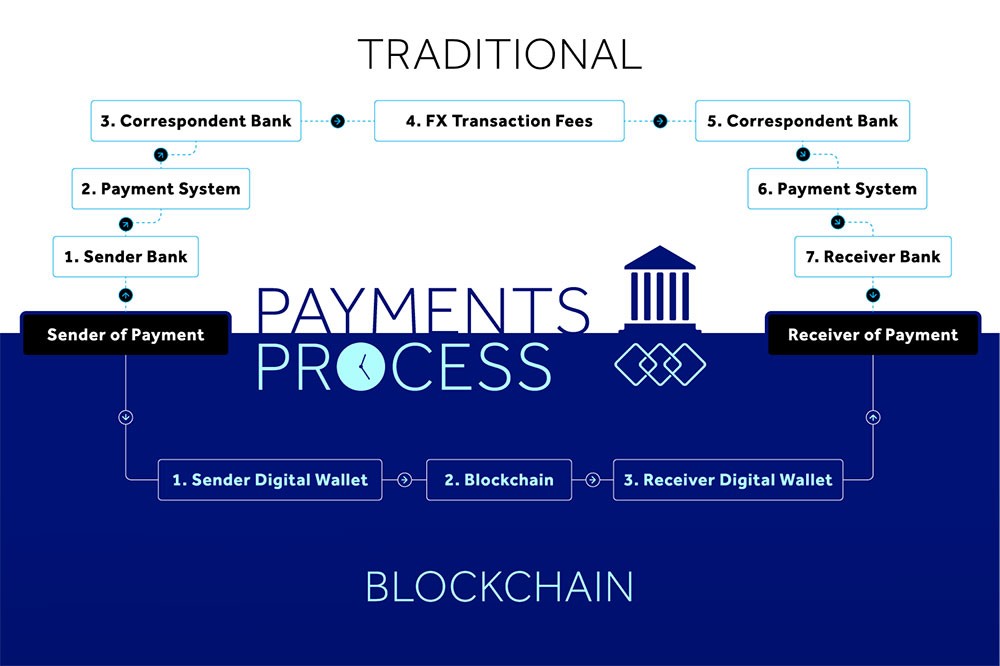
A savings account balance is already a bank deposit denominated in dollars. Moving it generally means instructing the bank to transfer dollars through established payment rails.
With a stablecoin, the user must get from token to bank money. Circle commits to one-for-one USDC redemption subject to its terms, but direct redemption with Circle is generally tied to an eligible Circle Mint account. A retail user holding USDC on another platform may instead rely on that platform’s conversion service or sell into the secondary market. PayPal lets eligible customers buy and sell PYUSD against dollars inside PayPal, while issuance and custody are performed by Paxos.
In normal markets, these routes can make redemption feel instantaneous. Under stress, the chain matters. A platform can restrict an account. An issuer can impose compliance-related restrictions. Blockchain transfers can be delayed by network conditions or irreversibly sent to the wrong address. Secondary-market prices can briefly move away from $1 even if reserve assets ultimately cover redemption. The peg is an economic mechanism, not the same legal thing as a dollar balance at an insured bank.
Counterparty risk does not disappear because the reserves are safe
A Treasury-heavy reserve portfolio can reduce credit and duration risk while leaving other risks intact. A hosted stablecoin user may be exposed to several entities at once: the trading or wallet platform, the stablecoin issuer, custodians holding reserve assets, banks holding cash reserves and the blockchain network used for transfers.
Some of those layers are designed to be bankruptcy-remote or segregated; that is valuable. But segregation is not the same as government insurance, and operational access can still matter. Coinbase, for example, distinguishes U.S. dollar cash balances from crypto balances: certain cash held in bank custodial accounts may be eligible for pass-through FDIC insurance if conditions are met, while USDC itself is explicitly not FDIC-insured.
For a retail user, this creates a simple discipline: identify the asset before reading the APY. “USD” in a cash wallet, “USDC” in a crypto wallet and “USDC lent through an onchain protocol” can sit one tap apart while occupying three different risk categories.

Figure 3. Stablecoin rewards add operational layers that a retail user may not see in the displayed APY.
Tax treatment can create a second hidden difference
For a U.S. taxpayer, bank savings interest is familiar. Banks generally report taxable interest on Form 1099-INT when reporting thresholds are met, and the interest is ordinary income.
Stablecoins are digital assets for federal tax purposes. The IRS treats digital assets as property and explicitly includes stablecoins in that category. Coinbase says U.S. customers receiving more than $600 of USDC Rewards generally receive a Form 1099-MISC. PayPal likewise says PYUSD rewards may be taxable and that customers receiving at least $600 in a calendar year will be issued a 1099-MISC.
That can produce more recordkeeping than a savings account. The reward itself can create income when received. Then, because the stablecoin is property, selling or otherwise disposing of it can create a capital gain or loss relative to tax basis. If a dollar stablecoin is acquired and redeemed at exactly $1, the gain may be zero, but the transaction is still part of the digital-asset recordkeeping framework. If the token is sold during a depeg, exchanged for another crypto asset or received as a reward at a price different from a later disposition price, the calculation becomes more meaningful.
This is a U.S.-focused comparison and not personal tax advice; tax treatment can differ materially by jurisdiction and by the exact reward arrangement.
Regulation is getting stronger without turning stablecoins into deposits
The GENIUS Act has materially narrowed some of the regulatory gap. It requires permitted payment-stablecoin issuers to maintain one-for-one identifiable reserves using specified high-quality liquid assets and establishes a federal/state supervisory framework. In September 2026, the Federal Reserve proposed additional capital, reserve, risk-management and safekeeping standards for Board-supervised issuers.
Those developments can make regulated stablecoins safer and more transparent. They do not erase the legal distinction at the heart of this article. The FDIC has emphasized that payment stablecoins themselves are not subject to federal deposit insurance, while tokenized deposits that are legally deposits remain deposits regardless of the technology used to record them.
That is an important dividing line for the next generation of financial apps. A token can look and move like digital cash without being a bank deposit. A tokenized bank deposit can use blockchain technology while still being a deposit. Retail investors should classify the legal instrument, not the interface.
When a stablecoin reward may make sense—and when a savings account is doing a different job
Stablecoin rewards have legitimate utility. A user who already keeps money onchain for trading, payments, remittances or DeFi may prefer to earn something on a dollar-like asset rather than hold non-yielding cash-equivalent tokens. Stablecoins can also move globally outside banking hours and integrate directly with crypto markets. Those features are not replicated by an ordinary savings account.
But for emergency cash, short-term household savings or money whose primary purpose is capital preservation in dollars, the relevant benchmark is often an insured deposit rather than another crypto product. If the yield advantage is 50 basis points, the consumer is being paid $50 a year per $10,000 for accepting a different legal and operational structure. Whether that trade is attractive depends on why the money is being held in the first place.
The useful retail question is therefore not “Which app pays the highest APY?” It is “What function do I need this money to perform?” A payment rail, trading collateral and an emergency fund may all be dollar-denominated, but they do not require the same protection.
A seven-question retail checklist
1. Is the balance a bank deposit, a stablecoin, a securities product, or a loan to a protocol?
2. Who is legally obligated to return one dollar to me?
3. Is my balance FDIC-insured, and if so, under whose bank relationship and ownership category?
4. Who actually pays the advertised yield: a bank, the token issuer, a platform loyalty program, or borrowers?
5. Can the reward rate or eligibility change at the platform’s discretion?
6. How do I redeem to dollars during a market or platform outage, and do I have direct issuer access?
7. What tax forms and transaction-level records will I need if rewards are paid in digital assets?
Bottom line
Stablecoins are becoming better regulated, better reserved and easier to use. That can make them excellent payment and onchain liquidity tools. It does not make a 4% stablecoin reward economically or legally identical to a 4% bank savings rate. The bank depositor owns an insured deposit claim; the stablecoin user owns a digital asset plus whatever reward arrangement a platform chooses to provide. For retail savers, the difference between those structures can be worth far more than the difference between the APYs.
Methodology & sources
Rates are snapshots and can change. The $10,000 examples assume the displayed annual rates persist for a full year, ignore compounding nuances unless embedded in the advertised APY, and are before taxes. Coinbase One membership economics are shown only to illustrate the impact of a fixed subscription cost if a consumer purchased the plan solely for USDC rewards; the plan includes other benefits, so that scenario is not a complete valuation of the subscription. U.S. tax discussion is general educational information, not individualized advice.
1. Marcus by Goldman Sachs — Online Savings Account, 3.50% APY as of Oct. 2, 2026
3. FDIC — 2026 GENIUS Act proposed rule / stablecoin reserve and deposit-insurance treatment
4. Federal Reserve — Payment Stablecoins and Cross Border Payments (Mar. 30, 2026)
5. Federal Reserve — Sept. 24, 2026 stablecoin regulatory proposals
7. Circle — Transparency and reserve composition
8. Coinbase — USDC Rewards page
9. Coinbase Help — USDC Rewards overview / insurance and tax disclosures
10. Coinbase — U.S. User Agreement
11. PayPal — PYUSD stablecoin and 4% rewards
12. PayPal — Cryptocurrency Terms and Conditions / PYUSD rewards
13. Paxos — U.S. Dollar-Backed Stablecoin Terms
15. IRS — Frequently asked questions on digital asset transactions

Johan Shamshad is a financial markets writer at Dave Finances covering cryptocurrencies, trading platforms, brokers, fintech, financial regulation, and developments across global markets. He previously worked at Gulf News, adding newsroom experience to his coverage of fast-moving financial and digital-asset markets.
His work focuses on identifying market-moving events, company developments, regulatory changes, product launches, and shifts in trading and financial infrastructure.
Johan contributes news and analysis designed to help readers understand not only what happened, but why a development matters and how it may affect the wider financial landscape. You can reach out to him via his social media accounts:
Linkedin: https://www.linkedin.com/in/johan-shamshad-742851262/
X: https://x.com/Yasmine_FX
Investing: https://www.investing.com/members/contributors/279781574