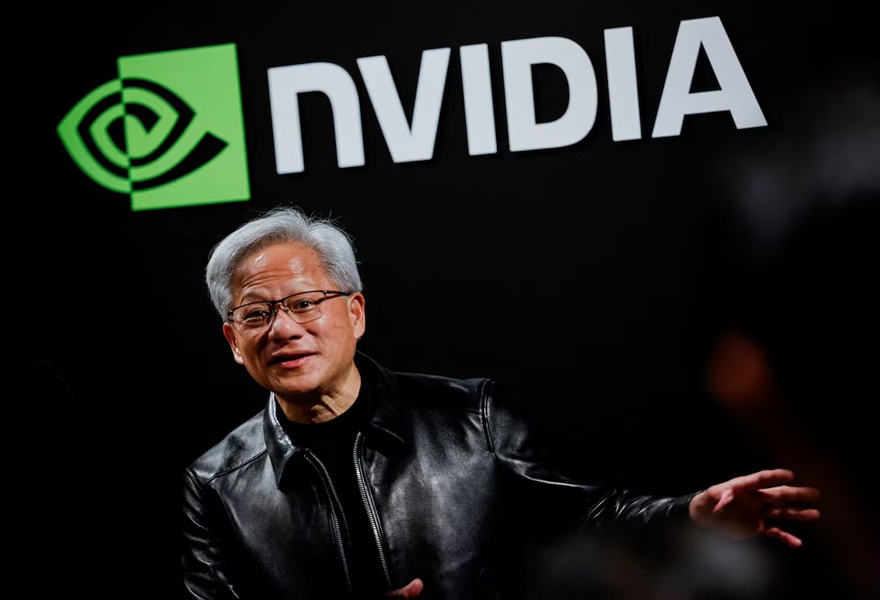
Nvidia has agreed to a proposed $290 million settlement of a shareholder lawsuit over disclosures about cryptocurrency mining demand for its gaming graphics processors in 2017 and 2018. The agreement requires court approval, and the chipmaker denies wrongdoing.
Investors submitted an unopposed motion for preliminary approval on November 24 in the Northern District of California. The filing lists February 4, 2027, as the hearing date before Judge Haywood Gilliam Jr. The case has been pending since December 2018.
Insurers to fund most of the settlement
Nvidia told Reuters that its insurers would provide the majority of the settlement funding. The company has not specified their exact contribution, making the gross settlement amount an unreliable measure of the chipmaker’s own cash expense.
Class counsel intends to seek fees of up to 21.4% of the fund, equivalent to $62.06 million on the principal settlement amount. The lawyers also intend to request reimbursement of litigation expenses of up to $3.3 million.
Deducting both maximum amounts from the $290 million principal would leave approximately $224.6 million before other applicable deductions or interest. That is an illustrative calculation, not the amount investors are guaranteed to recieve. The court must approve the fees and distribution arrangements.
Crypto demand behind gaming revenue
Shareholders alleged that Nvidia and certain executives understated the contribution of cryptocurrency miners to sales classified as gaming revenue. During the mining boom, customers could purchase graphics processors marketed for video games and use them to mine digital currencies such as Ethereum.
The end market was difficult to infer from the hardware alone. Investors assessing sustainable gaming demand therefore depended on management’s disclosures about the composition of sales and the inventory held by distributors.
The plaintiffs linked a cumulative 28.5% stock decline over two November 2018 trading sessions to disclosures concerning the downturn. Those allegations were disputed by Nvidia. The proposed settlement does not constitute a judicial finding that securities fraud occured.
In a seperate proceeding in May 2022, Nvidia agreed to a $5.5 million SEC penalty over inadequate disclosures about mining-related demand in its fiscal 2018 gaming business, without admitting or denying the regulator’s findings.
Litigation survived dismissal and appeals
The district court dismissed the shareholder case in March 2021. The Ninth Circuit partially reversed that decision in August 2023, and the Supreme Court subsequently dismissed its review in December 2024 without resolving the merits.
On March 25, 2026, the district court certified a class covering eligible investors who acquired Nvidia common stock between August 10, 2017, and November 15, 2018. Certain parties, including defendants and relevant company insiders, were excluded. The Ninth Circuit declined permission to appeal the certification in May.
Certification established who could pursue claims collectively, not whether the claims were ultimately proven. Final approval of the settlement is still outstanding.
Legacy litigation and Nvidia’s current business
The agreement arrives during a volatile period for Nvidia shares, following Jensen Huang’s resignation earlier in November and his subsequent reinstatement as chief executive. The mining lawsuit predates those developments by years and is unrelated to them.
Nvidia’s business mix has also changed considerably. Its latest quarterly results, discussed in coverage of its halt in licensed Hopper shipments to China, showed that data center sales now account for the overwhelming majority of revenue.
The settlement addresses historical disclosures rather than current AI-chip sales. Insurance coverage limits the direct funding burden, though the available information is not sufficent to calculate Nvidia’s precise net expense or its accounting treatment.

Johan Shamshad is Editor-in-Chief at Dave Finances, covering financial markets, digital assets, trading platforms, brokers, fintech, payments and regulation. Since 2023, he has also worked as an editor at Gulf News, the UAE English-language newspaper published by Al Nisr Publishing LLC. His work focuses on market-moving developments, company disclosures, regulatory changes and trading infrastructure, with an emphasis on primary-source verification and practical context for traders and investors.