
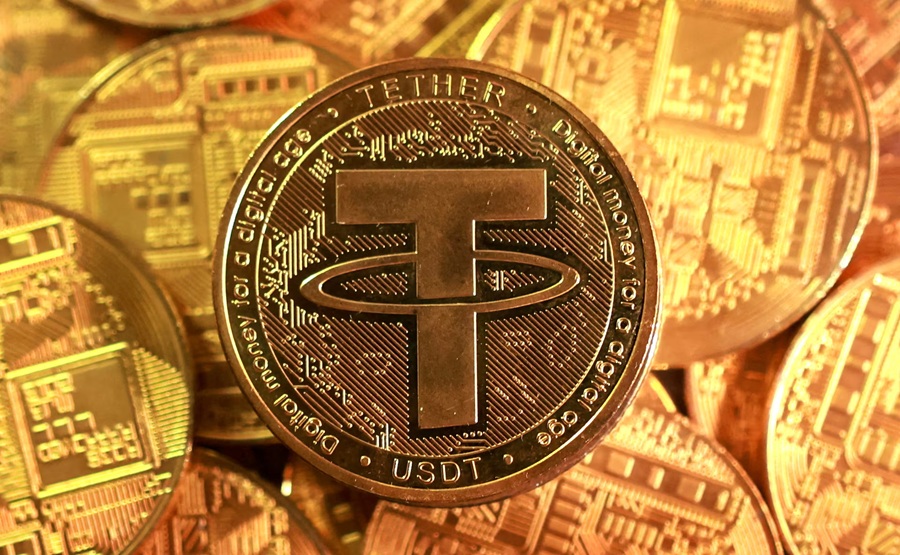
Tether now holds more U.S. Treasury bills than Germany.
Read that again.
A stablecoin issuer — not a sovereign state, not a central bank — is sitting on a bigger pile of short-term U.S. government debt than Europe’s largest economy. That’s not a crypto headline. That’s a structural shift.
According to the U.S. Treasury’s foreign-holder rankings cross-referenced with Tether’s latest reserve attestation, the numbers line up. More than $122 billion in T-bills. Roughly $185 billion USDT outstanding. Over 83% of reserves in short-term Treasuries.
This isn’t balance-sheet trivia. It’s a redistribution of dollar liquidity.
And it’s happening through stablecoins.
The Numbers Are Big. The Implications Are Bigger.
Tether’s latest attestation shows over $122 billion parked in short-dated U.S. government paper. These aren’t exotic instruments. They’re the most liquid, most collateralized pieces of the global financial system.
If you slotted Tether into the Treasury Department’s list as if it were a country, it would sit between Germany and Saudi Arabia.
That comparison should make you uncomfortable.
Germany accumulates Treasuries as part of sovereign reserve management. Tether accumulates Treasuries because retail users around the world want digital dollars.
That’s a completely different demand engine.
One is geopolitical strategy.
The other is market preference.
From Exchange Bridge to Sovereign Debt Channel
When USDT launched in 2014, it was basically plumbing. A way for traders to move in and out of crypto markets without waiting on banks. Nobody was talking about Treasury market implications back then.
Now? It’s different.
Bo Hines — now leading Tether’s U.S. subsidiary — says the company is adding roughly 30 million users per quarter. Total user base reportedly around 530 million. Whether you take that figure at face value or haircut it, the trajectory is obvious: USDT demand is embedded in global crypto infrastructure.
Every new USDT issued has to be backed.
Under current positioning, that backing increasingly means short-term U.S. government debt.
So the loop looks like this:
Crypto adoption rises →
USDT issuance expands →
Treasury purchases increase →
Tether’s footprint inside U.S. funding markets deepens.
At scale, that’s not just crypto growth. That’s monetary plumbing evolving.
The GENIUS Act Changes the Tone
The GENIUS Act formalized something that was already happening informally: stablecoins must be backed 1:1 with high-quality liquid assets, primarily short-term Treasuries.
Tether’s new U.S.-compliant stablecoin, USAT, is built around that framework and issued via Anchorage Bank. This is a deliberate pivot. Historically, USDT operated largely offshore. USAT is designed to live inside U.S. regulatory boundaries.
Hines talks about “reciprocity” between USDT and USAT. Translation: two rails, same ecosystem.
Offshore liquidity stays intact.
Domestic compliance box gets checked.
That’s not resistance. That’s alignment.
And it matters politically.
A Top-10 Buyer of T-Bills?
Hines suggested Tether could become a top-10 purchaser of Treasury bills this year.
Pause there.
Short-term Treasuries underpin everything: money market funds, repo markets, collateral chains, bank liquidity buffers. If a stablecoin issuer becomes one of the largest marginal buyers, demand shifts from sovereign reserve managers to digital-native retail flows.
That changes the elasticity profile.
In a crypto bull market, USDT issuance surges. Treasury demand rises with it.
In a contraction? Redemptions increase. Treasury exposure could flatten or even unwind.
Tether reports excess reserves — around $6.3 billion per BDO — but the cyclical link is there. Crypto volatility and short-term U.S. funding markets are more connected than they used to be.
That’s new territory.
Gold in the Vault, Too
Tether reportedly holds around 140 tons of gold.
That’s not random diversification. That’s central-bank behavior.
Treasuries for liquidity.
Gold for reserve stability.
This portfolio mix mirrors sovereign balance sheets more than fintech startups. Symbolically, it positions Tether less as an app and more as a quasi-monetary institution.
Regulators will notice that. Banks already have.
The Stablecoin–Treasury Feedback Loop
Historically, Treasuries were accumulated by foreign governments managing pegs, trade surpluses, and reserves.
Now stablecoins are accumulating Treasuries because private users want programmable dollars.
That distinction is everything.
Sovereign Treasury demand reflects state policy.
Stablecoin Treasury demand reflects retail and institutional crypto activity.
At a time when official channels talk about de-dollarization, private markets are reinforcing dollar dominance through digital wrappers.
It’s almost ironic.
While BRICS debates settlement alternatives, retail users in Argentina, Turkey, and Nigeria are dollarizing via USDT. Every token minted to meet that demand increases Treasury buying.
That’s dollar hegemony — just wearing a blockchain interface.
Is This a Risk or a Reinforcement?
There are two camps here.
Camp one says risk.
A private issuer now holds sovereign-scale debt. If redemptions spike in a crisis, Treasury markets could feel pressure. Crypto volatility introduces demand variability not typically associated with sovereign reserve managers.
In extreme scenarios, large-scale unwinds could ripple through short-term funding markets.
That’s not alarmism. It’s mechanical reality.
Camp two says reinforcement.
Stablecoins channel global capital into U.S. government debt. They deepen liquidity. They broaden the buyer base. They align private digital innovation with public debt financing.
The GENIUS framework formalizes that alignment.
Both interpretations are defensible.
The answer depends on transparency, redemption management, and regulatory oversight.
Competitive Pressure on Other Issuers
Tether’s Treasury-heavy reserve strategy puts pressure on competitors.
USDC operates under stricter transparency norms but lacks USDT’s global penetration. Other stablecoins are smaller or more regionally constrained.
As regulation tightens, the edge shifts from early mover advantage to audit credibility, reserve quality, and political alignment.
Tether’s heavy T-bill allocation strengthens its “safe reserve” narrative. But long-term dominance will hinge on continued disclosure and regulatory cooperation.
Markets forgive opacity in bull cycles. They don’t in stress cycles.
Informal Dollarization at Scale
In emerging markets with unstable currencies, USDT often functions as a parallel dollar system.
People don’t need correspondent banks. They don’t need wire transfers. They need a wallet and an internet connection.
Every time someone swaps local currency for USDT, the stablecoin issuer increases its backing requirements. And that backing sits largely in U.S. government debt.
So digital dollarization isn’t abstract. It’s directly linked to Treasury demand.
This is dollar exportation without physical banks.
That’s powerful.
The Political Layer
Bo Hines’ shift from Executive Director of the White House Crypto Council to leading Tether’s U.S. arm isn’t cosmetic.
It signals policy continuity.
Instead of antagonizing regulators, Tether appears to be embedding itself within the regulatory perimeter. USAT is part of that move. GENIUS compliance is part of that move.
Becoming a top Treasury buyer doesn’t hurt optics either.
It reframes stablecoins from speculative instruments to liquidity providers within sovereign finance.
Perception shifts follow capital flows.
If Growth Continues
If USDT keeps expanding at 30 million users per quarter — and if USAT gains traction domestically — Treasury accumulation could accelerate meaningfully.
At some point, stablecoin issuers may:
- Influence short-term funding spreads
- Be folded into systemic risk monitoring frameworks
- Face oversight closer to money market funds or narrow banks
That’s not inevitable. But it’s plausible.
Scale forces classification.
This Is a New Kind of Dollar Intermediary
Tether now sits in a space that didn’t exist a decade ago.
It isn’t a bank.
It isn’t a sovereign wealth fund.
It isn’t a central bank.
Yet it channels private global demand into U.S. government debt at sovereign scale.
That’s new.
Stablecoins are no longer peripheral to sovereign finance. They’re participants. Maybe even structural participants.
The real question isn’t whether this is good or bad. It’s whether regulatory architecture adapts fast enough to account for it.
Because whether policymakers like it or not, digital dollars are now wired directly into the Treasury market.
And that changes the map.
Disclaimer
This article is for informational and educational purposes only and does not constitute financial, investment, trading, or legal advice. Cryptocurrencies, memecoins, and prediction-market positions are highly speculative and involve significant risk, including the potential loss of all capital.
The analysis presented reflects the author’s opinion at the time of writing and is based on publicly available information, on-chain data, and market observations, which may change without notice. No representation or warranty is made regarding accuracy, completeness, or future performance.
Readers are solely responsible for their investment decisions and should conduct their own independent research and consult a qualified financial professional before engaging in any trading or betting activity. The author and publisher hold no responsibility for any financial losses incurred.

Shane Neagle is a financial markets analyst and digital assets journalist specializing in cryptocurrencies, memecoins, prediction markets, and blockchain-based financial systems. His work focuses on market structure, incentive design, liquidity dynamics, and how speculative behavior emerges across decentralized platforms.
He closely covers emerging crypto narratives, including memecoin ecosystems, on-chain activity, and the role of prediction markets in pricing political, economic, and technological outcomes. His analysis examines how capital flows, trader psychology, and platform design interact to create rapid market cycles across Web3 environments.
Alongside digital assets, Shane follows broader fintech and online trading developments, particularly where traditional financial infrastructure intersects with blockchain technology. His research-driven approach emphasizes understanding why markets behave the way they do, rather than short-term price movements, helping readers navigate fast-evolving crypto and speculative markets with clearer context.