
The fight over the Digital Asset Market Structure Clarity Act has quietly turned into one of the most important regulatory battles crypto has faced since Bitcoin went mainstream.
On paper, the bill is supposed to do something everyone says they want: finally explain how digital assets fit inside the US financial rulebook. No more regulatory fog. No more guessing whether a token is a commodity or a security depending on which agency wakes up first.
But once you look past the headline, the argument gets deeper.
It’s not just about definitions.
It’s about what crypto becomes.
A new financial architecture.
Or a slightly upgraded version of the old one.
And that tension is now sitting right at the center of Washington’s crypto debate.
The Promise of the CLARITY Act
For years, one problem has hung over the US crypto industry like a cloud: nobody agrees who regulates what.
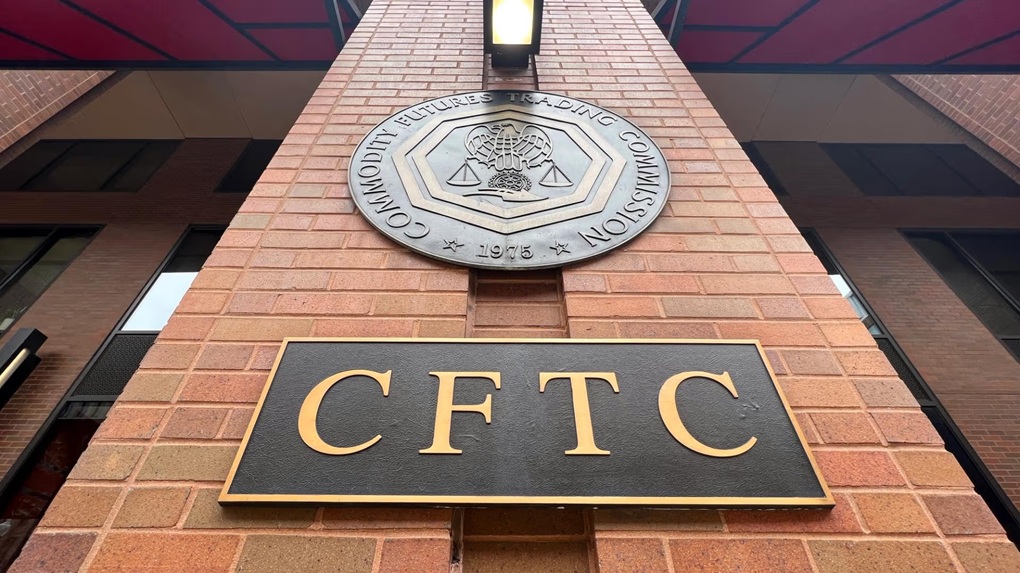
The Securities and Exchange Commission claims authority over tokens that resemble securities. The Commodity Futures Trading Commission oversees commodities and derivatives markets.
Crypto sits awkwardly in between.
The CLARITY Act tries to split that knot. In simplified terms:
- The SEC would oversee tokens considered securities
- The CFTC would regulate crypto commodities and trading activity
- Self-custody and peer-to-peer blockchain activity would receive explicit legal recognition
That alone would be a huge shift. For the first time, Congress would be laying out how digital asset markets are supposed to operate within the US financial system.
If you’re a startup founder or exchange operator, that kind of certainty matters. Investors hate regulatory gray zones.
But critics say the bill’s structure carries a hidden assumption.
One that could quietly reshape the industry.
The Criticism: Crypto Through a TradFi Lens
One of the sharpest critiques has come from Friederike Ernst, co-founder of Gnosis.
Her concern isn’t about regulation itself. Most builders now accept that regulation is inevitable.
The concern is how the law imagines crypto markets working.
According to Ernst, the CLARITY Act seems to assume that most crypto activity will flow through regulated intermediaries — exchanges, brokers, and financial institutions.
That’s exactly how traditional finance works.
But blockchain networks weren’t designed that way.
Their entire breakthrough was that users could interact directly with financial infrastructure without needing those intermediaries at all.
Settlement happens on-chain.
Custody sits with the user’s keys.
Governance can be distributed across thousands of token holders.
Force activity back through institutional middlemen, critics argue, and you start undoing that architecture.
Ernst put it bluntly: users could end up as “customers renting access to financial technology once again rather than stakeholders in it.”
That’s a sharp line.
Ownership vs Access
This is where the debate stops being technical and becomes philosophical.
Traditional finance is built around access. You access markets through brokers, banks, clearinghouses, and custodians. Those institutions control the infrastructure.
Crypto introduced something different: ownership of infrastructure.
Token holders can participate directly in networks. Validators secure chains. Liquidity providers earn trading fees. Governance tokens let communities vote on upgrades.
The user isn’t just a client. They’re part of the system.
It’s subtle. But it changes the power balance.
Critics worry that regulatory frameworks built around intermediaries will gradually push crypto back toward the access model.
The technology would remain. The structure of power would not.
Why Centralization Worries Crypto Builders
One reason this argument resonates is history.
The 2008 financial crisis exposed how fragile centralized financial systems can be. When key institutions fail, the ripple effects spread across the entire economy.
Blockchain systems were built to avoid that kind of concentration.
Instead of relying on a single clearinghouse or custodian, decentralized networks distribute trust across many participants.
Push enough activity back into centralized institutions, and those old vulnerabilities return:
- Custody concentrated in a handful of firms
- Liquidity clustered in large exchanges
- Settlement shifting off-chain again
In that world, blockchain becomes a backend technology rather than a new financial architecture.
Some policymakers are perfectly comfortable with that outcome. Many crypto developers are not.
The Banking Industry’s Quiet Role
Another source of friction in the CLARITY Act debate involves the traditional banking sector.
One of the most contentious questions centers on stablecoins — specifically whether issuers should be allowed to share yield with holders.
Banks strongly oppose that idea.
Why? Because deposits are the lifeblood of banking. They fund loans and anchor liquidity.
A stablecoin that distributes yield would start looking suspiciously like a digital bank account without a bank. That threatens the deposit base.
The result is a policy tug-of-war.
Crypto firms want flexibility for stablecoin economics. Banks want guardrails that prevent stablecoins from competing directly with deposits.
That dispute has already slowed negotiations around the bill.
Coinbase Walks Away
The tension became impossible to ignore when Coinbase withdrew its support for the legislation.
CEO Brian Armstrong criticized parts of the bill he believes could:
- Restrict decentralized finance innovation
- Limit yield-bearing stablecoins
- Slow the development of tokenized real-world assets
His response was blunt: better no bill than a bad one.
That moment exposed something important. The crypto industry itself isn’t aligned.
Some companies want regulatory clarity at almost any cost. Others worry that poorly designed regulation could permanently tilt the industry toward large incumbents.
Two visions of crypto are colliding.
The Political Clock Is Ticking
Despite the disagreements, some lawmakers remain optimistic.
US Senator Bernie Moreno suggested the legislation could still pass by April and land on the desk of Donald Trump.
But legislative calendars are unforgiving.
According to Alex Thorn of Galaxy Digital, if the bill doesn’t clear Congress by April 2026, its chances of passing this year drop dramatically.
Miss that window and the political focus shifts elsewhere.
Crypto policy could easily get pushed to the back burner again.
The Issues Nobody Has Solved Yet
Stablecoins dominate headlines, but they’re only part of the puzzle.
Several deeper questions remain unresolved:
How should decentralized finance protocols be regulated?
Can open-source developers be held responsible for the activity of the software they create?
How should tokenized real-world assets be classified under securities law?
What protections should exist for open blockchain infrastructure?
These aren’t minor details. They touch the core mechanics of decentralized systems.
Take DeFi protocols. Many operate autonomously through smart contracts without a central company running them. Imposing licensing requirements on something that doesn’t have a legal entity is… complicated.
Holding developers liable for how others use their code raises a different risk: it could chill open-source innovation.
The legal system hasn’t fully caught up with these questions.
The Global Race for Crypto Regulation
The stakes aren’t limited to the United States.
Other jurisdictions are moving quickly.
The European Union has rolled out MiCA. Singapore is refining licensing frameworks. The UAE has positioned itself as a crypto hub.
If US regulation tilts too heavily toward institutional control, innovation could migrate.
We’ve seen that movie before in other technology sectors. Startups don’t stay where the rules feel hostile.
Regulation is no longer just domestic policy. It’s global competition.
The Bigger Question Behind the Bill
Strip away the legal language, and the CLARITY Act debate boils down to one strategic question.
What is blockchain supposed to become?
One vision treats it as an upgrade to the existing financial system. Banks remain central. Institutions remain gatekeepers. Blockchain just improves efficiency.
The other vision sees blockchain as a fundamentally new architecture where users participate directly in networks.
Neither outcome is inevitable.
Regulation will shape which path dominates.
A Moment That Will Define Crypto’s Future
The CLARITY Act isn’t just another policy proposal. It’s a fork in the road.
Get the framework right, and the US could integrate digital assets into mainstream finance while preserving the open infrastructure that made blockchain revolutionary.
Get it wrong, and crypto risks becoming something much more familiar: a market where access is controlled by large institutions and users remain clients rather than participants.
The challenge for lawmakers is delicate.
They need to regulate the industry without regulating away the qualities that made it worth building in the first place.
That balance will determine whether crypto remains an open network economy — or simply becomes another layer of the financial system it was meant to challenge.
Disclaimer
This article is for informational and educational purposes only and does not constitute financial, investment, trading, or legal advice. Cryptocurrencies, memecoins, and prediction-market positions are highly speculative and involve significant risk, including the potential loss of all capital.
The analysis presented reflects the author’s opinion at the time of writing and is based on publicly available information, on-chain data, and market observations, which may change without notice. No representation or warranty is made regarding accuracy, completeness, or future performance.