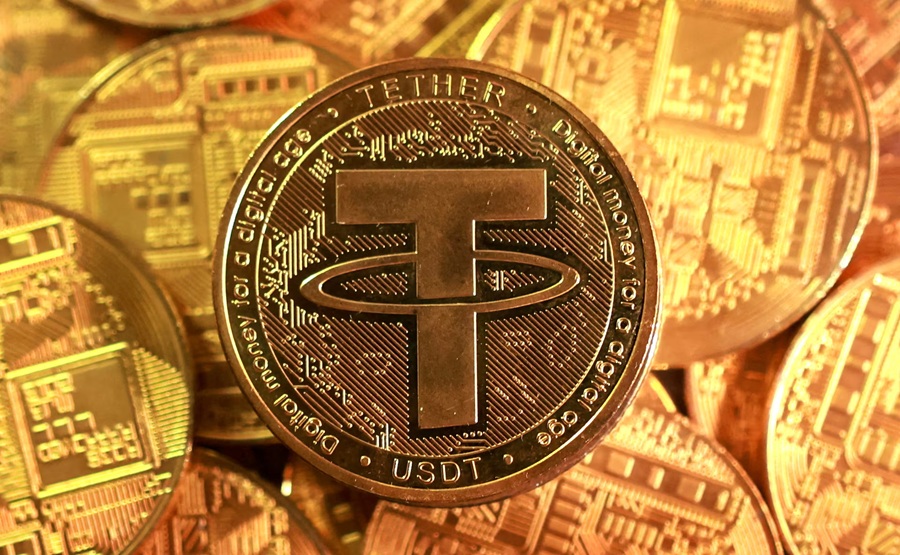
A new report from Bitso reveals a fascinating shift in user behavior across Latin America’s cryptocurrency market. In 2025, stablecoins linked to the US dollar—such as Tether’s USDt (USDT) and Circle’s USDC—have overtaken Bitcoin in purchase volume for the first time. This shift signals a growing trend of “digital dollarization” across inflation-ravaged economies in the region, with many users turning to stablecoins as a more reliable store of value amid economic turbulence.
Stablecoins Overtake Bitcoin in Latin America
According to Bitso’s latest report, stablecoins now account for 40% of crypto purchases in Latin America, surpassing Bitcoin, which made up 18% of total purchases. This is the first time in the region’s history that stablecoins have eclipsed Bitcoin in terms of transaction volume. The data, collected from Bitso’s nearly 10 million retail users across its platform, reflects a broader trend of regional adaptation in response to inflationary pressures and limited access to traditional banking services.
The trend toward stablecoin adoption mirrors the mounting challenges faced by many Latin American countries, where hyperinflation, volatile currencies, and a lack of trust in local financial systems have pushed citizens toward alternative financial solutions. Stablecoins—digital assets pegged to the US dollar—are becoming a critical lifeline, offering a stable store of value and an easy way to transact in an economy where local currencies fluctuate wildly.
The Rise of “Digital Dollarization” Across the Region
Bitso’s report draws attention to what they term “digital dollarization,” a movement where citizens of Latin American countries are increasingly seeking to store their wealth in assets tied to the US dollar. While the dollar itself isn’t immune to inflation, it is seen as a more stable alternative compared to the rapidly depreciating local currencies.
For people living in economies with high inflation rates, stablecoins offer a practical and accessible way to protect savings and make payments. The ease with which users can convert their funds into dollar-pegged stablecoins is part of the appeal. Not only do stablecoins shield against the volatile swings of local currencies, but they also open up more robust cross-border remittance opportunities, particularly in countries like Venezuela, Argentina, and Brazil, where local currency devaluation is a constant concern.
Mercado Libre’s Role in Promoting Stablecoin Use
Stablecoins are not just gaining traction as individual assets but are also being integrated into business models across Latin America. For example, in early April 2025, Brazilian e-commerce giant Mercado Libre launched a new cross-border remittance product using its own Meli dollar stablecoin for users in Brazil, Mexico, and Chile. This move comes shortly after the retailer discontinued issuing its previous stablecoin, Mercado Coin, earlier in the year.
With millions of Latin Americans relying on remittances from family members working abroad, stablecoins are seen as an efficient way to transfer funds across borders, bypassing traditional banks and avoiding high fees. Mercado Libre’s decision to integrate stablecoin technology highlights the growing mainstream acceptance of digital assets in the region, marking a clear trend toward blockchain-based financial solutions.
Bitcoin’s Continued Role as a Store of Value
Despite stablecoins taking the lion’s share of crypto purchases in 2025, Bitcoin remains a prominent asset in the region. The report shows that Bitcoin is still held in 52% of crypto portfolios across Latin America, only slightly down from 53% in the previous year.
Bitcoin has long been seen as a store of value in Latin America, particularly in countries facing high inflation. While Bitcoin’s price volatility often discourages day-to-day transactions, it continues to be viewed as a reliable asset for long-term wealth preservation. Even with the recent price fluctuations—Bitcoin hit a high of $126,000 in October 2025 before pulling back to around $60,000—it still plays a critical role in the investment strategies of many in the region.
Recent research by MarketVector reaffirms Bitcoin’s value as a store of wealth. They argue that Bitcoin shares several key characteristics with gold, including its scarcity, decentralization, and resistance to supply expansion. These attributes make Bitcoin a desirable hedge against inflation in countries where local currencies lose value quickly.
Stablecoins and Cross-Border Payments
In addition to their use in savings and investments, stablecoins are becoming increasingly popular for sending cross-border remittances. Latin America, which has long been one of the largest recipients of remittances in the world, is seeing a rapid rise in the use of digital assets for transferring funds. For many Latin Americans, the high fees and slow processing times associated with traditional remittance channels make stablecoins an attractive alternative.
The use of stablecoins like USDT and USDC offers several advantages: low transaction fees, faster transfer times, and the ability to bypass traditional financial intermediaries. This is especially valuable in countries where access to banking infrastructure is limited, and users face challenges with sending or receiving funds through conventional channels.
Global Stablecoin Market and Latin American Appeal
The global stablecoin market has surged in recent years, growing to an estimated $320 billion. This expansion is driven by both developed and emerging markets, but Latin America stands out as a particularly relevant region for stablecoin adoption. As the economic challenges of inflation and currency instability continue to affect daily life in many Latin American countries, stablecoins offer a viable solution for users seeking stability in their finances.
In countries like Argentina and Venezuela, where inflation has reached catastrophic levels, stablecoins provide a much-needed alternative to local currencies. The appeal of stablecoins lies in their ability to maintain value and offer liquidity in times of crisis. As a result, adoption has been growing rapidly in countries that are traditionally known for their economic instability.
The Broader Implications for the Crypto Ecosystem
The growing adoption of stablecoins in Latin America presents both challenges and opportunities for the broader cryptocurrency ecosystem. On the one hand, stablecoins offer a way to gain mainstream adoption, as they are seen as less volatile and more user-friendly than other cryptocurrencies like Bitcoin and Ethereum. Their widespread use in remittances and as a hedge against inflation is helping to drive the next phase of digital asset adoption.
On the other hand, the shift towards stablecoins also underscores the continued skepticism that many people have toward more volatile cryptocurrencies like Bitcoin. For some, the risk associated with Bitcoin’s price swings outweighs its potential as a store of value, especially when stablecoins offer a more predictable alternative.
Bitcoin’s Role in Long-Term Investment Strategies
While stablecoins have become the preferred asset for daily transactions, Bitcoin’s role as a long-term savings vehicle remains intact. For many Latin Americans, Bitcoin continues to represent a long-term hedge against inflation and economic instability. Despite the volatility that often accompanies Bitcoin’s price movements, the asset is viewed as a way to store value outside of traditional financial systems, which may be prone to manipulation or collapse.
The fact that Bitcoin remains a key component of over half of crypto portfolios in Latin America speaks to its enduring appeal as a store of value. Bitcoin’s scarcity and its decentralized nature make it a desirable alternative to national currencies that are subject to inflationary pressures.
The Future of Crypto in Latin America
As the region continues to face economic uncertainty, the rise of stablecoins and the sustained importance of Bitcoin indicate that Latin America is at the forefront of global cryptocurrency adoption. The convergence of these two trends—stablecoins as a practical tool for daily transactions and Bitcoin as a long-term investment—suggests that digital assets will continue to play a growing role in the region’s financial landscape.
With more users shifting to stablecoins for everyday financial use, and more businesses integrating stablecoin payments into their platforms, Latin America is on track to become a global leader in cryptocurrency adoption. The combination of stablecoins and Bitcoin is likely to shape the future of the region’s financial systems, offering an alternative to traditional banking and providing much-needed economic stability in times of crisis.
Disclaimer
This article is for informational and educational purposes only and does not constitute financial, investment, trading, or legal advice. Cryptocurrencies, memecoins, and prediction-market positions are highly speculative and involve significant risk, including the potential loss of all capital.
The analysis presented reflects the author’s opinion at the time of writing and is based on publicly available information, on-chain data, and market observations, which may change without notice. No representation or warranty is made regarding accuracy, completeness, or future performance.
Readers are solely responsible for their investment decisions and should conduct their own independent research and consult a qualified financial professional before engaging in any trading or betting activity. The author and publisher hold no responsibility for any financial losses incurred.

Shane Neagle is a financial markets analyst and digital assets journalist specializing in cryptocurrencies, memecoins, prediction markets, and blockchain-based financial systems. His work focuses on market structure, incentive design, liquidity dynamics, and how speculative behavior emerges across decentralized platforms.
He closely covers emerging crypto narratives, including memecoin ecosystems, on-chain activity, and the role of prediction markets in pricing political, economic, and technological outcomes. His analysis examines how capital flows, trader psychology, and platform design interact to create rapid market cycles across Web3 environments.
Alongside digital assets, Shane follows broader fintech and online trading developments, particularly where traditional financial infrastructure intersects with blockchain technology. His research-driven approach emphasizes understanding why markets behave the way they do, rather than short-term price movements, helping readers navigate fast-evolving crypto and speculative markets with clearer context.