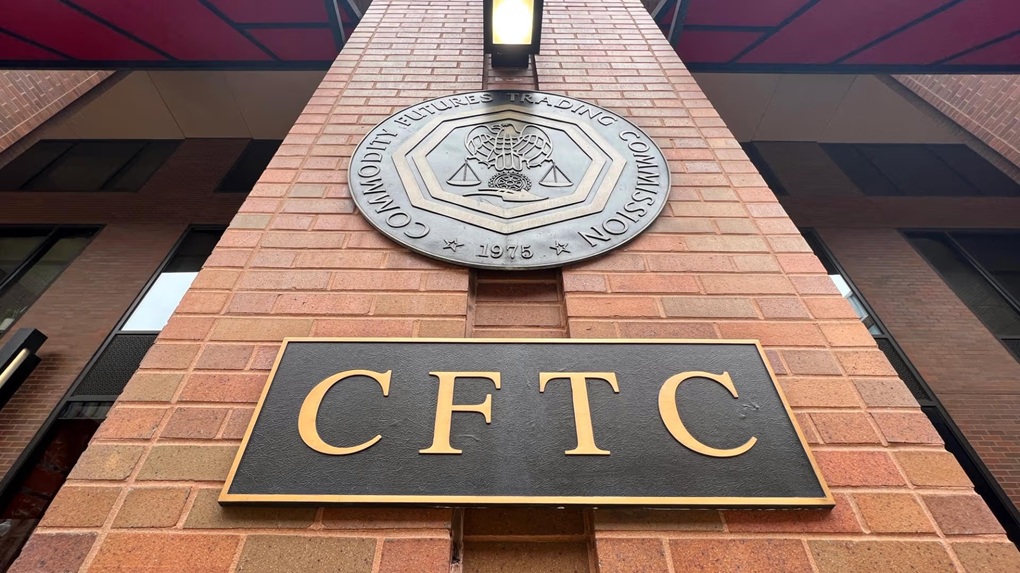
Backpack Clearing has secured registration from the US Commodity Futures Trading Commission (CFTC) to clear futures, options on futures and swaps, giving the cryptocurrency trading group a regulated clearing operation as it pursues a separate application to establish a US derivatives exchange.
The regulator registered TLD Clearing, Inc., operating as Backpack Clearing, as a Derivatives Clearing Organization (DCO) on November 13, 2026. The approval permits the company to clear futures on a margined basis, alongside fully collateralized futures, options on futures and swaps.
The authorization follows a formal Commission review of the company’s application, operating rules, risk-management arrangements and proposed clearing activities. The signed registration order confirms that the CFTC found TLD Clearing had demonstrated compliance with the requirements applicable to a registered derivatives clearing organization.
Backpack’s exchange application remains unresolved. The CFTC separately lists TLD Markets, Inc. as pending designation as a Designated Contract Market (DCM), with an application dated April 22, 2026.
The clearing licence is granted; the exchange one is not.
Neither the registration announcement nor the associated order establishes that Backpack has begun clearing US derivatives transactions. The company’s application anticipates a phased operational launch following systems testing, clearing-member onboarding and regulatory readiness reviews.
CFTC authorizes margined futures and fully collateralized derivatives
The CFTC’s official registration record for Backpack Clearing identifies the company as registered under filing reference 60669. That number is an administrative filing reference, rather than a separate licence number.
The Commission’s November 13 order establishes two distinct categories of permitted clearing activities. TLD Clearing may clear futures contracts using margin, while its authorization for futures, options on futures and swaps also covers positions that satisfy the regulatory definition of fully collateralized.
The inclusion of margined futures gives Backpack greater flexibility than a registration limited exclusively to fully collateralized contracts. Margin-based clearing allows qualifying derivatives positions to be supported by collateral determined through applicable risk models rather than requiring the entire contractual exposure to be funded upfront.
That flexibility brings additional requirements involving collateral valuation, margin collection, stress testing and default management.
Backpack’s application outlines a central-counterparty model under which the clearing organization would stand between the parties to transactions executed on registered exchanges, assuming obligations under cleared contracts subject to its risk-management framework.
The proposed system includes initial and maintenance margin, daily mark-to-market calculations, settlement procedures and financial resources intended to withstand the default of at least the largest clearing member under extreme but plausible market conditions.
According to the registration order, Backpack also represented that clearing-member funds would remain seperate from its own corporate funds and that it would enforce its membership standards and operating rules.
The Commission expressly retained the authority to amend, restrict, suspend or terminate the registration under applicable law. It also warned that material changes to the circumstances supporting its decision could require an amended order.
And this is now a completed registration, not merely another pending application.
Backpack’s US derivatives exchange application remains pending
Backpack’s regulatory plans involve multiple legal entities performing different functions within a proposed US derivatives business.
TLD Clearing is responsible for the central-counterparty clearing function. TLD Markets, Inc., meanwhile, has applied for DCM designation, which would authorize a separate entity to operate a regulated derivatives trading venue if approved.
The CFTC’s public register continues to identify TLD Markets as pending, despite the clearing organization’s successful registration.
The two authorizations are governed by different sections of the Commodity Exchange Act and impose different obligations. A DCM operates the trading venue, administers its markets and enforces trading rules. A DCO manages the clearing and settlement of contracts, including margin requirements and the financial consequences of member defaults.
Backpack’s application also describes a coordinated structure involving an affiliated futures commission merchant (FCM). Such an entity would handle customer-facing brokerage and margin relationships, subject to its own registration and regulatory obligations.
The clearing organization has its approval, but the trading venue part is not finished.
Backpack’s proposed arrangement resembles the vertically integrated US derivatives infrastructure developed by other cryptocurrency trading groups.
Kraken parent Payward, for example, acquired Bitnomial, whose regulated exchange and clearinghouse provide infrastructure for US derivatives products. DaveFinances previously examined Kraken’s use of Bitnomial for US perpetual futures, including the roles of the exchange, clearinghouse and customer-facing brokerage.
Backpack is pursuing a comparable regulatory structure, but its exchange application remains at a different stage. The CFTC has not announced a designation date for TLD Markets, and the clearing registration does not establish when the group could launch its intended US derivatives operations.
Filing outlines cryptocurrency perpetuals and prediction markets
Backpack’s clearing application provides a more detailed picture of its planned business than the short registration entry alone.
In its description of proposed clearing activities, TLD Clearing identifies traditional futures, cryptocurrency derivatives, fully collateralized swaps, event contracts and equity-linked derivatives among the products it intends to support.
The cryptocurrency category explicitly includes conventional futures and perpetual-style futures. The equity-linked category also includes futures and perpetual-style structures.
Still, the proposed product range is a long one.
Those descriptions establish Backpack’s commercial intentions rather than approval for every individual instrument. The application states that products would be listed on registered DCMs and cleared according to the applicable rules and regulatory permissions.
Backpack does not intend to clear bilateral or off-exchange derivatives in the United States under the proposed arrangement.
The inclusion of event contracts is particularly relevant as CFTC-regulated prediction markets attract investment from cryptocurrency exchanges, brokerage operators and financial technology companies.
Backpack’s application says event-contract clearing would follow the same general standards for margining, settlement, surveillance and default management as its other derivatives products. It also anticipates further regulatory engagement over contract design and public-interest considerations.
Other cryptocurrency groups have already secured both exchange and clearing registrations. Gemini Titan received DCM designation in December 2025, while Gemini Olympus obtained DCO registration in April 2026.
The development of that regulated infrastructure has continued alongside Gemini’s legal disputes with the regulator. In October, a federal judge refused to overturn Gemini’s $5 million CFTC settlement, even after the Commission reconsidered the merits of its original enforcement case.
Backpack enters a market in which competitors are obtaining multiple registrations to support different stages of trading, clearing and customer intermediation. Its November 13 authorization completes one part of that framework, while the exchange and customer-access arrangements remain subject to their own regulatory and operatonal requirements.
Clearing registration leaves launch readiness unresolved
The CFTC has approved the clearing entity, but Backpack must still complete the practical preparations described in its application before commencing operations.
These include testing its clearing technology, establishing connectivity with trading venues, onboarding clearing members and implementing the required collateral and default-management arrangements.
The filing anticipates a phased launch, beginning with a limited group of derivatives products and expanding as the company’s operational capacity and regulatory permissions allow.
There is no confirmed public launch date, initial contract list, clearing-member roster or projected clearing volume in the registration order.
The operational work can be substantial even for established clearing firms. DaveFinances recently reported that Cboe is offering clearing firms up to $1.25 million to accelerate their readiness for a new category of securities options, with payments tied to certification, connectivity and membership milestones.
Cboe’s program concerns a different regulatory framework, but it provides a concrete example of the preparation required to bring clearing participants into a new market.
For Backpack, the number of participating clearing members and the products ultimately approved for trading will help determine the commercial reach of the newly registered organization.
The authorization also arrives during a period of expanding CFTC clearing registrations. Coinbase Clearing received DCO registration on September 28, while tZERO DCO and Sporttrade DCO were registered on October 16 and XV Clearing on October 29.
Those organizations were registered to clear fully collateralized derivatives within their respective authorized categories. Backpack’s express permission to clear margined futures gives its regulatory scope an additional feature, although that does not establish an advantage in liquidity, pricing or commercial adoption.
The registration order also does not disclose projected revenue, capital committments beyond applicable regulatory requirements, expected customer numbers or the economics of Backpack’s proposed clearing services.
The paperwork is complete for clearing, but there is still the business of making it operational.
The next identifiable regulatory milestone is the CFTC’s decision on TLD Markets’ pending DCM application. A successful designation would establish the exchange authorization required for Backpack’s intended integrated structure, subject to any conditions and remaining requirements.
For now, the November 13 order gives Backpack Clearing a confirmed place among federally registered US derivatives clearing organizations, with authority covering margined futures and fully collateralized derivatives. Its commercial use of that authorization will depend on the separate exchange process, clearing-member participation and the eventual launch of approved products.

Johan Shamshad is Editor-in-Chief at Dave Finances, covering financial markets, digital assets, trading platforms, brokers, fintech, payments and regulation. Since 2023, he has also worked as an editor at Gulf News, the UAE English-language newspaper published by Al Nisr Publishing LLC. His work focuses on market-moving developments, company disclosures, regulatory changes and trading infrastructure, with an emphasis on primary-source verification and practical context for traders and investors.