
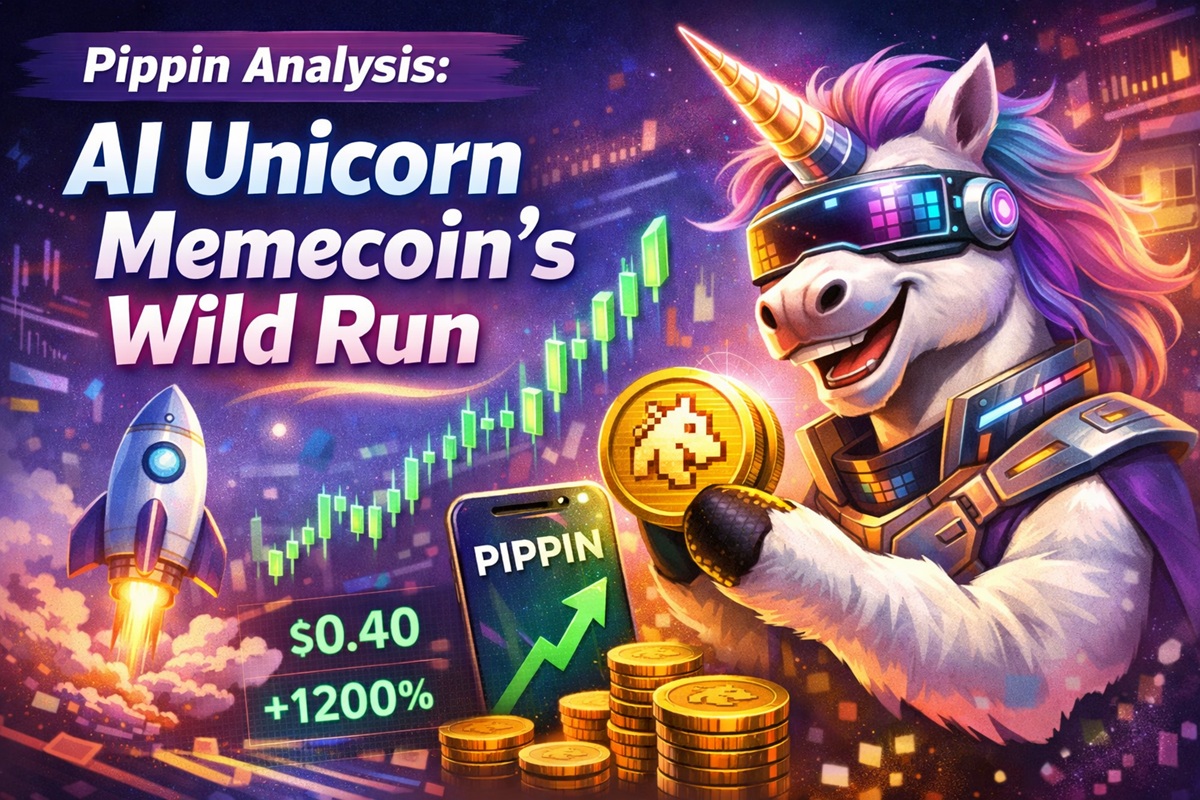
What Is Pippin (PIPPIN) And Why Has It Gone Viral?
Pippin (PIPPIN) is a Solana-based memecoin built around a simple but powerful origin story: an AI-generated unicorn drawing created by GPT-4. What began as an experiment in “AI-made memes” quickly evolved into a live on-chain token, a community, and a growing brand powered by the hype economics that dominate Solana’s meme ecosystem.
The project’s creator, Yohei Nakajima, leveraged his reputation in AI and venture capital circles to build early credibility. PIPPIN’s identity — logo, tone, personality — is intentionally AI-native. Its social presence behaves like an autonomous AI agent interacting with traders across X (Twitter), reinforcing the idea that PIPPIN is more than a typical memecoin. It is, in essence, a meme character that acts like a machine.
As of recent data, PIPPIN trades around the $0.17–$0.18 level with a circulating supply near 1B tokens, placing its market capitalization in the ~$170M range. Daily trading volumes often exceed tens of millions of dollars, positioning it among the most actively traded Solana memecoins. Over the past month, PIPPIN has delivered multi-hundred-percent gains, dramatically outperforming the broader crypto market.
Investor Takeaway
How Did An AI Sketch Become A Nine-Figure Memecoin?
Pippin’s rise is a classic example of how modern hype economics work. It launched through Solana’s meme-friendly culture and, reportedly, through Pump.fun — a platform that has turned Solana into the world’s most active factory for memecoins. The combination of AI branding, low fees, and instant distribution across Solana’s trader base allowed PIPPIN to ignite quickly.
Once early interest picked up, a reflexive cycle drove the token higher:
- AI novelty attracted attention from crypto Twitter, venture capital circles, and meme traders.
- Solana’s meme ecosystem amplified the brand instantly, allowing rapid liquidity formation.
- Influencers and chart analysts began covering PIPPIN, strengthening its cultural footprint.
- Listings on major exchanges increased accessibility, deepened liquidity, and expanded investor reach.
At its highs, PIPPIN traded above $0.30 — more than 500% higher month-over-month — making it one of Solana’s strongest performing memecoins during a period when most others cooled off.
Investor Takeaway
Why Is PIPPIN Outperforming While Other Solana Memecoins Stall?
Although Solana remains the most active memecoin ecosystem, many meme tokens launched in prior cycles have struggled to maintain attention. PIPPIN, however, is bucking the trend. It is consistently ranking among the top Solana memes for daily trading volume and social engagement.
Several factors explain this relative strength:
- Dual narrative power: AI + memecoin branding gives PIPPIN two cultural engines rather than one.
- A distinct visual identity: The AI-generated unicorn is easy to remix, meme, and embed into social posts.
- Exchange depth: Listings on major centralized exchanges provide stability and on-ramps for new traders.
- Community cohesion: PIPPIN’s “AI persona” increases engagement and gives the meme a recognizable voice.
In an environment where new Solana tokens launch daily, few stand out. PIPPIN does — not because of utility or technology, but because it is an AI-native meme with a coherent story. In memecoin markets, story is everything.
Investor Takeaway
Is Pippin Truly Decentralized? The Whale Question
As with most hyped memecoins, on-chain analysis indicates that a set of large wallets accumulated significant PIPPIN positions early. While this is typical in meme markets, it introduces risk. A cluster of strategic whales can provide support during rallies but can also spark aggressive sell-offs when they exit.
For traders, this means that PIPPIN behaves like a classic Solana meme: thrilling, fast-moving, but structurally vulnerable to liquidity shocks caused by insider distribution.
Investor Takeaway
How Traders Are Positioning PIPPIN Across Spot, Perps, And DeFi
As the token matured, it transitioned from being just a meme punt to a fully tradable asset across multiple venues. Traders are now interacting with PIPPIN in several structured ways:
- Spot accumulation: Long-term meme traders accumulate dips, betting on the AI narrative persisting.
- Meme rotations: Solana-native traders rotate profits from micro-cap memes into more resilient plays like PIPPIN.
- Breakout trading: Analysts track PIPPIN’s chart for volatility setups, liquidity pockets, and resistance retests.
- Portfolio hedging (if derivatives available): Traders may hedge spot holdings via perps or correlated meme baskets.
Investor Takeaway
What Are The Biggest Risks For PIPPIN Traders Right Now?
Despite its success, PIPPIN remains a high-volatility memecoin. Several risks could undermine the current trend:
1. Narrative burnout
AI-themed memes are trending now, but attention cycles are short and fickle. A new viral AI meme could steal PIPPIN’s spotlight.
2. Whale-controlled liquidity
Concentrated holders can destabilize markets with a single distribution event.
3. Parabolic exhaustion
Despite strong recent performance, historical patterns show that multi-hundred-percent meme rallies are typically followed by sharp retracements.
4. Exchange risk
Any delisting, liquidity freeze, or regulation targeting speculative tokens could dampen volume dramatically.
Investor Takeaway
Where Does Pippin Fit Inside A Hype-Economics Portfolio?
For traders building portfolios around speculative narratives — especially memecoins — PIPPIN’s role is becoming clear. It functions as a “core meme holding” within the AI category, similar to how BONK became the dog-meme anchor for Solana.
Instead of aping into dozens of micro-cap launches, many traders now allocate a small, disciplined percentage of their portfolio to established memes like PIPPIN, then use a separate high-risk bucket to chase newer narratives.
Investor Takeaway
In the end, Pippin represents the perfect fusion of two of crypto’s strongest speculative forces: the memecoin boom on Solana and the cultural obsession with AI. Whether it remains a top performer or becomes another chapter in meme history will depend on narrative momentum — the most powerful currency in hype economics.
[…] markets are operating in an environment where attention itself has become a tradable asset. Memecoins function as financial wrappers around cultural moments, allowing traders to express belief or skepticism […]
[…] Peanut the Squirrel (Pnut), a Solana memecoin listed on pump.fun, is trading around a $57.1 million market capitalization, effectively flat on the day as activity continues to fade months after its historic peak. The pump.fun memecoin once reached an all-time high near $2.5 billion, making it one of the largest viral successes to ever emerge from the pump.fun ecosystem. […]