
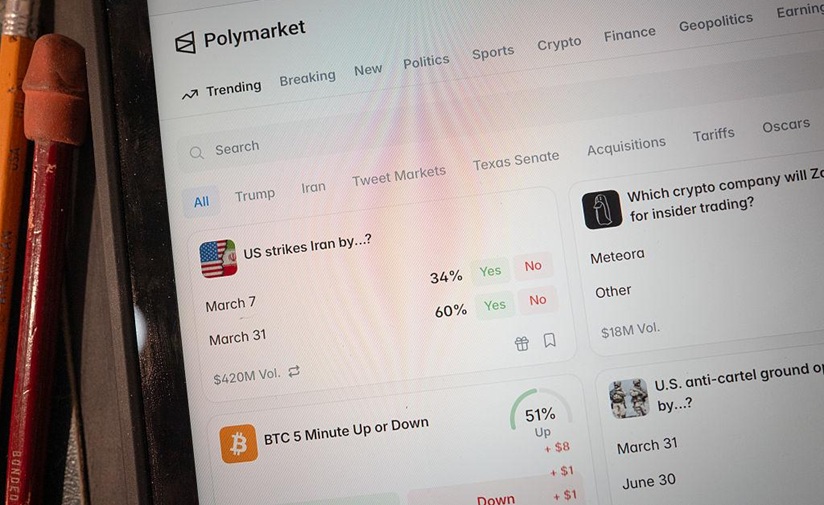
Polymarket isn’t tweaking around the edges anymore. This upgrade feels like a line in the sand.
What used to look like a fast, crypto-native prediction app is starting to look… heavier. More controlled. Closer to actual market infrastructure than anything DeFi built in its early phase.
And once you see it, you can’t unsee it.
This Isn’t About UX — It’s About Control
On paper, the V2 upgrade sounds harmless:
- new exchange contracts
- a new collateral token
- broader wallet support
Standard stuff.
But if you’ve watched how crypto platforms evolve when regulation enters the picture, the pattern is familiar. You don’t start with compliance. You start by tightening the system underneath.
That’s what this is.
Not a feature release. A structural shift.
The Timing Gives It Away
This isn’t happening in a vacuum.
Polymarket has been inching toward regulatory alignment, especially with the Commodity Futures Trading Commission in the background.
That changes everything.
Once you aim for the US market, you’re no longer optimizing for:
- speed
- composability
- or crypto-native flexibility
You’re optimizing for:
- control
- auditability
- predictable execution
Different game.
Rebuilding the Engine (Quietly)
The new exchange contracts — V2 — are being framed as a simplification.
That’s technically true. But it undersells what’s happening.
In any market, the order structure defines everything:
- how liquidity forms
- how trades match
- how edge cases get resolved
So when you redesign that layer, you’re not improving UX.
You’re rewriting the rules of the market itself.
From what’s been described, V2 is cleaner. Easier for bots. Easier for integrations. More standardized.
That last part matters most.
Institutions don’t plug into messy systems. They need consistency. Predictability. Something that doesn’t behave differently every time market conditions shift.
V1 didn’t really offer that.
The Wallet Change Is Bigger Than It Looks
Support for EIP-1271 doesn’t sound exciting unless you’ve dealt with institutional setups.
But this is where things start opening up.
Smart contract wallets mean:
- multisig accounts
- automated execution systems
- fund-level infrastructure
In other words, you’re no longer just dealing with retail traders clicking buttons on a browser wallet.
You’re building for desks.
That’s a different category of participant.
The Real Story: Collateral
Everything above matters. But it’s not the main event.
The real shift is the move away from USDC.e to a platform-controlled collateral token.
That’s the moment where things click.
Before:
- reliance on bridged assets
- dependency on external infrastructure
- exposure to bridge risk
Now:
- 1:1 backing with USDC
- internalized issuance and redemption
- direct control over settlement
If you’ve been around long enough, you know why this matters.
Bridges break. Not occasionally. Regularly.
And once you’re trying to operate in a regulated environment, “bridge risk” isn’t just technical—it’s a compliance nightmare.
So Polymarket cut it out.
Settlement Is the Game
This is the part most people miss.
Trading is front-end. Settlement is power.
In traditional markets, settlement is tightly controlled:
- clearinghouses
- custodians
- regulated entities
Crypto tried to make settlement invisible — just smart contracts doing their thing.
That works… until it doesn’t.
As volume grows, as scrutiny increases, settlement becomes the thing regulators care about most.
By controlling collateral, Polymarket now controls:
- how value enters the system
- how it moves
- how it exits
That’s not just cleaner.
It’s defensible.
The Trade-Off Nobody Wants to Say Out Loud
Here’s the tension.
The more control you introduce, the less permissionless the system becomes.
Early DeFi was messy but open:
- anyone could plug in
- assets moved freely
- systems composable by default
This upgrade moves in the opposite direction:
- standardized pathways
- controlled collateral
- tighter execution rules
It’s not fully closed. But it’s not raw DeFi anymore either.
It’s something in between.
And that’s intentional.
This Is About the US Market
You don’t make these changes unless you’re serious about operating inside US regulatory boundaries.
That means addressing:
- market manipulation
- insider trading
- settlement clarity
- participant accountability
Prediction markets are especially sensitive here.
You’re not trading earnings reports. You’re trading:
- elections
- policy outcomes
- real-world events
Information asymmetry isn’t a bug. It’s the product.
That makes surveillance harder. And more necessary.
Infrastructure has to support that.
The Monetization Shift Is Already Happening
At the same time, fees are coming in.
That matters.
Polymarket is moving from:
- growth mode
→ to - revenue mode
That transition always coincides with infrastructure tightening.
Better execution → more volume
More volume → more fees
More fees → sustainable model
Simple loop.
But only if the system holds.
Bigger Picture: The Industry Is Moving This Way
This isn’t just Polymarket.
Prediction markets as a category are shifting from:
- experimental
- crypto-native
- loosely structured
to:
- regulated
- infrastructure-heavy
- institution-ready
That shift is being forced by:
- regulators
- capital
- competition
Once institutional money shows up, everything gets stricter.
Always.
Where This Could Go
If this works, Polymarket becomes something new.
Not pure DeFi.
Not a traditional exchange.
A hybrid.
Part crypto-native execution layer.
Part regulated market infrastructure.
If it doesn’t work?
Then you get the worst of both worlds:
- less openness
- without enough institutional adoption to justify it
That’s the risk.
What Actually Matters Now
The upgrade itself isn’t the test.
The next phase is.
Do we see:
- deeper liquidity
- more sophisticated participants
- tighter spreads
- fewer structural failures
Or not?
Because at this point, the direction is clear.
Polymarket isn’t trying to be the fastest app anymore.
It’s trying to be taken seriously.
And that usually comes at a cost.
Disclaimer
This article is for informational and educational purposes only and does not constitute financial, investment, trading, or legal advice. Cryptocurrencies, memecoins, and prediction-market positions are highly speculative and involve significant risk, including the potential loss of all capital.
The analysis presented reflects the author’s opinion at the time of writing and is based on publicly available information, on-chain data, and market observations, which may change without notice. No representation or warranty is made regarding accuracy, completeness, or future performance.
Readers are solely responsible for their investment decisions and should conduct their own independent research and consult a qualified financial professional before engaging in any trading or betting activity. The author and publisher hold no responsibility for any financial losses incurred.