Cryptocurrency security developments on November 24, 2026, include a reported $613,000 theft involving Trezor and Exodus wallets, the restoration of 64 liquidity positions exploited on XDEX, and Wagyu’s reopening of its Monero bridge following a $13.5 million token incident. Today’s crypto hack roundup examines new blockchain investigations, unresolved access-control risks and the progress of customer reimbursements. The three cases have different outcomes: a wallet theft with no established cause, restored DeFi positions alongside a separate security threat, and a bridge relaunch backed by an operator’s still-unverified refund claims.
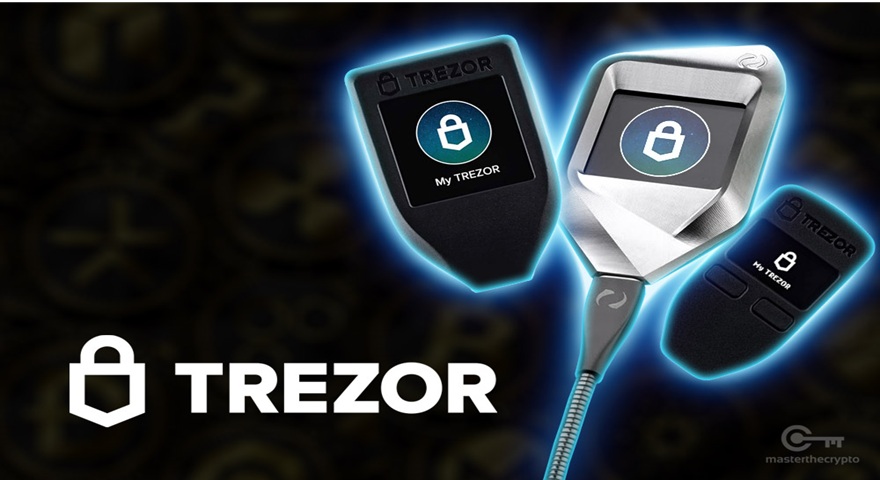
Trezor Safe 7 and Exodus user reports $613,000 wallet theft
Blockchain investigator Onchain Lens reported on November 23 that a cryptocurrency holder lost approximately $613,000 across wallets associated with a Trezor Safe 7 hardware device and an Exodus software wallet. Both were used with the same iPhone 17 Pro Max, although investigators have not determined how the attacker obtained access to the funds.
The reported losses comprise approximately $580,000 in Tether (USDT) on the Tron blockchain, $23,400 in USD Coin (USDC) on Solana and another $9,500 from the Exodus wallet. The combined figure is approximately $612,900, with Tron accounting for nearly 95% of the reported amount.
According to the investigaton, the victim had been using the Trezor Safe 7 for approximately two months, connecting it through Bluetooth to the Trezor Suite application on an iPhone 17 Pro Max running iOS 27.2.1.
The victim reportedly received the hardware wallet in sealed packaging, generated the recovery phrase directly on the device and recorded it on paper rather than storing it digitally. These details come from the user’s account and have not independently established the device’s integrity throughout its ownership.
Onchain Lens traced funding of an attacker-associated address to Binance and identified subsequent transfers involving an address labeled as belonging to Bybit. The investigation also identified a disputed 49,999 USDT transaction executed using the affected Tron account’s owner authority.
Those blockchain movements help reconstruct the destination of the stolen assets but do not establish who controlled the attacker or how the transactions were authorized. The Binance and Bybit connections concern wallet activity, not evidence that either exchange participated in the theft.
The transfers happened, but the how of it is still missing.
Trezor said its examination had found no indication of a hardware implant in the device associated with the report, while the investigation remained ongoing. No vulnerability affecting the Safe 7’s secure hardware, firmware or Bluetooth connection has been established.
The report arrives after earlier investigations into physically modified Trezor wallets identified malicious replacement components in older devices. Trezor subsequently confirmed separate implant discoveries involving Safe 5 wallets distributed through CryptoBilis and released firmware protections against the known implant method in November.
Those cases involved identified physical modifications and specific distribution channels. The latest Safe 7 incident has not been connected to that supply-chain activity, and the available evidence provides no basis for treating the devices as having suffered the same attack.
Two wallets, one phone, and no established way in.
The shared mobile device is a relevant part of the investigation because a compromised phone could expose software-wallet credentials or other sensitive information. That possibility has not been established in this case, nor would it automatically explain unauthorized signing through a properly functioning hardware wallet.
The SEC’s investor bulletin on crypto asset custody explains that hardware wallets generally offer stronger protection against internet-based attacks than connected software wallets, while warning that compromised recovery phrases can still expose self-custodied funds.
Onchain Lens has invited other security researchers to assist with tracing the stolen cryptocurrency and identifying opportunities to freeze it. The investigators have not announced a confirmed recovery amount or publicly established the technical cause of the compromise.
XDEX restores 64 exploited positions as X1 key risk persists
Decentralized exchange XDEX restored 64 liquidity-provider positions belonging to 54 wallets after attackers exploited an ownership-verification flaw in its staking infrastructure on November 22, according to a blockchain reconstruction published by X1 Report on November 23.
The exploit involved an unstaking function that failed to verify whether the caller owned the liquidity position being withdrawn. This allowed an unauthorized wallet to remove LP tokens from staking vaults without controlling the legitimate users’ wallets.
X1 Report identified the attacker-controlled address as 9qaTYVh6vpn5X7g7gdee5VVhRoSVXnLeFpvFMHbwPBM6. The withdrawals occurred over approximately 90 seconds between 21:26 and 21:28 UTC on November 22.
The investigation reconstructed the affected positions using blockchain records from the staking vaults before the exploit and following their restoration. XDEX patched the vulnerable farms and returned all 64 identified positions on November 23.
Those 64 positions came back, yes, but that is only one part of X1’s problem.
X1 Report documented a seperate security incident involving compromised server credentials that began producing unauthorized activity on November 19. In that case, the attacker gained access to sensitive keys associated with several X1 ecosystem programs and wallets.
The earlier attacker reportedly withdrew 5,110 XNT from two staking accounts before gaining control of upgrade authorities associated with 14 blockchain programs. The investigation also identified unauthorized activity involving a cryptocurrency donation wallet associated with X1 founder Jack Levin.
The upgrade-authority exposure presents a different form of risk from the XDEX staking exploit. On Solana-based infrastructure, an upgrade authority can control whether a deployed program’s executable code may be replaced. Possession of that authority can therefore give an attacker power over future program behavior, even when the program’s existing code has not been exploited.
One affected application was Vero, whose staking program reportedly remained under an attacker-controlled upgrade authority as of November 23. The program still held approximately 10,791 XNT, according to the investigation.
That balance represents assets exposed to an unresolved authority risk, not a confirmed additional theft of 10,791 XNT. X1 Report also identified the attacker-controlled upgrade-authority address as 7kacxq1bCgXa3fSnf35jLTwqet9DV87gur7Qbho4F9su.
It was a different attacker, different access, according to the reconstruction.
The security implications resemble those raised by the governance takeover affecting Hifi Finance in October, where unauthorized control over protocol governance reportedly enabled an attacker to upgrade a core contract and transfer collateral. XDEX’s direct staking vulnerability differs from a governance attack, while the separate X1 upgrade-authority incident involves potential control over deployed programs.
At 00:09 UTC on November 24, X1 Report indicated that the DGN, XNM and USDC.X farms remained paused despite the restoration of affected positions. The investigation did not establish a reliable aggregate dollar loss across the incidents.
Returning the LP positions resolves the documented displacement of those particular assets. The outstanding exposure involving program upgrade permissions requires its own remediation, including verified removal or replacement of compromised authorities. The latest reconstruction does not establish that this process has been completed for every affected program.
Wagyu reopens Monero bridge and reports XMR1 refunds
Wagyu has resumed operations following the November 20 compromise involving its wrapped Monero token XMR1, introducing a replacement token called HXMR and reporting that most affected holders have received compensation.
The update, announced by Wagyu’s pseudonymous operator PerpetualCow and circulated on November 24, marks a new stage in the recovery effort following the unauthorized movement of approximately 5.2 million XMR1 tokens from the token’s deployer account.
The earlier attack triggered an aggressive sell-off on Hyperliquid, pushing XMR1 from approximately $500 to around $1 and generating an estimated $13.5 million in proceeds for the attacker.
Blockchain analytics company Bitquery previously traced sales of approximately 369,623 XMR1 to 420 buying accounts during the November 20 incident. Those sales generated approximately $13.51 million, representing the amount paid by counterparties rather than a verified calculation of all customers’ net losses.
The original event and its suspected cause were examined in DaveFinances’ November 20 XMR1 collapse investigation, which detailed the deployer-account transfers and the operator’s allegation that credentials were exposed through infrastructure associated with Icelandic hosting provider 1984.hosting.
The hosting company separately experienced a cybersecurity incident. The available records have not independently established that attackers obtained Wagyu’s deployer key through that breach, leaving the exact compromise mechanism dependent on the operator’s explanation and any subsequent forensic findings.
The replacement asset, HXMR, is designed to represent Monero on Hyperliquid through Wagyu’s bridge infrastructure. The service reports that deposits and withdrawals have reopened, replacing the compromised XMR1 arrangement with a revised authorization structure.
According to the relaunch comparison, XMR1’s supply and deployment were controlled by a single hot-wallet private key. HXMR instead uses a two-of-three multisignature arrangement, requiring authorization from at least two signers to perform actions governed by that authority.
The new token also changes transaction precision. XMR1 supported eight decimal places and a minimum trading unit equivalent to 0.01 XMR, while HXMR supports ten decimal places and a minimum unit of 0.00001 XMR.
The smaller unit enables more granular token transactions, while the multisignature arrangement reduces dependence on one controlling key. Neither change independently verifies the bridge’s reserve backing, the security of the individual signers or the recovery of funds lost during the original attack.
Wagyu’s operator says most users affected by XMR1’s depegging have now received refunds. A smaller group of holders with larger positions has reportedly agreed to installment repayment arrangements.
Most were paid, the operator says; the larger claims, not all at once.
The announcement did not provide an independently audited repayment total, a complete recipient count or transaction-level reciepts covering the compensation claims. The identities of the HXMR multisignature signers and an independently verified reserve attestation also remain unavailable in the reporting reviewed.
The reported reimbursements represent an improvement from the prelimnary November 20 position, when PerpetualCow had pledged compensation without establishing a completed payment schedule. Yet the available disclosures still cannot establish what proportion of the total economic losses has been reimbursed.
Wagyu’s relaunch also leaves a distinction between restoring bridge operations and restoring the financial positions of holders who purchased XMR1 during the sell-off. The former has been announced as complete, while the latter remains subject to the operator’s repayment arrangements and further verification.
Across the November 24 developments, XDEX has provided identifiable on-chain evidence of restored liquidity positions, Wagyu has announced the return of bridge services and partial completion of reimbursements, and the Trezor and Exodus investigation continues without a confirmed compromise mechanism. The unresolved evidence is specific to each case: wallet authorization and tracing in the reported $613,000 theft, outstanding upgrade permissions across X1 programs, and documented compensation and reserve backing for Wagyu’s replacement Monero asset.

Johan Shamshad is Editor-in-Chief at Dave Finances, covering financial markets, digital assets, trading platforms, brokers, fintech, payments and regulation. Since 2023, he has also worked as an editor at Gulf News, the UAE English-language newspaper published by Al Nisr Publishing LLC. His work focuses on market-moving developments, company disclosures, regulatory changes and trading infrastructure, with an emphasis on primary-source verification and practical context for traders and investors.