
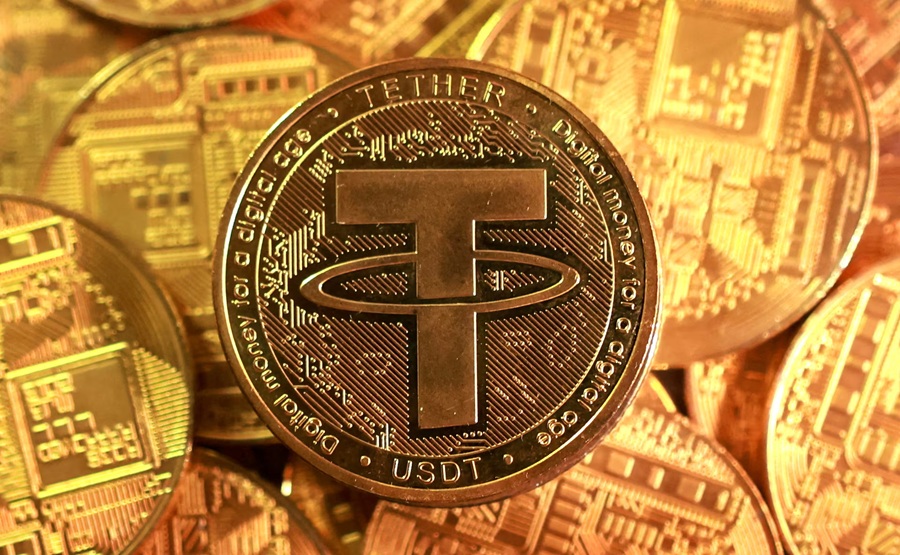
Distribution, regulation, payments, networks, reserves, integrations and ecosystem strategy are pushing the two companies toward very different versions of digital-dollar infrastructure.
Research current through October 4, 2026
Research thesis: The stablecoin market is becoming a contest over who controls the rails around the token—not merely who has the larger token. Circle is building a vertically integrated, regulation-first financial stack around USDC. Tether is using USDT’s much larger distribution and retained reserve economics to seed a wider ecosystem of wallets, payment firms, tokenization tools and strategic investments. The likely end state is not one winner, but two different moats.
The Numbers That Frame the Competition
| Metric | Tether / USDT | Circle / USDC | Why it matters |
| Q2 2026 token scale | $184.6B issued | $73.3B in circulation | USDT was ~2.52x larger at quarter end. |
| Q2 2026 operating economics | $1.5B net operating profit | $701M total revenue + reserve income | Tether retains more of the reserve economics; Circle shares heavily with distributors. |
| Reserve / revenue dependence | Treasury/repo-led profit | 95.2% of Q2 revenue was reserve income | Both remain rate-sensitive, so both are building fee-generating infrastructure. |
| Distribution footprint | 570M+ estimated users as of Mar. 2026; +30M in Q2 | 1,000+ banks, blockchains, distributors and partners | Tether is consumer/emerging-market heavy; Circle is institution/integration heavy. |
| Network strategy | 13 issuance chains at Q2; chain-agnostic WDK | USDC on 38 chains; Arc L1 launched Sep. 16 | Circle is moving toward owning a settlement layer; Tether favors ubiquity across third-party rails. |
| Regulatory architecture | USDT under El Salvador framework; USA₮ via Anchorage in U.S. | MiCA-authorized in Europe; OCC national trust bank | Tether segments by jurisdiction; Circle turns regulatory status into a product feature. |
Source note: Quarter-end comparisons use June 30, 2026 data where possible. User, chain and partner counts come from company disclosures and are not directly comparable metrics.

Figure 1. Stablecoin scale remains Tether’s clearest structural advantage
Sources: Tether Q2 2026 reserves report; Circle Q2 2026 results. Calculation: 184.6 / 73.3 = 2.52x.
1. The Competition Has Moved Above the Stablecoin Layer
USDT and USDC still compete for the same basic job: put a dollar-denominated liability on public blockchains. But by 2026, that is no longer where the most important strategic differences sit. The contest has moved up the stack—to distribution, payments, developer tools, network ownership, regulated custody and the ability to turn reserve income into durable non-interest revenue.
At June 30, Tether reported about $184.6 billion of tokens issued, while Circle reported $73.3 billion of USDC in circulation. That gives Tether more than two and a half times the dollar base from which to earn reserve income and, more importantly, a much larger installed network of users. Circle’s answer is not to replicate Tether’s emerging-market footprint one wallet at a time. It is trying to make USDC the regulated settlement asset that banks, payment networks, exchanges, asset managers and software developers can plug into with lower legal and operational friction. [1][2]
This distinction matters because network effects in money are not one-dimensional. A stablecoin can win by being the most widely held dollar substitute, by being the easiest regulated asset for institutions to integrate, by becoming the settlement unit of a payments network, or by owning the blockchain and software stack around the asset. Tether and Circle increasingly appear to be optimizing for different combinations of those advantages.
2. Distribution: Tether Owns the Grassroots Network Effect; Circle Is Industrializing Access
Tether’s strongest asset remains distribution that was built before stablecoins became a mainstream policy category. Tether said more than 570 million people were using its technology by March 2026, with tens of millions of new users being added each quarter. Its Q4 2025 market report estimated 534.5 million total USDT users and 139.1 million on-chain holders, while 24.8 million wallets were active monthly on average during that quarter. Those figures are company estimates, but they illustrate the kind of network Tether is defending: people using a digital dollar for trading, remittances, savings and payments, particularly where local currencies or banking access are weak. [7][8]
Circle’s distribution looks different. Its USDC page now advertises more than 1,000 banks, blockchains, distributors and other partners, availability in 185+ countries, and $75.2 billion in circulation as of September 24. Rather than pushing primarily through end-user wallets, Circle increasingly distributes through institutions and embedded infrastructure. Its proposed acquisition of Singapore-based Tazapay would add more than 60 banking and fintech partners and access to 100+ payout markets. [9][10]
That creates a useful way to think about the moats. Tether’s distribution advantage is demand-led: users already ask for USDT. Circle’s is increasingly compliance-led and integration-led: institutions can choose USDC because the legal, reserve, redemption and technology interfaces have already been packaged for them. The first moat is harder to dislodge in emerging markets; the second can be more valuable in regulated wholesale finance.
3. Regulation: Circle Is Selling One Global Compliance Story; Tether Is Segmenting the Product
Regulation is no longer merely a constraint on stablecoin issuers. For Circle, it is part of the product. Circle France is authorized to issue USDC and EURC as MiCA-regulated e-money tokens in Europe, and in 2026 it expanded its authorization to custody and transfer services. In July, Circle received final OCC approval to establish Circle National Trust, a national trust bank that can provide federally regulated custody and may eventually manage USDC reserves. [11][12]
Tether is taking a different path. Its international USDT issuer is based in El Salvador and, according to its Q2 reserve report, is an authorized stablecoin issuer and digital asset service provider there. For the United States, Tether did not simply move USDT into the new federal framework. It launched a separate token—USA₮—issued by Anchorage Digital Bank under the U.S. regime. [3][13]
This is a strategic choice, not just a legal workaround. Circle wants the same USDC brand to travel across regulated markets. Tether is preserving USDT’s global structure while creating jurisdiction-specific products where needed. The advantage is flexibility: regulatory requirements in one market do not have to redesign the global USDT product. The cost is fragmentation. Institutions may have to decide whether they want USDT, USA₮ or another Tether product depending on where they operate, while Circle can market regulatory continuity as part of USDC’s identity.
For Circle, the risk is the mirror image: compliance creates access, but it also brings higher fixed costs, capital requirements, supervisory scrutiny and a slower product cadence. If stablecoins become commoditized under harmonized regulation, the regulatory premium attached to USDC could narrow. Circle therefore needs its compliance position to convert into network usage, not simply better branding.
4. Payments: Circle Is Building a Network; Tether Is Embedding Itself Into Other Networks
Circle Payments Network (CPN) is the clearest sign that Circle wants to move beyond earning yield on reserve assets. At the end of Q2, CPN had 175 financial institutions enrolled and a $14.7 billion annualized transaction run rate based on the trailing 30 days, up 76% quarter over quarter. Circle also launched CPN Managed Payments, which lets payment firms and banks use stablecoin settlement while Circle handles minting, burning, compliance and blockchain orchestration in the background. [2][14]
The Tazapay acquisition would move Circle closer to owning both the stablecoin settlement layer and the local payout connections required to turn that settlement into usable bank money. This is strategically important because stablecoin payments rarely fail at the blockchain step; the expensive part is usually the regulated conversion, banking relationship, FX and last-mile payout. Circle is trying to capture more of that stack.
Tether is attacking the same problem through a portfolio model. It invested in t-0, a platform using USDT to settle cross-border flows between licensed financial institutions; Axiym, which is building treasury and settlement infrastructure; and LemFi, a remittance platform serving corridors linking developed markets to Africa and Asia. It has also pushed USDT into consumer distribution through Opera’s MiniPay. [15][16][17][18]
The difference is control. Circle is increasingly building and acquiring the network. Tether is often financing or supplying the asset and wallet tooling used by someone else’s network. Circle’s model can capture more fee revenue if it succeeds; Tether’s can spread faster and with less operating complexity.
5. Networks: Arc Is a Vertical-Integration Bet; Tether Is Betting on Chain Neutrality
Circle’s September launch of Arc is the most aggressive strategic move in the comparison. Arc is a Layer 1 designed for financial markets, payments and agentic activity, with USDC integrated natively and more than 100 institutional and ecosystem builders at launch. Its founding ecosystem includes banks, payment firms, exchanges, custodians and asset managers. In effect, Circle is no longer satisfied with USDC being an asset that runs on other people’s blockchains; it wants to own a settlement environment optimized around its products. [19]
That creates new monetization possibilities—network fees, infrastructure services, tokenization, agentic payments and potentially economics associated with Arc itself. It also creates strategic tension. Circle must persuade developers and institutions that Arc is useful without making Ethereum, Solana, Base, X Layer and other partner ecosystems feel that USDC is becoming a Trojan horse for Circle’s own chain.
Tether’s approach is almost the opposite. Its Q2 reserve report said fiat-denominated Tether tokens were supported on 13 discrete blockchains, while its open-source Wallet Development Kit abstracts wallets across Bitcoin, Ethereum, Tron, Solana, TON and many other networks. WDK says it supports 50+ chains and is designed so developers can integrate once without being locked into a Tether-controlled blockchain. [3][20]
This is consistent with Tether’s core distribution advantage. USDT benefits when it is everywhere. Tether does not need to own the base layer if the token itself is the liquidity standard. Circle, by contrast, is trying to convert stablecoin adoption into ownership of more of the infrastructure economics.

Figure 2. Tether’s Q2 reserve mix goes beyond cash-like assets
Source: Tether International Financial Figures & Reserves Report, June 30, 2026. Percentages calculated from $187.75B total assets; corporate bonds are <0.01% and omitted from the chart.
6. Reserves: Circle Maximizes Regulatory Simplicity; Tether Uses the Balance Sheet as a Strategic Asset
The reserve comparison is where the business models become especially different. Circle says USDC is backed by highly liquid cash and cash-equivalent assets, with Treasuries and overnight reverse repos held through custodial arrangements, separately managed accounts or the BlackRock-managed Circle Reserve Fund. This structure is designed to make redemption, transparency and regulatory classification easy to explain. [9][21]
Tether’s Q2 report shows a broader asset mix. Roughly 74.9% of Tether International’s $187.75 billion reserve assets were in U.S. Treasury bills, repo, cash and other short-term deposits. But about 10.0% was in precious metals, 7.2% in secured loans, 3.1% in Bitcoin, 2.8% in other investments and 2.0% in public equities. Its assets exceeded liabilities by $4.11 billion, equivalent to roughly 2.2% of reported liabilities. [3]
The upside of Tether’s approach is economic optionality. Gold, Bitcoin, loans and investments can generate returns that are not identical to short-term interest rates. The downside is that reserve equity can fluctuate with asset prices. Tether’s reserve report shows net equity falling from $6.34 billion at year-end 2025 to $4.11 billion at June 30 even though the company separately reported strong operating profits during the first half. The assured report shows a negative $3.17 billion financial result and $943 million of net capital movements over the six-month period; it does not provide enough assured detail to attribute that result asset by asset. [3]
That trade-off is fundamental. Circle’s reserve portfolio is closer to a regulated payments balance sheet. Tether’s reserve portfolio is closer to a highly liquid treasury operation with a meaningful allocation to strategic and market-risk assets. Investors and users should not confuse ‘fully backed’ with ‘identically backed.’

Figure 3. Circle pays a large “distribution tax” to scale USDC
Source: Circle Q2 2026 results and Form 10-Q. Distribution and transaction costs were $410.4M; total operating expenses were $254.5M; operating income was $34.4M.
7. The Hidden Battle Is Over Who Keeps the Reserve Economics
Circle’s public filings make the economics unusually transparent. In Q2 2026, reserve income was $667.7 million—95.2% of total revenue and reserve income. Circle incurred $410.4 million of distribution and transaction costs, including $324.6 million tied to its Coinbase agreements. Put differently, the largest stablecoin distributor in Circle’s ecosystem captured an amount equal to nearly half of Circle’s reserve income for the quarter. [1][2]
That does not mean the Coinbase relationship is bad economics. Without large distributors, USDC may be much smaller. The important point is that Circle’s business model structurally shares the reserve spread with distribution partners. Its Q2 revenue-less-distribution-cost margin was about 41%, before operating expenses. That creates a strong incentive to build businesses—CPN, Arc, custody, tokenization, integration services and payments software—where Circle can own more of the customer relationship and more of the fee pool.
Tether’s Q2 disclosure points to a different engine. It reported approximately $1.5 billion of net operating profit for the quarter, led by Treasuries and repo. Because Tether does not disclose a Circle-style distribution-sharing model of comparable scale, more of the reserve economics can be retained and redeployed into investments. That helps explain the breadth of Tether’s expansion into Anchorage Digital, Mercado Bitcoin, LemFi, Axiym, Whop, WDK, Hadron, Bitcoin infrastructure and other ventures. [3][16][17]
Both companies nevertheless face the same macroeconomic pressure: falling short-term rates reduce the gross yield available on reserves. Circle quantified this directly in Q2: a 66-basis-point decline in average yields created an estimated $113.9 million year-over-year headwind to quarterly reserve income, partly offset by higher USDC circulation. The more rates fall, the more valuable non-interest revenue becomes. [2]
8. Ecosystem Strategy: The Same Goal, Different Method
| Strategic layer | Circle | Tether |
| Core dollar | USDC + EURC | USDT + USA₮ + XAU₮ |
| Payments | CPN + Managed Payments + Tazapay | t-0 + Axiym + LemFi + partner integrations |
| Blockchain strategy | Own L1: Arc; plus 38 USDC networks | Chain-agnostic issuance + WDK abstraction |
| Institutional moat | MiCA, OCC trust bank, bank/payment-network validators | Anchorage/USA₮, strategic stakes in infrastructure firms |
| Developer strategy | APIs, CCTP, Arc, agent stack | Open-source WDK, Hadron tokenization |
| Consumer strategy | Mostly partner-led distribution | tether.wallet + emerging-market integrations |
| Capital allocation | Build/acquire adjacent infrastructure | Use retained profits to invest broadly across ecosystem |
Circle’s ecosystem resembles a platform company trying to internalize more of the transaction stack. Tether’s resembles a capital allocator using a dominant monetary asset to finance an external network around itself. Those models can converge—Tether is building more software directly, while Circle is partnering aggressively—but their default instincts remain different.
9. Which Strategy Carries the Bigger Risk?
Circle’s risk: expensive distribution and execution complexity
Circle has to prove that regulated access converts into durable economics. The company still depends heavily on reserve income, and its distribution agreements consume a large share of that income. Arc adds another execution challenge: Circle must attract meaningful activity without fragmenting USDC liquidity or alienating partner chains. Its growing regulatory footprint also creates fixed compliance costs and exposes more of the business to supervisory intervention.
Tether’s risk: regulation, reserve-market risk and strategic sprawl
Tether’s scale gives it more room to experiment, but its model carries different risks. USDT’s regulatory architecture is less uniform across major jurisdictions, which is one reason Tether created USA₮ for the U.S. market. Its reserve portfolio contains more market-sensitive and credit-sensitive assets than Circle’s. Its expanding investments across payments, wallets, tokenization, Bitcoin, AI and other sectors could strengthen distribution—or become strategic sprawl if those investments fail to reinforce the core monetary network.
The shared risk: stablecoins become a low-margin utility
The biggest long-term threat to both companies may not be each other. If banks, payment networks, exchanges and technology platforms issue their own regulated stablecoins—or if tokenized bank deposits become interoperable—the basic stablecoin unit could become commoditized. In that world, the winners are the firms that own distribution, developer workflows, settlement networks and compliance infrastructure. That is exactly why both Circle and Tether are expanding now.
10. Who Has the Better Position?
There is no single answer because the two moats are strongest in different markets. Tether remains better positioned where the problem is access to dollars: crypto trading liquidity, remittances, savings in inflationary economies and peer-to-peer transfer outside the banking system. Its 2.5x supply advantage and enormous installed user base create a self-reinforcing liquidity loop.
Circle is better positioned where the problem is making blockchain money acceptable to regulated institutions. MiCA authorization, an OCC trust charter, CPN, Arc and partnerships with firms such as Visa, Mastercard, BlackRock, ICE, DTCC and major banks create a route into capital markets and payments that is difficult to replicate with consumer distribution alone. [12][19]
The most interesting battleground is the middle: regulated global payments. Circle wants banks and PSPs to use USDC through CPN even if end users never see a blockchain. Tether wants USDT and USA₮ embedded in wallets, remittance firms and local payment platforms. Whichever company turns stablecoin settlement into invisible infrastructure—not merely a crypto product—will be closer to owning the next layer of the market.
11. What Investors and Operators Should Watch Next
- USDC vs. USDT supply growth: Whether Circle can narrow the 2.5x scale gap without paying away more of the economics.
- Circle distribution costs: Coinbase and other partner payments as a percentage of reserve income.
- CPN payment volume: Whether the $14.7B annualized Q2 run rate becomes meaningful relative to USDC’s on-chain activity.
- Arc activity and monetization: Real settlement volume, institutional use, fees and non-reserve revenue—not just integrations.
- USA₮ adoption: Whether Tether can translate its brand and distribution into a federally regulated U.S. product.
- Tether reserve mix: Changes in gold, Bitcoin, loans and other investments versus cash-like backing.
- Non-interest revenue: Circle’s other revenue and Tether’s payment/software/investment returns as rates normalize.
- Regulatory portability: Whether USDT gains broader regulated-market access or Circle’s compliance lead continues to compound.
Conclusion: Two Stablecoins, Two Operating Systems
Circle and Tether are no longer merely competing to issue the dominant blockchain dollar. They are competing over what sits around that dollar.
Circle’s strategy is to make USDC the regulated money layer of an integrated institutional stack: compliant issuance, payment orchestration, banking access, cross-chain transfer, tokenization and its own Arc network. Tether’s strategy is to use USDT’s distribution and cash generation to make Tether infrastructure unavoidable across wallets, remittances, exchanges, payment firms and emerging-market finance—while creating separate regulated products such as USA₮ where required.
The key strategic asymmetry is therefore not market capitalization. It is who controls the economics after the stablecoin is issued. Circle is spending heavily to acquire compliant distribution and is now trying to own more of the network. Tether already owns the larger distribution network and is using retained profits to buy, build or seed the ecosystem around it.
That makes the long-term contest much more interesting than USDT versus USDC. It is becoming a competition between two different models for internet-native financial infrastructure: one built from regulation inward, the other built from distribution outward.
Methodology and Source Notes
This analysis compares the operating strategies of Circle Internet Group and Tether using primary company disclosures, regulatory materials and independent assurance reports available through October 4, 2026. Balance-sheet comparisons use June 30, 2026 data where possible. Tether International’s reserve report is not a set of full IFRS financial statements; BDO’s assurance is limited to the specified Financial Figures and Reserves Report at the reporting date. Circle’s financial data are GAAP figures from its SEC filing and earnings release. User counts and ecosystem metrics are company-reported and should not be treated as independently audited measures unless explicitly stated.
The reserve-mix percentages and selected ratios in this article are Dave Finances calculations from disclosed figures. The article does not treat Tether’s ‘net operating profit’ as directly comparable with Circle’s GAAP net income because the entities use different reporting structures and disclosures.
Primary Sources
[1] Circle Q2 2026 earnings release — https://www.circle.com/pressroom/circle-reports-second-quarter-2026-results
[2] Circle Q2 2026 Form 10-Q — https://www.sec.gov/Archives/edgar/data/1876042/000187604226000248/crcl-20260630.htm
[3] Tether Q2 2026 Financial Figures & Reserves Report / BDO assurance — https://assets.ctfassets.net/vyse88cgwfbl/2kYf7r64h3tzwiu6F0CbUB/2997abd2f11ecea74a21528048b50707/Opinion___Report_-_Tether_International_Financial_Figure_30-06-2026.pdf
[4] Tether Q2 2026 performance release — https://tether.io/news/tether-posts-strong-q2-performance-generates-1-5b-net-operating-profit-maintains-4-11b-reserve-buffer-and-expands-gold-holdings-to-more-than-146-tons/
[5] Tether Q1 2026 performance release — https://tether.io/news/tether-posts-1-04b-q1-2026-profit-despite-highly-volatile-global-markets-reaches-all-time-highs-8-23b-reserve-buffer-and-maintains-u-s-treasury-heavy-backing/
[6] Circle USDC overview and current circulation — https://www.circle.com/usdc
[7] Tether wallet launch / user estimate — https://tether.io/news/tether-launches-tether-wallet-the-peoples-wallet-extending-its-global-financial-infrastructure-directly-to-billions-of-users-left-behind-by-the-traditional-financial-system/
[8] Tether USD₮ Q4 2025 market report — https://tether.io/news/usdt-q4-2025-market-report/
[9] Circle transparency and reserve framework — https://www.circle.com/transparency
[10] Circle agreement to acquire Tazapay — https://investor.circle.com/news/news-details/2026/Circle-Expands-Global-Payments-Infrastructure-with-Agreement-to-Acquire-Singapore-Based-Cross-Border-Payments-Platform-Tazapay/default.aspx
[11] Circle France MiCA services approval — https://www.circle.com/blog/circle-france-receives-approval-to-offer-crypto-asset-services-under-mica
[12] Circle National Trust OCC approval — https://www.circle.com/pressroom/circle-receives-final-occ-approval-to-establish-national-trust-bank
[13] Tether launch of USA₮ — https://tether.io/news/tether-announces-the-launch-of-usat-the-federally-regulated-dollar-backed-stablecoin-made-in-america/
[14] Circle CPN Managed Payments — https://www.circle.com/pressroom/circle-launches-cpn-managed-payments-a-full-stack-platform-for-seamless-stablecoin-settlement
[15] Tether investment in t-0 network — https://tether.io/news/tether-announces-investment-in-t-0-network-to-support-usdt-powered-payments-system/
[16] Tether investment in Axiym — https://tether.io/news/tether-invests-in-axiym-to-advance-digital-asset-use-cases-across-global-payment-ecosystems/
[17] Tether investment in LemFi — https://tether.io/news/tether-invests-in-lemfi-to-promote-stablecoin-powered-remittances-across-emerging-markets/
[18] Tether / Opera MiniPay integration — https://tether.io/news/tether-and-opera-expand-financial-access-in-emerging-markets-through-minipay/
[19] Circle Arc mainnet launch — https://www.circle.com/pressroom/circle-launches-arc-mainnet-an-economic-operating-system-for-the-internet
[20] Tether WDK overview — https://wdk.tether.io/blog/introduction-to-wdk-wallet-development-kit
[21] Circle MiCA overview — https://www.circle.com/circle-eea
[22] Tether strategic investment in Anchorage Digital — https://tether.io/news/tether-announces-100-million-strategic-equity-investment-in-anchorage-digital/
[23] Tether WDK / Shiga collaboration — https://tether.io/news/tether-wdk-brings-self-custodial-finance-to-africa-and-the-gcc-with-shiga/

Johan Shamshad is a financial markets writer at Dave Finances covering cryptocurrencies, trading platforms, brokers, fintech, financial regulation, and developments across global markets. He previously worked at Gulf News, adding newsroom experience to his coverage of fast-moving financial and digital-asset markets.
His work focuses on identifying market-moving events, company developments, regulatory changes, product launches, and shifts in trading and financial infrastructure.
Johan contributes news and analysis designed to help readers understand not only what happened, but why a development matters and how it may affect the wider financial landscape.