
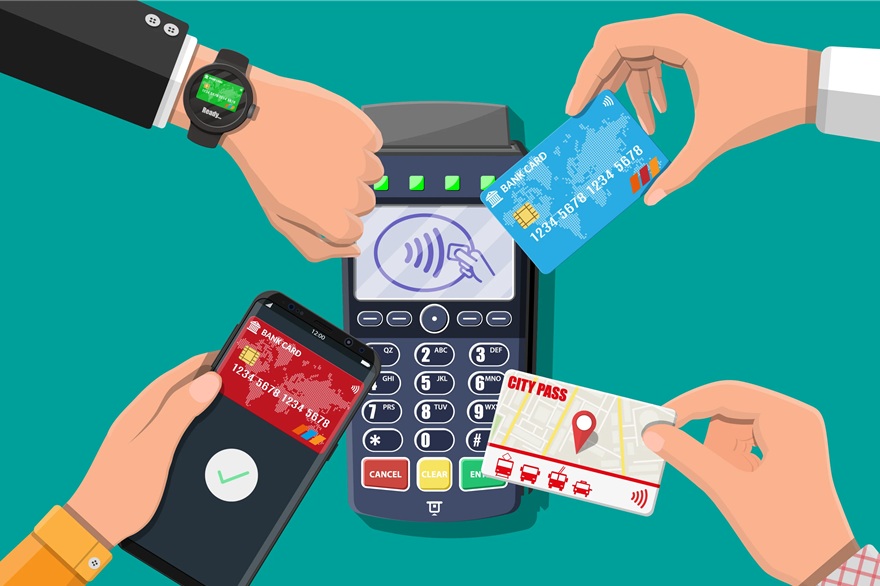
Embedded finance is what happens when a non-financial app quietly becomes the place where you pay, get paid, borrow, hold money or buy insurance. The important part is not the branding. It is the rearrangement of distribution: the app owns the customer journey while a bank, lender, insurer, card network or infrastructure provider often sits behind the screen.
| App / platform | Financial function embedded inside it | Who actually provides the regulated product |
| Uber | Driver checking account + debit card + instant earnings | Evolve Bank & Trust; Branch powers the Uber Pro Card |
| DoorDash | Dasher deposit account + debit card + instant payouts | Starion Bank |
| Shopify | Payments, cash-management account, cards and merchant lending | Stripe, Fifth Third, Celtic Bank, WebBank and other partners depending on product |
| Airbnb | Travel insurance at booking; host earnings-protection insurance | Generali / Europ Assistance, Chubb, other underwriters; Airbnb acts through licensed insurance entities |
| Starbucks | Closed-loop stored-value wallet and loyalty balance | Starbucks records the balance as its own deferred-revenue liability rather than a bank deposit |
The Core Question: Who Owns the Customer, and Who Owns the Risk?
A bank used to own both the product and the primary customer interface. Embedded finance separates those roles. The non-financial platform can own the moment of need—ordering a ride, running an online shop, booking accommodation or receiving gig earnings—while a regulated provider supplies the underlying financial instrument.
That separation matters economically. The platform may earn payment-processing fees, lending income, referral commissions, interchange-related economics or higher retention without ever becoming the legal bank or insurer. The regulated provider, meanwhile, gains access to customers it might otherwise have had to acquire through its own marketing.

Figure 1. Embedded finance separates the customer interface from the regulated product. The exact number of layers varies by program.
This is why a useful definition is narrower than simply ‘financial technology.’ A budgeting app is fintech, but it is already a financial product. An Uber driver receiving a bank account inside the Driver app, an Airbnb guest adding insurance while booking, or a Shopify merchant receiving a loan offer inside the commerce dashboard are embedded-finance experiences because finance has been inserted into a non-financial workflow.
1. Uber and DoorDash: Turn the Earnings Screen Into a Bank Account
Gig platforms illustrate the logic particularly well because they already control the flow of money. A driver completes work, the platform calculates earnings, and the next question is naturally: where should the money go?
Uber’s Pro Card places a checking account and Mastercard debit card directly around that earnings flow. Uber’s own terms say the card is powered by Branch and issued by Evolve Bank & Trust. The driver experiences it as an Uber feature; legally and operationally, the banking service sits elsewhere.
DoorDash has gone further with DoorDash Crimson. Its current help materials describe a personal banking account inside the Dasher app, established by Starion Bank, with a Visa debit card, bill payment, external direct deposit and instant access to Dasher earnings. No separate banking app is required.
The customer-value case can be quantified. DoorDash’s legacy FastPay option charges $1.99 for a daily cash-out, while Crimson says Dasher earnings can be deposited after each dash at no fee. If a worker otherwise cashed out five times a week for 50 weeks, the fee would be about $497.50 a year. At two withdrawals a week, it would still be about $199. This is an illustrative avoided-fee calculation, not a claim that every Dasher used FastPay at that frequency.

Figure 2. Illustrative annual FastPay cost at different withdrawal frequencies, using DoorDash’s disclosed $1.99 fee. Crimson’s after-dash earnings deposits are advertised at no fee.
For the platform, the strategic return can be broader than a direct fee. Faster access to earnings can improve worker retention, keep more financial activity inside the app and create card-spending economics. But Uber and DoorDash do not separately disclose enough program economics to justify pretending that we know the exact revenue split between platform, bank, network and infrastructure provider.
2. Shopify: When Commerce Software Becomes a Financial Operating System
Shopify is the clearest public-company example because its financial statements show how embedded finance can move from product feature to core business model.
In the first half of 2026, Shopify generated $5.20 billion of merchant-solutions revenue versus $1.55 billion of subscription-solutions revenue. Merchant solutions therefore represented about 77% of total revenue. Shopify says this category is driven principally by Shopify Payments and currency conversion, but it also includes lending and other financial products, partner referral fees, shipping and additional merchant services.

Figure 3. Shopify H1 2026 revenue mix. Merchant solutions include payments and financial products but also non-financial merchant services, so the chart should not be read as 77% ‘financial revenue.’
The payment layer is enormous. Shopify Payments processed $145.1 billion of GMV in the first six months of 2026, equivalent to 67% penetration of Shopify’s platform GMV for the period. That means the commerce platform is not merely observing the sale; in most cases it is also touching the payment.
The economics are different from software subscriptions. In H1 2026, merchant-solutions cost of revenue was $3.19 billion against $5.20 billion of revenue, implying an approximate 38.7% gross margin. Subscription solutions produced roughly an 80.0% gross margin. The embedded-finance-heavy stream is lower margin because payment and financial products have third-party costs, but Shopify says it requires materially less sales-and-marketing and R&D spending than acquiring the merchant subscription in the first place.
That is the core cross-sell logic: acquire the merchant once through software, then monetize more of the merchant’s financial activity without reacquiring the same customer.
3. Embedded Lending: The Platform’s Data Becomes an Underwriting Asset
Lending is where embedded finance becomes more economically powerful—and more balance-sheet intensive. A traditional small-business lender has to ask for financial statements, bank data and proof of revenue. Shopify already sees the merchant’s sales, seasonality, refund behavior and payment flows.
Shopify Capital uses that position to offer financing inside the merchant dashboard. In the United States, Shopify states that loans are issued by WebBank. Its financial filings add an important layer: certain loans and merchant cash advances are originated by a banking partner and then purchased by Shopify, which obtains the economic rights and therefore carries substantial credit exposure.
At June 30, 2026, Shopify reported $2.18 billion of net loans and merchant cash advances, up from $1.78 billion at the end of 2025 and $1.22 billion at the end of 2024. That is roughly 78% growth in the balance in 18 months. Shopify purchased $2.8 billion of loans and merchant cash advances during the first half of 2026 and recognized $175 million of six-month interest and fee revenue on loans.

Figure 4. Shopify’s net loan and merchant-cash-advance receivables grew from $1.22 billion at end-2024 to $2.18 billion by June 2026.
The risk grows with the revenue. Shopify’s allowance for credit losses on loans and merchant cash advances reached $242 million at June 2026, and its six-month provision for credit losses was $154 million. Embedded lending is therefore not simply a referral commission. Once the platform purchases the receivable or funds credit from its own balance sheet, it begins to look economically more like a lender.
4. Airbnb: Insurance Appears at the Exact Moment the Risk Is Created
Insurance is another form of embedded finance because timing matters. A generic travel-insurance advertisement asks the customer to imagine a future trip. Airbnb can present insurance at the moment a real booking, destination, dates and price already exist.
For eligible U.S. guests, Airbnb offers optional travel insurance at checkout or after booking. The policy is underwritten by Generali U.S. Branch and offered through Airbnb Insurance Agency LLC. Airbnb’s disclosure says its agency may receive compensation for insurance sold through the platform.
Airbnb is also moving embedded insurance to the supply side. In 2026 it launched optional Earnings Protection for eligible U.S. hosts, sold from the host earnings dashboard and designed around the listing’s historical earnings.
This illustrates a powerful feature of embedded finance: the distributor often has context a standalone financial provider does not. Airbnb knows the booking value, trip dates and host earnings history. That data can make the financial product more relevant at the point of sale. It also creates governance questions around disclosures, conflicts and whether convenience pushes users toward a product without sufficient comparison shopping.
5. Starbucks: Embedded Finance Without a Bank Account
Not every embedded-finance product requires an external bank partner. Starbucks’ stored-value ecosystem is a useful edge case because it functions like a closed-loop wallet rather than a deposit account.
Customers load money onto Starbucks Cards and use the balance to buy Starbucks products. Accounting-wise, Starbucks records those balances as deferred revenue until redemption. At the end of FY2025, stored-value cards and loyalty-program liabilities totaled about $1.75 billion. During the year, Starbucks deferred $15.25 billion from card activations, reloads and Stars earned, then recognized $15.20 billion through redemptions and breakage.
Starbucks separately reported $222.4 million of breakage revenue in FY2025 from balances it did not expect customers to redeem—$200.4 million in company-operated stores and $22.0 million in licensed stores. That breakage was equivalent to about 1.46% of the year’s $15.25 billion of new stored-value and loyalty deferrals. This is not an interest margin and the balance is not a bank deposit; it is a financial feature embedded into a coffee loyalty system.
The business value is not just breakage. Preloading money can increase repeat usage, reduce payment friction and keep the brand at the center of the transaction. The customer experiences a wallet; the company experiences prepaid demand and a large deferred-revenue balance.
How Embedded Finance Actually Makes Money
| Embedded product | Typical monetization | Who may carry the main financial risk |
| Payments | Processing fee, FX spread, platform fee, revenue share | Processor/acquirer for some operational risks; merchant/platform for disputes depending on contract |
| Cards + deposit accounts | Interchange share, transfer fees, partner economics, retention | Sponsor bank legally holds deposits; program manager/platform bears contractual and operational risks |
| Lending | Interest, fixed fees, gain-on-sale, revenue share | Bank, platform, investor or combination depending on who ultimately owns receivable |
| Insurance | Commission or distribution compensation | Licensed insurer / underwriter |
| Stored value | Higher repeat spend, prepaid cash flow, breakage | Merchant owes the stored-value liability |
The most important insight is that the platform can monetize finance in two ways. The obvious route is direct revenue: a payment fee, interest income, insurance commission or transfer fee. The less visible route is strategic: higher conversion, faster payouts, lower churn, deeper customer data and more reasons for the user to remain inside the ecosystem.
The Regulatory Catch: The App Is Not Necessarily the Bank
Embedded finance can make legal boundaries almost invisible to the user. DoorDash explicitly says it is a technology company, not a bank. Shopify makes the same disclosure for Shopify Balance. That distinction matters because deposit insurance, complaint handling, lending law and responsibility for account records can depend on the underlying regulated entity rather than the logo at the top of the app.
U.S. banking regulators have specifically warned about arrangements in which banks use third parties to distribute deposit products. The Federal Reserve, FDIC and OCC note that the bank remains responsible for compliance even when third parties perform customer-facing technology, transaction recordkeeping, payments, servicing or compliance functions.
The FDIC also warns consumers that a nonbank app itself is never FDIC-insured. Pass-through insurance can apply only after funds are actually deposited at an insured bank and recordkeeping and ownership conditions are satisfied. Insurance against the bank’s failure is not insurance against the nonbank platform’s bankruptcy, operational outage or recordkeeping failure.
For users, the practical question is therefore not simply ‘does this app say FDIC?’ It is: which bank holds the money, when does the money reach that bank, whose records determine ownership, and what happens if the platform—not the bank—fails?
Why Platforms Want Finance Embedded Earlier in the Journey
The distribution advantage comes from context. A standalone lender has to persuade a merchant to apply for credit. Shopify can show a financing offer next to the merchant’s sales data. A standalone bank has to persuade a gig worker to reroute income. DoorDash can make its account the default destination for earnings. A travel insurer has to find a traveler; Airbnb already has one at checkout.
This is economically powerful because customer acquisition is often the expensive part of financial services. Embedded finance converts an existing non-financial relationship into a distribution channel. The app does not need to win a second customer; it needs to win a second use case.
What Would Prove the Embedded-Finance Thesis Wrong?
Embedded finance is not automatically superior. The model weakens if customers refuse to trust nonbanks with money, partner-bank economics absorb most of the revenue, regulators make multi-party programs significantly more expensive, or losses in lending and fraud overwhelm cross-sell benefits.
There is also a concentration risk. When payments, deposits, credit and insurance all sit inside the same platform, a user may gain convenience but lose comparison-shopping discipline. A platform can become the default financial distributor simply because it owns the workflow, not because each embedded product is the cheapest or best available.
The strongest test is therefore attach rate plus economics: do enough users adopt the product, does the product improve retention or revenue, and does the platform keep enough of the economics after banks, networks, processors, insurers, fraud losses and compliance costs are paid?
A Retail Checklist: Look Behind the Interface
| Question to ask | Why it matters |
| Who is the legal provider? | The app brand may only distribute a bank, lending or insurance product. |
| Where is my money actually held? | Deposit protection depends on the underlying account structure, not the app’s branding. |
| Who owns the loan after origination? | Credit risk and servicing rights may move from bank to platform or investor. |
| Is this insurance optional and who underwrites it? | The distributor can earn compensation even though another company bears claims. |
| What fee am I avoiding—or adding? | Embedded products can eliminate friction, but convenience can also hide transfer, FX or financing costs. |
| Can I use the core app without the financial product? | Optionality helps reveal whether finance is a convenience layer or a lock-in mechanism. |
Bottom Line
Embedded finance is not primarily about turning Uber, DoorDash, Shopify or Airbnb into banks. It is about moving the distribution of financial products into the software and marketplaces where economic activity already happens.
The app typically owns the context and customer relationship. A bank, lender or insurer often owns the regulated product. Infrastructure companies connect the two. The resulting experience can feel like one product even though the legal and economic chain contains several companies.
Shopify shows how far the model can go: payments and adjacent merchant solutions now dominate its revenue, while embedded credit has grown into a multi-billion-dollar balance-sheet asset. Uber and DoorDash show why instant earnings can evolve naturally into embedded banking. Airbnb shows how insurance can be inserted at the moment risk is created. Starbucks shows that even a closed-loop prepaid wallet can create meaningful financial economics without becoming a bank.
For consumers and investors, the essential question is the same: the interface may be seamless, but who holds the money, who earns the fee, who carries the risk, and what legal claim exists when something goes wrong?
Methodology
Research is current through October 8, 2026 and prioritizes company filings, official product documentation and U.S. regulatory guidance. Because embedded-finance programs often involve private contracts, exact revenue-sharing terms between platforms, sponsor banks, processors and card networks are frequently undisclosed. The article does not infer undisclosed splits.
Derived calculations: Shopify H1 2026 merchant-solutions share = $5.201bn / $6.753bn = 77.0%. Merchant-solutions gross margin = ($5.201bn – $3.188bn) / $5.201bn = 38.7%; subscription-solutions gross margin = ($1.552bn – $0.311bn) / $1.552bn = 80.0%. Shopify net loans and merchant-cash-advance growth from December 2024 to June 2026 = $2.184bn / $1.224bn – 1 = 78.4%. DoorDash FastPay illustrative annual cost assumes 50 active weeks and the disclosed $1.99 withdrawal fee. Starbucks FY2025 breakage ratio = $222.4m / $15.2458bn of annual card activations, reloads and Stars-earned deferrals = 1.46%.
Sources
1. Federal Reserve / FDIC / OCC — Joint Statement on Third-Party Deposit Arrangements — Link. Regulatory framework for bank-fintech and embedded-deposit arrangements, recordkeeping and compliance responsibility.
2. FDIC — Banking With Third-Party Apps — Link. Consumer guidance on nonbanks, sponsor banks and pass-through deposit insurance.
3. Visa — Embedded Finance: Powering Seamless Business Experiences — Link. Industry definition and value-chain framework.
4. Shopify Q2 2026 Form 10-Q — Link. H1 2026 revenue mix, Shopify Payments GMV, lending balances, provisions and loan revenue.
5. Shopify 2025 Form 10-K — Link. Annual merchant-solutions model, Shopify Payments penetration, Capital economics and risks.
6. Shopify — Finance Dashboard — Link. Current suite structure for Balance, Credit, Capital, Bill Pay and Tax.
7. Shopify — Shopify Balance — Link. Current legal structure: Stripe Payments Company, Fifth Third Bank and Celtic Bank.
8. Shopify — Balance Product Page — Link. Current product mechanics and disclosure that Shopify is not a bank.
9. Shopify — Shopify Capital — Link. Current financing structure and merchant eligibility.
10. Uber — Uber Pro Card — Link. Checking-account/debit-card functionality and Branch/Evolve structure.
11. Uber — Uber Pro Program Terms — Link. Current legal disclosure for issuer, network and rewards.
12. DoorDash — DoorDash Crimson FAQ — Link. Current in-app banking, Starion Bank issuer structure and legacy FastPay comparison.
13. DoorDash — Crimson Transfers — Link. Current instant-transfer and ACH mechanics.
14. DoorDash — Crimson Onboarding — Link. Current fee and in-app account functionality.
15. Airbnb — US Travel Insurance Disclosures — Link. Airbnb Insurance Agency and Generali underwriting/compensation disclosures.
16. Airbnb — Travel Insurance and AirCover — Link. Countries and checkout availability for embedded travel insurance.
17. Airbnb — Earnings Protection — Link. 2026 host-side embedded insurance launch and eligibility.
18. Starbucks 2025 Form 10-K — Link. Stored-value liability, annual load/redemption flows and breakage revenue.
19. Visa — Embedded Payments — Link. Embedded-payments mechanics and platform use cases.
20. Visa Direct — Platform Overview — Link. Money-movement infrastructure used for payouts, wallets and embedded use cases.

Johan Shamshad is a financial markets writer at Dave Finances covering cryptocurrencies, trading platforms, brokers, fintech, financial regulation, and developments across global markets. He previously worked at Gulf News, adding newsroom experience to his coverage of fast-moving financial and digital-asset markets.
His work focuses on identifying market-moving events, company developments, regulatory changes, product launches, and shifts in trading and financial infrastructure.
Johan contributes news and analysis designed to help readers understand not only what happened, but why a development matters and how it may affect the wider financial landscape.