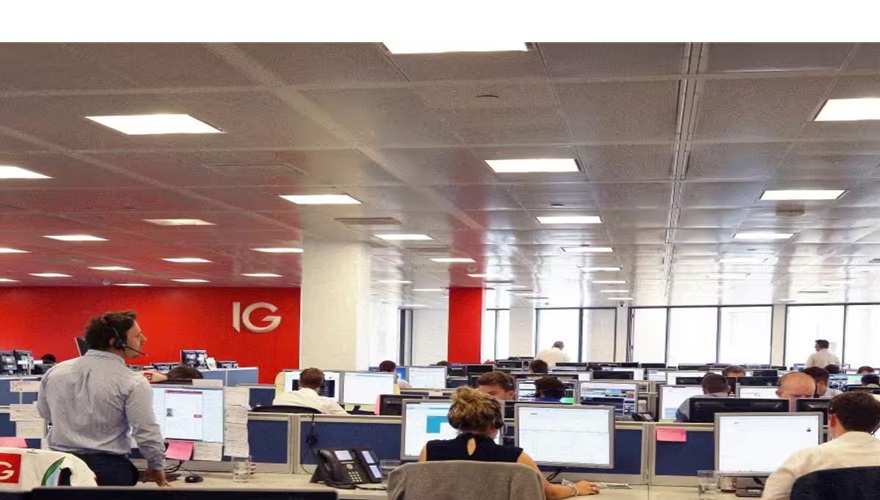
IG Group experienced a nearly three-hour authentication disruption on October 30, preventing some clients from receiving the SMS or email verification codes needed to access their trading accounts. The broker acknowledged the incident through its official system-status page and advised customers requiring immediate dealing services to contact its telephone support teams in Australia, Singapore and the UK.
The incident began at 00:50 UTC and was marked resolved at 03:36 UTC, producing a total disruption window of two hours and 46 minutes. Although IG confirmed that a fix had been implemented, it did not disclose the number of affected customers, the underlying technical cause or whether any traders experienced financial losses because they could not access their accounts.
The incident is particularly relevant for customers holding leveraged positions. Even when a broker’s trading infrastructure remains operational, authentication failures can prevent customers from reaching their accounts to monitor exposure, close positions or adjust stop-loss orders.
IG Reports Authentication Problems and Implements a Fix
According to IG’s official incident timeline, the company first acknowledged the problem at 00:50 UTC on October 30, stating that some clients were unable to receive SMS or email authentication codes.
IG said it was investigating the issue with the highest priority and provided alternative telephone dealing numbers for customers requiring assistance. The contacts listed were +61 (3) 9860 1734 for Australia, +65 6390 5118 for Singapore and +44 207 896 0079 for the UK.
The broker published another update at 01:50 UTC, confirming that its investigation was continuing. At 02:28 UTC, IG said it had identified the issue and was implementing a fix.
Five minutes later, at 02:33 UTC, the company moved the incident into monitoring after implementing the fix. The status page subsequently confirmed full resolution at 03:36 UTC.
The sequence indicates that IG spent approximately 98 minutes investigating and identifying the problem before announcing that a fix had been implemented. Another 63 minutes passed before the company formally closed the incident.
However, identifying the problem does not necessarily mean IG established its underlying root cause. The broker has not explained whether the disruption originated within its authentication infrastructure, an external SMS delivery provider, an email service or another component involved in generating and distributing verification codes.
IG also did not provide a breakdown of the affected customers by country, account type or authentication method. It remains unclear whether the issue affected SMS and email authentication equally or whether one delivery channel experienced more significant problems.
Following the resolution, IG’s status page listed its tracked services, including login, web trading, mobile applications, trading and deposits and withdrawals, as operational.
Telephone Dealing Offered an Alternative for Locked-Out Clients
One of the more important details in IG’s initial announcement was its decision to publish emergency telephone dealing numbers alongside the authentication incident.
This suggests that the company recognized the possibility that some customers might need to execute transactions without being able to access their usual online trading interfaces.
For an active CFD trader, the distinction between being unable to log in and being unable to manage an existing position can be financially significant.
Suppose a customer holds a leveraged position in an index, currency pair or commodity while market prices move sharply. If the customer cannot authenticate, they may be unable to close the position, reduce exposure or modify protective orders through the normal platform.
Telephone dealing can provide an alternative route, but its effectiveness depends on several practical factors, including whether the customer can complete identity verification, reach a dealer promptly and have the requested transaction executed under the applicable dealing procedures.
IG’s public announcement did not disclose whether any customers actually used the emergency numbers, how long telephone calls took to connect or whether telephone orders experienced delays during the disruption.
It also remains unknown whether customers with already authenticated sessions could continue using their trading platforms normally. If the problem affected only new authentication requests or sessions requiring revalidation, the operational impact could have been considerably narrower than a complete login failure.
That distinction matters when assessing the incident’s potential consequences. A customer who remained logged in might have continued managing positions, while someone who had logged out, changed devices or encountered a fresh authentication requirement could have faced a complete access barrier.
Authentication Failures Can Become Trading Infrastructure Risks
The IG incident highlights a frequently overlooked vulnerability in online brokerage operations: authentication is not simply a security feature but also a gateway to financial services.
A broker can maintain functioning pricing engines, order-management systems and execution infrastructure while customers remain unable to access those services because a separate identity-verification component has failed.
A similar distinction appeared in an October incident involving Japanese broker GMO Gaika. The company experienced a broad FX and CFD system outage affecting authentication and account-management functions, including password resets, SMS authentication settings and account unlocking. That incident extended beyond login access to deposits, withdrawals and other account services.
IG’s October 30 disclosure was narrower, with the company specifically identifying the delivery of authentication codes as the problem. There is no evidence that its trading engine, order execution or customer balances were affected.
Nevertheless, the financial consequences of access failures can be substantial when they coincide with volatile market conditions. A separate cluster of Capital.com customer complaints involving account access and trading interruptions illustrates how customers can become concerned when technical or account restrictions prevent them from managing open positions.
These situations should not automatically be treated as evidence of failed trade execution. However, they demonstrate why brokers need to assess operational disruptions according to the services customers actually lose, rather than simply whether the underlying platform remains online.
The UK’s Financial Conduct Authority has established an operational resilience framework requiring firms within its scope to identify important business services, establish tolerable disruption limits and test their ability to recover from severe but plausible operational incidents. The FCA’s operational resilience requirements emphasize the importance of maintaining services that could cause significant harm to consumers or markets if disrupted.
For a leveraged trading provider, account access and the ability to manage existing positions are particularly relevant when assessing the potential impact of authentication failures. A disruption lasting less than three hours may still become consequential if it prevents customers from responding to fast-moving markets.
IG Has Not Disclosed the Number of Affected Traders or Financial Impact
For IG Group, the immediate priority is likely to be ensuring that the authentication system remains stable following the implemented fix. However, the absence of a published root-cause explanation leaves several questions open.
The broker has not established whether the incident resulted from an internal infrastructure failure, an external service provider or a temporary disruption involving the delivery of verification messages. It has also not disclosed whether any customers were unable to execute transactions through telephone dealing.
Another relevant question is whether the incident exposed weaknesses in IG’s fallback arrangements. Providing emergency numbers is useful, but the alternative channel must have sufficient capacity to handle customers who cannot access their accounts simultaneously.
That becomes particularly important during periods of elevated volatility, when multiple customers may attempt to close positions or reduce leverage at the same time. A telephone dealing system that works under normal conditions may face considerably different demands during a widespread authentication failure.
There is currently no disclosed evidence that IG suffered a cybersecurity breach, that customer information was compromised or that the incident affected the execution of trades across its platforms. The available information supports treating this as an authentication and account-access disruption rather than a confirmed trading-system failure.
The next developments worth monitoring are an explanation of the technical cause, confirmation of the number of affected accounts and any disclosure of customer complaints or compensation requests linked to the incident.
Ultimately, IG restored authentication services within two hours and 46 minutes, but the absence of information about customers’ ability to manage existing positions prevents a complete assessment of the incident’s impact. For traders using leveraged products, the real measure of operational resilience is not simply whether a broker can restore its login system, but whether customers retain a reliable way to control their financial exposure throughout the disruption.

Johan Shamshad is a financial markets writer at Dave Finances covering cryptocurrencies, trading platforms, brokers, fintech, financial regulation, and developments across global markets. He previously worked at Gulf News, adding newsroom experience to his coverage of fast-moving financial and digital-asset markets.
His work focuses on identifying market-moving events, company developments, regulatory changes, product launches, and shifts in trading and financial infrastructure.
Johan contributes news and analysis designed to help readers understand not only what happened, but why a development matters and how it may affect the wider financial landscape. You can reach out to him via his social media accounts:
Linkedin: https://www.linkedin.com/in/johan-shamshad-742851262/
X: https://x.com/Yasmine_FX
Investing: https://www.investing.com/members/contributors/279781574