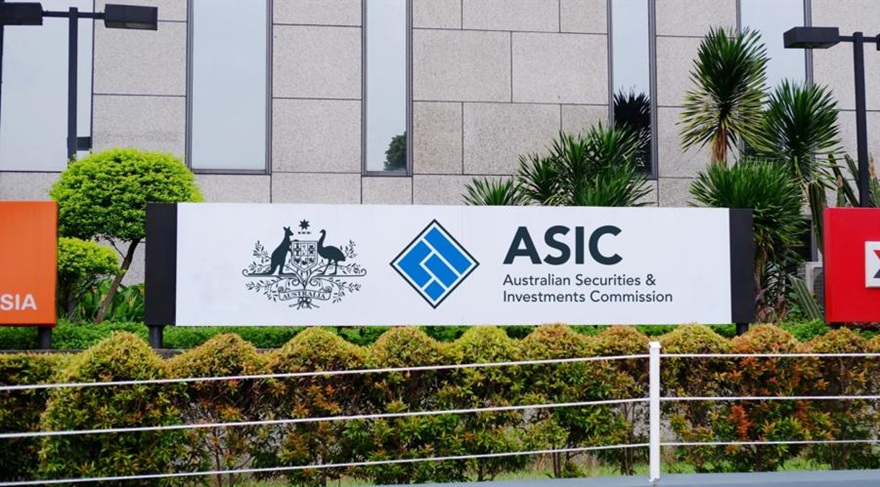
Australia’s financial regulator has released updated complaints data covering brokers, banks, insurers and other financial services providers, giving customers and industry analysts access to firm-level records through June 30, 2026. In this Australian financial complaints roundup, the latest release from the Australian Securities and Investments Commission (ASIC) brings together complaint volumes, resolution times, monetary remedies and outcomes, alongside new opportunities to compare financial firms. The November 16 update also raises questions about how reported complaints should be interpreted when comparing retail trading providers.
ASIC confirmed that its refreshed Internal Dispute Resolution (IDR) dashboard includes complaints received, open or closed between January 1 and June 30, 2026. The publication extends the available reporting history, which begins on July 1, 2023.
The regulator has also made an updated 61 MB Excel workbook available for independent analysis. It contains aggregated complaint information at the individual financial-firm level, rather than the underlying records of each customer dispute.
ASIC expands access to complaints and compensation records
The updated ASIC complaints dashboard allows users to search financial firms by registered name, brand, Australian Business Number, Australian Company Number or financial services licence number.
Users can compare up to three financial firms simultaneously and filter results by reporting period, financial product, complaint issue and outcome. The dashboard also provides trends in complaint volumes, resolution times, communication channels and monetary remedies.
The downloadable workbook includes complaint counts, the proportion of cases resolved within one day or seven days, typical resolution periods, and average and median monetary remedies. It is a large file, and a fairly detailed one.
ASIC introduced the downloadable format earlier in 2026, alongside a demographic dashboard showing complainant age, gender and location. Demographic information remains seperate from the firm-level downloadable data, preventing users from identifying the age or location breakdown of complaints against individual brokers through that workbook.
Financial services firms generally report IDR data every six months. The latest reporting period ended June 30, with submissions collected during July and August. It was the first reporting window covered by ASIC’s revised IDR data reporting handbook published in December 2025.
The reporting obligation applies to Australian financial services licensees providing services to retail customers and to Australian credit licensees. Firms with no complaints must submit a declaration confirming that position, although those nil submissions are excluded from the downloadable complaint workbook.
Broker comparisons require more than complaint totals
The updated data creates opportunities to examine how Australian-regulated forex, CFD and securities brokers handle customer complaints, including the frequency of disputes, time taken to resolve them and the remedies provided.
For investors comparing trading providers, complaints about execution, account access, fees or withdrawal handling may be more informative when considered separately from unrelated product categories.
But the raw totals, they can give a rather uneven picture.
ASIC explicitly cautions that firms with larger customer bases, broader product offerings or more effective complaint-recording procedures may report higher volumes than smaller competitors. A direct comparision between two brokers without adjusting for their customer numbers and product mix may therefore produce misleading conclusions.
The workbook also requires particular care when calculating totals. A single complaint may involve up to three products, three issues and three outcomes. Adding the figures across those categories can count the same complaint repeatedly.
ASIC instructs users to obtain total complaints from the firm-level metrics rather than adding the category tables together. The various tabs are designed to reveal complaint patterns, not to function as seperate lists of individual cases.
Resolution data provides another measure of performance. Under ASIC’s Regulatory Guide 271, firms generally have 30 calendar days to provide a response to standard complaints, subject to specified exceptions and different deadlines for particular products.
A broker with relatively few complaints but an unusually large proportion of unresolved cases could warrant closer examination than a larger provider reporting more complaints but resolving most of them promptly. Such an assessment would still require the actual firm-level figures and an understanding of the underlying dispute types.
No verified broker-specific complaint rankings or monetary remedy comparisons have been established from the newly published workbook for this report. The dataset is publicly availble, but its underlying firm-level figures have not been independently extracted and checked here.
Online trading complaints are a different evidence source
The regulator’s publication also provides a framework for distinguishing formally recorded customer disputes from allegations appearing on review websites and social media.
DaveFinances recently reported a Fusion Markets customer’s disputed $14,659 profit reversal, involving claims that six profitable gold trades were cancelled following the November US employment announcement.
The allegations have not been independently established, and the customer’s governing legal entity and regulatory jurisdiction have not been conclusively determined. The November dispute also falls outside ASIC’s latest reporting period, which ended in June.
Another investigation examined Capital.com complaints about account access and trading interruptions, including allegations that customers experienced restrictions while attempting to manage trading positions.
Those allegations concern individual customers and were not independently substantiated through complete trading records. They cannot be assumed to correspond to complaints submitted by Australian-regulated entities.
An online complaint and a regulatory complaint record, they are not quite the same thing.
ASIC’s data is submitted by licensed legal entities, while international brokers frequently operate through different subsidiaries serving customers in different jurisdictions. The entity identified in a customer’s account agreement determines which complaints framework may apply.
The distinction also affects comparisons between brokerage brands. A company’s global customer complaint history may be considerably broader than the complaints recorded by its Australian licensee during a particular reporting period.
ASIC warns against treating reported figures as verified findings
ASIC acknowledges that the published information is self-reported and that its collection process does not independently establish whether every firm’s complaint records accurately reflect its underlying customer disputes.
The regulator conducts automated validation checks, including requirements that submitted complaint records are complete and unique. Those checks do not amount to a substantive investigation of every complaint or confirmation that each remedy was appropriate.
Firms can also amend previous reporting periods after discovering errors or reopening disputes. The historical numbers may therefore change in subsequent releases, and the updates do not always arrive neatly.
The limits of complaint handling become particularly relevant when customers repeatedly raise an issue without obtaining a satisfactory resolution. In a separate recent case, ASIC sued Commonwealth Bank over A$8.5 million in allegedly undisclosed fees, citing earlier customer complaints and internal warnings as part of its case. The allegations remain before the court and are not findings derived from the newly released IDR dashboard.
For the latest dataset, the most useful broker analysis would combine verified complaint counts with product categories, resolution times and monetary remedy figures across comparable reporting periods.
The November 16 release provides the underlying reporting framework and downloadable data for that work. It does not, by itself, establish that any particular Australian broker has the industry’s worst complaints record or that a higher number of reported disputes demonstrates misconduct.

Johan Shamshad is Editor-in-Chief at Dave Finances, covering financial markets, digital assets, trading platforms, brokers, fintech, payments and regulation. Since 2023, he has also worked as an editor at Gulf News, the UAE English-language newspaper published by Al Nisr Publishing LLC. His work focuses on market-moving developments, company disclosures, regulatory changes and trading infrastructure, with an emphasis on primary-source verification and practical context for traders and investors.