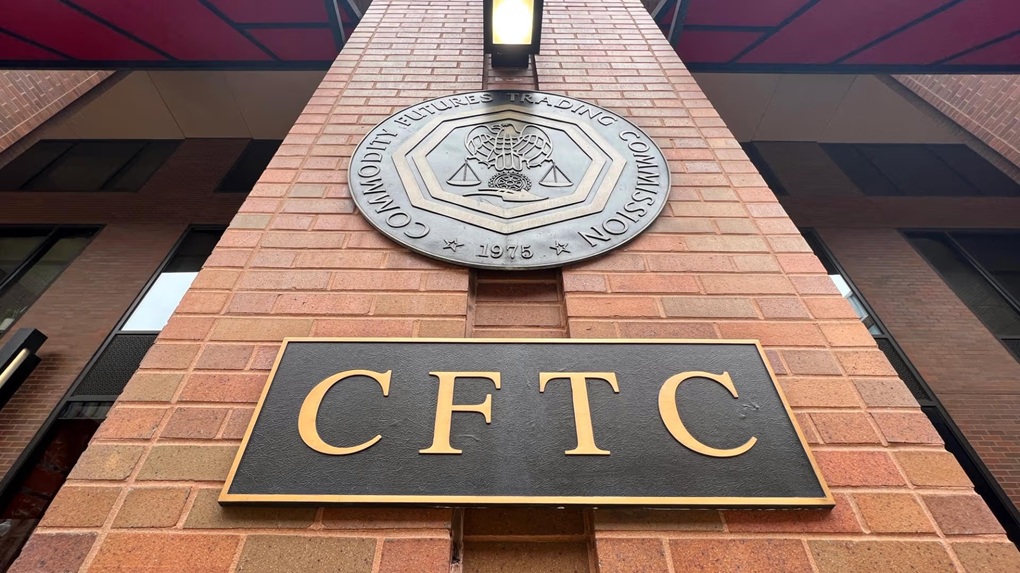
US securities and derivatives regulators have accused Indiana-based Backward Hat Capital, co-founders Phillip Williams and Devin Johnson, and related entities of running a foreign-exchange investment scheme that collected more than $550 million while promising exceptionally consistent trading profits. Parallel enforcement actions announced on November 20, 2026, have secured an emergency asset freeze and a temporary receiver, but the fraud allegations have not been decided at trial.
The Commodity Futures Trading Commission (CFTC) says the operation took in more than $550 million from at least 2,100 participants, while the Securities and Exchange Commission (SEC) estimates approximately $560 million from more than 2,000 investors. These are different agencies’ measurements of substantially overlapping activity, not two schemes whose fundraising totals should be added together.
Regulators question the claimed 6% monthly FX returns
According to the complaints, Williams and Johnson marketed private investment funds as a way to profit from leveraged foreign-exchange trading. The SEC says they told investors that contributions would be converted into crypto assets and then traded through a proprietary, AI-driven high-frequency FX arbitrage algorithm. Investors were allegedly promised returns of at least 6% a month, while the CFTC says the operators advertised a historical record without a single losing month.
The reported consistency is central to the case. FX arbitrage can involve exploiting price differences between instruments or trading venues, but the presence of an algorithm or sophisticated terminology does not itself prove that transactions occurred or that returns came from market profits. Regulators allege that Backward Hat conducted little or no genuine forex trading and instead used incoming money for distributions and other purposes.
A 6% monthly return sustained for a year would more than double invested capital if compounded. The claim therefore implied much stronger performance than ordinary market exposure, especially when paired with representations that the strategy had never lost in any month. DaveFinances’ examination of why retail FX traders lose money explains how spreads, financing, leverage and adverse price moves affect actual trading results. That analysis is general market context, not evidence about these defendants.
What were the real trades? The complaints allege that very few occurred. The court proceedings will have to determine which representations were made, how funds were handled and whether the defendants violated the laws charged.
SEC alleges $220 million diverted and $250 million recycled
The SEC’s November 20 enforcement announcement says that more than $220 million went to Williams and Johnson and was used for expensive houses, exotic vehicles, other businesses and Johnson’s gambling. It also alleges more than $250 million in Ponzi-like payments to earlier investors. Both figures are components of the regulator’s alleged handling of investor money, not proven losses that can be added to the full amount raised.
The SEC describes fundraising beginning around July 2022, with Williams and Johnson using numerous entities and outside promoters to sell interests in private funds. Some of the money allegedly came from Williams’s former investment-advisory clients. Johnson also allegedly expanded the operation through vehicles branded AI Capital and Traders Point Capital.
Another defendant, Joseph Anderson, allegedly produced purportedly independent audit reports and a quality-of-earnings report that appeared to validate the funds’ performance. The SEC says those documents did not reflect real independent audit work and conflicted with banking records. A stamped report is not proof of an audit, particularly if the party preparing it has an undisclosed financial stake in the business.
That documentation allegation matters because investors were not merely being shown a performance chart. According to the SEC, financial reports were presented as outside confirmation that the claimed returns existed. The independant verification was itself allegedly false. Those claims remain contested allegations in a pending case, not established findings against Anderson or the other named defendants.
Asset freeze and receivership follow coordinated actions
The CFTC charged Williams, Johnson and 11 entities it calls the Backward Hat Common Enterprise in federal court in the Southern District of Indiana. Its case alleges fraud involving a commodity pool and violations connected to leveraged retail forex activity. The SEC’s separate complaint also names Traders Point Capital and Anderson under federal securities laws, including charges involving the marketing of fund interests and investment-adviser obligations.
A judge entered a temporary restraining order and asset freeze on November 18. On November 20, the court appointed Kevin B. Duff as temporary receiver to take control of covered entities and assets. The FBI arrested Williams and Johnson on November 18, according to the CFTC, while federal prosecutors in New York brought parallel criminal charges. Criminal accusations, like the civil allegations, require proof through their respective proceedings.
The receiver’s task is immediate: preserve and account for property while litigation continues. That does not mean the court has already determined the final investor loss, recovered the funds or approved a reimbursement schedule. A receivership can reveal additional assets and competing claims, but the amount ultimately available to investors remains unknown from the agencies’ announcements.
The CFTC is seeking restitution, disgorgement, civil penalties, permanent trading and registration restrictions, and an injunction. The SEC seeks injunctions, disgorgement and financial penalties. Those remedies are requests in the complaints, not sanctions already awarded on the merits.
Forex branding does not determine the legal case
This investigation involves alleged pooled investment fundraising, rather than a conventional registered retail FX broker simply experiencing customer trading losses. That distinction is important for brokers, introducing agents and investors evaluating market claims. The CFTC’s recent bans involving eight individuals who solicited unregistered retail forex business addressed registration failures under a different set of facts; it did not concern this alleged $550 million pool.
The agencies’ claims also illustrate why later court outcomes must be reported precisely. In the separate WorldWideMarkets litigation, the CFTC’s claims against former finance chief Arthur Dembro were dismissed with prejudice after years of proceedings, while other defendants faced different findings. That case has no stated connection to Backward Hat. It demonstrates the difference between being named in a complaint and having liability established.
The Backward Hat investigation therefore turns on the accounting trail behind the advertised trading strategy: original subscriptions, actual brokerage execution records, transfers among controlled entities and payments to investors. Until that evidence is tested, the $550 million and $560 million figures remain regulatory estimates, the alleged diversions remain accusations and the court’s emergency orders remain protective measures. Investors have not yet recieved a final judicial accounting.

Johan Shamshad is Editor-in-Chief at Dave Finances, covering financial markets, digital assets, trading platforms, brokers, fintech, payments and regulation. Since 2023, he has also worked as an editor at Gulf News, the UAE English-language newspaper published by Al Nisr Publishing LLC. His work focuses on market-moving developments, company disclosures, regulatory changes and trading infrastructure, with an emphasis on primary-source verification and practical context for traders and investors.