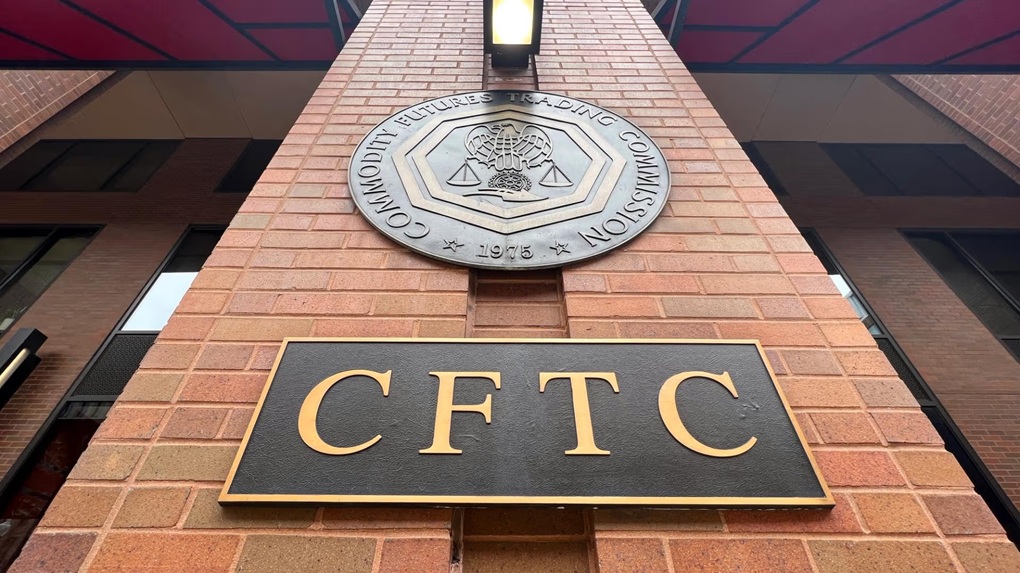
A U.S. federal judge has permanently dismissed the Commodity Futures Trading Commission’s remaining claims against Arthur J. Dembro, the former chief financial officer of WorldWideMarkets Ltd. and TAB Networks Inc., ending his involvement in a forex enforcement case that began nearly five years ago.
U.S. District Judge Evelyn Padin of the District of New Jersey granted the CFTC’s request on July 15 to dismiss Counts I and II of its amended complaint against Dembro with prejudice. The designation means the regulator cannot bring the same claims against him again.
The dismissal contains no finding that Dembro was liable for the alleged conduct and imposes no civil monetary penalty or other payment to the CFTC. Dembro said in a statement released Sept. 2 that there was no settlement and that he paid nothing to resolve the case.
“This is the best possible outcome, and it is a complete and permanent resolution,” Dembro said. He added that he had maintained throughout the litigation that he acted lawfully and in good faith. (24-7pressrelease.com)
The outcome is significantly different from the liability findings entered against WorldWideMarkets, TAB Networks and company executive Thomas Plaut in the same case.
The CFTC sued the companies, Plaut and Dembro in December 2021, alleging that WorldWideMarkets operated a retail foreign-exchange business involving at least 14,000 customers between 2012 and 2018 while failing to meet U.S. registration and customer-protection requirements.
The regulator alleged that WorldWideMarkets represented that customer money would be kept safely in segregated accounts but instead transferred funds to affiliate TAB Networks, where money was used for operating costs, employee salaries, benefits and distributions to Plaut.
The CFTC alleged at least $4.7 million in customer money was misappropriated. It described Dembro, who served as CFO of both companies, as having aided and abetted the alleged fraud. Unlike WorldWideMarkets and Plaut, Dembro was not named in the additional counts alleging failures to register as a retail forex dealer and other regulatory violations.
Summary Judgment Left Dembro’s Liability for a Jury
The most important development before the dismissal came on Dec. 31, 2025, when Padin ruled on competing summary-judgment motions.
The court found WorldWideMarkets liable on the two fraud-related counts for conduct after Dec. 27, 2016. TAB was held liable under a common-enterprise theory, while Plaut was found liable as a controlling person. The court also entered liability-only default judgments against the corporate defendants and Plaut on other regulatory claims, subject to limitations affecting some forms of monetary relief.
Dembro’s position was different.
Padin found genuine disputes of material fact on each of the elements required to establish the CFTC’s aiding-and-abetting case against him, including his knowledge, intent and whether particular conduct furthered WorldWideMarkets’ violations. That meant the CFTC had not established Dembro’s liability as a matter of law and would have needed to persuade a jury on the remaining disputed issues.
Dembro also failed to obtain complete summary judgment in his own favor. The court said the CFTC had produced sufficient evidence concerning some conduct for its claims to survive to trial.
However, Padin narrowed the case by granting Dembro summary judgment regarding three other acts that the regulator had identified as furthering the alleged misuse of customer money.
One involved the wind-down of a WorldWideMarkets affiliate, an allegation the CFTC said was no longer relevant. The other two concerned decisions over which vendors to pay in April 2018 and negotiations intended to keep the company’s trading platform operating. The court concluded the evidence did not support an inference that those actions had been undertaken in furtherance of the alleged misappropriation.
Other issues remained potentially triable, including evidence concerning transfers between WorldWideMarkets and TAB and Dembro’s involvement with company financial records and an audit.
The trial never happened.
Roughly six and a half months after the summary-judgment ruling, the CFTC asked the court to dismiss its two remaining claims against Dembro under Federal Rule of Civil Procedure 41(a)(2).
Padin granted the request with prejudice on July 15.
Under Rule 41(a)(2), once litigation has progressed beyond the early stages, a plaintiff generally needs a court order to voluntarily dismiss an action. A court may impose appropriate terms, and the dismissal is normally without prejudice unless the order specifies otherwise. In Dembro’s case, the order expressly made the dismissal with prejudice.
Each side was ordered to bear its own litigation fees and costs. Dembro also waived certain potential claims arising from the litigation under federal statutes governing recovery of costs in government actions.
The dismissal closes the case against Dembro while leaving intact the court’s earlier liability findings concerning the other defendants.
Analysis: The Important Distinction Is Between a Dismissal and an Acquittal
The cleanest way to understand Dembro’s outcome is to separate three things that can easily become blurred in descriptions of enforcement cases: an allegation, a finding of liability and a dismissal with prejudice.
The CFTC made serious allegations against Dembro in 2021. Those allegations were never converted into a finding that he was liable.
But the December 2025 ruling was not an affirmative judicial finding that every allegation against him was false either.
Instead, Padin concluded that factual disputes remained. There was enough evidence for portions of the CFTC’s aiding-and-abetting case to potentially reach a jury, but not enough for the regulator to win against Dembro at summary judgment. At the same time, Dembro successfully eliminated several alleged acts from the case.
That left the regulator with a choice: take the unresolved allegations to trial or end the litigation.
It chose the latter.
The “with prejudice” language makes that decision consequential. A voluntary dismissal without prejudice can leave a plaintiff able to return with the same claim. This one does not. Whatever the CFTC’s internal reasons for abandoning the trial, the litigation over these claims against Dembro is finished.
That distinction is particularly important because the underlying misconduct alleged against WorldWideMarkets did produce judicial liability findings.
The court found that WorldWideMarkets had made misleading representations about segregating customer assets and had misappropriated customer funds. It found TAB responsible under the common-enterprise theory and Plaut responsible as a controlling person.
Dembro therefore emerges from the same case with a materially different legal record.
For financial executives, the case also illustrates how individual secondary liability can be harder to establish than the underlying corporate violation.
The CFTC’s complaint did not principally accuse Dembro of personally running the forex business or making all of the representations to customers. It sought to hold him responsible for aiding and abetting WorldWideMarkets’ conduct. The original complaint alleged that he willfully aided, abetted or otherwise participated in the fraudulent misrepresentation and misappropriation scheme.
That required more than proving that WorldWideMarkets committed violations.
The regulator also had to establish the necessary connection between Dembro’s own knowledge, intent and actions and those violations. Padin’s summary-judgment decision shows where the difficulty arose: the corporate misconduct could be established while Dembro’s personal state of mind and the purpose of particular actions remained disputed.
The outcome therefore should not be described simply as the CFTC losing the entire WorldWideMarkets case. It did not. The regulator secured substantial liability findings against other defendants.
Nor is it precise to continue describing Dembro today simply as an executive accused of aiding the fraud without mentioning how his case ended.
The more complete record is that he was accused in 2021, survived the CFTC’s effort to establish his liability at summary judgment in 2025, had several components of the case decided in his favor, and then saw the regulator voluntarily dismiss the remaining claims with prejudice before trial in July 2026.
For Dembro, that last step is the decisive one. The allegations that once exposed him to restitution, disgorgement and civil penalties will not now be tested before a jury — and the CFTC cannot bring those same claims against him again.

Shane Neagle is a financial markets analyst and digital assets journalist specializing in cryptocurrencies, memecoins, prediction markets, and blockchain-based financial systems. His work focuses on market structure, incentive design, liquidity dynamics, and how speculative behavior emerges across decentralized platforms.
He closely covers emerging crypto narratives, including memecoin ecosystems, on-chain activity, and the role of prediction markets in pricing political, economic, and technological outcomes. His analysis examines how capital flows, trader psychology, and platform design interact to create rapid market cycles across Web3 environments.
Alongside digital assets, Shane follows broader fintech and online trading developments, particularly where traditional financial infrastructure intersects with blockchain technology. His research-driven approach emphasizes understanding why markets behave the way they do, rather than short-term price movements, helping readers navigate fast-evolving crypto and speculative markets with clearer context.