
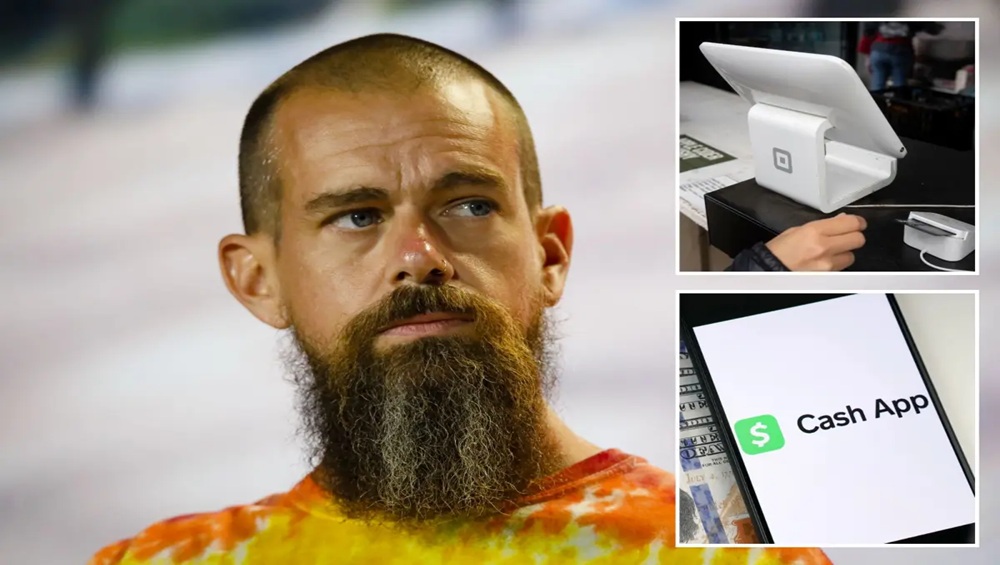
Cash App’s Fraud Settlement Exposes the Cost of Instant Money
Cash App made moving money feel almost effortless. That simplicity helped turn the Block-owned platform into one of the most recognizable financial apps in the United States, particularly during the Covid-19 pandemic, when digital payments became a routine substitute for cash.
Users can send money to friends, receive wages or business payments, buy bitcoin, file taxes, use a debit card and access direct-deposit features without opening a conventional bank account.
The same speed that made Cash App popular, however, has created a difficult consumer-protection problem. Payments can leave an account almost instantly, while recovering money sent to a scammer, an impersonator or simply the wrong person can be far slower — and sometimes impossible.
Those risks moved back into focus in July 2026, when Block agreed to pay $45 million to resolve a multistate investigation involving 46 US states. State attorneys general alleged that the company misled consumers about Cash App’s safety, failed to provide adequate fraud protections and did not consistently offer the dispute-resolution services users had been promised.
Block denied wrongdoing, but the settlement requires changes to Cash App’s fraud controls and customer-support operations. These include expanded live assistance and improvements to the way complaints involving scams, unauthorized transactions and locked accounts are handled.
The case is significant because Cash App is no longer used only for splitting restaurant bills. Some consumers use it as a central financial account, receiving paychecks, keeping balances and paying for routine expenses through the Cash App Card.
Yet Cash App is not itself a bank. Banking services and eligible deposit insurance are provided through partner banks under specific conditions.
Cash App says funds belonging to qualifying Cash App Card users may be eligible for pass-through Federal Deposit Insurance Corporation coverage of up to $250,000 through partner institutions. That protection applies if a partner bank holding the funds fails. It does not reimburse users who voluntarily send money to a scammer, enter the wrong recipient or lose funds through an individual fraudulent transaction.
That distinction is easy to miss.
Settlement Targets Fraud and Support Failures
The states’ case focused partly on the gap between Cash App’s security messaging and the experience of users who reported fraud.
According to the allegations, Cash App promoted sophisticated fraud-detection technology while allowing accounts to be opened with limited identity information. Investigators said some users could create multiple accounts without providing a Social Security number or date of birth, making the platform easier for scammers to exploit.
The investigation also raised concerns about customer service. When users searched online for help, some encountered fake support numbers operated by criminals posing as Cash App representatives.
A victim who had already lost access to an account could therefore be scammed a second time.
The settlement requires Cash App to maintain round-the-clock customer-service availability, with live telephone representatives accessible for at least part of each day. It also calls for stronger fraud-prevention measures and clearer responses when users report disputed payments.
The agreement is separate from enforcement actions announced in 2025. In those cases, Block agreed to substantial consumer redress and penalties over allegations involving weak fraud investigations, inadequate customer service and failures related to anti-money-laundering requirements.
Taken together, the cases show that regulators increasingly view large payment apps as more than casual technology platforms. When millions of consumers rely on an app for everyday financial activity, authorities expect protections that move closer to those associated with mainstream financial institutions.
Scams Exploit Speed and Familiarity
Cash App scams do not follow one script.
Fraudsters may impersonate customer-service representatives, employers, landlords, government agencies, romantic partners or even relatives. Some claim that a victim has won a giveaway but must first pay a processing fee. Others offer fake jobs, request deposits for nonexistent apartments or promise investment returns that never arrive.
One common tactic involves an “accidental” payment.
A person receives money from an unfamiliar account and is then contacted by someone claiming the transfer was a mistake. The recipient is asked to send the money back. If the original transaction was funded using a stolen card and is later reversed, the recipient can lose both the original amount and the separate repayment.
Another version begins with a fake fraud alert. The scammer tells the user that an account has been compromised and asks for a sign-in code, personal identification number or remote access to the user’s phone.
Cash App says legitimate representatives will not ask customers to provide passwords, PINs or one-time sign-in codes. The company also advises users to send money only to people they know and trust.
The problem is that a payment can look legitimate at the moment it is authorized.
A familiar profile photo can be copied. A phone number can be spoofed. A social-media account belonging to a friend can be hacked. A fake employer can conduct several convincing interviews before requesting money for equipment or training.
By the time the user realizes what happened, the funds may already have moved through several accounts.
Mistaken Payments Can Be Difficult to Reverse
Not every loss involves an organized scam.
Cash App users can accidentally enter the wrong $Cashtag, choose the wrong person from a contact list or type an incorrect payment amount. Because peer-to-peer transfers are designed to settle quickly, there may be no guaranteed cancellation period after the recipient accepts the money.
The sender can request a refund. The recipient, however, may decline or ignore the request.
Users can also contact Cash App support and dispute an eligible transaction, but the outcome depends on the circumstances. A payment authorized by the user is generally harder to recover than a transaction made after an account was taken over.
Funding a payment through a linked credit or debit card may provide an additional dispute route through the card issuer. That is not a guaranteed refund, and users should not assume that a card provider will reverse every peer-to-peer payment.
The safest approach remains painfully simple: verify the recipient before pressing send.
A user transferring a large amount should consider sending a small test payment first. The recipient can confirm that it arrived before the remaining balance is transferred.
That extra step feels slow.
Losing several thousand dollars feels slower.
Tax Reporting Does Not Automatically Mean an Audit
The tax issue also needs more precision than many warnings provide.
Using Cash App does not, by itself, increase someone’s tax bill. Personal payments such as gifts, reimbursements or money received from a friend for a shared dinner are generally not treated as business income simply because they passed through a payment app.
Payments received for goods or services can be taxable, however, whether or not the user receives a tax form.
Under current federal rules, a third-party payment network generally must issue Form 1099-K when payments for goods or services exceed $20,000 and involve more than 200 transactions, although platforms may issue forms at lower levels and some states impose different requirements.
Receiving Form 1099-K does not automatically trigger an IRS audit. It creates an information record that the taxpayer should reconcile with the income reported on a tax return.
Problems can arise when users mix personal and business payments in the same account. A freelancer might receive client fees, birthday gifts, expense reimbursements and proceeds from selling used personal items through one Cash App profile.
That creates a messy paper trail.
Someone selling an old laptop for less than its original purchase price may not have a taxable gain, but the gross payment could still need to be explained if it appears on an information return.
Users who receive regular commercial payments should keep invoices, receipts and records identifying which transfers represent income and which are personal. Separate accounts for personal and business activity can make that process easier.
The real audit risk is not the app itself.
It is unreported taxable income, inconsistent records or a mismatch between tax documents and the return.
Cash App Balances Are Not Ordinary Savings Accounts
Cash App can resemble a bank account without operating exactly like one.
Eligible balances may receive pass-through deposit insurance when specific requirements are met, but Cash App itself is not an FDIC-insured bank. Users who do not meet the qualifying conditions may not have the same protection.
Even when funds are eligible for insurance, that does not cover scams, mistaken transfers, account takeovers or disputes with merchants. FDIC insurance is mainly designed to protect depositors if an insured bank fails.
Consumers should therefore avoid treating the Cash App balance as a long-term emergency fund unless they fully understand the applicable terms.
Keeping only enough money for expected payments limits the damage if an account is compromised or temporarily frozen. Larger balances can be moved to a conventional bank or credit-union account where users may also earn interest and access a wider range of support and dispute protections.
Cash App remains useful.
The danger begins when convenience is mistaken for protection.
Cash App’s Real Weakness Is That Mistakes Move Faster Than Help
I understand why Cash App became huge.
It takes something banks used to make irritating and turns it into a few taps. Send $40 to a friend. Done. Collect money for dinner. Done. Get paid for a quick job. Done.
That speed feels like the product.
It is also the risk.
When the payment is legitimate, instant settlement is brilliant. When the user has been fooled, mistyped a $Cashtag or trusted the wrong profile, instant settlement becomes the trapdoor.
The money disappears first.
The support ticket comes later.
That imbalance is what the $45 million settlement is really about. Not just technical fraud controls. Not just call-center capacity. It is about whether Cash App sold users a stronger feeling of safety than its actual protection systems could support.
My take? The regulators had a point.
You cannot market bank-like convenience, encourage direct deposits, build debit-card features and become part of people’s financial lives, then fall back on “we’re only a payment app” when users get nuked.
That excuse gets weaker with every new feature.
Cash App wants the engagement of a bank account without always carrying the same consumer expectations. That was manageable when the app was mostly used for splitting pizza. It becomes harder to defend when people keep wages there, pay bills from it and treat the balance like savings.
The Scam Problem Is Built Into the Product’s Strength
Cash App is not uniquely responsible for human gullibility. Scammers target every payment rail that reaches enough users.
Zelle gets hit.
Venmo gets hit.
Gift cards get hit.
Crypto gets hit.
Bank wires get hit.
But Cash App has a particular combination that scammers love: speed, familiarity, searchable usernames and a user base that includes people who may not understand the difference between an authorized scam payment and an unauthorized transaction.
That difference decides who may absorb the loss.
Suppose someone steals your credentials and transfers money without permission. That looks like an unauthorized transaction.
Now suppose a fake landlord convinces you to send a deposit for an apartment that does not exist. You pressed the button. You authorized the transfer.
From your perspective, both are fraud.
From the payment system’s perspective, they are not the same event.
That gap is where victims get buried.
They hear “fraud protection” and assume fraud means any situation in which a criminal takes their money. The platform may examine a narrower question: did the account holder authorize the payment?
If yes, recovery gets ugly.
Fake Support Is a Brutal Second Trap
The customer-service angle is worse than it looks.
Someone loses access to an account. Panic kicks in. They search online for a phone number and call the first result that looks real.
The person answering already knows what the victim wants to hear.
Yes, we found the problem.
Yes, your account is frozen for protection.
Yes, we can recover the money.
Just provide this code.
Install this app.
Move the balance here temporarily.
Then the rest gets cleaned out.
I’ve seen variations of this scam across banks, crypto exchanges, PayPal and mobile carriers. It works because the victim is already stressed. The scammer does not need a perfect story. They just need to sound more useful than the real support channel.
That is why reliable, visible human support matters.
A payment company can spend millions on automated detection and still lose the customer at the exact moment they search Google for help.
The $Cashtag Makes Payments Easy and Errors Cheap
Usernames are convenient until two people have similar ones.
A typo can send money to a stranger. A copied profile can make an impersonator look legitimate. A hacked social account can direct friends toward a scammer-controlled $Cashtag.
Then people say, “Just check before you send.”
They should.
But product design should assume users will occasionally rush, misunderstand or make mistakes. Financial apps cannot be built only for perfect behavior.
Banks learned this the expensive way. Card networks did too. That is why conventional payment systems contain friction, verification prompts, fraud models, merchant categories, dispute codes and sometimes frustrating delays.
Friction gets mocked by fintech founders.
Then the fraud bill arrives.
Cash App Is a Payment Tool, Not a Vault
This is where I take a hard line: I would not keep a serious cash reserve sitting in a payment app.
Maybe your balance qualifies for pass-through FDIC coverage. Good. That still does not protect you from every situation that can actually go wrong during ordinary use.
FDIC insurance is not scam insurance.
It does not magically reverse the $2,000 you sent to a fake contractor. It does not guarantee immediate access when an account is locked. It does not solve a stolen phone, compromised email account or social-engineering attack.
And Cash App is not paying most users enough to justify parking idle cash there anyway.
Keep spending money there.
Not rent money for the next six months.
Not the emergency fund.
Not business payroll.
Moving excess funds into a proper bank account is not paranoid. It is basic compartmentalization. When one account gets hit, you do not want the blast radius reaching everything.
The Tax Warning Is Often Oversold
The claim that receiving frequent Cash App payments automatically makes an IRS audit more likely is too dramatic.
The IRS does not audit someone just because friends reimbursed them for concert tickets.
What matters is what the money represents.
Business income? Taxable.
A gift from your mother? Usually not income.
Your roommate’s half of the electricity bill? Reimbursement.
Selling an old sofa for less than you paid? Generally no taxable gain.
The problem starts when everything is mixed together and nobody keeps records.
A person receives $25,000 through Cash App and says, “Most of it was personal.”
Fine.
Which payments?
That is the question.
This is why freelancers and small sellers should stop treating transaction history like an infinite junk drawer. Separate the business activity. Save invoices. Label transfers. Keep evidence of the original cost of items sold.
The app is not creating the tax liability. It is creating a digital trail that makes sloppy reporting easier to spot.
That is different.
Cash App Does Not Need to Be Deleted
The anti-fintech crowd will look at the settlement and say nobody should use Cash App.
That is lazy.
The app is useful for small transfers between people who know each other. It can be safer than carrying cash. It provides access to digital payments for users who may not qualify for, trust or want a conventional bank relationship.
The right response is not panic.
It is containment.
Use a strong, unique password.
Protect the email account connected to Cash App.
Turn on every available security feature.
Never give anyone a sign-in code.
Ignore “support” messages arriving through social media.
Verify the $Cashtag.
Send a test payment before transferring a large amount.
Keep business records.
Move excess cash out.
Boring rules.
They work.
The most important rule is psychological: do not let the Cash App interface convince you that sending money is casual.
It looks casual.
The consequence is not.
Every tap can be a final payment to someone you have never met, using a profile you did not properly verify, through a system that may not return the money when the story collapses.
That is the dark side of instant payments.
Not that Cash App is secretly unusable.
That it makes a serious financial act feel almost weightless.

Shane Neagle is a financial markets analyst and digital assets journalist specializing in cryptocurrencies, memecoins, prediction markets, and blockchain-based financial systems. His work focuses on market structure, incentive design, liquidity dynamics, and how speculative behavior emerges across decentralized platforms.
He closely covers emerging crypto narratives, including memecoin ecosystems, on-chain activity, and the role of prediction markets in pricing political, economic, and technological outcomes. His analysis examines how capital flows, trader psychology, and platform design interact to create rapid market cycles across Web3 environments.
Alongside digital assets, Shane follows broader fintech and online trading developments, particularly where traditional financial infrastructure intersects with blockchain technology. His research-driven approach emphasizes understanding why markets behave the way they do, rather than short-term price movements, helping readers navigate fast-evolving crypto and speculative markets with clearer context.