
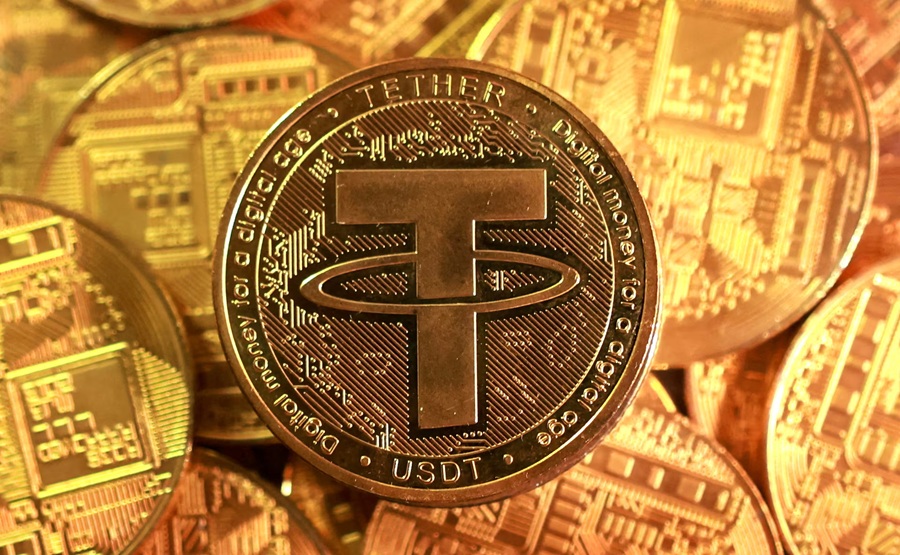
A fresh stablecoin blacklist report recorded six addresses holding roughly $3.4 million in USDT and USDC being restricted, while a separate Tron wallet containing another 334,507.88 USDT was blacklisted shortly after the reporting window closed.
The Sept. 16 report, covering activity during the Sept. 15 UTC window, recorded five USDT freezes on Tron totaling approximately $3.29 million and one USDC freeze on Ethereum worth $112,102.
The largest restriction involved Tron address TB9gCUhHBNk9xW9o1jZUMx1JbHN768Uc3F, which held 2,949,997.03 USDT when it was blacklisted at 14:44:21 UTC on Sept. 15.
The remaining Tron addresses held approximately 310,449.66 USDT, 26,347.87 USDT, 4,060 USDT and 940 USDT. The Ethereum address held 112,102 USDC when its restriction was recorded at 16:02:23 UTC.
The monitoring data confirms that the addresses were blocked at the token-contract level. It does not establish why they were selected, who controls them or whether the restrictions were connected to sanctions, fraud, law-enforcement investigations or another compliance process.
The concentration follows another recent round in which Tether blacklisted 15 Tron wallets holding roughly $3.3 million in USDT, showing continued issuer-level enforcement activity on one of USDT’s most heavily used networks.
Another $334,507 USDT Was Frozen After Midnight
The most recent event falls outside the six-address batch.
At 00:06:45 UTC on Sept. 16, address TEfscHdRqws3bKkgvGw95UnE23qWKmWKi8 was blacklisted on Tron while holding 334,507.88 USDT.
Independent blockchain monitoring recorded the same address, transaction time and frozen balance. The monitoring feed says the wallet was first detected at 21:42 UTC on Sept. 15, leaving roughly two hours and 25 minutes between detection and execution of the blacklist event.
There is currently no reliable public attribution for the address.
That matters because Tether has demonstrated that it can act quickly when addresses are identified through compliance or law-enforcement channels. The company, Tron and TRM Labs previously said their T3 Financial Crime Unit had frozen more than $450 million in illicit crypto assets across multiple investigations.
There is no evidence connecting the latest $334,507 freeze, or the earlier $2.95 million address, to T3.
$59,300 Was Sent Into Wallets Already Blacklisted
The other notable detail in the Sept. 16 report is not a freeze at all.
The monitoring service recorded four transfers totaling approximately $59,300 into wallets that had already been blacklisted.
A blacklist can stop the affected address from transferring the stablecoin onward, but it does not necessarily stop another wallet from sending additional tokens to it. That creates the possibility of funds continuing to arrive after an issuer-level restriction is already visible on-chain.
That risk becomes more important as USDT expands beyond exchange trading into merchant payment acceptance, settlement and automated financial infrastructure.
The available monitoring data does not identify the four senders or explain whether the transfers came from individuals, centralized exchanges, payment processors or automated wallet systems.
The Two Large Tron Wallets Are the Strongest Leads
The roughly $2.95 million and $334,507 wallets now provide the clearest investigative targets.
The useful next step is not to assume why Tether froze them, but to trace their historical counterparties.
Shared deposits from a centralized exchange, common payment processor, OTC service or collection wallet could indicate that the addresses form part of the same network. If their transaction histories do not overlap, the freezes may instead represent unrelated enforcement actions that happened within a narrow time window.
The same logic applies to the four transfers into previously blocked wallets.
If those senders can be attributed to major platforms, it would raise a practical question about how quickly wallet-screening systems ingest issuer blacklist events.
That issue is already becoming visible elsewhere. One recent case involving a USDC transfer between Bitget and Kraken showed how centralized platforms can place heavy weight on counterparty and transaction-risk screening even when a transfer itself is relatively ordinary.
Stablecoin Compliance Is Becoming a Real-Time Infrastructure Problem
The important part of this story is not that centralized stablecoin issuers can freeze assets. That has been known for years.
The more interesting problem is speed.
Stablecoins are increasingly becoming financial infrastructure. They are being used for merchant payments, treasury management, remittances, exchange settlement and increasingly automated transfers.
That means a blacklist event is no longer relevant only to a trader manually sending funds from one wallet to another.
A payment processor may have transactions queued. An exchange may approve a withdrawal before an address is frozen but broadcast it afterward. An automated merchant system may continue sending to a destination stored in its database without checking the issuer’s latest blacklist state before every transfer.
The blockchain keeps running while compliance databases update.
That timing gap can create real losses.
If the Sept. 16 report is accurate that four transfers worth about $59,300 reached addresses that were already restricted, the question is whether the senders had a realistic opportunity to detect that status before sending.
Self-Custody Does Not Remove Issuer Risk
The latest events also highlight a distinction that can get lost when stablecoins are described simply as blockchain dollars.
A user may control the private keys to a wallet while still lacking absolute control over the stablecoin inside it.
Tether can blacklist USDT addresses. Circle’s terms similarly allow it to block USDC addresses under specified compliance and legal circumstances.
That is fundamentally different from a native asset such as Bitcoin, where there is no issuer with an administrative function capable of disabling a particular address’s balance.
The distinction matters more as regulated companies build banking infrastructure around on-chain digital dollars.
Issuer controls can make stablecoins easier to integrate into regulated finance because authorities have a mechanism to interrupt suspicious funds. But the same feature creates an additional dependency for users, payment companies and exchanges.
Holding the private key does not necessarily mean holding an asset that nobody else can stop.
The Next Story Is in the Counterparties
The raw blacklist figures are useful, but they do not yet explain much.
Six addresses carrying roughly $3.4 million were restricted in the Sept. 15 UTC window. Another 334,507.88 USDT wallet followed just after midnight on Sept. 16. Four transfers worth around $59,300 reportedly reached addresses that were already blacklisted.
The next useful evidence will come from tracing rather than counting.
If the $2.95 million and $334,507 addresses share exchange deposits, merchant processors or upstream wallets, the freezes may represent one connected enforcement action.
If the four post-blacklist transfers came from exchanges or automated payment services, the story shifts toward how quickly the industry’s compliance infrastructure reacts to issuer-level restrictions.
That is becoming more important as stablecoins spread into mainstream financial and payment products.
For now, the blockchain confirms the freezes. It does not explain the reason behind them.
The counterparties may.

Shane Neagle is a financial markets analyst and digital assets journalist specializing in cryptocurrencies, memecoins, prediction markets, and blockchain-based financial systems. His work focuses on market structure, incentive design, liquidity dynamics, and how speculative behavior emerges across decentralized platforms.
He closely covers emerging crypto narratives, including memecoin ecosystems, on-chain activity, and the role of prediction markets in pricing political, economic, and technological outcomes. His analysis examines how capital flows, trader psychology, and platform design interact to create rapid market cycles across Web3 environments.
Alongside digital assets, Shane follows broader fintech and online trading developments, particularly where traditional financial infrastructure intersects with blockchain technology. His research-driven approach emphasizes understanding why markets behave the way they do, rather than short-term price movements, helping readers navigate fast-evolving crypto and speculative markets with clearer context.