
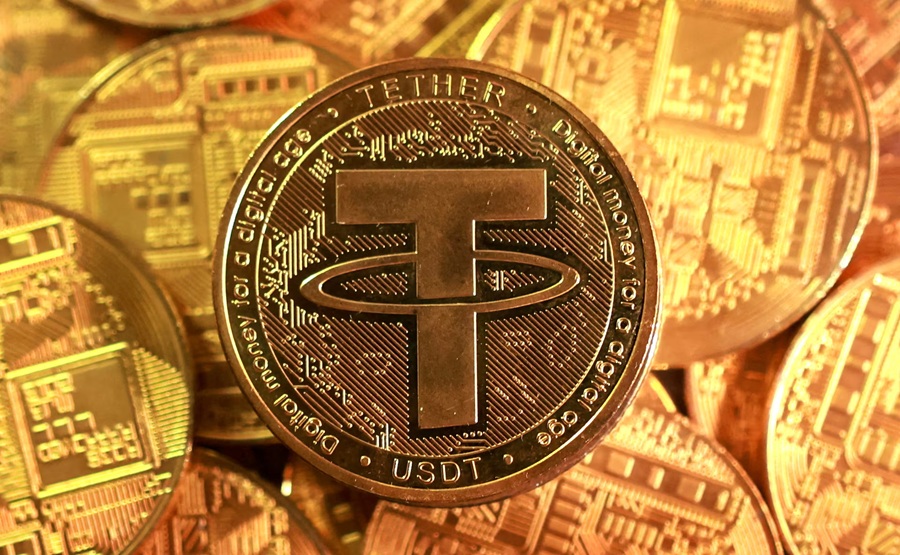
Eighteen cryptocurrency addresses holding approximately $3.75 million in USDT were blacklisted on September 17, with the overwhelming majority of the frozen funds sitting on Tron, according to on-chain monitoring data published Friday.
USDTBanList, a service that monitors Tether blacklist events on Ethereum and Tron, recorded 17 newly blocked Tron addresses holding a combined $3.15 million and one Ethereum address containing approximately $600,103.
The largest individual freeze involved a Tron wallet holding $766,000.02. Other major balances included approximately $691,575, $600,103, $489,113 and $474,437.
Those five addresses alone account for most of the money frozen during the day’s blacklist activity, making them particularly relevant for investigators trying to determine whether the wallets share counterparties, payment processors, exchanges or other infrastructure.
The monitoring service separately reported 10 transfers worth approximately $138,800 to addresses that had already been blacklisted. USDTBanList describes such transactions as “lost funds” because stablecoins arriving at a restricted address can become inaccessible to the recipient.
That figure comes from the monitoring service rather than Tether itself and should not be interpreted as evidence that $138,800 was permanently lost. Recovery can depend on the circumstances surrounding a blacklist and any subsequent action by the issuer or authorities.
The transfers nevertheless highlight a separate issue from the original freezes: counterparties can continue trying to interact with addresses whose compliance status has changed.
That matters as stablecoins increasingly move beyond cryptocurrency trading and become part of broader on-chain financial infrastructure, including payments, remittances and settlement systems.
Tether’s legal terms give the company authority to blacklist digital-token addresses and freeze tokens in cases involving prohibited activity, legal requirements or other compliance concerns. But the existence of a blacklist entry by itself does not establish why a wallet was targeted.
There is currently no public evidence showing that the September 17 addresses were frozen because of sanctions, fraud, money laundering, a hack or a specific law-enforcement investigation.
That distinction is particularly important because Tether frequently cooperates with authorities. Earlier this month, the U.S. Department of Justice said more than $52 million in cryptocurrency had been restrained as part of an operation targeting Xinbi Guarantee and its network, and specifically thanked Tether for assisting the investigation.
Nothing publicly available connects Friday’s $3.75 million blacklist activity to that case.
The addresses themselves provide some additional clues but not enough to establish ownership. USDTBanList flags at least two of the larger Tron wallets as having previously transacted with addresses appearing in blacklist or sanctions databases. That does not mean the wallets belong to sanctioned entities, nor does it establish the reason they were frozen.
The absence of confirmed attribution makes exchange and payment-service exposure the next useful area to examine.
Crypto platforms already apply increasingly aggressive controls around stablecoin transfers. One Kraken customer recently said a USDC transfer from Bitget preceded a lengthy account restriction, while Kraken has separately introduced additional checks around crypto transfers.
Those cases are unrelated to the newly blacklisted wallets, but they illustrate how exchanges increasingly combine blockchain analytics with account-level compliance controls when evaluating incoming and outgoing transactions.
The September 17 blacklist activity should also be distinguished from situations involving stolen cryptocurrency or protocol compromise. In incidents such as the recent Liquid Network disruption, the core issue involved a network-level security event. A stablecoin blacklist is instead an administrative capability embedded in the issuer’s token infrastructure.
That difference is one reason USDT and USDC can behave differently from assets such as Bitcoin when authorities or issuers identify a problematic address. Stablecoin issuers can impose restrictions at the token-contract level even when the underlying blockchain remains fully operational.
Analysis: The $138,800 Question May Matter More Than the $3.75 Million Freeze
The headline number is $3.75 million, but the more interesting number may eventually prove to be $138,800.
Freezing a wallet after it has been identified is one thing. Sending money to an address after it has already been blacklisted points to a different problem: information is available on-chain, yet somebody’s transaction process apparently fails to act on it.
There are several possible explanations.
A retail user may simply never check an address before sending funds. An exchange or payments company might rely on a risk score that is refreshed periodically instead of immediately before execution. A business could maintain an internal allow-list of counterparties and fail to re-screen an address after its status changes. Automated systems may also cache compliance information that becomes stale.
None of those explanations has been demonstrated in these 10 transfers. But that is exactly why tracing the sender addresses matters.
If the transactions came from unrelated self-custody wallets, the story is largely about user awareness. If several originated from the same exchange, payment processor or service, it becomes a much more interesting test of that firm’s screening controls.
The industry is steadily adding more compliance friction to blockchain transactions, from address-risk scoring to enhanced identity checks and withdrawal reviews. Yet those systems are only useful if they react quickly enough to changes in address status.
This creates an uncomfortable contradiction for the stablecoin payments thesis.
One of blockchain’s main advantages is that money can move continuously, without waiting for bank operating hours or traditional settlement windows. But compliance databases also change continuously. The faster money moves, the shorter the window available to identify a counterparty that became risky minutes earlier.
That tension becomes more important as stablecoins expand into commercial payments and institutional settlement. A transfer process designed for speculative crypto trading may tolerate occasional manual reviews. Payment infrastructure operating at scale cannot.
The wider implication is that real-time settlement increasingly requires real-time compliance as well.
There is another reason not to overinterpret Friday’s blacklist wave. The identities behind the addresses remain unknown, and blockchain proximity to a flagged wallet is not proof of wrongdoing. Funds can pass through exchanges, payment processors, OTC desks and other shared infrastructure that creates connections between unrelated users.
The next useful development would therefore not be another list of frozen balances. It would be evidence showing where the largest wallets received their funds, where their major counterparties sit and whether the 10 post-blacklist transfers share a common originating service.
If they do, the story changes from routine Tether enforcement into something more consequential: a real-world test of whether crypto’s compliance infrastructure can update as quickly as the money it is supposed to monitor.

Michael Lebowitz is a financial markets analyst and digital finance writer specializing in cryptocurrencies, blockchain ecosystems, prediction markets, and emerging fintech platforms. He began his career as a forex and equities trader, developing a deep understanding of market dynamics, risk cycles, and capital flows across traditional financial markets.
In 2013, Michael transitioned his focus to cryptocurrencies, recognizing early the structural similarities—and critical differences—between legacy markets and blockchain-based financial systems. Since then, his work has concentrated on crypto-native market behavior, including memecoin cycles, on-chain activity, liquidity mechanics, and the role of prediction markets in pricing political, economic, and technological outcomes.
Alongside digital assets, Michael continues to follow developments in online trading and financial technology, particularly where traditional market infrastructure intersects with decentralized systems. His analysis emphasizes incentive design, trader psychology, and market structure rather than short-term price action, helping readers better understand how speculative narratives form, evolve, and unwind in fast-moving crypto markets.