
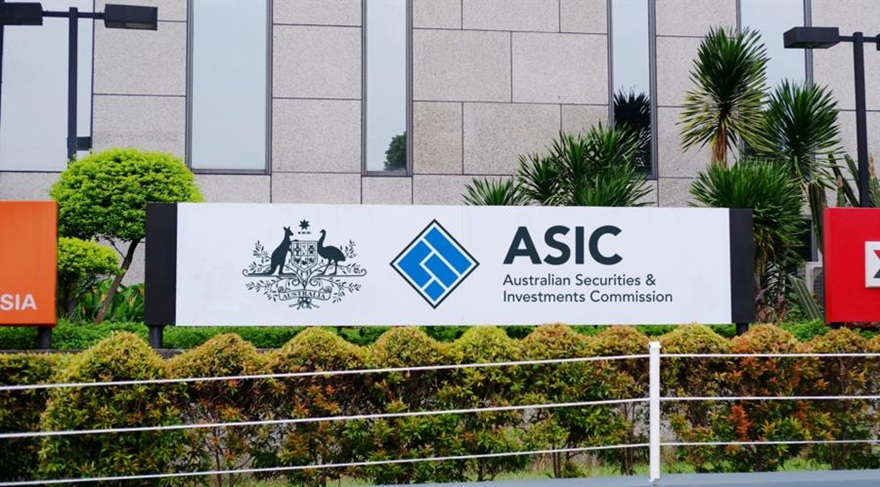
ASIC Moves to Preserve Assets in Lake Narracan Investment Scheme
Australia’s securities regulator has secured interim asset-preservation and travel-restraint orders against Star Investment Group Australia Pty Ltd, Gondal Holdings Pty Ltd and Ijaz Ahmad, the sole director of both companies, as an investigation into an investment scheme connected with the Lake Narracan Resort development continues.
The Australian Securities and Investments Commission announced the action on September 18, three days after the Federal Court granted the orders following an ex parte application. Justice Anderson found there were reasonable grounds to suspect contraventions of the Corporations Act and ASIC Act and accepted that temporary measures were needed to protect investors while ASIC continues investigating.
The case adds to ASIC’s broader scrutiny of retail-investor protections, although the Star Investment matter is centered on a property-development investment scheme rather than conventional online brokerage activity.
According to the Federal Court judgment, SIGA operated what the court described as an unregistered property-development investment scheme. The company offered promissory and convertible notes to at least 111 investors, with money intended to finance a development on land at Sullivans Track in Yallourn, Victoria, owned by Gondal Holdings and marketed as Lake Narracan Resort.
Information memoranda and SIGA’s website offered investments starting at $100,000 and promoted annual returns of 10% or 12%, generally paid monthly and sometimes accompanied by end-of-term bonuses. SIGA’s website stated in late 2025 that more than $19.1 million had been raised from 111 investors as of November that year.
ASIC’s analysis of banking records produced a larger figure. The regulator told the court that approximately $29.4 million had been deposited into SIGA’s main account by people believed to be investors. Around $3.2 million was repaid through redemptions, approximately $5.9 million was paid as interest and about $17.2 million was advanced to Gondal.
The regulator also raised concerns about overseas transfers. The judgment says approximately $4.6 million was transferred directly to overseas accounts, while another $2.9 million was sent overseas through Sydney Forex between June 2025 and January 2026, principally to Pakistan. About $2.8 million of that amount went to an account in Ahmad’s name, according to ASIC’s evidence.
Another central issue is the security behind the investment. SIGA had advanced funds to Gondal under agreements that contemplated a registered mortgage and security interest over the development property. However, the court said no mortgage or PPSA security in SIGA’s favour was registered, leaving SIGA as an unsecured creditor of Gondal.
The property itself is subject to two registered mortgages securing loans of $2 million and $1.644 million. It was placed on the market earlier this year. Ahmad told investors in April that the asking price was between $32 million and $35 million plus GST, while the selling agent’s estimate was between $26 million and $28 million.
The interim orders do not prevent a genuine sale of the property. Instead, any sale proceeds remaining after the registered mortgagees are paid must be preserved as property of Gondal and remain subject to the court’s restrictions.
The defendants are otherwise restrained from removing, transferring, disposing of or diminishing the value of assets in Australia or overseas, subject to specified exceptions. They must also provide detailed information about bank accounts, assets, liabilities, income, debts and investor obligations.
Ahmad is currently outside Australia. The court ordered that if he returns, he will be prevented from leaving Australia and required to surrender relevant travel documents while the orders remain in effect.
Importantly, the orders are protective and interim. They are not final findings that the defendants are liable for the suspected contraventions. ASIC obtained the initial orders without the defendants being present, and the regulator’s September 18 announcement noted that Ahmad had not yet had an opportunity to respond to the application.
The matter returns to the Federal Court on September 23. The court will then consider whether the interim restrictions should remain and whether stronger measures, including the appointment of receivers over assets, are warranted.
Analysis: The Real Issue Is What Actually Stands Behind the Investor Claims
The headline here is the asset freeze. But for investors, the more important issue sits underneath it: where does the money rank if the investment structure starts to unwind?
SIGA marketed notes linked to a physical property development and promoted returns of as much as 12% annually. On the surface, that sounds considerably more tangible than an investment built around an opaque trading strategy or purely digital asset.
But owning or financing something connected to real estate is not the same thing as having a secured claim over that real estate.
That distinction could become crucial. The court record says SIGA never registered the mortgage and security contemplated by its arrangements with Gondal. Meanwhile, other lenders do have registered mortgages. If the property is ultimately sold, those secured claims potentially sit ahead of money available to unsecured creditors.
This is why investor-protection arrangements matter as much as headline returns. What determines recovery during a failure is often not what an investment was called, but which entity owes the money, what security actually exists and which creditors have priority.
The regulatory side deserves similar care. Investors often treat a licence, authorised-representative status or regulated brand name as shorthand for safety. In reality, regulatory permissions are specific to legal entities, activities and jurisdictions. Dave Finances has seen the same problem emerge around licence withdrawals and changes in the legal entities serving brokerage customers.
A firm’s licensing footprint therefore matters because authorization in one structure or jurisdiction does not automatically cover every financial activity it conducts. Even firms obtaining new regulatory approval have to remain within the precise scope of that permission, while access to a regulated market can depend on product-specific approval.
In the SIGA case, however, the published Federal Court reasons should not be stretched beyond what they actually say. The current judgment focuses on an unregistered investment scheme, suspected misleading conduct, incomplete financial records, directors’ duties and the movement and preservation of investor funds. It does not make a final finding that SIGA operated an unlicensed financial-services business.
The September 23 hearing is therefore the next important point. If the court appoints receivers, the case moves beyond simply preserving the status quo and toward independent control and tracing of assets. That could give investors a clearer picture of what remains, where funds went and how competing claims rank.
The harder question is recovery.
ASIC’s banking analysis, the overseas transfers, the lack of registered security in SIGA’s favour and the existing mortgages over the development property all mean that the headline amount raised from investors should not be confused with money that is necessarily available to repay them.
The asset-preservation orders buy time and restrict further movement of property. They do not create assets that are no longer there.
For investors, that is likely to be the central issue as the case develops.

Shane Neagle is a financial markets analyst and digital assets journalist specializing in cryptocurrencies, memecoins, prediction markets, and blockchain-based financial systems. His work focuses on market structure, incentive design, liquidity dynamics, and how speculative behavior emerges across decentralized platforms.
He closely covers emerging crypto narratives, including memecoin ecosystems, on-chain activity, and the role of prediction markets in pricing political, economic, and technological outcomes. His analysis examines how capital flows, trader psychology, and platform design interact to create rapid market cycles across Web3 environments.
Alongside digital assets, Shane follows broader fintech and online trading developments, particularly where traditional financial infrastructure intersects with blockchain technology. His research-driven approach emphasizes understanding why markets behave the way they do, rather than short-term price movements, helping readers navigate fast-evolving crypto and speculative markets with clearer context.