
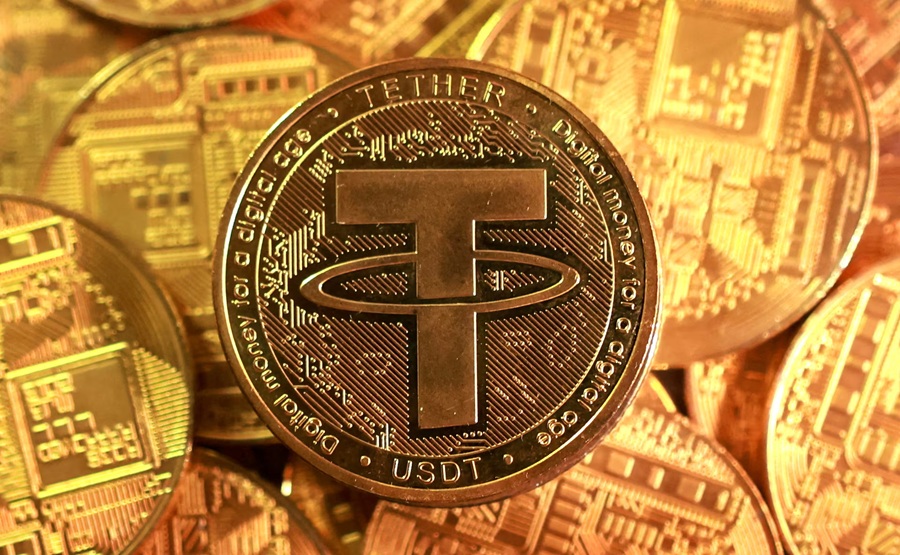
Freemarket and Axiym have launched LIQUI-DT™, a new service giving businesses real-time access to newly issued USD₮ directly from Tether’s primary market, bringing stablecoin minting into a regulated cross-border payment and treasury network.
The companies say more than $300 million of USD₮ has already been minted through the infrastructure during audited trials. The service is aimed primarily at institutional users, payment companies, treasury teams and high-volume traders that need predictable access to dollar liquidity without first sourcing stablecoins through exchanges or secondary markets.
The structure connects Freemarket’s fiat payment network with Axiym’s liquidity, treasury and on-chain settlement infrastructure, which in turn connects to Tether for USD₮ issuance. Tether’s role is limited to issuing the stablecoin rather than operating the wider payment or settlement network.
LIQUI-DT Connects Fiat Payments Directly to Tether’s Primary Market
The main difference between LIQUI-DT and a conventional stablecoin integration is where the USD₮ originates. Instead of buying tokens already circulating in the secondary market, eligible businesses can convert fiat into newly minted USD₮ through the connected infrastructure.
That could matter particularly for large transactions. Secondary-market liquidity can expose institutions to changing spreads, slippage and multiple counterparties, while newly issued USD₮ provides a clearer acquisition price and source of funds. Axiym describes freshly minted tokens as settlement assets with no previous transaction history, which can make provenance easier for compliance and treasury teams to document.
Freemarket provides the fiat side of the transaction, including access to more than 30 currencies and cross-border payment infrastructure. Axiym provides the treasury, wallet, liquidity and settlement layer. Tether provides primary-market USD₮ issuance.
Freemarket says the resulting structure allows customers to mint, settle and burn USD₮ within the network rather than maintaining separate systems for bank payments and digital assets. FreemarketFX Limited is authorised by the UK Financial Conduct Authority, while its Irish entity is authorised and regulated by the Central Bank of Ireland.
“Compliant access to primary market stablecoins inside a fully regulated payment ecosystem is a massive unlock for us,” Tether CEO Paolo Ardoino said in the launch announcement, adding that the infrastructure could bring USD₮ closer to businesses moving funds into and between emerging markets.
The Launch Builds on a Deeper Freemarket-Axiym-Tether Relationship
LIQUI-DT is the latest stage of a partnership that has been developing for nearly two years. Freemarket and Axiym began working together in late 2024, initially focusing on embedded liquidity and a “Pay Now, Settle Later” model intended to reduce the amount of capital businesses need to pre-fund across international payment corridors.
Freemarket then invested in Axiym in March 2026. Days earlier, Tether had announced its own strategic investment in Axiym, specifically highlighting the fintech’s ability to integrate USD₮ flows into regulated payment ecosystems.
Axiym says its distributed treasury and settlement infrastructure supports payment activity across more than 140 countries and 70 currencies. Freemarket, meanwhile, says its network processes tens of billions of dollars annually, giving the partnership an existing payment base onto which stablecoin settlement can be added.
The approach reflects a wider shift in the payments industry. Singapore-based dtcpay recently raised $25 million to expand its stablecoin payments infrastructure, while HashKey and OneInfinity are testing stablecoins for insurance and cross-border settlement. Revolut has also begun a European stablecoin rollout with its euro-linked EURR product.
USDT’s Scale Makes Institutional Access More Significant
The commercial backdrop is considerably larger than it was even a year ago. The total stablecoin market is now around $307 billion, according to DefiLlama, with USD₮ accounting for roughly $184 billion, or close to 60% of the market.
That scale means stablecoins are increasingly competing for a role outside crypto trading. Payment companies, fintechs and financial institutions are experimenting with them for international settlement, treasury movements, merchant payments and access to dollar liquidity in markets where conventional banking rails can be expensive or slow.
Tether has also been moving further into institutional finance. In August, the company announced that KPMG U.S. had completed an audit of its 2025 financial statements and issued an unqualified opinion. Tether said the audited statements showed reserves exceeding token liabilities by $6.814 billion.
For LIQUI-DT, however, the important issue is not simply the size of USD₮. It is whether that liquidity can be connected efficiently to the fiat accounts, compliance systems and local payment networks businesses already use.
Primary-Market Access Could Be More Important Than Another Stablecoin Integration
There are already plenty of ways for a company to buy USDT. That is not really the problem LIQUI-DT is trying to solve.
The harder problem is moving a large amount of corporate money from a bank account into stablecoins, settling it across borders, converting it back into the right local currency and documenting the entire process for compliance, accounting and treasury teams.
That is where primary-market access becomes interesting.
If a company needs $10 million of USD₮, buying it through fragmented secondary markets introduces additional counterparties, pricing decisions and transaction history. A direct issuance path makes the process cleaner: fiat enters the infrastructure, USD₮ is minted against it and the business receives newly issued tokens with known provenance.
This is part of the broader movement toward on-chain financial infrastructure in which blockchain settlement becomes one component inside existing financial products rather than a separate crypto experience.
That distinction matters. Corporate treasurers generally do not care whether a payment uses a fashionable blockchain. They care about price certainty, liquidity, reconciliation, settlement time, regulatory exposure and whether the recipient ultimately receives usable money.
Emerging Markets Offer the Opportunity — and the Hardest Test
The strongest use case may be markets where those traditional processes work least efficiently.
Businesses operating across Africa, Latin America and parts of Asia often deal with fragmented banking relationships, multiple currencies, correspondent banks and requirements to maintain liquidity in several locations. Stablecoins can compress the settlement portion of that process, allowing dollar-denominated value to move continuously rather than only during banking hours.
But LIQUI-DT does not eliminate the difficult parts of cross-border finance. Someone still needs to collect the local currency, perform customer and transaction checks, manage foreign exchange, satisfy local regulations and deliver funds at the other end. That is why Freemarket and Axiym’s existing fiat infrastructure may ultimately matter more than the minting feature itself.
The model also introduces dependencies. Users remain exposed to Tether as issuer, Freemarket and its partners for fiat access, Axiym for treasury and settlement infrastructure and the regulatory rules governing each jurisdiction. A multi-party structure can reduce concentration within one operator, but it also creates more operational interfaces that need to work correctly.
The Next Question Is Transaction Volume, Not Minting Capacity
The $300 million already minted during trials suggests that LIQUI-DT can handle meaningful institutional flows. The more important test now is whether businesses use it repeatedly.
A payment network becomes valuable through recurring volume, not technical demonstrations. If companies begin using primary-market USD₮ for routine supplier payments, treasury transfers, liquidity management and emerging-market settlement, Freemarket and Axiym could occupy a valuable position between the traditional banking system and Tether’s enormous pool of digital-dollar liquidity.
If demand remains limited to specialist traders and occasional large transactions, the infrastructure will still be useful but much less disruptive.
That makes LIQUI-DT worth watching for a reason that goes beyond another stablecoin product launch. The companies are testing whether direct stablecoin issuance can disappear into the background of corporate finance — becoming another treasury rail that businesses use because it is faster or more predictable, not because they particularly want to use crypto.
If that transition happens at scale, the stablecoin industry’s next growth phase may depend less on convincing companies to hold digital dollars and more on making those digital dollars function invisibly inside the payment systems companies already rely on.

Johan Shamshad is a financial markets writer at Dave Finances covering cryptocurrencies, trading platforms, brokers, fintech, financial regulation, and developments across global markets. He previously worked at Gulf News, adding newsroom experience to his coverage of fast-moving financial and digital-asset markets.
His work focuses on identifying market-moving events, company developments, regulatory changes, product launches, and shifts in trading and financial infrastructure.
Johan contributes news and analysis designed to help readers understand not only what happened, but why a development matters and how it may affect the wider financial landscape.