
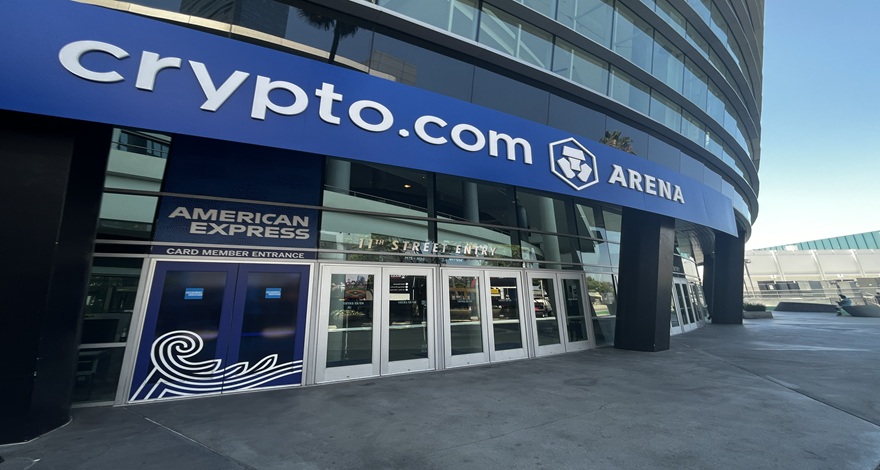
The U.S. House Oversight Committee has widened its investigation into potential insider trading on prediction markets, demanding records from Crypto.com, Hyperliquid Labs and PredictIt owner Aristotle Exchange on how they identify users, monitor suspicious trades and respond when traders may be acting on nonpublic information.
House Oversight Committee Chairman James Comer sent separate letters to the three companies on September 29, extending an inquiry that began in May with Kalshi and Polymarket.
The new requests go substantially beyond asking whether the platforms have basic compliance policies. The committee wants records showing how suspicious trades are detected, whether questionable activity has been referred to regulators or law enforcement, and in some cases whether employees or government officials themselves have traded contracts connected to information they could have learned through their positions.
The companies were asked to produce the requested information by October 13. The committee said its earlier inquiry has already generated nearly 1,000 documents and five briefings from Kalshi and Polymarket.
Crypto.com Faces Questions About Employees Trading on Company Information
Of the three letters, the request to Crypto.com is particularly detailed because it examines potential information advantages inside the company itself.
The committee asked Crypto.com to identify any instances since January 2024 in which an employee, contractor or affiliate traded an event contract concerning a subject on which that person possessed material nonpublic information through their employment.
Examples cited in the letter include advance knowledge of digital asset listings or delistings, liquidity decisions, custody decisions and other token-related corporate actions.
Comer also requested information on any internal trading restrictions or information barriers designed to stop employees with advance knowledge from betting on related outcomes.
The questions extend to government information. Crypto.com was asked to identify current or former federal employees or officials, including former or current CFTC personnel, known to have traded Crypto.com Derivatives North America contracts tied to cryptocurrency regulation or the regulatory status of CDNA itself.
The requests form part of the committee’s broader investigation into prediction-market trading controls.
The distinction is important because insider-trading concerns in prediction markets are no longer limited to government secrets. Corporate announcements can also create unusually clear informational advantages when an event contract asks traders to predict an outcome that a small group of employees already knows.
That problem has already surfaced elsewhere in the sector. Kalshi previously investigated suspicious trading cases including one involving a media employee, an episode DaveFinances examined when Kalshi suspended a MrBeast editor in an insider-trading case.
Hyperliquid Letter Focuses on a Reported $1.1 Billion Short
The Hyperliquid request is unusual because Hyperliquid is primarily a crypto derivatives platform rather than a conventional prediction market.
The committee cited reports of a roughly $1.1 billion leveraged short position involving Bitcoin and Ether that was reportedly opened around 30 hours before a presidential announcement on U.S. tariff policy in October 2025.
According to the material cited by the committee, the position was closed after the announcement for more than $150 million in profit.
The letter does not establish that the trader possessed nonpublic government information, and it does not identify the trader as a government insider. Rather, Comer is asking Hyperliquid for records that could help determine who controlled the relevant accounts and whether the platform had mechanisms for escalating suspicious activity.
The committee wants details on Hyperliquid’s identity-verification practices, geographic restrictions and methods for detecting anomalous trading. It also requested the number and disposition of suspicious-activity referrals made to the Department of Justice, CFTC or other U.S. authorities since January 2024.
That represents a notable expansion of the inquiry. The underlying concern is moving beyond whether someone uses privileged information to trade a binary political contract. Congress is also examining whether the same information could be monetized through leveraged crypto positions that react sharply to government decisions.
PredictIt Is Being Asked Who Trades Government Outcomes
The PredictIt letter is more directly focused on political and government event markets.
Aristotle Exchange was asked to provide information concerning suspicious trades tied to elections, nominations, confirmations, legislative action and other government actions.
The committee also wants records showing whether current or former government employees, officials or contractors have participated in event contracts related to those subjects.
PredictIt was asked to explain its procedures for referring suspicious activity to the DOJ, CFTC or other authorities and disclose the number and outcome of such referrals since January 2025.
The committee additionally requested information on the removal of PredictIt’s previous per-contract trader limit and whether that change affected liquidity, market scale or the platform’s ability to identify insider trading.
These questions arrive as unusually successful or well-timed prediction-market accounts are drawing more attention from both regulators and independent researchers. DaveFinances recently covered a separate case in which Polymarket trading around an Iran-related event raised questions about informed positioning.
The Investigation Started With Kalshi and Polymarket
The new letters are the second major phase of Comer’s inquiry.
In May, the committee asked Kalshi and Polymarket for information on identity verification, geographic controls and systems used to detect suspicious trading.
One case cited by lawmakers involved a U.S. Army master sergeant who was federally charged in April over allegations that he used classified information concerning a military operation involving Venezuela to make more than $409,000 from Polymarket wagers.
That remains an allegation being handled through the legal process, but the case gave lawmakers a concrete example of the type of information advantage they are examining. DaveFinances previously covered the Polymarket case involving the alleged $400,000-plus profit.
The committee says it has since received nearly 1,000 documents and five briefings from representatives of Kalshi and Polymarket.
Existing Rules Already Cover Some Government Insider Trading
The congressional probe is unfolding while the CFTC is separately reconsidering how prediction markets should be regulated.
Existing U.S. commodities law already addresses some forms of government insider trading. Certain federal employees, members of Congress and judicial personnel can be prohibited from using nonpublic information acquired through their official positions for personal trading in covered derivatives.
CFTC-regulated exchanges are also expected to monitor their markets for manipulation, fraud and other abusive trading practices.
The unresolved issue is how those rules translate to an industry that has expanded rapidly into elections, geopolitics, economic statistics, sports, corporate events and even short-duration contracts tied to individual statements or actions.
There is also an ongoing jurisdictional debate over how much authority belongs at the federal level versus state gambling regulators, an issue explored in DaveFinances’ analysis of federal versus state control of prediction markets.
The Hardest Problem Is Identifying the Trader Behind the Information
The immediate regulatory question is not whether prediction markets can identify unusual trades. In many cases, unusual positioning is relatively easy to see after an event occurs.
The harder question is whether the platform can determine who was behind the trade and how that person knew what they knew.
A wallet placing a large wager immediately before an unexpected military announcement may look suspicious. That does not by itself establish insider trading.
The trader could have made a highly informed prediction, received confidential information, controlled the event’s outcome, or simply been lucky.
Investigating the difference requires identity information, communications, transaction histories and often cooperation among platforms and government agencies.
That is why the committee’s focus on KYC and referral procedures matters. A platform may have highly transparent trading data while still making it difficult to connect an account to a real person. Conversely, a regulated venue may know exactly who its customer is but still struggle to establish whether that customer’s information was public when the trade was placed.
Hyperliquid Shows How the Issue Can Spill Outside Prediction Markets
The inclusion of Hyperliquid may prove to be the most consequential part of the latest inquiry.
If the core concern is trading on government secrets rather than the specific financial instrument being used, then event contracts are only one potential outlet.
A trader who knows a tariff announcement is coming could potentially express that information through Bitcoin, stocks, currencies, futures or leveraged crypto perpetuals rather than through a contract explicitly asking whether tariffs will be announced.
That creates a much broader surveillance problem.
Prediction markets make the information advantage unusually visible because the contract often names the event directly. But financially, a leveraged position in an asset expected to react to the announcement can achieve a similar outcome.
The Hyperliquid letter therefore suggests that the congressional inquiry is beginning to examine the information flow rather than simply the product category.
Compliance Could Become a Competitive Issue for Prediction Platforms
For the industry, the investigation creates an uncomfortable trade-off.
Prediction markets benefit from attracting informed traders. Their usefulness as forecasting tools partly depends on participants acting on better research, faster analysis and differentiated information.
But there is a line between being better informed and trading on confidential information obtained through employment, government access or another protected relationship.
Drawing that line becomes harder when contracts settle on events controlled by a tiny number of people.
A Federal Reserve decision, token listing, political appointment or regulatory approval may be unknowable to the public while being completely known to a small internal group before publication.
Platforms that can identify those conflicts quickly may eventually have an advantage with regulators and institutional partners. The cost is that stronger identity checks and surveillance can reduce some of the anonymity and low-friction access that helped crypto-native markets grow in the first place.
October 13 Is the Next Important Date
The immediate milestone is the committee’s October 13 deadline.
The most useful disclosures would be concrete numbers: how many suspicious trades the companies have identified, how many were referred to authorities, whether employees or government officials were involved, and what happened after those referrals.
Until those records are produced, the letters should be treated as information requests rather than findings that Crypto.com, Hyperliquid or PredictIt violated the law.
That distinction matters for investors. Congressional scrutiny can generate dramatic headlines, but the underlying evidence has not yet established wrongdoing by any of the three companies named in the latest requests.
What the investigation does establish is that prediction-market surveillance is moving from a theoretical regulatory concern to a much more practical question: when a trade appears to anticipate information the public did not possess, can the platform identify the trader, reconstruct how the position was built and determine whether regulators need to know?
The answers provided in October could help shape not only future rules for prediction markets, but expectations for crypto trading venues whenever nonpublic government or corporate information appears to move markets.

Johan Shamshad is a financial markets writer at Dave Finances covering cryptocurrencies, trading platforms, brokers, fintech, financial regulation, and developments across global markets. He previously worked at Gulf News, adding newsroom experience to his coverage of fast-moving financial and digital-asset markets.
His work focuses on identifying market-moving events, company developments, regulatory changes, product launches, and shifts in trading and financial infrastructure.
Johan contributes news and analysis designed to help readers understand not only what happened, but why a development matters and how it may affect the wider financial landscape.