
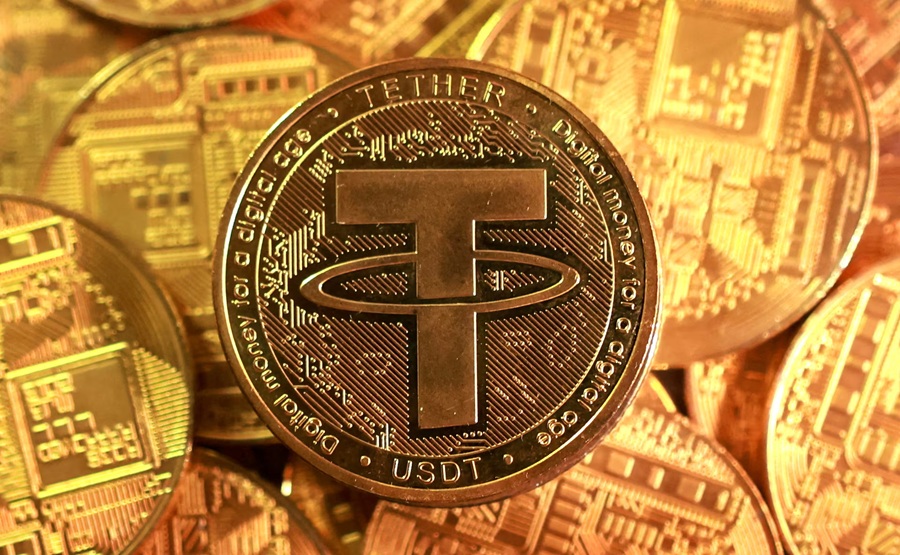
Cross-border payments company Conduit Technology has sued Tether over approximately $2.76 million of USDT that it says has been frozen for more than a year, turning a relatively small stablecoin dispute into a potentially important test of how much control an issuer can exercise over tokens being used as corporate working capital.
Conduit filed the complaint on October 5 in the U.S. District Court for the Southern District of New York under case number 1:26-cv-08773. The defendants include Tether Holdings, Tether International, Tether Operations and Tether Investments.
The payments company alleges that Tether blocked its treasury wallet on September 24, 2025, without giving Conduit a valid explanation and has refused repeated requests to restore access.
Conduit is asking the court to order the tokens unfrozen and award at least another $2.76 million in damages, along with consequential damages and profits it alleges Tether earned from reserves backing the immobilized USDT.
Tether had not publicly responded to the allegations as of October 6, and none of Conduit’s claims has yet been tested in court.
Conduit Says the Wallet Was Its Equivalent of an Operating Bank Account
The dispute matters because Conduit says the affected wallet was not a speculative crypto account.
The company uses stablecoins including USDT and USDC to facilitate cross-border payments across more than 100 countries. It describes the frozen wallet as effectively its operating bank account, containing company treasury assets used to support day-to-day payment operations.
Conduit says it began funding the wallet in May 2025 with its own working capital.
That distinction cuts directly into the growing institutional stablecoin thesis. Stablecoins are increasingly marketed not simply as cryptocurrency instruments but as settlement infrastructure that businesses can use for treasury management, liquidity and international payments.
Dave Finances recently examined that transition when Telcoin began linking regulated bank accounts directly with on-chain digital dollars. Stablecoin payment firms are similarly building products around the assumption that tokenized cash can function as dependable operational money.
Conduit’s lawsuit asks what happens when the issuer behind that money can technically stop it from moving.
The Freeze Was Allegedly Connected to a Brazilian Investigation
According to the complaint, the freeze appears to stem from a Brazilian Federal Police investigation involving Onix Intermediações, a former Conduit customer.
Conduit says it previously provided services to Onix but that the relationship ended in April 2025.
That date is important because Conduit says the treasury wallet at the center of the lawsuit did not even exist until the following month.
The company alleges that the wallet therefore never held Onix funds and was not used to process transactions for the former customer.
More significantly, Conduit says Brazilian law enforcement confirmed that its treasury wallet was never identified for freezing as part of the investigation. It also says a Brazilian court confirmed that Conduit itself was not under investigation in the Onix matter.
If those allegations are accurate, the question becomes how the wallet ended up blocked.
Tether’s Ability to Freeze USDT Is Normally a Compliance Advantage
Tether makes no secret of its ability to restrict USDT at the issuer level.
That capability has become a major part of the company’s law-enforcement strategy. In April, Tether said it had worked with more than 340 law-enforcement agencies across 65 countries and had frozen more than $344 million of USDT in two wallets following information supplied by U.S. authorities.
Tether, TRON and blockchain intelligence company TRM Labs have also built the T3 Financial Crime Unit around essentially the same model: trace suspected illicit funds and use Tether’s issuer-level controls to prevent identified USDT from moving.
That system has frozen hundreds of millions of dollars linked to scams, sanctions evasion and other alleged criminal activity.
The power is often presented as an advantage over assets such as Bitcoin, where no central issuer can disable a particular balance.
But Conduit’s complaint targets the other side of that architecture.
If an issuer can freeze funds quickly, what process is required before it does so, and what remedy exists when an innocent company says its wallet was incorrectly caught in the action?
The Lawsuit Could Test Whether Issuer Control Creates a New Form of Counterparty Risk
For businesses using stablecoins as working capital, the key risk is not only whether USDT remains worth one dollar.
It is also whether the holder can continue using it.
A company can control the private keys to its wallet and still be unable to transfer issuer-controlled stablecoins if the smart contract has blacklisted the address.
That makes the risk structurally different from self-custody of Bitcoin or another censorship-resistant native asset.
The wallet can remain fully under the company’s cryptographic control while the economic asset inside it becomes immobile.
This distinction becomes more important as stablecoins penetrate business payments. Dave Finances recently reported how SBI backed stablecoin payments provider dtcpay in a $25 million funding round, reflecting institutional demand for exactly the kind of cross-border settlement model Conduit operates.
Businesses adopting these rails therefore inherit not only blockchain risk and counterparty risk but issuer-policy risk.
Conduit Is Also Targeting the Economics of Tether’s Reserve Model
The damages claim adds another unusual dimension.
Conduit argues that while it has been unable to use its 2.76 million USDT, Tether has continued benefiting economically from the reserve assets supporting those tokens.
Tether backs circulating USDT with reserves that include short-duration U.S. government securities, cash-equivalent instruments and other assets. Income generated by those reserves belongs to Tether rather than automatically flowing to USDT holders.
That arrangement is ordinary when tokens are freely usable. Conduit argues the economics look different when an issuer prevents a holder from accessing its USDT for more than a year while continuing to retain the benefits associated with the reserves.
The company is consequently seeking not only return of the frozen tokens but at least $2.76 million in additional damages and disgorgement of profits it says Tether earned from the reserve assets attributable to them.
Whether a court accepts that theory is far from certain. Holding USDT does not normally give the holder a contractual right to the yield earned on Tether’s reserves.
But the argument could force closer examination of what legal relationship exists between a stablecoin issuer and a secondary-market token holder after the issuer itself prevents the token from being transferred.
This Is Different From a Bank Freezing an Account
The comparison with banking is useful but imperfect.
A bank directly maintains the customer’s account and usually operates within a jurisdiction-specific framework covering freezes, court orders, regulatory requests and customer remedies.
USDT can circulate globally between self-custodied wallets without the holder maintaining a conventional deposit account with Tether.
Yet Tether retains technical authority capable of disabling those tokens.
That creates a hybrid structure: possession can be decentralized while ultimate transferability remains partially dependent on the issuer.
The model is increasingly relevant as firms try to make stablecoins function more like institutional cash. The tension becomes especially visible when businesses rely on those balances for payments rather than merely holding them as trading assets.
The Most Important Evidence Is Now the Original Freeze Request
The lawsuit is still at the allegation stage, and Tether may have information that changes the picture substantially.
The decisive evidence will likely be the records explaining why Conduit’s wallet was frozen in September 2025.
If Brazilian police, another government agency or a court specifically asked Tether to restrict the wallet, that would seriously challenge Conduit’s central argument.
If Tether identified the wallet through its own blockchain-analysis process but had an independent contractual or compliance basis for acting, the case becomes a dispute over the scope of its issuer powers.
But if Brazilian authorities genuinely did not identify the wallet, Conduit was not under investigation and the wallet never handled Onix funds, the lawsuit raises a harder question about what review process protected an apparently unrelated corporate treasury from being immobilized.
That is what gives the case significance beyond $2.76 million.
Stablecoins are increasingly being promoted as global payment infrastructure, with firms building treasury operations and cross-border settlement directly around them. That only works at institutional scale if businesses understand not just why an issuer can freeze money, but how a mistaken freeze can be challenged and reversed.
Conduit says it has spent more than a year trying to answer exactly that question.
The court may now get the opportunity to answer it instead.

Johan Shamshad is a financial markets writer at Dave Finances covering cryptocurrencies, trading platforms, brokers, fintech, financial regulation, and developments across global markets. He previously worked at Gulf News, adding newsroom experience to his coverage of fast-moving financial and digital-asset markets.
His work focuses on identifying market-moving events, company developments, regulatory changes, product launches, and shifts in trading and financial infrastructure.
Johan contributes news and analysis designed to help readers understand not only what happened, but why a development matters and how it may affect the wider financial landscape.