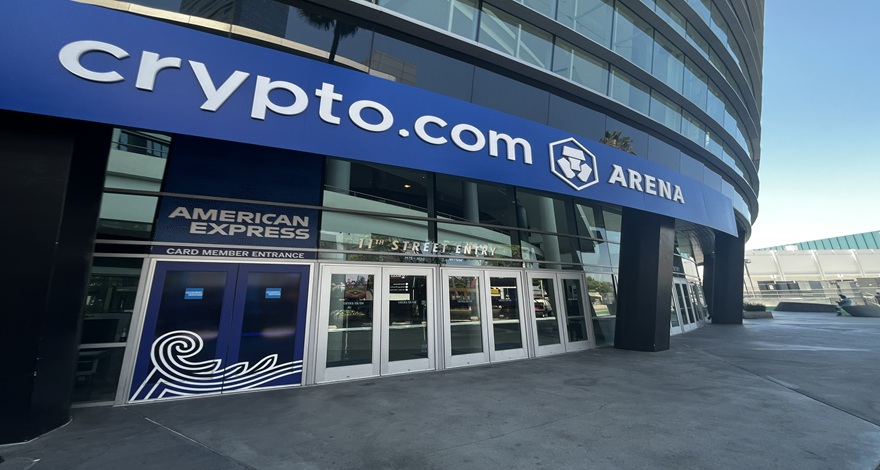
Crypto.com’s U.S. prediction-market exchange and Novig filed separate federal lawsuits against Missouri officials on Friday, October 16, seeking to prevent the state from applying sports-gambling laws to their sports event contracts as deadlines in cease-and-desist notices approached.
The cases put two CFTC-regulated derivatives businesses in direct conflict with Missouri Attorney General Catherine Hanaway, who argues that contracts tied to sporting results amount to unlicensed sports wagering regardless of whether they are marketed as financial instruments. Filing the complaints does not itself protect the operators from enforcement, and the public docket material reviewed has not established that either court has granted an injunction.
Kalshi, Polymarket, Robinhood and Underdog also received Missouri notices in September. None had filed a comparable case in either of Missouri’s federal districts by Sunday, October 18, according to a court-record review reported by The Block. That narrower observation does not establish that those companies have accepted the state’s position or resolved their exposure.
Why Did Missouri Target Six Prediction-Market Operators?
In its official cease-and-desist announcement, the Missouri Attorney General’s Office identified Crypto.com, Novig, Kalshi, Polymarket, Robinhood and Underdog as providers of sports event contracts that it considers gambling under state law.
The letters, issued September 16 and 17, gave recipients 30 days to stop offering the relevant contracts to Missouri customers or demonstrate compliance with state sports-wagering requirements. Hanaway argued that calling a sports wager an event contract does not remove licensing, taxation and consumer-protection obligations.
Missouri voters approved regulated sports wagering in November 2024. The state framework requires authorized operators and prohibits betting by customers under 21. It also imposes a 10% tax on adjusted gross wagering revenue, not a flat 10% tax on the total dollar value of every bet or trade.
The Crypto.com notice also alleged that people as young as 18 could access the platform, creating a direct conflict with Missouri’s sports-betting age requirement if the state’s interpretation applies. That is the attorney general’s position; a court has not resolved the disputed classification in these lawsuits.
What Is Crypto.com’s Exchange Arguing in Federal Court?
North American Derivatives Exchange, the CFTC-designated contract market associated with Crypto.com’s OG prediction-markets offering, brought its case in the Western District of Missouri on October 16. The case is North American Derivatives Exchange, Inc. v. Hanaway, No. 4:26-cv-00969.
The exchange is seeking a declaration and permanent injunction on the theory that the Commodity Exchange Act places its federally regulated event contracts within the Commodity Futures Trading Commission’s exclusive jurisdiction and prevents Missouri from applying conflicting gambling laws. These are claims advanced by the exchange, not findings by the court.
According to its complaint, the state’s warning was incorrectly addressed to Foris DAX, Inc., rather than to the exchange that lists and operates the relevant contracts. That entity distinction may matter for identifying the business responsible for a product, but an allegedly incorrect addressee does not by itself determine whether state wagering rules apply.
Crypto.com’s exchange raises a second practical objection: Missouri’s constitution permits only two direct mobile sports-wagering licences for qualified operators, and the complaint says both have already been awarded. The constitutional cap covers this particular category of direct operator licence; it does not mean Missouri has no other forms of sportsbook licensing.
That distinction is important. If federal exchanges must use a state gambling route, a capped licence class and alternative partnerships could materially change the cost and availability of entering Missouri. Whether any legally workable licensing arrangement is available to the exchange remains part of the dispute.
Why Did Novig File a Separate Missouri Lawsuit?
Novig’s exchange operator, Ludlow Exchange LLC, filed in the Eastern District of Missouri on October 16. The case, No. 4:26-cv-01780, names Hanaway and Missouri Gaming Commission officials Michael Lear and Jan Zimmerman. The docket records the complaint and related initial filings, but does not establish that the plaintiffs received emergency relief.
Novig seeks preliminary and permanent relief preventing the state from enforcing its sports-gambling restrictions against contracts that Novig characterizes as federally regulated derivatives. It argues that federal authority over the relevant exchange trading should take precedence over the state’s rules.
The company also points to pending litigation within the Eighth Circuit, the federal appeals region covering Missouri. An appeal involving Kalshi and Iowa raises closely related questions about the treatment of sports event contracts. Novig wants to maintain the status quo during that uncertainty, but the existence of another appeal does not compel a Missouri judge to freeze enforcement.
The two filings follow Crypto.com’s expansion of sports event trading and a broader wave of cases challenging how states classify products built around sporting outcomes.
Why Have Federal Courts Reached Different Conclusions?
The central legal question is whether a contract that settles on a sports result qualifies for the federal derivatives framework in a way that displaces state gambling rules. Classification and preemption are related but separate questions: a contract’s treatment under federal commodities law does not automatically resolve every state-law issue.
In April, the Third Circuit sided with Kalshi at the preliminary-injunction stage in a New Jersey dispute. The Ninth Circuit rejected Kalshi’s argument for protection from Nevada enforcement in August. In September, the Sixth Circuit ruled against Kalshi in litigation involving Ohio and Tennessee, questioning whether the sports contracts qualified as swaps and rejecting the asserted preemption theory.
These rulings were made in particular cases and procedural settings. The split does not establish a single final nationwide rule, and a Missouri district judge must consider binding Eighth Circuit law as well as persuasive decisions from other circuits.
The CFTC’s evolving treatment of event contracts adds another layer. DaveFinances has previously examined the commission’s effort to distinguish event-contract derivatives from traditional sportsbook and casino wagers. Regulatory rulemaking may influence future litigation, but it does not automatically cancel existing state laws or decide the pending lawsuits.
What Could the Missouri Cases Mean for Prediction-Market Investors?
For platforms, the dispute reaches beyond legal fees. If a state can require sportsbook licensing, event-contract operators may need to limit access by geography, change onboarding or age controls, secure local partnerships, and evaluate state taxes and compliance costs. That could reduce the number of potential customers able to trade a given sports market.
For traders, a platform’s CFTC designation is not the same as a guarantee that every sports contract will remain available in every state. An injunction could temporarily protect access in the relevant jurisdiction, while a denial could force an operator to reassess local listings. Neither outcome would resolve all challenges in other states.
These restrictions can affect liquidity as well as access. A fragmented nationwide market may concentrate trading on fewer approved venues or regions, potentially widening effective spreads and making pricing less competitive. Those are scenarios, not measured effects of the newly filed Missouri cases.
The risks also differ from the possibility that a specific contract settles incorrectly. Investors assessing the sector need to separate product mechanics, market liquidity, the location of their account, and continuing legal authority to offer sports-event trades. The earlier Nevada appeals fight over Kalshi illustrates how venue-level legal outcomes can affect a national business model.
What Happens Next in Missouri?
The most immediate milestones are any motions for temporary restraining orders or preliminary injunctions, the state’s formal responses, and hearing dates. The exact status of Missouri access at each platform should be checked through official customer notices rather than inferred from the mere filing of a lawsuit.
There is also no verified basis to say that Kalshi, Polymarket, Robinhood or Underdog will follow these two plaintiffs into Missouri federal court. Their absence from the identified dockets as of October 18 is a snapshot, not a statement about future litigation.
For now, the confirmed development is that Crypto.com’s regulated exchange and Novig are contesting Missouri’s authority in separate federal cases. The unresolved question is whether federal oversight of event contracts shields these products from a state framework designed for sports betting. Until a court grants relief, the complaints remain legal arguments rather than victories.

Johan Shamshad is a financial markets writer at Dave Finances covering cryptocurrencies, trading platforms, brokers, fintech, financial regulation, and developments across global markets. He previously worked at Gulf News, adding newsroom experience to his coverage of fast-moving financial and digital-asset markets.
His work focuses on identifying market-moving events, company developments, regulatory changes, product launches, and shifts in trading and financial infrastructure.
Johan contributes news and analysis designed to help readers understand not only what happened, but why a development matters and how it may affect the wider financial landscape. You can reach out to him via his social media accounts:
Linkedin: https://www.linkedin.com/in/johan-shamshad-742851262/
X: https://x.com/Yasmine_FX
Investing: https://www.investing.com/members/contributors/279781574