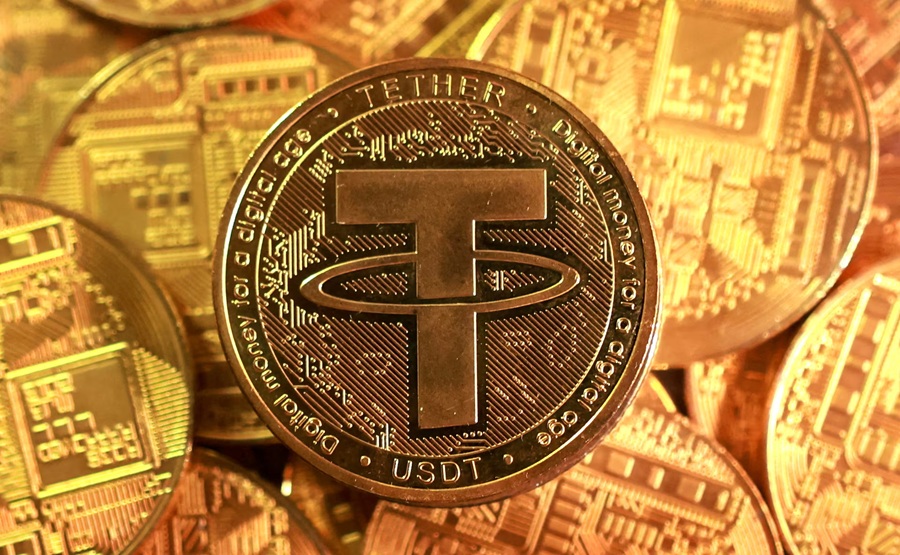
A token-level freeze can stop a transfer. It does not establish who owns the balance, reverse an old transaction or guarantee a victim receives a dollar.
RESEARCH CUTOFF 20 OCTOBER 2026 • RETAIL INVESTOR ANALYSIS
The Real Question: Can Tether Immobilize a Wallet?
Tether’s USDT is not a bank transfer and its on-chain history is not reversible by pressing a button. Yet token contracts on supported networks can include administrative capabilities. The crucial distinction is between stopping identified tokens from moving in the future and undoing a transaction that has already moved them. Tether’s February 2026 legal terms reserve the ability to freeze tokens, blacklist addresses and act on legal or compliance concerns [1]. That is a real issuer power, not a blanket promise to individual fraud victims.
The company said it helped U.S. authorities freeze more than $344 million in USDT across two addresses in April 2026 [2]. Its earlier 2023 investigation with OKX and U.S. authorities led to a reported $225 million USDT freeze [3]. These actions demonstrate that a token can be immobilized in external self-custody even though Tether does not hold the wallet’s private key. They do not tell readers that every scam will qualify for intervention or that the addresses’ holders have been convicted.
A retail holder should distinguish five possible statuses: funds stolen; funds traced; funds frozen; title or entitlement resolved; funds paid out. Confusing the middle step with the last is the central error in much crypto-recovery coverage. Dave Finances’ reported USDT address blacklisting shows that an on-chain freeze is observable, while the underlying legal questions can remain unresolved.
What Actually Happens When an Address Is Blacklisted?
Where a supported USDT contract has administrative controls, issuer action may restrict transfers linked to a designated address or balance. This is different from seizing the attacker’s private key, breaking an underlying blockchain or recovering Bitcoin that has already been swapped out. Contract implementation, chain, address attribution and the exact restriction matter; not every asset bearing the letters ‘USDT’ is necessarily the same native issuer liability.
Before an intervention, investigators generally need the correct network, token contract, receiving address, transaction hashes and evidence linking those transfers to an offense. A thief can move balances again, split them into multiple wallets or trade into assets that lack equivalent token-level freeze powers. A request based on a screenshot of a wallet balance is far weaker than a reproducible transaction trail. When a wallet is blacklisted, unrelated funds at that address may become embroiled in a dispute too, depending on the action.
Tether’s terms permit restrictions in several legal and risk situations, including suspected unauthorized access, theft, sanctions and government direction [1]. The power is discretionary and conditioned by law; it is not a retail dispute-resolution service open to anyone who submits a transfer hash. There is a separate product-support process for some recoverable mistaken token transfers [7]. That policy’s fee schedule and $1,000 eligibility floor should not be confused with a law-enforcement route for stolen funds.
Why a Frozen Dollar Is Not a Returned Dollar
Imagine an investor loses $100,000. Investigators identify $70,000 of flows into USDT; authorities coordinate a freeze on $48,000; later legal proceedings establish that $30,000 is distributable to claimants; and $22,000 is actually paid to eligible victims. These numbers are an illustrative flow model, not historical Tether data. Saying ‘48% recovered’ after the freeze overstates the illustrated cash restitution of 22% by 26 percentage points.
The distinction is supported by actual U.S. procedures. In March 2026 the Department of Justice announced that about $470,735 would be returned to two Maine victims after agents seized 470,773 USDT and a court ordered forfeiture [8]. A December 2025 case similarly described approximately $1.7 million in stablecoin assets recovered and cleared for return through civil forfeiture [9]. Those cases are evidence that restitution can happen, not that recovery is instant or fully replicable across jurisdictions.
The DOJ’s remission guidance requires a documented pecuniary loss, a connection to the offense and proof the claimant has not already been compensated, among other criteria [11]. A private claims firm cannot replace a court or law-enforcement agency. This is especially important when multiple alleged victims, beneficial owners, custodians or innocent downstream receivers claim the same token balance.
Structural Comparison
| Action | Who can control it | What it proves | What it does not prove |
| Trace on-chain funds | Analysts, investigators | Recorded movements and candidate links | Rightful owner or legal seizure power |
| Freeze issuer token | Issuer, often coordinating with authorities | Restricted transfers in relevant contract | Proven guilt or claimant reimbursement |
| Freeze exchange account | Exchange/compliance team | Custodial withdrawal blocked | Native token address blacklisted |
| Forfeit or seize legally | Court/authorized authorities | Legal control under applicable process | All victims entitled to full amount |
| Distribute/remit proceeds | Administrator or competent agency | Eligible beneficiary receives value | All original losses compensated |

Figure 1 | A freeze is not a victim payout: stages do not automatically advance.
Original Model: What Can a $40,000 Freeze Really Deliver?
Take a separate $100,000 theft in which exactly $40,000 remains frozen. If later proceedings permit 25% of that frozen pool to be distributed to this claimant, the eventual payment is $10,000, or 10% of the original theft. At 50%, it is $20,000; at 75%, $30,000. Nothing in the model says these percentages are likely. They demonstrate mathematically that the frozen amount is an upper bound on the assets captured at that point, not the claimant’s guaranteed award.
Now vary the movement of funds before action. If all $100,000 is still held as freezable USDT, the theoretical immediate target is $100,000. If 80% has already moved or been exchanged into assets outside the reachable USDT pool, at most $20,000 remains in that narrow opportunity set. Moving USDT does not make it untraceable, but movement can destroy that particular issuer-level control opportunity. Delays across a weekend, fragmented platforms or an uncooperative custodian can change practical outcomes.
These calculations also make a subtle point about incentives. An attacker may prefer to convert a stablecoin quickly because the ability to freeze it creates a window of enforcement risk. A lawful user of USDT meanwhile faces the opposite consideration: a legitimate payment can be caught by sanctions or mistaken-identity screening. The cost of false positives can be immense for a company using stablecoins as operating cash.

Figure 2 | Sensitivity to legal distribution, not a predicted recovery rate.
Who Can Ask Tether to Freeze or Release a Balance?
Law-enforcement agencies and regulators are the most straightforward participants in a formal investigation. Exchanges and blockchain analytics firms may supply evidence, identify destination accounts or cooperate in a report, but observing a trail is not the same as exercising legal authority. An individual victim should contact relevant law enforcement and any receiving platform through verified channels, and preserve transaction documentation. A lawyer can pursue an injunction or claim where law permits, but no private investigator can order seizure unilaterally [12].
Issuers have to weigh errors and competing claims. A legitimate user may receive funds from an address later accused of wrongdoing; a corporate treasury may have no involvement in the conduct that caused a suspicious-screening match. The October 2026 dispute over a frozen corporate USDT balance highlights this issue. The lawsuit is a set of allegations and requested relief, not a final judgment that Tether acted unlawfully.
Conversely, authorities may identify strong evidence of theft or sanctions evasion while the end beneficiary remains hidden behind pooled wallets or intermediaries. A freeze preserves optionality for enforcement; releasing a frozen balance too early could frustrate a case, while leaving it restricted indefinitely can harm an innocent owner. Good reporting tracks who made the request, which wallets were affected, whether a court intervened, and whether the eventual disposition is known.
Why Chain and Custody Structure Change the Answer
A token in a self-hosted Ethereum address, an exchange’s omnibus wallet, a Tron address and a bridged representation can have different technical and legal control paths. On a custodial exchange, a platform may freeze a customer’s account ledger even if the underlying USDT has not been blacklisted at the issuer contract. That is an exchange action. A bridged token may be a claim against a bridge, custodian or wrapper rather than the native USDT issuer. A token symbol alone cannot tell investors whose cooperation is required.
Consider a user who bought $10,000 USDT on one venue, transferred to a DeFi wrapper, and then lost the wrapper token in an exploit. Even if the wrapper references issuer-backed USDT, freezing the native stablecoin reserve could harm innocent pool participants rather than identify the ultimate thief. The problem is a chain of claims, not merely a balance. Mapping every contract, signer and custodian involved is the necessary first step.
The investigation into hardware-wallet theft recoveries also illustrates that tracing a crypto asset into another network does not create jurisdiction over the network. The strongest case is one where the claimant’s identifiable stolen proceeds are still held at a cooperative institution or in a token with effective administrative restrictions.

Figure 3 | Remaining USDT determines the narrow immediate freezing opportunity.
What Retail Victims Should Preserve, and What Not to Do
Preserve exchange withdrawal confirmations, transaction IDs, destination addresses, exact USDT contract addresses, chain names, UTC time, screenshots of relevant communications and device compromise evidence. Keep a chronological ledger of what happened and which funds left at each stage; do not publish a recovery phrase, seed, private key or authentication code. If any signing key has been compromised, isolate still-safe funds in a genuinely new wallet before spending time seeking restitution.
Victims should promptly report to local authorities and, where relevant, the FBI IC3; report channels vary by jurisdiction. Request a case number and supply consistent asset tracing records to the exchange or issuer’s legitimate support/compliance contacts. Do not claim the same money is ‘returned’ solely because a block explorer displays a blacklisted wallet. Ensure the report distinguishes the theft amount, value at the date of theft, value when traced and denomination of assets currently frozen.
Recovery scammers commonly use a genuine hash or exact stolen amount to convince victims they have access to secret seizure channels. The FBI explicitly warns that private recovery companies cannot issue seizure orders [12]. Paying a supposed release tax or connecting a wallet to ‘authorize recovery’ can create a second loss. Genuine legal asset-return processes do not require victims to send their secret recovery phrases to private agents.
The Strongest Counterargument: Freezing Power Is Also a Risk
Centralized token controls create a trade-off. A useful enforcement mechanism against stolen assets can also freeze payments at the request of a government, on a faulty attribution or under terms that permit broad issuer discretion. The mechanism that may protect a victim is also a counterparty-risk factor for an innocent holder. Stablecoins differ in their blacklisting architecture, reserve terms, operational procedures and jurisdictions; investors should not assume all issuers behave identically.
A careful company holding payroll or treasury liquidity in USDT should treat freeze and false-positive screening as measurable business-continuity risks. If $500,000 of working capital is restricted for 60 days and replacement funding costs 12% annually, simple financing drag alone would be approximately $9,863, excluding litigation, lost business and reputational effects. This is a hypothetical cost calculation, not a reported Tether case.
The relevant investor question is therefore dual: can the issuer stop identified criminal proceeds, and can the lawful user challenge or resolve an erroneous restriction with usable evidence? The answer depends as much on governance and legal rights as on smart-contract code.
A Direct-Redemption Right Is Not the Same as a Theft Claim
An investor may see a dollar token that normally trades close to par and assume its issuer owes every holder cash on demand. That inference is unsafe. Tether’s contractual purchase and redemption services involve eligibility, verification and limits; they do not grant every anonymous holder the same procedural status as a verified direct customer [1]. Likewise, an individual whose stolen USDT is blocked cannot treat an issuer’s routine redemption process as a restitution desk. Entitlement to fraud proceeds may require police evidence, a court decision or a formal distribution program.
Suppose $60,000 in USDT was transferred from a victim’s wallet to an exchange that commingles balances. The exchange might owe customers corresponding ledger credits while only holding pooled coins on-chain. The victim’s transaction is highly relevant evidence of theft, but identifying those exact tokens later in a shared wallet can be harder than following a single self-hosted address. The issuing token contract, exchange customer claims and the criminal proceeding then intersect. Freezing a service’s omnibus USDT without accurately identifying the implicated balance can impose loss on unrelated customers.
Investors should ask four separate questions before treating a headline freeze as collateral for a recovery estimate: who controls the underlying token; which entity holds the actual balance; what process determines beneficiary rights; and who can lawfully distribute the released value? Secondary-market purchase, custodial ownership, direct issuer redemption and legal restitution are four different paths with different gatekeepers. A token priced at $1 does not collapse those legal steps into one.
The Hidden Cost of a False Freeze
Tether’s ability to stop certain illicit flows is valuable partly because payment rails can be used before an investigation reaches a courtroom. That speed creates a tension with procedural safeguards. A false match may leave a legitimate business unable to pay suppliers while the sender, receiver, issuer and authorities resolve whether a wallet is connected to an actual sanctions or fraud case. Because on-chain addresses often identify services rather than individuals, a single attribution score is an especially weak substitute for a legal ownership finding.
For example, imagine a firm has $300,000 of legitimate USDT receivables, pays 9% annualized for substitute short-term funding and cannot access the tokens for 45 days. Even if every dollar is later unfrozen, simple financing cost is about $3,329 ($300,000 × 9% × 45/365). A forced payment delay could additionally trigger late fees, exchange conversion costs and contract disputes. These are illustrative financing economics and do not measure losses in the Conduit case or any other specific lawsuit.
The issuer’s policy and the customer’s remedy should therefore be analyzed together. A freeze should be described with its initiating authority, factual basis when public, contract scope, chain and procedural status. The corresponding remedy may be release, reissuance, confiscation, forfeiture or distribution, and a journalist should not use those verbs interchangeably. Clarity also helps readers distinguish issuer cooperation with legitimate authorities from private attempts to coerce an innocent customer into paying a supposed unlocking fee.
Bottom Line and Methodology
Tether can freeze certain USDT balances, including at external wallet addresses, according to its terms and documented enforcement cooperation. A freeze may preserve stolen funds but does not reverse historical transfers or automatically transfer property to the complaining investor. Recovery depends on correct attribution, remaining reachable assets, lawful authority, victim eligibility, and eventual distribution. The better headline is ‘funds preserved pending process’ unless money has in fact reached eligible claimants.
The recovery funnel uses independent illustrative assumptions of $100,000 stolen, $70,000 traced, $48,000 frozen, $30,000 cleared and $22,000 distributed. The sensitivity exercise uses an independent 40% frozen fraction and release rates of 0–100%; neither represents an empirical forecast. The liquidity interruption calculation uses simple interest with 60/365 days. Sources were checked for status through October 20, 2026; legal outcomes vary by jurisdiction and depend on primary records.
Sources and Evidence
Primary research and supporting documentation; URLs are clickable and checked against the dated research cutoff.
01. Tether, Token Terms of Sale and Service, updated February 26, 2026
02. Tether, Supported Freeze of More Than $344 Million (April 23, 2026)
03. Tether, Following Investigations, Voluntary $225 Million Freeze (Nov. 2023)
04. Tether, Freeze and Reissue of About $1.6 Million (July 2025)
05. Tether, T3 Financial Crime Unit Reports More Than $450 Million Frozen (May 2026)
06. Tether, Iran-linked USDT Freezes in 2026 (Sept. 2026)
07. Tether, Token Recoveries Policy and Scope
08. DOJ, $470,735 to Two Maine Crypto Fraud Victims (March 2026)
09. DOJ, Civil Asset Forfeiture of $1.7 Million in Stablecoins (Dec. 2025)
10. DOJ, Civil Forfeiture of 47,461 USDT (July 2026)
11. DOJ, FAQ on Remission, Restitution and Victim Eligibility
12. FBI IC3, Warning About Crypto Recovery Companies

Johan Shamshad is a financial markets writer at Dave Finances covering cryptocurrencies, trading platforms, brokers, fintech, financial regulation, and developments across global markets. He previously worked at Gulf News, adding newsroom experience to his coverage of fast-moving financial and digital-asset markets.
His work focuses on identifying market-moving events, company developments, regulatory changes, product launches, and shifts in trading and financial infrastructure.
Johan contributes news and analysis designed to help readers understand not only what happened, but why a development matters and how it may affect the wider financial landscape. You can reach out to him via his social media accounts:
Linkedin: https://www.linkedin.com/in/johan-shamshad-742851262/
X: https://x.com/Yasmine_FX
Investing: https://www.investing.com/members/contributors/279781574