The developments highlight three pressures facing the retail trading industry: stronger account-security controls, rising operating costs and competition for international customers. For traders, these changes can affect platform access and execution. For investors and industry participants, they offer a glimpse into how brokers are balancing security requirements with growth.
FXTF blocks overseas IP access after GMO cyberattack
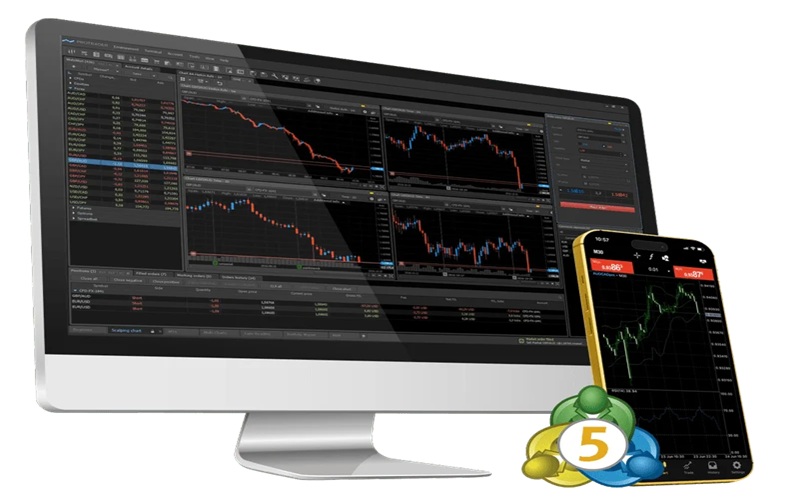
Goldenway Japan, the operator of FXTF, announced on October 27 that it had blocked access from overseas IP addresses across all three of its trading services: FXTF MT4, FXTF MT5 and FXTF GX. The broker said the measure strengthens protection against unauthorized access following recent cyberattacks and phishing incidents.
Under the restriction, customers using overseas virtual private servers (VPS) can no longer log in to or use the affected platforms through those connections. The policy applies across all three services rather than only to accounts confirmed to have been compromised.
FXTF had already restricted some overseas access, but the latest notice expands the measure as the company strengthens its security controls. The broker also warned that accounts potentially exposed through the compromised GMO hosting service could face additional restrictions as investigations continue.
The move follows the attack on GMO Internet’s Onamae.com Desktop Cloud, a hosting service used by forex traders to run MetaTrader terminals and automated strategies. GMO confirmed unauthorized access to its environment, the installation of malicious programs in some customer environments and the removal of customer information. It estimated that as many as 26,739 server environments could potentially be affected, while emphasizing that this was not a confirmed count of compromised systems.
The incident has spread beyond the hosting provider. Five Japanese forex brokers—Goldenway Japan, OANDA Securities, AvaTrade Japan, Gaitame Finest and Dukascopy Japan—have reported customer harm suspected to be connected to unauthorized trading. Japan’s financial authorities have urged brokers to strengthen transaction monitoring and warn customers about suspicious activity.
FXTF’s decision is more restrictive than measures limited to individual accounts because it can also affect legitimate customers connecting from overseas VPS environments. Traders who depend on remote servers for automated strategies may need to migrate to supported connections, subject to FXTF’s requirements. Existing broker-side orders may remain active, but strategies that rely on a continuously connected terminal could stop executing new instructions.
The wider incident has already prompted other firms to tighten controls. GMO’s shutdown of its FX trading VPS service disrupted customers relying on remote trading environments, while AvaTrade Japan confirmed unauthorized customer trades. OANDA Japan also introduced additional withdrawal checks as it assessed security risks.
Eightcap UK grows revenue as profitability weakens
Elsewhere in the brokerage sector, Eightcap’s UK business reported a 26% increase in revenue for its financial year ending June 30, 2026, according to industry reporting published on October 27. However, higher turnover did not translate into stronger profits.
The company’s reported revenue reached approximately £4.49 million, while profit before tax fell to £164,833 from £510,688 in the preceding 16-month reporting period. Because the earlier period covered more than a year, the two headline totals are not directly comparable. On a monthly-average basis, revenue increased substantially, but the profitability decline remains notable.
Costs were a major factor. Cost of sales rose to approximately £2.47 million from £718,324 in the previous period, reducing gross margin to 45.1% from 79.8%. Administrative expenses declined, but not enough to offset the pressure on gross profitability.
The London business also continued to rely heavily on customers outside the UK. Continental Europe generated approximately 70.5% of its £4.49 million revenue, while British customers contributed around 4%. The remainder included revenue associated with an intra-group transfer-pricing arrangement.
These figures suggest that the UK entity’s commercial performance depends more on its international client base than on domestic demand. They also show why revenue growth alone can be misleading when assessing a brokerage’s financial health: acquisition costs, execution-related expenses and the commercial arrangements between group companies can materially affect the amount ultimately retained as profit.
NinjaTrader advances its international expansion
NinjaTrader’s expansion into the UK forms part of a broader push to reach retail futures traders outside the United States. The platform launched its European futures offering in the Netherlands and Germany in January 2026 through Payward Europe Digital Solutions, a regulated investment firm, with wider European and UK access included in its expansion plans.
The company has also established international leadership in the UK. Christopher Tripp, appointed general manager of international operations in February, is responsible for supporting the platform’s overseas growth. His background includes senior international and commercial roles at other trading businesses.
NinjaTrader provides access to exchange-listed futures alongside charting, order-flow tools, execution capabilities and trading education. Its European expansion is aimed at customers seeking regulated exchange-traded products rather than relying exclusively on over-the-counter contracts such as CFDs.
The UK opportunity is commercially important because it offers access to an established retail trading market and a broader pool of customers familiar with leveraged products. However, a UK presence or expansion plan does not automatically mean that every product is available to every resident. Access depends on the relevant legal entity, regulatory permissions and the countries supported by the account-opening process.
NinjaTrader’s strategy reflects a wider effort among trading platforms to expand geographically while offering products that appeal to customers seeking more transparent, exchange-listed markets. The challenge will be converting that wider reach into sustainable customer growth without allowing compliance, distribution and technology costs to erode margins.
Security, costs and expansion will shape broker competition
The three developments illustrate different sides of the same competitive challenge. FXTF is prioritizing account protection even at the cost of restricting access for some legitimate customers. Eightcap’s results show that revenue growth can coexist with a sharp decline in profitability. NinjaTrader is investing in international distribution to capture demand for futures trading.
For FXTF, the next important questions concern the duration and scope of overseas access restrictions, the handling of potentially exposed accounts and whether customers will be offered secure alternatives for running automated strategies. A restriction that reduces unauthorized access can strengthen customer protection, but poorly managed disruption could also affect confidence and trading continuity.
For Eightcap, investors and industry observers should monitor gross margins, cost of sales and the contribution of different client regions. The distinction between revenue growth and profit generation is particularly important when comparing financial periods of different lengths.
For NinjaTrader, the key measure will be whether its European and UK expansion translates into sustained customer acquisition and engagement. Broader access to futures may attract traders looking for exchange-listed products, but success will depend on pricing, platform quality, regulatory access and the ability to compete with established regional providers.
Ultimately, the brokerage industry is being shaped by more than trading volumes and product launches. Security resilience, cost discipline and the ability to serve customers across jurisdictions are becoming equally important. Brokers that manage all three effectively will be better positioned to protect existing relationships while pursuing growth in increasingly competitive markets.

Johan Shamshad is a financial markets writer at Dave Finances covering cryptocurrencies, trading platforms, brokers, fintech, financial regulation, and developments across global markets. He previously worked at Gulf News, adding newsroom experience to his coverage of fast-moving financial and digital-asset markets.
His work focuses on identifying market-moving events, company developments, regulatory changes, product launches, and shifts in trading and financial infrastructure.
Johan contributes news and analysis designed to help readers understand not only what happened, but why a development matters and how it may affect the wider financial landscape. You can reach out to him via his social media accounts:
Linkedin: https://www.linkedin.com/in/johan-shamshad-742851262/
X: https://x.com/Yasmine_FX
Investing: https://www.investing.com/members/contributors/279781574