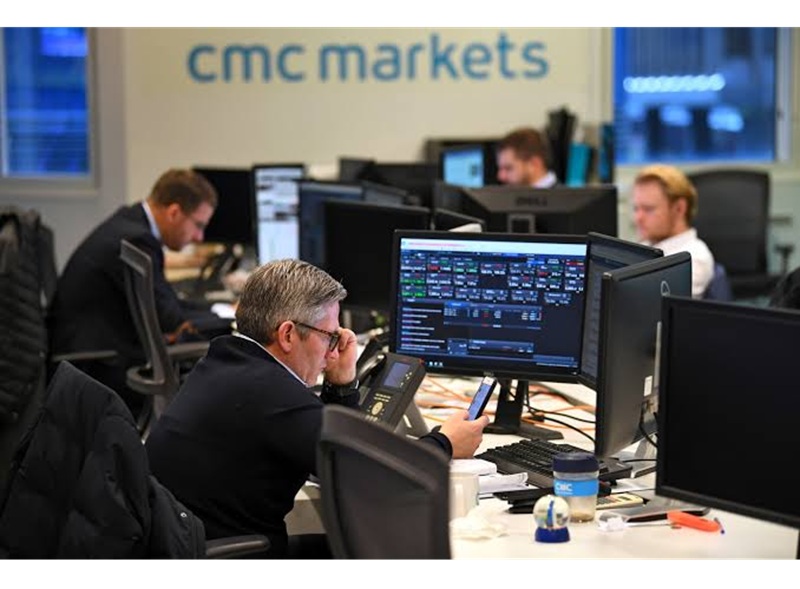
CMC Markets is preparing to automate substantial parts of its digital advertising operations using artificial intelligence, according to a Warsaw-based recruitment advertisement that outlines plans for AI agents capable of planning, launching, monitoring and optimizing marketing campaigns.
The London-listed trading and investment group is recruiting an AI Growth & Performance Marketing Manager to develop systems connecting artificial intelligence directly with advertising platforms, analytics tools and internal company data.
The company describes the initiative as building an “AI-first performance marketing capability,” with the ambition of transferring much of the repetitive work involved in buying advertising and managing campaigns to automated systems.
The vacancy, published through CMC Markets Polska on LinkedIn and visible in job archives by October 16, represents a potentially significant change in how the broker approaches customer acquisition. However, it does not establish that fully autonomous advertising agents have already been deployed.
CMC Wants AI Agents to Manage Advertising Campaigns
The recruitment describes a role combining performance marketing expertise with the technical development of AI-powered workflows across Meta, Google, programmatic advertising networks and other digital channels.
Rather than simply using generative AI to produce advertising copy or images, CMC wants systems capable of handling multiple stages of campaign management.
Responsibilities include automating campaign planning, setup, launch checks, performance monitoring, optimization and reporting. The successful candidate will also connect AI tools with advertising platforms, attribution systems, analytics infrastructure and internal datasets using application programming interfaces.
The technical requirements specifically mention large language models, AI agents, Model Context Protocol (MCP) integrations and automation tools such as n8n, Make and Zapier.
These technologies could allow AI systems to retrieve marketing information, interact with connected tools and execute predefined workflows rather than relying entirely on employees to manage individual advertising tasks.
The vacancy also covers app-install and website-conversion campaigns, indicating that the initiative is intended to support measurable customer acquisition rather than just brand awareness.
CMC expects the new hire to establish controls covering advertising budgets, bidding strategies, campaign pacing, creative materials and audience selection. Performance would be evaluated using established marketing metrics, including customer acquisition cost, cost per acquisition and return on advertising spending.
The description points toward a potentially connected advertising operation in which humans establish objectives and boundaries while automated systems perform recurring operational tasks.
However, the posting does not disclose the proposed investment budget, implementation timetable, expected staffing changes or projected financial savings. It also provides no evidence that CMC intends to eliminate its existing marketing team.
Automation Plans Emerge as CMC Expands Its Business
The recruitment comes during a period of broader technology investment and business expansion at CMC Markets.
For the financial year ended March 31, 2026, the company reported net operating income of £392.6 million, an increase of 15% from the previous year. Pretax profit climbed 20% to £101.3 million, while EBITDA reached £117.8 million.
CMC also reported 55,081 active trading clients and 281,442 active investing clients during the financial year.
In July, the company raised its forecast for the financial year ending March 2027, projecting net operating income of at least £550 million and EBITDA of £250 million. Management attributed the stronger outlook primarily to rapid growth in its business-to-business operations.
The group is simultaneously developing new products and expanding its technology infrastructure. Dave Finances recently reported on CMC’s plans to establish a fixed-income trading business, another initiative revealed through a recruitment advertisement.
The advertising project addresses a different part of the business: attracting customers more efficiently through digital channels.
That distinction matters because institutional partnerships currently underpin much of CMC’s growth outlook. An automated marketing operation could potentially improve the economics of its direct-to-consumer business, but the company has not quantified the contribution it expects from the initiative.
Financial Advertising Rules Remain a Major Constraint
Automating advertising presents particular challenges for regulated financial companies, especially brokers offering leveraged contracts for difference.
CMC’s job description acknowledges these requirements, directing the successful candidate to review AI-generated outputs and establish approval and escalation procedures aligned with regulatory, privacy and brand standards.
The UK’s Financial Conduct Authority requires financial promotions to be fair, clear and not misleading, regardless of the technology or advertising channel used.
Its guidance on financial promotions through social media emphasizes balanced communication of benefits and risks, appropriate disclosures and firms’ responsibility for advertising published through digital platforms.
For retail CFD promotions, additional rules govern risk warnings, incentives and the presentation of leveraged trading products.
The regulatory implications extend beyond ordinary online advertisements. The industry’s use of sports sponsorships to promote CFD trading brands demonstrates how customer-acquisition strategies must balance commercial visibility against financial-promotion restrictions.
International campaigns also require careful geographic targeting. Products that can be advertised to eligible customers in one jurisdiction may face different restrictions in another.
CMC has not disclosed which countries would initially use the proposed AI advertising systems or whether individual campaigns would require human authorization before publication.
Could AI Significantly Reduce CMC’s Customer Acquisition Costs?
The commercial attraction is fairly obvious. Digital advertising involves substantial repetitive work, from testing creative materials and adjusting bids to reallocating budgets and identifying audiences that produce better conversion rates.
AI agents could potentially perform these tasks more frequently and with less manual intervention, helping CMC respond faster when advertising costs rise or campaigns stop producing acceptable results.
But cheaper advertising does not necessarily produce a more profitable brokerage business.
The important question is whether automation can attract customers who remain active, use the company’s products appropriately and generate enough long-term revenue to justify acquisition spending.
A campaign might produce a lower cost per registration while attracting customers who never fund their accounts. Another might generate fewer sign-ups but deliver substantially more valuable relationships.
That difference becomes particularly important for CFD brokers, where customer trading activity, retention, market conditions and regulatory restrictions can all influence revenue.
Investors should therefore look beyond advertising efficiency toward funded-account conversion, customer acquisition cost, retention and lifetime customer value.
There is also a strategic question about CMC’s business mix. Its institutional operations are expanding rapidly, reducing the group’s reliance on acquiring individual retail traders through traditional advertising.
If AI improves retail acquisition economics without requiring a proportionate increase in marketing personnel or spending, it could provide an additional source of operating leverage. But the recruitment itself is not evidence of future margin improvement.
AI Advertising Could Create New Compliance Risks
The more interesting challenge may be controlling what automated marketing systems are actually allowed to do.
Advertising platforms already offer algorithmic bidding and audience optimization. CMC’s proposed architecture appears to go further by connecting AI agents with multiple systems and potentially delegating decisions across the campaign-management process.
That creates risks conventional advertising software does not necessarily eliminate.
An agent could select an inappropriate audience, increase spending beyond intended limits, promote unapproved messaging or optimize aggressively for conversions without properly accounting for regulatory restrictions.
Geographic targeting could prove especially sensitive. The FCA’s crackdown on 24 CFD firms over the misuse of UK authorization illustrates why regulators care about how brokerage services and customer protections are presented across different legal entities.
The central problem is accountability. Even if an AI system creates or adjusts an advertisement, responsibility for compliant financial promotions remains with the relevant regulated business.
There is a useful comparison with Interactive Brokers’ introduction of autonomous AI trading, where defined permissions, capital limits and emergency controls are important safeguards around delegated machine decisions.
Advertising automation requires different protections, but the principle is similar: intelligent software becomes commercially useful only when its authority is clearly defined and its actions can be monitored and interrupted.
For CMC, success would mean building systems that improve acquisition performance while preserving effective human oversight, reliable audit trails and jurisdiction-specific compliance controls.
The next evidence to watch is whether the broker moves from recruitment to operational deployment, discloses measurable acquisition efficiencies or incorporates AI-driven marketing into its wider cost-efficiency strategy.
CMC’s next scheduled financial results, on November 19, 2026, may offer more insight into spending priorities, although the company has not indicated that it will provide a specific update on advertising automation.
For now, the vacancy establishes a clear technological ambition rather than a completed transformation. The broader implication is that competition between online brokers may increasingly depend not only on trading platforms and pricing, but also on how efficiently they can acquire customers without weakening regulatory controls.

Johan Shamshad is a financial markets writer at Dave Finances covering cryptocurrencies, trading platforms, brokers, fintech, financial regulation, and developments across global markets. He previously worked at Gulf News, adding newsroom experience to his coverage of fast-moving financial and digital-asset markets.
His work focuses on identifying market-moving events, company developments, regulatory changes, product launches, and shifts in trading and financial infrastructure.
Johan contributes news and analysis designed to help readers understand not only what happened, but why a development matters and how it may affect the wider financial landscape. You can reach out to him via his social media accounts:
Linkedin: https://www.linkedin.com/in/johan-shamshad-742851262/
X: https://x.com/Yasmine_FX
Investing: https://www.investing.com/members/contributors/279781574