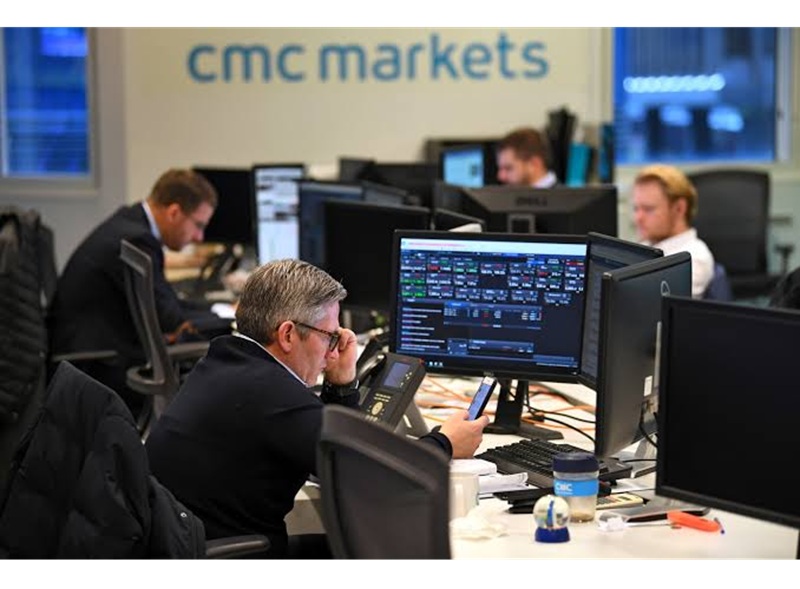
CMC Markets has added £250 million of long-dated Tier 2 capital to its funding structure, completing a move that had been signposted only in broad terms in its latest annual report and substantially expanding the listed broker’s use of external debt.
A London Stock Exchange admission notice dated September 3 shows £250 million of CMC Markets Plc 7.125% Tier 2 Capital Notes due September 3, 2036 were admitted to trading on the International Securities Market.
The notes carry ISIN XS3485571577 and trade under LSE code 6CO4. CMC’s London Stock Exchange company page now lists the bond alongside its ordinary shares.
The transaction is significant relative to CMC’s previous funding structure. At March 31, the group reported £46.8 million of borrowings and explicitly stated that it had no Additional Tier 1 or Tier 2 capital. Its regulatory capital was therefore composed entirely of Common Equity Tier 1 capital.
The bond did not, however, come entirely without warning.
CMC disclosed in its 2026 annual report that, after the financial year ended, it had started arranging a European medium-term note programme and was considering a debt issuance of approximately £200 million.
At that stage, the company said the main reasons for the proposed transaction were to provide more stable funding and deliver a regulatory capital benefit of about £100 million. The plan remained subject to board approval and completion of documentation when the accounts were authorised in June.
The final £250 million issue is therefore £50 million larger than the amount CMC had originally indicated.
CMC also said its existing commercial paper programme and £55 million revolving credit facility would remain in place, suggesting the longer-dated debt was intended to broaden rather than replace its funding options.
The move extends a broader transformation of CMC’s balance-sheet funding.
During the year to March, the company established a €300 million commercial paper programme and obtained an investment-grade credit rating, steps that management said would give it more diversified access to liquidity. It drew £46.6 million of net borrowings during the financial year, largely reflecting use of the commercial paper programme.
At March 31, CMC had £276.5 million of cash and cash equivalents and reported net cash of £208.1 million. After regulatory adjustments, the group had £390.3 million of CET1 capital against an own funds requirement of £133.8 million, producing a ratio of 292%, up from 272% a year earlier.
That meant CMC was already operating with considerable regulatory capital headroom before issuing the new Tier 2 notes.
Tier 2 instruments sit below senior creditors in the capital structure and are designed to provide additional loss-absorbing capacity. Under the FCA’s Investment Firms Prudential Regime, qualifying Tier 2 capital must generally have an original maturity of at least five years and is gradually amortised for regulatory purposes during its final five years.
CMC’s new notes have a 10-year maturity.
The timing also coincides with a sharp acceleration in the company’s operating outlook.
CMC reported net operating income of £392.6 million for the year ended March 2026, up 15%, while profit before tax rose 20% to £101.3 million. EBITDA increased to £117.8 million.
Only weeks later, in July, management substantially raised its guidance for the current financial year. CMC now expects net operating income of at least £550 million and EBITDA of £250 million, compared with its previous net operating income forecast of £460 million to £480 million.
Management attributed the upgrade primarily to accelerating growth in its B2B platform business, where CMC provides trading infrastructure, execution, liquidity and technology to banks, fintechs and other financial institutions.
CMC is simultaneously investing in a wider multi-asset platform, its planned Super App, expanded institutional services, digital assets and major stockbroking partnerships. Its agreement with Westpac in Australia is expected eventually to bring about half a million share-trading accounts and approximately A$39 billion of assets under administration onto CMC’s infrastructure.
Against that backdrop, the £250 million bond issue appears less like an emergency capital raise and more like another stage in CMC’s shift from a predominantly equity-funded retail broker toward a financial-services platform with a more institutional funding structure.
Why CMC Is Paying 7.125% for Capital It Did Not Urgently Need
The interesting thing about this deal is that CMC did not appear short of capital.
At the end of March, it had £390.3 million of CET1 after regulatory adjustments against a £133.8 million minimum own funds requirement. In other words, the group had almost three times the regulatory capital required before this bond appeared.
So why add £250 million of subordinated debt carrying a 7.125% coupon?
The answer is probably less about plugging a hole and more about changing what CMC’s balance sheet can do.
Equity is excellent regulatory capital, but it is also expensive capital from a shareholder’s perspective. Raising another £250 million through shares would dilute existing investors. Retaining substantially more earnings would restrict dividends and other uses of capital.
Tier 2 debt provides another layer.
CMC can raise long-term money without issuing new shares while creating an instrument specifically structured to provide regulatory capital support. That matters more as the company becomes larger, takes on bigger institutional relationships and operates infrastructure for partners that can introduce much larger volumes and balance-sheet demands than a traditional retail CFD account.
There is a price for that flexibility.
A 7.125% coupon on £250 million represents about £17.8 million of annual interest before considering any other issuance terms. That is not a trivial financing charge compared with the £101.3 million of profit before tax CMC generated last year.
It looks considerably more manageable, however, against management’s current expectation of £250 million in EBITDA for FY2027.
The more revealing comparison may be with CMC’s old debt structure. The group had only £46.8 million of conventional borrowings at March 31. The Tier 2 issue alone is more than five times that figure.
That makes this a genuine capital-structure change, not another small liquidity facility.
It also helps explain why the annual report’s wording matters. Management had originally described a roughly £200 million issuance designed partly to produce about £100 million of regulatory capital benefit. Investors now know that the actual transaction reached £250 million, although the admission notice does not establish how much of the final issue CMC expects to recognise as regulatory capital.
That distinction should not be overlooked. A £250 million bond labelled Tier 2 does not simply mean CMC’s regulatory surplus increases by £250 million. Eligibility, regulatory deductions and capital-composition requirements determine the amount that ultimately counts.
Still, the direction is clear.
CMC spent years being viewed largely as a cash-generative retail trading company whose earnings rose and fell with market volatility. Management is increasingly pitching something different: a B2B infrastructure provider, institutional counterparty, stockbroking platform and multi-asset financial-services group.
Companies making that transition eventually need a funding architecture that looks more institutional as well.
The commercial paper programme provided short-term flexibility. The revolving facility provides emergency or operational liquidity. The new Tier 2 notes provide something different: decade-long funding with regulatory-capital characteristics.
That is why a relatively obscure LSE admission notice deserves more attention than it received.
CMC has not merely borrowed £250 million.
It has started rebuilding the liability side of its balance sheet for a much larger business.
The wider change is especially notable when compared with another listed retail broker using its balance sheet in a very different way.
A more flexible parent structure could also make future acquisitions, capital raising or combinations involving individual businesses easier.

Shane Neagle is a financial markets analyst and digital assets journalist specializing in cryptocurrencies, memecoins, prediction markets, and blockchain-based financial systems. His work focuses on market structure, incentive design, liquidity dynamics, and how speculative behavior emerges across decentralized platforms.
He closely covers emerging crypto narratives, including memecoin ecosystems, on-chain activity, and the role of prediction markets in pricing political, economic, and technological outcomes. His analysis examines how capital flows, trader psychology, and platform design interact to create rapid market cycles across Web3 environments.
Alongside digital assets, Shane follows broader fintech and online trading developments, particularly where traditional financial infrastructure intersects with blockchain technology. His research-driven approach emphasizes understanding why markets behave the way they do, rather than short-term price movements, helping readers navigate fast-evolving crypto and speculative markets with clearer context.