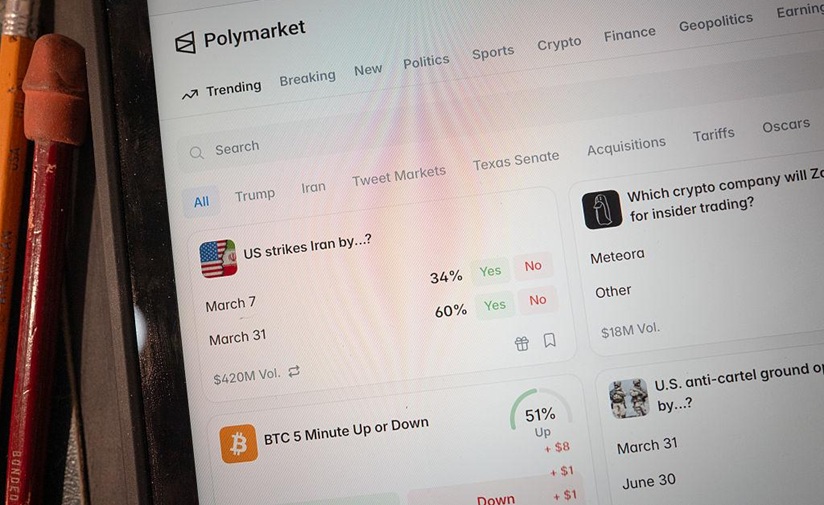
A group of Polymarket wallets has placed more than $3.6 million on the outcome that the Digital Asset Market Clarity Act will not become law before the end of 2026, creating a notable prediction-market position just days before the Senate begins a key procedural vote on the cryptocurrency market-structure bill.
On-chain analysis from PredictBook shows that a wallet identified as “TahitiBob” placed more than $1 million in “No” exposure on the question of whether the Clarity Act will be signed into law by Dec. 31, 2026. The wallet received almost $1 million in two deposits on Sept. 3 before deploying most of the funds into the prediction contract.
The first purchase occurred at 3:26 a.m. ET on Sept. 4, when the wallet bought 539,349 “No” shares at an average price of $0.85, spending about $456,000. Around seven hours later, it purchased another 494,866 “No” shares at an average price of $0.86.
Together, the two transactions accounted for roughly 85% of the day’s trading volume in the contract, according to the analysis.
TahitiBob now holds more than 1 million “No” shares at an average entry price of approximately $0.855. At current contract pricing, the position represents a bet that the legislation fails to reach President Donald Trump’s desk before the end-of-year deadline.
The activity stands out because TahitiBob is not the only large wallet positioned against the bill.
Five other Polymarket accounts hold similarly large “No” positions, with the six wallets collectively spending about $3.63 million on the bearish outcome.
The largest “No” positions identified include:
- VelvetNova27, holding 1,052,874 shares purchased at an average price of $0.78.
- TahitiBob, holding 1,034,215 shares purchased at an average price of $0.855.
- KatsuManager87, holding 809,296 shares purchased at an average price of $0.84.
- 321cba, holding 570,629 shares purchased at an average price of $0.68.
- blahblah344, holding 546,838 shares purchased at an average price of $0.80.
- EamonnD1812, holding 515,398 shares purchased at an average price of $0.77.
If the Clarity Act fails to become law this year, the group would receive approximately $4.53 million in payouts, producing close to $900,000 in combined gains based on the reported entry prices.
The concentration of these trades has also drawn attention because blockchain data suggests several of the wallets were newly created and funded through centralized exchanges.
According to PredictBook’s analysis, four of the wallets received funds from Bybit while two received funds from Binance. Five wallets sent funds directly into addresses that had no previous activity and were not used again after funding the Polymarket positions.
Several wallets also used similar funding patterns, including small test transactions before larger deposits. TahitiBob reportedly sent $10 before transferring $999,990, while KatsuManager87 sent $10 before transferring nearly $800,000.
The similarities have raised speculation about whether the wallets could be connected, although the blockchain data does not prove common ownership. No direct transfers between the six wallets have been identified, and millions of users regularly move funds from exchanges such as Binance and Bybit.
The timing of the bets is what makes them particularly notable.
The Senate is scheduled to hold its first major procedural vote on the Clarity Act on Sept. 15. The vote concerns cloture on the motion to proceed, which determines whether debate on the bill can begin.
The legislation requires 60 votes to overcome procedural hurdles in the Senate. Republicans currently hold 53 seats, meaning the party would need support from Democrats or independents to advance the measure.
Supporters of the bill argue that establishing clearer rules for digital asset markets would provide regulatory certainty for crypto companies, exchanges and investors. Critics have raised concerns about oversight standards, consumer protection and the balance between federal and state authority.
A failure to secure the votes needed to begin debate could significantly reduce the chances of the bill becoming law before the end of 2026, especially with the congressional calendar becoming more limited ahead of the midterm elections.
A Prediction Market Bet or a Signal of Political Intelligence?
Large prediction-market wagers often attract attention because they sit somewhere between speculation and information gathering.
Unlike traditional financial markets, where investors trade based on expected cash flows, prediction markets allow participants to directly express views on future events. A $1 million position does not necessarily mean the trader has insider information, but it does represent a willingness to risk substantial capital on a specific outcome.
In this case, the timing is the most interesting element.
The wallets increased their exposure shortly before the Senate’s Sept. 15 cloture vote, suggesting that whoever controls these positions believes the immediate political path is more difficult than current market expectations suggest.
However, interpreting the trades as evidence of inside knowledge would go beyond what blockchain data can prove.
Prediction markets attract sophisticated participants, but they also attract traders willing to make high-conviction bets based on political analysis, polling, lobbying activity or personal interpretation of legislative dynamics. A large position can reflect information, but it can also reflect a concentrated opinion.
The structure of the wallets raises additional questions.
The use of multiple fresh wallets funded from centralized exchanges is consistent with attempts to separate positions or reduce visibility. At the same time, it is also common practice among prediction-market traders who want operational separation between accounts.
The lack of direct transfers between the wallets means the evidence remains circumstantial.
The bigger story may be what the market itself is saying about the Clarity Act.
The legislation has become one of the most important crypto policy efforts in Washington because it could define which digital assets fall under securities regulation, commodities oversight or other regulatory frameworks. For exchanges, token issuers and investors, the difference between a clear federal framework and continued uncertainty is significant.
A failed Senate vote would not necessarily end the broader push for crypto legislation, but it could delay major changes until a later congressional session. That possibility appears to be what these wallets are pricing.
The next major test comes on Sept. 15. If the bill advances, the $3.63 million bearish position loses much of its thesis. If the vote fails and the legislation stalls, these wallets will have turned a political forecast into a nearly $1 million payoff.
Either way, the size and timing of the bets highlight how prediction markets are becoming a place where traders attempt to monetize views on policy outcomes before traditional markets have a clear way to price them.

Shane Neagle is a financial markets analyst and digital assets journalist specializing in cryptocurrencies, memecoins, prediction markets, and blockchain-based financial systems. His work focuses on market structure, incentive design, liquidity dynamics, and how speculative behavior emerges across decentralized platforms.
He closely covers emerging crypto narratives, including memecoin ecosystems, on-chain activity, and the role of prediction markets in pricing political, economic, and technological outcomes. His analysis examines how capital flows, trader psychology, and platform design interact to create rapid market cycles across Web3 environments.
Alongside digital assets, Shane follows broader fintech and online trading developments, particularly where traditional financial infrastructure intersects with blockchain technology. His research-driven approach emphasizes understanding why markets behave the way they do, rather than short-term price movements, helping readers navigate fast-evolving crypto and speculative markets with clearer context.