
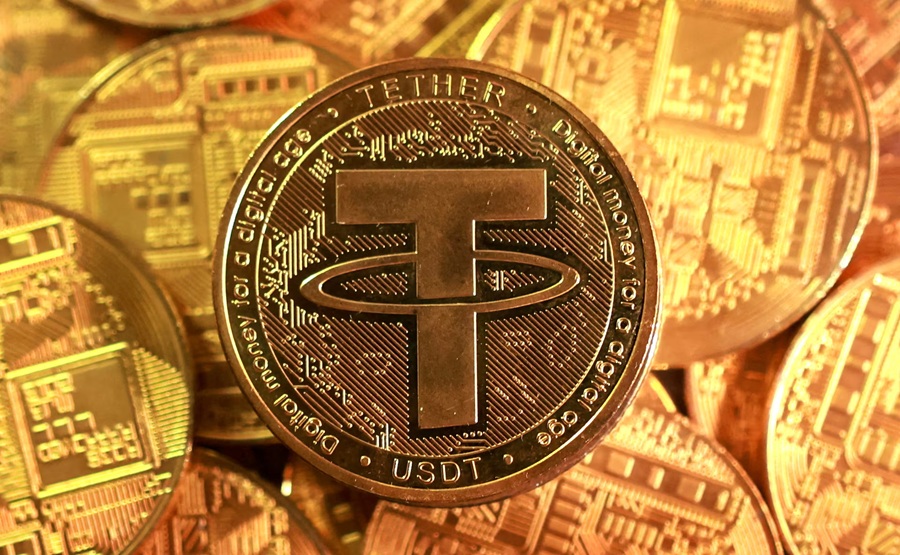
Tether Faces a Two-Year USDT Countdown as GENIUS Act Rules Take Shape
Tether may have less than two years to overhaul the reserves and regulatory structure behind USDT or risk seeing the world’s largest stablecoin excluded from centralized cryptocurrency platforms serving the United States.
The threat does not come from an enforcement action already taken against Tether. It comes from the delayed implementation of the Guiding and Establishing National Innovation for US Stablecoins Act, known as the GENIUS Act, and uncertainty over how its restrictions on foreign stablecoin issuers will apply.
The law was enacted on July 18, 2025, creating the first federal regulatory framework specifically governing payment stablecoins in the United States. It requires issuers to maintain full reserves in highly liquid assets, publish disclosures and meet standards covering capital, risk management, sanctions compliance and redemption.
One year later, federal agencies are still working through the rules needed to put the framework into operation. The Office of the Comptroller of the Currency and the Treasury Department have issued proposals, but the regulations have not been finalized.
That delay leaves Tether, US exchanges and institutional investors facing two questions with very different consequences.
The first is whether USDT can meet the GENIUS Act’s requirements without a major change to its reserves and corporate structure.
The second is how long Tether has to make those changes.
USDT remains the dominant dollar-linked cryptocurrency by circulating supply and trading activity. It is deeply embedded in offshore exchanges, decentralized finance applications and markets where access to US bank accounts or physical dollars is limited.
Its scale, however, does not guarantee continued access to US trading venues.
Once the GENIUS Act restrictions become fully applicable, US centralized platforms will generally be prohibited from offering payment stablecoins issued by companies that have not satisfied the law’s regulatory conditions.
For Tether, the most immediate problem is its reserve composition.
The company’s recent disclosures show that most USDT reserves are held in cash, cash equivalents and short-term US Treasury securities. Yet a substantial remaining share is allocated to assets that may not qualify under the GENIUS Act’s narrower reserve standards.
Those holdings include bitcoin, precious metals, secured loans and other investments.
Tether has argued that its reserve portfolio is highly liquid and that the value of its assets exceeds the amount of USDT in circulation. The GENIUS Act sets a different test. It is not merely concerned with whether an issuer is solvent or profitable. It specifies the types of instruments that can be used to back regulated payment stablecoins.
The law generally favors cash, deposits at regulated financial institutions, short-dated US government obligations and similarly liquid instruments. Bitcoin and gold may be valuable, but their prices can move sharply. Secured loans may produce income, but they cannot necessarily be converted into dollars immediately during a wave of redemptions.
Bringing USDT into compliance could therefore require Tether to sell or separate tens of billions of dollars in non-qualifying assets, depending on how regulators interpret the final rules.
Tether CEO Paolo Ardoino said after the law was signed that the company intended to comply with the foreign-issuer provisions applicable to USDT. Tether has not since outlined a detailed public plan showing how it will change USDT’s reserves, obtain US regulatory registration or satisfy the law’s requirements for foreign issuers.
The company has instead introduced USA₮, or USAT, a separate dollar-backed stablecoin developed for the US market and issued through Anchorage Digital Bank.
USAT gives Tether a product designed from the beginning around the new federal regime. It also allows the group to pursue US customers without immediately rebuilding the legal and reserve structure supporting USDT.
Usage of the new token remains small compared with USDT, however. USDT’s value comes partly from its deep liquidity, broad exchange support and extensive use across international crypto markets. Those network effects cannot be transferred automatically to a new token.
Tether could therefore end up operating two different dollar products: a federally regulated stablecoin for the United States and USDT for offshore markets.
That approach may protect Tether’s ability to compete in the US without resolving whether US platforms can continue listing USDT.
Foreign Issuers Face Additional Conditions
The GENIUS Act does not automatically prohibit foreign-issued stablecoins. It creates a route through which they can remain available in the United States, but the route carries several conditions.
A foreign issuer may need to register with the OCC, demonstrate that it is supervised under a regulatory system judged comparable with the US framework and maintain reserves through approved US financial institutions.
It must also possess the technical capacity to comply with lawful orders to freeze or seize stablecoins associated with illicit activity.
The requirement that a foreign issuer’s home regulatory regime be judged comparable could prove difficult for Tether. The company is based in El Salvador, which would need to satisfy a US Treasury review of its stablecoin oversight framework.
Even if Tether can meet that test, OCC registration would expose the company to direct reporting, examination and supervisory requirements in the United States.
That would represent a major change for a business that has historically operated outside the US banking regulatory perimeter.
The timeline is still disputed.
The GENIUS Act contains a three-year transition period that is widely read as allowing existing stablecoins to remain available until July 18, 2028. Under that interpretation, Tether has about two years to secure approval and adjust USDT.
Some legal readings have suggested that foreign issuers could face certain restrictions earlier, potentially when the law becomes effective. The effective date is tied either to the completion of federal regulations or to the statutory deadline in January 2027.
One interpretation separates the law’s immediate operational requirements from its longer licensing transition. Foreign issuers may be required to comply with US freeze and seizure orders as soon as the framework takes effect, while receiving additional time to complete registration and meet reserve and custody standards.
That reading would give Tether a runway, but not a comfortable one.
OCC registration, changes to reserve custody, regulatory equivalence reviews and restructuring a portfolio of USDT’s size cannot be completed quickly. Exchanges will also need time to determine whether a token remains eligible for trading.
Some platforms may act before a formal deadline.
Smaller exchanges and companies with conservative legal departments could decide that the revenue generated by USDT trading does not justify the regulatory risk. They may restrict or delist the token before regulators force them to do so.
Larger platforms could take the opposite approach. USDT supports considerable trading volume and liquidity, particularly in markets where it serves as the primary quote asset. Companies with stronger legal and lobbying resources may continue listing it until regulators provide a direct instruction or enforcement threat.
Coinbase, the largest US-listed cryptocurrency exchange, has not publicly detailed how it will treat USDT under the completed GENIUS framework.
The exchange has a close commercial relationship with Circle, the issuer of USDC, and earns revenue from interest generated by USDC reserves. A regulatory environment that weakens USDT’s US presence could benefit both Circle and Coinbase.
Circle has built its business around US regulation to a greater degree than Tether. It publishes reserve information, holds the bulk of USDC backing in cash and short-term Treasury instruments and has spent years establishing relationships with US financial institutions.
That does not guarantee an uncontested path through the GENIUS regime. It does mean Circle appears to face a smaller structural adjustment.
Stablecoin Competition Moves Into Banking
The law has already changed competitive behavior across the stablecoin industry.
Crypto companies, fintech groups and traditional financial institutions are pursuing trust bank charters and other regulatory approvals that could allow them to issue or support federally compliant digital dollars.
World Liberty Financial, which is tied to President Donald Trump and his family, has also entered the market, though its stablecoin remains far behind USDT and USDC.
Banks and payment companies see stablecoins as a potential source of deposit-like funding, transaction revenue and Treasury income. Crypto firms see them as the settlement layer for exchanges, tokenized assets and decentralized applications.
The GENIUS Act gives those companies clearer rules, but it also raises the cost of entry. Issuers will need compliance teams, reserve-management systems, banking relationships and the ability to meet federal examinations.
That could favor companies large enough to absorb those costs.
It could also divide the market into regulated US stablecoins and more flexible offshore tokens.
The outcome will depend partly on rules that regulators have not yet completed. The OCC, Treasury Department and other federal agencies are working on proposals covering registration, reporting, anti-money laundering controls and sanctions compliance.
Until final rules are issued, companies cannot know the exact procedures they must follow.
The delay creates an awkward position. The statutory countdown is moving, but the regulatory target is still being drawn.
Tether therefore has time. What it does not have is certainty.
USDT’s dominance may give the company leverage with exchanges and policymakers, but the GENIUS Act was written to make reserve quality and federal oversight conditions for access to US markets.
Unless Tether restructures USDT or regulators adopt a flexible interpretation, the stablecoin could reach 2028 facing a choice between federal supervision and retreat from the United States.
USDT’s Real Threat Is Not Collapse — It Is Being Regulated Out of the Room
Let’s kill the easy narrative first.
USDT is not about to disappear.
It will not suddenly lose every exchange listing, implode overnight or stop mattering because Washington passed a stablecoin law. Tether is too large, too profitable and too deeply wired into offshore crypto for that kind of clean ending.
But the US market?
That is different.
The GENIUS Act can hurt Tether without destroying Tether. It can fence USDT out of regulated American liquidity, steer institutions toward USDC and USAT, and force exchanges to decide whether billions in trading volume are worth a fight with federal regulators.
That is the pressure point.
Not insolvency.
Access.
Tether’s Reserves Are Strong — And Still May Fail the Test
This is where people talk past each other.
Tether supporters point to its huge Treasury portfolio, excess reserves and massive profits. Fair enough. Tether has turned high interest rates into a money printer. It holds a mountain of US government debt and has reported equity cushions above its outstanding liabilities.
That sounds safe.
GENIUS does not ask only whether Tether has enough money.
It asks what that money is sitting in.
Cash and short-dated Treasuries are fine. Bitcoin, gold and secured loans are where the headache starts.
Those holdings may be profitable. They may even make Tether financially stronger over time. But a payment stablecoin reserve is supposed to be boring.
Painfully boring.
A user hands over one digital dollar. The issuer holds one dollar or something that can become one dollar almost instantly. No commodity bet. No BTC drawdown. No borrower sitting on the other side of a loan.
Tether’s portfolio was built partly like the balance sheet of an aggressive investment company. GENIUS wants something closer to a narrow bank.
That gap is not cosmetic.
If around one-quarter of reserves sit outside the likely permitted list, compliance could mean moving an enormous pile of assets. Sell bitcoin. Reduce lending. Move gold elsewhere. Put more money into bank deposits and Treasuries.
Easy to write.
Much harder to execute without affecting markets, returns or Tether’s internal economics.
I doubt Tether wants to gut the part of its portfolio that produces upside just to make US regulators happy. The company has spent years building an offshore fortress. Its biggest users are not necessarily Americans.
So the real question is not “Can Tether comply?”
Of course it can.
The question is whether keeping USDT on American platforms is worth the cost.
USAT Looks Like the Escape Hatch
USAT tells us Tether already sees the problem.
Instead of forcing USDT through every US regulatory hoop, Tether created another coin. US-focused. Bank-issued. Built around GENIUS from day one.
That is not a side project.
It is an insurance policy.
Tether can tell Washington: here is the compliant product. It can tell offshore users: USDT stays the global workhorse. Two coins. Two rulebooks. Less surgery.
Honestly, that may be the smartest move.
But it creates an uncomfortable possibility for USDT holders in America. Tether could comply as a corporate group while allowing USDT itself to fall outside the US perimeter.
That distinction matters.
“Tether is operating legally in the US” does not necessarily mean “USDT remains listed everywhere in the US.”
USAT could become the approved American product while USDT gets pushed offshore.
And Tether might live with that.
The Two-Year Runway Is Not as Comfortable as It Looks
Two years sounds generous until you list the work.
Tether may need OCC registration. Regulatory examinations. US reserve custody. A comparable-regime determination for El Salvador. New reporting systems. Formal redemption standards. Sanctions procedures. Corporate restructuring. Portfolio changes.
Then exchanges need their own legal reviews.
That is not a Friday-afternoon compliance patch.
It is a rebuild.
The deadline debate makes it messier. Some lawyers believe foreign issuers get the full runway to July 2028, provided they meet earlier requirements such as honoring lawful freeze and seizure orders.
Others have read the law more aggressively.
The final rules will decide where the hard lines sit, but markets do not always wait for final rules.
Compliance teams hate ambiguity. Small platforms hate it even more.
A nervous exchange does not need the OCC to kick down the door. Its lawyers can simply say, “This token is not worth the exposure.”
Then the listing disappears.
One exchange moves first. Others watch. Liquidity starts migrating. Market makers rebalance. Suddenly the formal deadline matters less because the market has already made the decision.
That is how regulatory exits often happen.
Slowly.
Then all at once.
Coinbase Has Every Reason to Let USDC Win
Coinbase does not need to declare war on USDT.
It can sit there.
USDC is already the cleaner American stablecoin story. Circle is US-based, reserve-heavy in cash and Treasuries, and built around regulatory access. Coinbase earns money from the reserves.
Every dollar that moves from USDT into USDC can strengthen a product tied directly to Coinbase’s economics.
That does not mean Coinbase will delist USDT tomorrow. Trading volume matters. Customers want choice. Removing the largest stablecoin in the world is not free.
Still, the incentive is obvious.
If regulators make USDT expensive to support, Coinbase does not need to fight hard to save a competitor’s token.
USDC gets the home-field advantage.
USAT may eventually compete for that same regulated space, but it is starting from far behind. Liquidity is not something Tether can manufacture by attaching its name to a new ticker.
USDT became dominant because traders already used it everywhere. Exchanges built pairs around it. Market makers held it. Offshore businesses treated it like working capital.
USAT has to earn that from zero.
USDT’s Offshore Moat Is Still Nasty
Anyone predicting Tether’s death is skipping the strongest part of its business.
USDT is not mainly an American retail product.
It is crypto’s offshore dollar.
Traders use it on platforms outside the United States. Businesses use it where banking is slow or unreliable. People use it in countries with currency controls, inflation or limited access to actual dollars.
That network is sticky.
A US delisting wave would hurt liquidity and prestige, but it would not erase demand in Turkey, Latin America, Africa, Asia or the Middle East.
This is why I do not buy the “GENIUS kills Tether” angle.
It does something more subtle.
It splits the stablecoin market.
USDC and bank-issued tokens dominate regulated US finance. USDT remains the giant offshore settlement asset. USAT tries to bridge Tether into the American system. Other coins fight for scraps or niche use cases.
That split could last for years.
Exchanges Will Drag This Out
The industry is not going to surrender USDT volume politely.
Large platforms make money from trading. USDT is attached to a ridiculous number of markets. Removing it means rebuilding pairs, shifting liquidity and annoying users who may simply take their business elsewhere.
Expect lawyers.
Expect lobbying.
Expect narrow interpretations of every deadline.
Expect companies to argue that they are compliant enough until someone tells them otherwise.
Crypto has used this playbook at nearly every regulatory bottleneck. Operate through uncertainty. Keep the revenue. Force regulators to become specific.
Smaller exchanges may fold early because they cannot afford the fight. The giants will probably push closer to the line.
That creates a fragmented US market where USDT remains available on some platforms but not others, at least for a while.
Ugly.
Very plausible.
The Freeze-and-Seize Requirement Is the Immediate Test
Reserve composition gets the headlines, but sanctions compliance may become the first real filter.
Foreign issuers that want access to US markets must be able to respond to lawful orders involving illicit funds. Freeze the wallet. Seize the coins when legally required. Cooperate with authorities.
Tether already freezes USDT addresses in certain cases, so the technical capability exists.
The issue is whether its processes satisfy the exact American legal standard once the rules take effect.
That is probably manageable.
OCC registration and reserve restructuring are the heavier lift.
Which is why the two-stage interpretation makes sense: prove now that the token can obey lawful orders, then complete the broader licensing work during the transition period.
But even that softer interpretation starts a clock Tether cannot ignore.
Regulation Could Accidentally Make Tether More Profitable
There is a weird twist here.
Suppose Tether dumps non-qualifying assets and moves even more reserves into short-term Treasuries.
It loses some bitcoin upside and lending income, but it also becomes simpler, more liquid and easier to defend. At current scale, even a plain Treasury portfolio throws off billions in annual interest.
Compliance would not necessarily wreck the business.
It might turn Tether into an even bigger buyer of US government debt.
That is one reason Washington may prefer bringing Tether inside the system rather than pushing it out completely. USDT expands global demand for dollars, and its reserves can create demand for Treasuries.
The fight is over control.
The US wants the dollar reach without an offshore company making its own rules.
Tether wants access without surrendering the flexibility that made it powerful.
That is the negotiation hiding inside the legislation.
What I’d Watch Now
Forget the public promises.
Watch the reserve report.
If bitcoin, gold and secured loans start shrinking as a share of USDT backing, Tether is preparing USDT for GENIUS.
If they stay elevated while USAT receives all the US-facing investment, Tether is probably choosing the two-token route.
Then watch custody. Are more reserves being placed with US institutions? Does Tether apply for OCC registration? Does El Salvador pursue recognition as a comparable jurisdiction?
And watch the exchanges.
The first meaningful US restriction will matter more than another speech from Ardoino. Once one major venue changes its USDT policy, everyone else will have to explain why they are taking a different risk.
My read?
Tether will not abandon USDT’s offshore model just to satisfy Washington. It will do enough to keep optionality, push USAT as the compliant American product and wait for the final rules before deciding how much of USDT needs to change.
That is not panic.
It is leverage.
But the clock is real. By July 2028, “we intend to comply” will not be enough.
Tether will need licenses, qualifying reserves and a regulatory structure the United States accepts.
Or USDT gets pushed out of the room while the party continues without it.

Shane Neagle is a financial markets analyst and digital assets journalist specializing in cryptocurrencies, memecoins, prediction markets, and blockchain-based financial systems. His work focuses on market structure, incentive design, liquidity dynamics, and how speculative behavior emerges across decentralized platforms.
He closely covers emerging crypto narratives, including memecoin ecosystems, on-chain activity, and the role of prediction markets in pricing political, economic, and technological outcomes. His analysis examines how capital flows, trader psychology, and platform design interact to create rapid market cycles across Web3 environments.
Alongside digital assets, Shane follows broader fintech and online trading developments, particularly where traditional financial infrastructure intersects with blockchain technology. His research-driven approach emphasizes understanding why markets behave the way they do, rather than short-term price movements, helping readers navigate fast-evolving crypto and speculative markets with clearer context.