
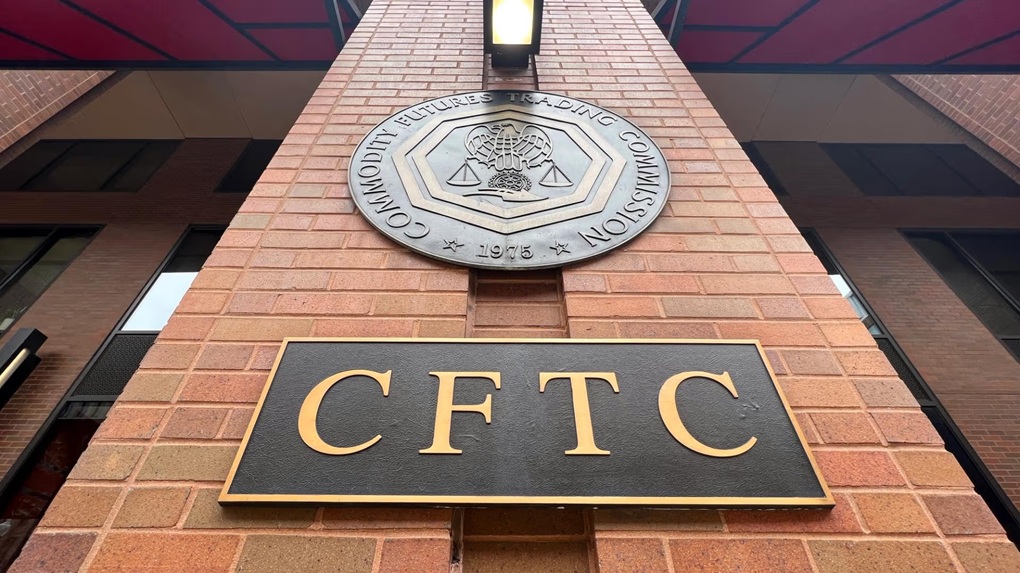
The Commodity Futures Trading Commission has sent a new crypto market rulemaking to the White House for review, potentially moving forward with a framework that could give both registered firms and currently non-registered crypto exchanges a new route into the U.S. leveraged trading market.
The Office of Information and Regulatory Affairs received the submission on Sept. 17 under the title “Regulation Crypto Asset Transactions and Regulation Crypto Asset Markets.” The filing, listed under RIN 3038-AF80, remains pending and is classified as a “Prerule” action.
That distinction matters because the CFTC has not yet published the regulatory text. The OIRA filing confirms that rulemaking is moving through the federal review process, but it does not disclose the proposed eligibility requirements, capital standards, leverage limits, custody rules or other conditions that could ultimately apply.
The filing arrived two days after the Senate failed to advance the CLARITY Act through a cloture vote. Senators voted 49-50 on Sept. 15 against invoking cloture on the motion to proceed, short of the three-fifths threshold required. The vote was procedural rather than a final vote on passage, but it left the broader legislative route for crypto market structure unresolved.
CFTC Chairman Michael Selig had already indicated what the agency could do if congressional legislation remained stalled.
Speaking at the CFTC’s Innovation Advisory Committee conference in August, Selig said he had directed staff to explore rules using the agency’s existing statutory authority that could allow both current registrants and non-registrant crypto exchanges to be designated as a new type of designated contract market, or DCM, known as a “crypto asset market.”
Under the concept he outlined, those venues could offer crypto trading on a leveraged or margined basis under a regulatory framework tailored specifically to digital assets.
That would represent a significant expansion of the regulatory path currently available to crypto trading platforms. Traditional DCMs operate under a framework originally designed around futures and commodity derivatives markets, while many of the largest crypto exchanges developed outside that structure.
Importantly, “non-registrant” would not necessarily mean unregulated. If the eventual proposal follows Selig’s earlier description, an exchange entering through the new category would still become subject to CFTC oversight. What remains unknown is how much of the existing DCM framework would apply and which requirements would be modified for crypto-native markets.
The Sept. 17 filing also builds on a series of changes already bringing crypto derivatives closer to the U.S. regulatory perimeter.
In May, the CFTC opened the door to U.S.-regulated bitcoin perpetuals, allowing a true perpetual futures contract to operate through a CFTC-registered exchange structure.
The agency separately issued an interpretive and no-action position for Coinbase Financial Markets involving perpetual contracts listed on affiliated foreign exchange Deribit FZE. Coinbase Financial Markets is already registered as a futures commission merchant, giving Coinbase an existing route into regulated derivatives that is different from the potential new category now being considered.
Kraken has also moved further inside the U.S. derivatives framework. The company launched CFTC-regulated perpetual futures for eligible U.S. traders in June, with contracts listed through Bitnomial and brokerage services provided through its registered futures commission merchant operation.
The regulatory direction therefore affects companies from different starting positions. Coinbase and Kraken already operate through registered U.S. derivatives structures, while international exchanges could be assessing whether a future crypto-specific designation creates another route into the market.
The consequences could also extend to firms such as Binance. The exchange remains a major global derivatives venue, but its ability to offer products inside individual jurisdictions depends heavily on local authorization. Its recent MiCA licensing experience in Europe illustrates how regulatory access increasingly determines where large crypto exchanges can distribute their products.
U.S. regulators are simultaneously experimenting with different structures outside derivatives. The SEC recently created a temporary framework for tokenized stock trading involving Coinbase, Kraken and Binance, another example of regulators attempting to adapt existing market rules to crypto-native infrastructure while Congress continues debating broader legislation.
The CFTC’s new filing does not yet establish that the final rule will adopt Selig’s “crypto asset market” model exactly as previously described. OIRA review can result in changes, and the agency has not publicly released the underlying document.
For now, the filing confirms something narrower but still important: the CFTC has moved its crypto market-structure work from public discussion into the formal federal regulatory review process.
Analysis: The Real Fight Is Over Who Gets Inside the U.S. Regulatory Perimeter
The interesting part of this rulemaking is not simply whether the CFTC creates another license.
It is who gets to use it.
Until now, the easiest route into U.S. crypto derivatives has favored companies willing and able to fit themselves into the existing futures infrastructure. Coinbase built a registered futures commission merchant operation. Kraken expanded through regulated derivatives infrastructure. Other firms have pursued DCM registrations, foreign-board-of-trade arrangements or partnerships with already regulated entities.
Those routes work, but they were not designed around the way crypto exchanges originally developed.
A purpose-built “crypto asset market” category could change that equation.
If the CFTC creates a workable designation for firms that are currently outside its registration system, the competitive advantage attached to already owning regulated derivatives infrastructure could narrow. Exchanges that previously considered the traditional DCM structure too expensive, operationally awkward or poorly matched to 24/7 crypto markets could potentially have another option.
That does not mean offshore exchanges suddenly receive automatic U.S. access.
The details will decide everything.
Capital requirements, customer-asset segregation, custody, market surveillance, liquidation systems, conflicts of interest, stablecoin collateral, governance and anti-manipulation controls could determine whether the new category is genuinely accessible or simply another version of existing registration under a different name.
The treatment of leverage may be the biggest commercial question. Crypto derivatives became globally dominant partly because offshore exchanges offered continuous markets, flexible collateral and levels of leverage that regulated U.S. markets historically approached much more cautiously.
Bringing more of that activity onshore could give traders access to additional products under federal oversight, but it could also increase the amount of leveraged crypto exposure available to U.S. customers. The regulatory design will therefore have to address both market access and the risks created by rapid liquidations and continuously traded collateral.
The CFTC has been moving in this direction for months. Its earlier decision to bring crypto derivatives onshore showed that the agency is willing to accommodate products that historically developed outside the traditional futures market.
The Sept. 17 submission goes further because it appears to address the venue itself rather than just individual contracts.
That is a much bigger market-structure question.
There is also a legal distinction between agency rulemaking and legislation. The Sept. 15 CLARITY Act vote showed that Congress has not yet settled the broader statutory framework. The CFTC is instead examining what it can do using authority it already has under the Commodity Exchange Act.
The eventual proposal will therefore need to show exactly how the new category fits within that existing authority.
That is one reason the OIRA filing should not yet be treated as a finished regulatory regime.
The questions that matter are still unanswered: Can an existing offshore exchange qualify directly? Would it need a separately capitalized U.S. entity? Would foreign regulatory supervision count toward CFTC requirements? How would customer crypto collateral be held? Could the venue combine spot, margin and derivatives trading inside one corporate structure? And how much leverage would retail traders actually be allowed to use?
Those answers will determine whether this becomes a major opening of the U.S. crypto derivatives market or a narrower modernization of the existing DCM system.
For Coinbase, Kraken, Binance and other global exchanges, the title of the rulemaking is less important than the registration architecture hidden inside it.

Johan Shamshad is a financial markets writer at Dave Finances covering cryptocurrencies, trading platforms, brokers, fintech, financial regulation, and developments across global markets. He previously worked at Gulf News, adding newsroom experience to his coverage of fast-moving financial and digital-asset markets.
His work focuses on identifying market-moving events, company developments, regulatory changes, product launches, and shifts in trading and financial infrastructure.
Johan contributes news and analysis designed to help readers understand not only what happened, but why a development matters and how it may affect the wider financial landscape.