
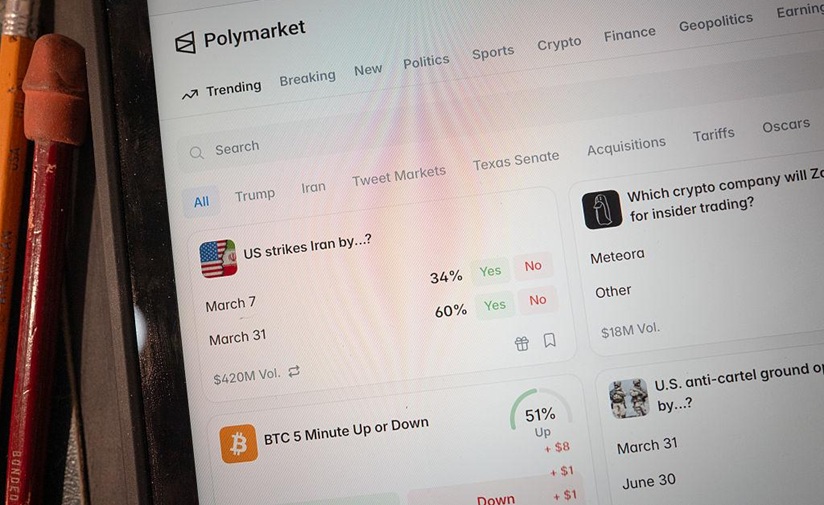
A prediction-market surveillance service has flagged 20 Polymarket wallets for statistically unusual trading patterns, including newly created accounts that recorded hundreds of resolved winning positions without a single reported loss.
GhostBetter’s Sept. 10-16 digest identified the accounts while scanning a universe of roughly 131,000 Polymarket wallets for patterns associated with unusually informed trading.
The most extreme entry involved a wallet only nine hours old that recorded 759 wins from 759 resolved positions while trading across 776 markets.
GhostBetter said the positions had an average entry probability of about 67%, making a perfect 759-position result dramatically better than the success rate implied by the market prices.
The service assigned the account a 66-out-of-99 “Highly Suspicious” score.
Another wallet, created only 15 hours before being flagged, recorded 268 wins from 268 resolved positions despite an average entry price corresponding to roughly 27% implied probability. The account had traded across 1,181 markets.
Three more newly created accounts showed records of 173-for-173, 213-for-213 and 271-for-271.
The 271-win account was approximately 13 hours old, traded across 400 markets and placed individual bets worth as much as $18,481, according to the digest. Its average entry probability was 56%.
The 173-win wallet was only four hours old and placed bets as large as $14,573. GhostBetter said its winning positions averaged approximately 59% at entry.
Those figures make the accounts potentially useful investigative leads as scrutiny increases around insider trading risks in prediction markets.
They are not evidence, by themselves, that any of the wallet owners possessed confidential information.
GhostBetter Looks for Three Types of Anomaly
GhostBetter says it monitors Polymarket trading activity by wallet and scores accounts from zero to 99 using three broad signals: newly created “ghost” accounts, unusually perfect trading records and concentrated conviction shortly before markets resolve.
The logic is straightforward. A newly funded wallet that appears shortly before an event, makes unusually accurate high-conviction bets and then disappears can resemble the trading patterns seen in previous investigations involving non-public information.
But the public digest has an important limitation.
GhostBetter does not publicly disclose the full wallet addresses behind its current signals. Those addresses are reserved for its alert subscribers, meaning the public data does not reveal which specific markets produced the 759 winning positions or when each position was entered.
That information is critical.
A trader buying a contract at 55 cents days before an unexpected event is very different from one buying the same outcome at 99 cents seconds before settlement after the result is effectively known.
Likewise, hundreds of positions could be highly correlated. A wallet trading multiple contracts tied to the same sporting event, election result or economic announcement does not necessarily represent hundreds of statistically independent predictions.
That is why previous research into Polymarket price discovery has used more sophisticated methods to distinguish genuine skill from traders who simply appear exceptional because of luck or market structure.
Real Insider-Trading Cases Show Why the Pattern Matters
The anomaly screening is becoming more relevant because prediction-market insider trading has moved from theoretical concern to active enforcement.
In May, the U.S. Commodity Futures Trading Commission charged Google employee Michele Spagnuolo with allegedly trading Polymarket contracts using confidential information about Google’s 2025 Year in Search rankings.
The CFTC alleges Spagnuolo traded at least 23 contracts with near-perfect accuracy and generated approximately $1.2 million in profit.
Another federal case involves a U.S. Army service member accused of using classified information about the operation to remove Nicolás Maduro from power to generate roughly $400,000 from event contracts.
That case has raised broader national-security concerns around prediction-market trading, particularly where contracts involve military operations known in advance by relatively small groups of people.
Separate Anti-Corruption Data Collective research reported by Reuters found more than 150 Polymarket wallets that may have traded using inside U.S. military information, although the research does not establish wrongdoing by every wallet identified.
Polymarket says it prohibits trading on misappropriated confidential information and continuously monitors activity for suspicious behavior. The company says more than 90 accounts have been referred to law enforcement.
The platform’s transparency also gives independent researchers an unusual advantage: once a wallet is known, its public blockchain activity can often be reconstructed trade by trade.
Analysis: A 759-For-759 Record Is a Starting Point, Not a Verdict
759 wins and zero losses looks absurd.
And that is precisely why it is tempting to jump immediately to insider trading.
That would be premature.
The number that matters most now is not 759. It is the entry timestamp attached to every one of those positions.
If the wallet repeatedly entered uncertain contracts at 30%, 50% or 70% before information became public and somehow selected the winner hundreds of times, the pattern becomes extraordinarily difficult to explain through normal trading skill alone.
If most positions were purchased at 98% or 99% after sporting results, crypto price moves or other outcomes had become effectively certain, the perfect record becomes far less remarkable.
The same applies to the 268-for-268 account with a reported average entry probability of just 27%. On the surface, that is arguably even more interesting than the 759-win wallet because consistently buying apparent underdogs and never losing would be exceptionally unusual.
But averages can hide important structure.
One profitable strategy, arbitrage leg or bundle of correlated contracts can create many winning positions without representing hundreds of independent forecasts. We already know that cross-platform arbitrage can create unusual-looking prediction-market trading that has nothing to do with secret information.
The investigation therefore needs to move from wallet statistics to market chronology.
For each flagged account, the useful questions are simple: What was the event? When was the position opened? What was publicly known at that moment? How much did the market move afterward? Did another newly created wallet make the same trade? And did the account stop trading once the event resolved?
Those patterns have mattered in previous cases.
Fresh wallets making concentrated bets hours before military operations are far more interesting than accounts steadily collecting near-certain settlements. Large positions appearing shortly before private corporate information becomes public deserve more scrutiny than ordinary high-frequency trading.
Wallet clustering matters too. Shared funding sources, coordinated timestamps or transfers through the same exchange addresses can turn several supposedly independent accounts into one trading operation.
That is particularly relevant as prediction markets attract larger pools of capital. Bigger markets will naturally produce more sophisticated traders, arbitrageurs and algorithms with records that look extraordinary to casual observers.
Winning too often is not misconduct.
Knowing something before everyone else is not necessarily misconduct either. A trader who analyzes public satellite imagery, blockchain data or obscure government filings faster than the market is doing exactly what markets are supposed to reward.
The problem begins when the informational advantage comes from confidential information that the trader had no right to use.
That is why GhostBetter’s disclaimer is important.
Its 20 wallets are leads, not defendants.
The real story starts when the wallet addresses are matched against the markets that generated those perfect records and the trades are placed on a timeline against the public release of information.
If the 759-for-759 account was simply harvesting outcomes that were already virtually certain, the headline number becomes much less interesting.
If it repeatedly entered uncertain markets before catalysts nobody else could reasonably know, it becomes exactly the kind of pattern that large Polymarket wallet activity deserves to be examined for.
For now, the extraordinary records tell us where to look.
They do not yet tell us what happened.

Johan Shamshad is a financial markets writer at Dave Finances covering cryptocurrencies, trading platforms, brokers, fintech, financial regulation, and developments across global markets. He previously worked at Gulf News, adding newsroom experience to his coverage of fast-moving financial and digital-asset markets.
His work focuses on identifying market-moving events, company developments, regulatory changes, product launches, and shifts in trading and financial infrastructure.
Johan contributes news and analysis designed to help readers understand not only what happened, but why a development matters and how it may affect the wider financial landscape. You can reach out to him via his social media accounts:
Linkedin: https://www.linkedin.com/in/johan-shamshad-742851262/
X: https://x.com/Yasmine_FX
Investing: https://www.investing.com/members/contributors/279781574